EN
 FR


by Ben Samuels,
The cutoff comes years sooner than Netanyahu proposed, but it fits his vision of a ‘Super Sparta’ Israel – one that buys its own weapons and develops new ones in partnership with the United States
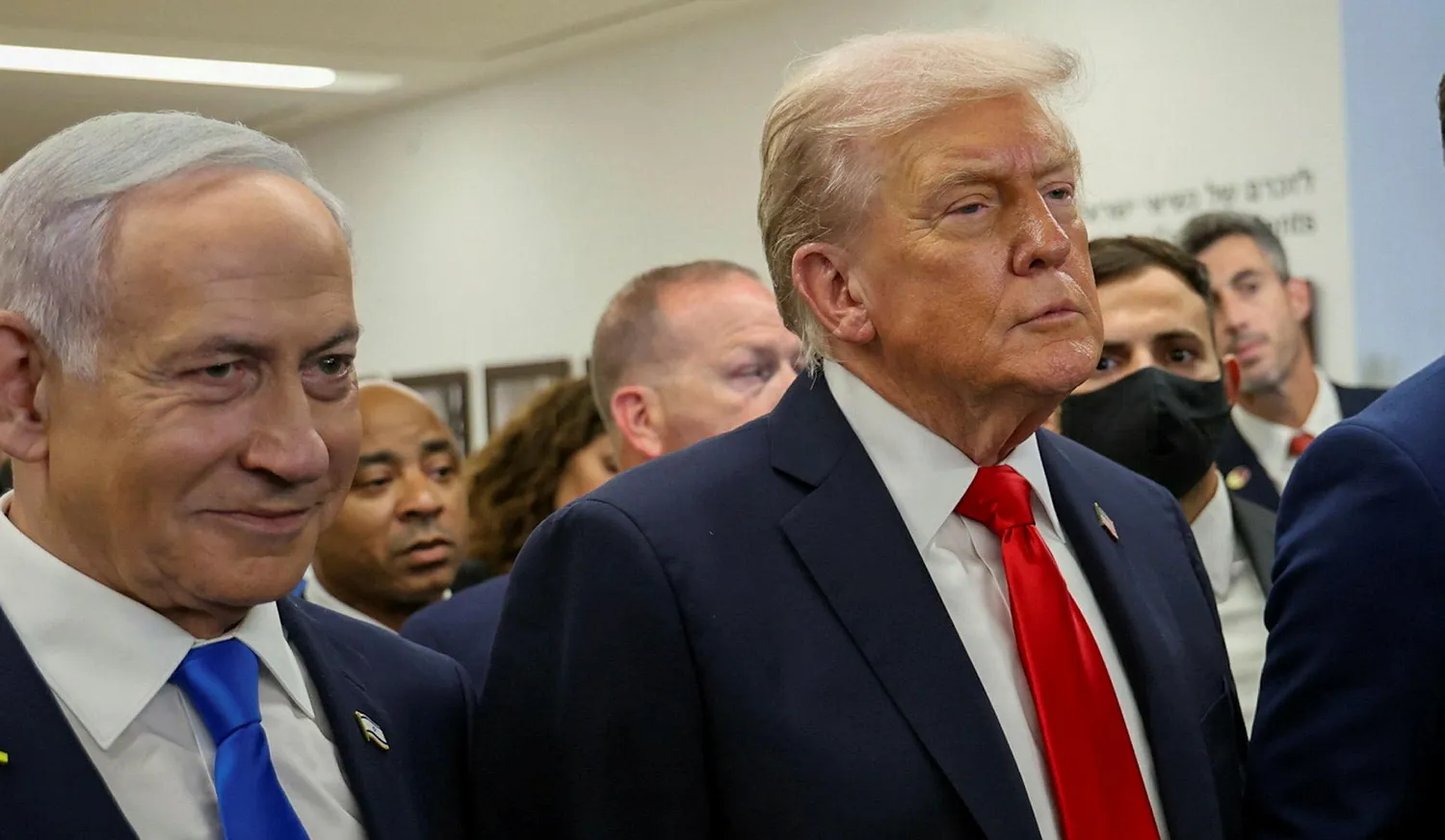
U.S. President Donald Trump threw yet another wrench into the U.S.-Israel relationship at the kickoff of the midterm elections, when he told Fox News that the U.S. would end its nearly $4 billion in annual military assistance to Israel at the end of 2026.
As Americans headed to the polls on Tuesday to elect the Congress that will dictate the agenda for the final two years of Trump’s presidency, Trump told “Fox & Friends” that he and Prime Minister Benjamin Netanyahu had agreed on the cutoff months ago.
Trump may well have been speaking to Republicans increasingly wary of U.S.-Israel ties after the two countries went to war with Iran. But the politician he singled out was a Democrat: Michigan Senate candidate Abdul El-Sayed. Why keep giving Israel money it no longer needed, Trump asked, when the payments gave his opponents a talking point?
By Trump’s own account, he had months to announce the deal with Netanyahu. The night before he did, El-Sayed stood in Detroit talking about the price of groceries and telling voters their taxes should go to their own children instead of “dropping bombs on somebody else and their kids.” The matter was inescapable in races that captured the country’s attention.
In Texas, Democratic Senate nominee James Talarico had also called for a halt to offensive weapons sales to Israel.

As polls opened, Trump gave voters uneasy about the cost of arming Israel an answer. It could still buy American weapons, he told them, but it would have to pay for them itself. Trump also made it clear that it was Netanyahu who had brought him the idea, all while making the case for it in public for months.
In January, Netanyahu told The Economist he wanted to phase out U.S. military aid over the coming decade. In May, he told CBS’ “60 Minutes” that “I don’t want to wait for the next Congress.”
One of the first to endorse the idea was the late Republican Sen. Lindsey Graham, among Israel’s most reliable allies on Capitol Hill. His objection was that 10 years was too long, touting the “billions” in taxpayer dollars that would be saved by expediting the end of the aid, which would be “plowed back into the U.S. military.”
Netanyahu’s domestic political calculus
The $38 billion aid agreement negotiated during the Obama administration is set to expire in 2028. To renew an agreement on long-term U.S. military assistance would invite Democrats to formally debate the Israeli military’s conduct and Republicans to debate the political cost of funding Israel’s military.
Netanyahu has long considered this kind of American domestic political calculus when it comes to U.S. military assistance for Israel.
In 1996, during his first term as prime minister, Netanyahu told Congress that Israel was ready to start giving up American economic assistance. Under the arrangement that followed, economic aid fell as military aid rose.
Timeline: U.S. Military Aid to Israel
1948–1960s
Mostly economic aid
1960s–1980s
Shift from economic to military aid
1987
Israel designated major Non-NATO Ally
2008
U.S. commits to preserving Israel’s Qualitative Military Edge (QME)
2016
10-year $3.8B MOU signed
2025
Netanyahu proposes “phasing to zero” ahead of MOU expiration
This time around, Netanyahu is framing the move as a push for self-sufficiency, part of his transformation of Israel into a “Super-Sparta”: Israel will pay for its own weapons while the two countries develop more together.
Of the $3.8 billion in annual aid under the current agreement, $3.3 billion helps Israel buy military equipment, including F-35 fighter jets and bombs, most of it American-made. The other $500 million goes toward missile defense, including the Iron Dome and other long-range defense systems.

Netanyahu knows how even a single attempt to use weapons shipments as leverage can come to dominate legacies. A defining episode of the U.S.-Israel relationship during the Biden administration had to do with a dispute over one solitary shipment of weapons. In May 2024, President Joe Biden held up a shipment that included 2,000-pound bombs to demonstrate his disapproval of a planned invasion of Rafah in southern Gaza.
As the war raged on, a record number of Democrats (and some Republicans) grew increasingly critical of their country’s assistance in Israel’s wars and, in their view, with U.S. taxpayer dollars that were being used to fund policies at odds with American interests.
In a landmark vote in July, 103 House Democrats – including some of Israel’s staunchest supporters – voted for an ultimately unsuccessful measure from Republican Israel critic Rep. Thomas Massie to cut off aid to Israel.

A model in which Israel pays for its own weapons would give lawmakers one fewer opportunity to demand changes in Israeli policy toward Palestinians as the price of renewing the aid package. Israel would, however, still be subject to U.S. export controls.
For Netanyahu, that is the political appeal of a joint weapons program. He wouldn’t need to win the argument over Gaza to keep the two countries building weapons together.
Israel has long used U.S. aid to buy U.S. manufactured weapons. Some of Netanyahu’s Republican allies in Congress now want more sales to flow in the opposite direction.
In July, with support from some pro-Israel Democrats, the House voted to have the Pentagon study Israeli weapons that American troops could use and that companies from both countries could build together in the United States.
Critics have warned that replacing annual aid with a series of Pentagon contracts would make it harder for Americans to know how much the U.S. spends on Israeli military cooperation. Congress would still control the money, but lawmakers would lose a yearly opportunity to attempt placing conditions on U.S. support over Israel.
‘We’ll help Israel if they need it’
Some questions still remain. Netanyahu wanted 10 years to phase out the aid, yet Trump has given him less than two months. Congress still controls the money and Trump didn’t say whether missile defense would be cut, how Israel would fill the gap or how much Washington would put toward developing weapons together.
Back in January, one test of Netanyahu’s vision of a self-reliant Israeli “Super-Sparta” was what the United States would do if Israel went to war with Iran again. On February 28, American and Israeli forces attacked Iran together. Israel could have paid for every weapon its pilots carried that morning and still depended on an American president willing to send his own forces into battle.

As the polls opened Tuesday, Trump had an explicit and straightforward answer for Americans who wanted to know why they were still paying for Israel’s weapons. By the end of the year, he told them, the annual checks would stop.
Despite the clear appearance of pandering to skeptical voters, however, Trump’s vow is not bad news for Netanyahu. There is no implication that Trump is intending to impose any public restraint on Israel – particularly relevant as Iran tensions continue to simmer. Netanyahu knows as well as anyone that efforts are underway to shield U.S. aid to Israel via the new Pentagon procurement process, one that will give Israel the benefit of reduced oversight.
And just in case Americans wanted to know what happens when push comes to shove, Trump said the words himself: “We’ll help Israel if they need it.”
Source: https://www.haaretz.com

Your Tax Free Donations Are Appreciated and Help Fund our Volunteer Website
Disclaimer: We at Prepare for Change (PFC) bring you information that is not offered by the mainstream news, and therefore may seem controversial. The opinions, views, statements, and/or information we present are not necessarily promoted, endorsed, espoused, or agreed to by Prepare for Change, its leadership Council, members, those who work with PFC, or those who read its content. However, they are hopefully provocative. Please use discernment! Use logical thinking, your own intuition and your own connection with Source, Spirit and Natural Laws to help you determine what is true and what is not. By sharing information and seeding dialogue, it is our goal to raise consciousness and awareness of higher truths to free us from enslavement of the matrix in this material realm.