EN
 FR



by Chen Maanit,
The Justice Ministry’s cyber department said 99 percent of posts were linked to suspected incitement to terror. However, a rights group says posts containing racism, violence, or criminal activities in any language other than Arabic remain online
Israel’s State Prosecutor’s Office asked social media platforms to remove more than 186,000 posts between May 2024 and September 2026, almost all of them in Arabic and most on suspicion of incitement to terrorism, according to data obtained by Haaretz through a freedom of information request filed by the Association for Civil Rights in Israel.
Together, Facebook, TikTok, Youtube, Instagram and Telegram removed 137,059 posts – 73.6 percent of those flagged. Out of all the 186,000 posts targeted for removal, five were written in Hebrew and two in English. The rest were in Arabic.
The Justice Ministry’s cyber unit said it only examines the content of the posts, not the authors – who remain anonymous. Therefore, some of the posts it asked to remove may not have originated in Israel, the West Bank or the Gaza Strip, or may not have been written exclusively in one language.
Even as incitement to terrorism is considered a criminal offense under Israeli law, the Justice Ministry’s response to the information request indicates that the cyber department did not refer any of its requests to police between May 2024 and September 2026. At least some of them were forwarded by law enforcement authorities who did not have the grounds to press charges.
This is an especially large-scale state effort to remove online content by direct requests to social media companies, without a specific judicial ruling on each post’s legality.
The Association for Civil Rights in Israel says the figures raise questions about the cyber department’s priorities and how they have changed over time.
A previous response to a freedom of information request filed by the association, received at the end of 2024 and covering the period from October 7, 2023, to May 2024, also showed that most of the content targeted for removal was in Arabic and that suspected incitement to terrorism was the main justification. However, on some platforms, requests based on other grounds – including incitement to racism and violence – accounted for as much as a fifth of cases, compared with about 1 percent in the latest figures.
The association warns that the overwhelming focus on Arabic-language posts raises concerns about systematic discrimination against Arabic speakers and restrictions on their freedom of expression, alongside what it describes as limited efforts to remove content suspected of other offenses.
The stark disparity between requests involving Arabic-language posts and those involving Hebrew and English content, it says, warrants scrutiny of how posts are identified and how the cyber department sets its priorities.
Attorney Hagar Shechter of the Association for Civil Rights in Israel, who filed the freedom of information request, says the figures expose a disturbing reality.
“It appears that the Justice Ministry’s cyber unit is not a unit that operates to enforce the law and protect the public from the dangers of the internet, but rather a unit entirely dedicated to silencing the Arab public,” Shechter said. She added that rather than combating cybercrimes such as financial fraud or sexual offenses, the unit devotes its efforts and public resources to “policing discourse and restricting the freedom of expression of the Arab public.”
Shechter said the data also suggests that the unit does not address content suspected of inciting racism and violence against the Arab community, including posts targeting Arab medical teams and pharmacists. She also noted that the unit does not appear to seek the removal of content explicitly calling for violence against Arab citizens of Israel or Palestinians in the West Bank and Gaza Strip.
At the beginning of the war, State Prosecutor Amit Aisman instructed authorities to investigate, arrest and prosecute people who posted praise or support for Hamas’ actions, encouraged acts of terrorism or expressed identification with them.
The State Prosecutor’s Office also authorized police to investigate incitement offenses without seeking prior approval and encouraged investigators to ask courts to keep suspects in detention until the end of legal proceedings.
During the war, many Arab citizens were investigated and wrongfully arrested on suspicion of incitement to terrorism, in some cases over social media posts.
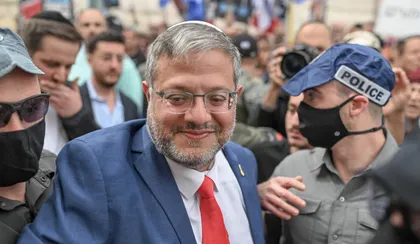
About a year ago, Haaretz reported that 96 percent of incitement investigations opened by police since National Security Minister Itamar Ben-Gvir took office involved Arab suspects, compared with just 4 percent involving Jews. More recently, police pledged to the High Court of Justice that they would not open further investigations involving freedom of expression without the State Prosecutor’s Office’s approval.
The State Prosecutor said in response that “the cyber department of the State Prosecution doesn’t actively search for illegal content online. Other authorities are responsible for monitoring and identifying such posts and submitting formal, reasoned requests to the Cyber Department.”
“The department handles publications that incite violence or constitute severe violations of privacy. Most of the requests it receives concern the removal of publications related to security matters.”
“A significant proportion of posts that raise suspicions of offenses involving incitement to terrorism, support for terrorism or praise for acts of terror are published on social media by anonymous users or individuals who are not located in Israel. Under these circumstances, they cannot be prosecuted, and the only way to stop the offense is to promptly report the content to the online platforms, on the understanding that such content is generally prohibited under the platforms’ own terms of service, and it is the platforms themselves that remove it.”
“The department operates in accordance with internal guidelines published on the State Prosecutor’s Office website, and its activities have also been reviewed and approved by the High Court of Justice.”
Source:https://www.haaretz.com

Your Tax Free Donations Are Appreciated and Help Fund our Volunteer Website
Disclaimer: We at Prepare for Change (PFC) bring you information that is not offered by the mainstream news, and therefore may seem controversial. The opinions, views, statements, and/or information we present are not necessarily promoted, endorsed, espoused, or agreed to by Prepare for Change, its leadership Council, members, those who work with PFC, or those who read its content. However, they are hopefully provocative. Please use discernment! Use logical thinking, your own intuition and your own connection with Source, Spirit and Natural Laws to help you determine what is true and what is not. By sharing information and seeding dialogue, it is our goal to raise consciousness and awareness of higher truths to free us from enslavement of the matrix in this material realm.