EN
EN FR
FR

By Robert Inlakesh,
Regardless of whether this fizzles out now or escalates and Israel begins launching assassination strikes alongside a US B-2 bombing campaign, it is clear that Tehran and Tel Aviv are on a war path as we enter the year 2026.
What began as a series of genuine protests, stemming from Iranian economic grievances, has now transformed into a fully fledged Israeli intelligence operation that seeks to destabilize Iran. It is therefore no coincidence that on the day of the Israeli PM’s departure from the United States, President Trump issued a threat to intervene militarily.
In order to analyze what is currently going on inside Iran, it is important not to beat around the bush; there is an ongoing regime change effort inside the country that Israel is chiefly responsible for. Demonstrating this is not difficult either.
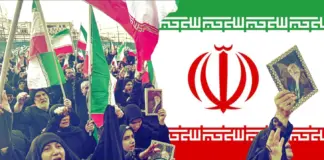
On December 28, shopkeepers came to the streets in locations across Iran to protest government mismanagement that has led to a worsening of the country’s inflation crisis, originally triggered by Western economic sanctions.
During the first few days of the demonstrations, nothing out of the ordinary, beyond a few isolated instances, had occurred. In fact, when hostile elements popped up inside the protests, there were filmed instances of them being kicked out by the crowds themselves and being accused of being agents.
Protests regularly occur across Iran for a range of reasons and end with no violence. For example, a protest took place in early December, where around 5,000 people allegedly marched at the South Pars oil facility, marked as the largest of its kind for the entire year. Yet, on social media, old videos from 2022 and 2019 were being circulated alongside AI-generated clips and photos, depicting a nationwide revolution.
Former Israeli Prime Minister Naftali Bennett then published a video message asserting his solidarity with the alleged revolution that was said to be occurring. At this point, nothing major was even happening in Iran. But the message was clear: Israel was about to turn up the heat.
Later, the offspring of Iran’s deposed Shah would get in on the action, claiming for the dozenth time this year that “the regime is falling” and that he is “returning.” Reza Pahlavi, who the Israelis have dubbed the “Crown Prince” since his visit to Tel Aviv in 2023, is an aspiring dictator seeking to reinstate a hereditary monarchy, while also advocating for the exact opposite system, a democracy.
On New Year’s Day, the intelligence operatives went into overdrive, coordinating riots and armed attacks through Telegram groups, shooting at security forces, tearing down statues and posters, setting stores, cars, and even police officers on fire, all as Israel’s coordinated propaganda campaign expanded online. Israel’s Persian-language account on X (formerly Twitter) even published an AI-generated image of Iranian police using a water cannon against a protester.
Iranian opposition media outlets even began declaring that cities had “fallen to the revolution,” that Islamic Revolutionary Guard Corps (IRGC) forces were fleeing, and that Ayatollah Khamenei had fled Tehran, none of which was true, evidently.
Then came along former US Secretary of State Mike Pompeo, who commented, “Happy New Year to every Iranian in the streets. Also to every Mossad agent walking beside them…”. In other words, nobody is even bothering to hide what this is.
During the 2022 protests, sparked by the death in police custody of Kurdish-Iranian Mahsa Amini, there were proven influences on this movement by foreign intelligence and media agencies seeking to achieve regime change. However, these protests enjoyed clear popular support from different elements of Iranian society, who all rallied behind the “Woman, Life, Freedom” banner.
In 2022, as with past major protests when major unrest broke out, the popular element was clear; there were countless publicly issued statements and protests organized publicly at different times and locations.
This time is the complete opposite. Out of nowhere, a single masked man, a small armed group carrying weapons, or a group of thugs will emerge to attack security forces, storm a police station, set a business or car on fire, etc. All of Iran’s major unions, which were originally backing the shopkeeper protests, have now also condemned the ongoing riots.
There is an absence of any unifying slogans, an absence of any kind of real cause, and the economic grievances are not the driver of the violent incidents. The violence appeared to be most prevalent in western Iran and among minority groups, and then, suddenly, violent incidents occurred in isolated instances across the country. An armed militant group even attempted to breach the border of Iran’s Sistan and Baluchistan province.
Within the first two days of violence during the new year, attempts were made to overrun police stations, government buildings, and armories, but all appear to have failed. Yet on January 1, two Iranian police officers were murdered, one was also left in a coma after rioters beat and stabbed him, and three rioters were shot dead.
A member of Iran’s volunteer Basij paramilitary force was executed by six masked thugs while he was operating in a civilian capacity, unarmed. The family of the 22-year-old had even been forced to lie that he was a member of the Basij after threats were made to attack his funeral. In Qom, on January 2, a man carrying an improvised handheld explosive was shot dead as he attempted to hurl the device at security forces. Ambulances were even pelted with stones near the Iranian capital.
What Can We Expect?
There is no need to pretend otherwise; it is crystal clear that this is an attack on Iran using agents on the ground. It should be judged similarly to how the Israelis used such agents during the 12 Day War back in June of 2025. Israel even admitted that over 100 foreign Mossad agents were used inside Iran to take down the nation’s air defenses and target missile launch sites during the opening wave of airstrikes.
In fact, most of the Israeli attacks carried out during the war were not carried out from the air, but by agents on the ground. These agents used drones, guided missiles, and carried out a broad range of activities on Israel’s behalf. Thousands of them were later caught for participating in such actions.
The Israelis are clearly attempting now to use their agents to inflict instability. If they see any success, they will only accelerate their plot. At their disposal are al-Qaeda-linked terrorist groups that act in areas like Sistan and Baluchistan; they also have Kurdish armed separatist movements that they work with and can trigger to act, in addition to various armed cells that undoubtedly still exist throughout the country.
Although Iran may have managed to uncover some Mossad networks, it has to be assumed that they have not succeeded in rooting out this issue entirely. If anything, the Israelis would have surely been working to ensure that they secure as many assets there as possible.
In other words, expect them to try to exhaust all possible avenues in order to succeed at destabilizing Iran. At the same time, they have failed to do that so far, not managing to seize any armories—that we know about—nor hold any positions or territory.
If the Israelis do have some breakthroughs, they could try hybrid warfare strategies and mobilize proxy forces, yet using these cards too early may backfire. Iran last year carried out its largest-ever series of counterinsurgency military exercises, with both the IRGC and regular army participating in them together.
In the event that the Israelis seek to pull all of their cards in order to set up a new wave of air attacks, the Iranians may experience some setbacks, but it is seriously unlikely that they will prove incapable of pushing back against the Israeli proxy forces on the ground. So far, nothing of that sort has been happening; it is worth noting.
It is also plausible that, in the event that the riot tactics fail, they may even back off and attempt to ignite civil unrest at another time instead.
Tehran’s options, in retaliation, could be to launch a preemptive series of strikes against the Israelis, especially if things begin to escalate on the ground. Its other option is to ride out this wave, waiting to go on the counterattack if the Israelis choose to launch airstrikes.
The wild card here is really the role of the United States, which could indeed be poised to launch its own round of airstrikes across Iran. According to the Hebrew media, Israeli PM Benjamin Netanyahu managed to extract every demand with which he came to Mar-a-Lago. If true, that would indicate that Trump will attack Iran on Israel’s behalf.
Such a war could quickly get out of hand, which is why pro-war think tanks in Washington have for months been advocating a limited exchange. But, at the same time, it is also clear that their ultimate goal is indeed regime change in Tehran, so if the opportunity presents itself, it is likely they will go for it.
Regardless of whether this fizzles out now or escalates and Israel begins launching assassination strikes alongside a US B-2 bombing campaign, it is clear that Tehran and Tel Aviv are on a war path as we enter the year 2026.
Source: https://www.palestinechronicle.com

Your Tax Free Donations Are Appreciated and Help Fund our Volunteer Website
Disclaimer: We at Prepare for Change (PFC) bring you information that is not offered by the mainstream news, and therefore may seem controversial. The opinions, views, statements, and/or information we present are not necessarily promoted, endorsed, espoused, or agreed to by Prepare for Change, its leadership Council, members, those who work with PFC, or those who read its content. However, they are hopefully provocative. Please use discernment! Use logical thinking, your own intuition and your own connection with Source, Spirit and Natural Laws to help you determine what is true and what is not. By sharing information and seeding dialogue, it is our goal to raise consciousness and awareness of higher truths to free us from enslavement of the matrix in this material realm.