EN
EN FR
FR


Holding Calm in the Storm
Getting to the Heart of the Matter Through the Teachings of Christ
Rev. Kat Carroll
Appx. 5 min read.
Preamble –
Before going further, I should make something clear. I am not tied to any single religious institution. Over the years I have studied many traditions and wisdom teachings from around the world. But among those teachings, the words and example of Jesus of Nazareth remain some of the most practical guidance I have found for navigating human conflict and difficult personalities.
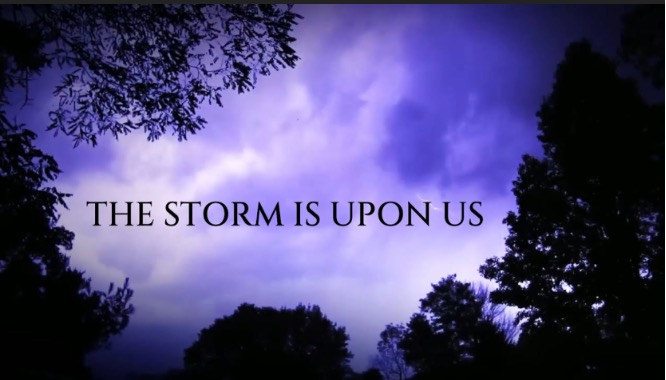
If you listen closely these days, you can feel it in conversations, in headlines, even in casual interactions between strangers. No doubt you’ve been witnessing or experiencing this in your life, or in someone close to you.
Something in the atmosphere feels tense. Tempers flare more quickly. Opinions harden faster. People who once might have disagreed politely now seem to meet each other with sharpened edges—and often with sharp words they may later regret.
Some call it political polarization. Others attribute it to global uncertainty, wars and rumors of wars, or the relentless churn of information we read on social media and watch in endless video streams. Still others look to cosmic cycles, astrological alignments, or shifts in collective consciousness.
I suspect it is a combination of all of these things—something like a compression point we must eventually break through. Cycles converge, pressures build, and human emotions rise with them. We cannot control what is said to us or what events unfold around us.
But we can control how we respond.
Whatever the cause, many people sense the same thing: the air feels charged. ⚡️
And yet, within that turbulence, another option remains available to us—the choice to remain steady while the storm moves through.
Not by controlling others, but by mastering our response.
A Storm We Have Seen Before
The image of storms as a symbol of turmoil appears often in the Gospels themselves.
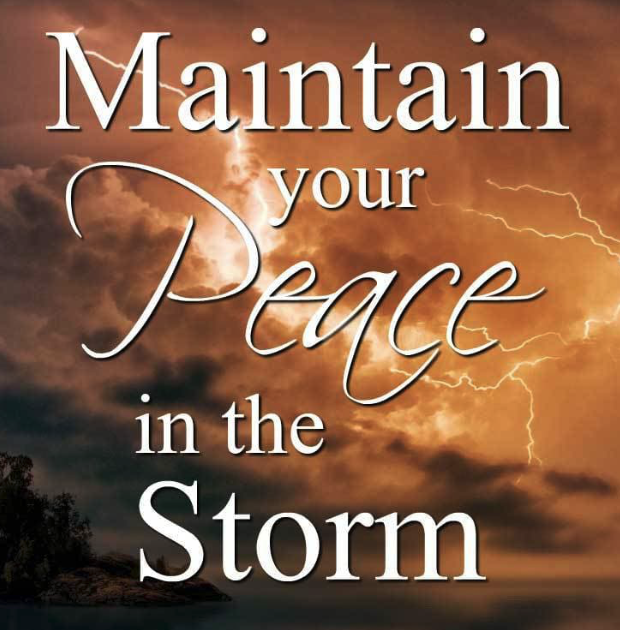 On one occasion, Jesus and his disciples were crossing the Sea of Galilee when a violent storm arose. Waves crashed against the boat, and even the seasoned fishermen among them feared they might drown. Meanwhile, Jesus slept calmly in the stern.
Terrified, the disciples woke him, crying out, “Teacher, don’t you care if we drown?”
Jesus rose and spoke to the wind and waves: “Peace, be still.” Instantly the storm subsided and the sea grew calm.
Then he turned to them and asked a question that echoes through time: Why are you afraid? Do you still have no faith?
In another moment on that same sea, Peter stepped out of the boat and began walking toward Jesus across the water. For a brief moment, he did the impossible. But when he focused on the wind and waves instead of the one he trusted, fear took hold and he began to sink.
Jesus immediately reached out and lifted him up.
Peter’s mistake was not stepping out of the boat. His courage in doing so was remarkable. The faltering came when his attention shifted from trust to fear.
Both stories carry the same quiet lesson: storms may rage around us, but where we place our focus determines whether we remain steady, or begin to sink.
Jesus as a Model
 When confronted with difficult people, Jesus rarely reacted in anger or retaliation. Instead, he often responded with a remarkable combination of compassion, patience, and clarity.
He listened. He asked questions. He addressed the deeper need beneath the behavior.
One of his most enduring teachings is often called the Golden Rule: Do to others as you would have them do to you.
Jesus was not the first to express this wisdom. Earlier versions existed across many cultures and traditions:
- The Hebrew Bible contains the foundational idea in Leviticus 19:18: “Love your neighbor as yourself,” written more than a thousand years earlier.
- Rabbi Hillel, a Jewish teacher before the time of Jesus, taught: “What is hateful to you, do not do to your neighbor.”
- Confucius expressed a similar teaching centuries earlier: “Do not do to others what you do not want done to yourself.”
Yet Jesus framed the principle differently. Instead of simply avoiding harm, he encouraged people to actively practice kindness and compassion.
It sounds simple in theory, but in moments of conflict it can be one of the hardest teachings to follow.
Compassion—even when we believe the other person is wrong—requires discipline and humility.
Jesus did not pretend people were perfect, nor did he ignore wrongdoing. Instead, he looked beyond the behavior to the wounded or confused human beneath it.
Compassion, in this sense, is not weakness… It’s clarity.
A Shift in Perspective
One of the most powerful tools in dealing with difficult people is a shift in perspective.
Prayer, meditation, or quiet reflection—whatever form it takes—creates space between stimulus and reaction. In that space, our response can change.
But in the heat of the moment there may not be time for formal reflection. Sometimes the most practical response is simply pausing for a few slow breaths. Allowing the nervous system to settle can lower the emotional temperature of the moment.
In more heated situations, stepping away briefly may be the wisest choice. Leaving the room and returning later when everyone is calmer can prevent words that might later be regretted. Sometimes this requires swallowing pride.
Compassion, kindness, humility, gentleness, and patience are not simply ideals. They are  practices that shape how we experience conflict.
When we pause long enough to see another person not as an enemy but as someone struggling in their own way, the emotional temperature of the moment often shifts.
It becomes easier to respond from compassion rather than from ego.
Love and Forgiveness
 Perhaps the most challenging teaching attributed to Jesus is the instruction to love one’s enemies and pray for those who persecute you.
At first glance this seems impossible. Why should anyone extend kindness toward someone who has hurt them?
Yet resentment often harms the one carrying it more than the person it is directed toward.
Forgiveness does not excuse harmful behavior, but it frees the heart from being chained to it.
Love, in this sense, becomes an act of inner liberation.
Guarding the Heart
Compassion, however, does not mean allowing others to trample our boundaries.
Ancient wisdom reminds us to guard the heart carefully, for everything we do flows from it.
 Healthy boundaries are part of emotional and spiritual maturity. They allow us to maintain integrity without descending into hostility or resentment.
In today’s world this often means using calm and respectful words rather than dramatic reactions.
Strength and kindness are not opposites. In fact, they often work best together.
Sometimes the kindest choice—both for ourselves and for the other person (or people)—is simply to step away from a situation that continues to cause harm. Walking away does not always mean anger or rejection.
At times it is an act of clarity and self‑respect, acknowledging that a relationship or circumstance has reached its natural limit. When we release what is no longer healthy, we create space for healing, growth, and new possibilities to enter our lives. Closing one door often opens many others.
Examining Ourselves First
Another teaching invites us to look inward before judging others:
Why do you notice the speck in another person’s eye while overlooking the beam in your own?
This teaching encourages humility.
 Often our strongest reactions reveal something within ourselves that still seeks healing. In that way, conflict can act as a mirror.
What we dislike most in others sometimes points to something unresolved within us.
When we recognize that mirror, conflict becomes an opportunity for growth rather than simply a battle to be won.
Simple Acts of Kindness
Not every conflict can be resolved. Not every relationship will be restored.
But small acts of kindness—a calm tone, a willingness to listen, a refusal to retaliate—can soften situations that might otherwise spiral into hostility.
Even something as simple as a gentle touch between partners can defuse tension and remind both people that the relationship matters more than the argument.
Sometimes the most powerful response is simply choosing not to escalate the conflict.
And there will be times you need to walk away.
Becoming the Calm in the Storm
We cannot control what comes at us in life. Words may be spoken, tensions may rise, and storms may gather.
But we always have a choice in how we respond.
In times when agitation seems to surround us, the teachings of Christ remind us that strength can appear in unexpected forms: patience instead of anger, compassion instead of retaliation, clarity instead of chaos.
Responding this way does not necessarily change the difficult person in front of us. But it prevents us from becoming, or saying something, we would later regret.
 A sailor cannot calm the stormy sea. The winds will blow and the waves will rise and fall as they will. But the sailor still holds the rudder, steering the vessel through turbulent waters. And your heart is the lighthouse that shows the way.
In much the same way, each of us carries an inner compass—a quiet guidance that points toward compassion, patience, and truth.
When we listen to that inner voice and steer accordingly, we are no longer tossed helplessly by every wave of emotion or conflict.
The storm may continue for a time. But somewhere within it, someone remains calm—steady at the helm, guiding the vessel forward.
And perhaps that is the deeper question quietly waiting beneath every difficult moment.
The Gospel of John reminds us of something simple yet profound: “God is love.” (1 John 4:8 is often quoted for its promise, but within it is the deeper revelation of God’s nature.) If love is the very essence of the divine, then returning to love in our words, actions, and intentions becomes our surest compass.
So when we find ourselves in the middle of conflict, confusion, or emotional storms, a quiet question can guide the helm:
What would love do here?


Your Tax Free Donations Are Appreciated and Help Fund our Volunteer Website
Disclaimer: We at Prepare for Change (PFC) bring you information that is not offered by the mainstream news, and therefore may seem controversial. The opinions, views, statements, and/or information we present are not necessarily promoted, endorsed, espoused, or agreed to by Prepare for Change, its leadership Council, members, those who work with PFC, or those who read its content. However, they are hopefully provocative. Please use discernment! Use logical thinking, your own intuition and your own connection with Source, Spirit and Natural Laws to help you determine what is true and what is not. By sharing information and seeding dialogue, it is our goal to raise consciousness and awareness of higher truths to free us from enslavement of the matrix in this material realm.