EN
EN FR
FR

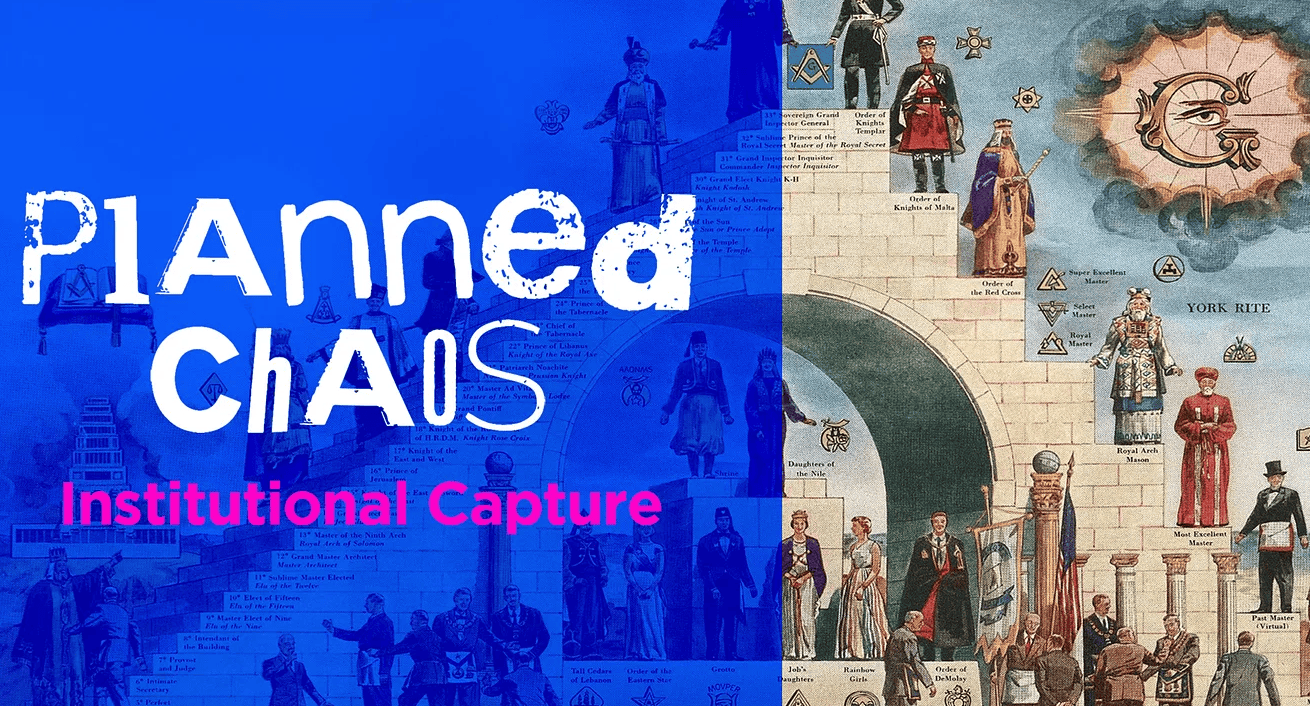
How Hybrid Warfare Took the Battlefield Inside the Buildings We Trusted Most
“You provide the prose poems, I’ll provide the war.” — Charles Foster Kane
In the masterwork film Citizen Kane, Kane – based on William Randolph Hearst’s famous line allegedly told to artist Frederic Remington, “You supply the pictures, I’ll supply the war,” – frames the power of the press’s ability to create reality through perception. The fact that a hundred years later it still circulates as the most concise description of how media manufactures reality — tells you everything you need to know about how power and perception have always operated together.
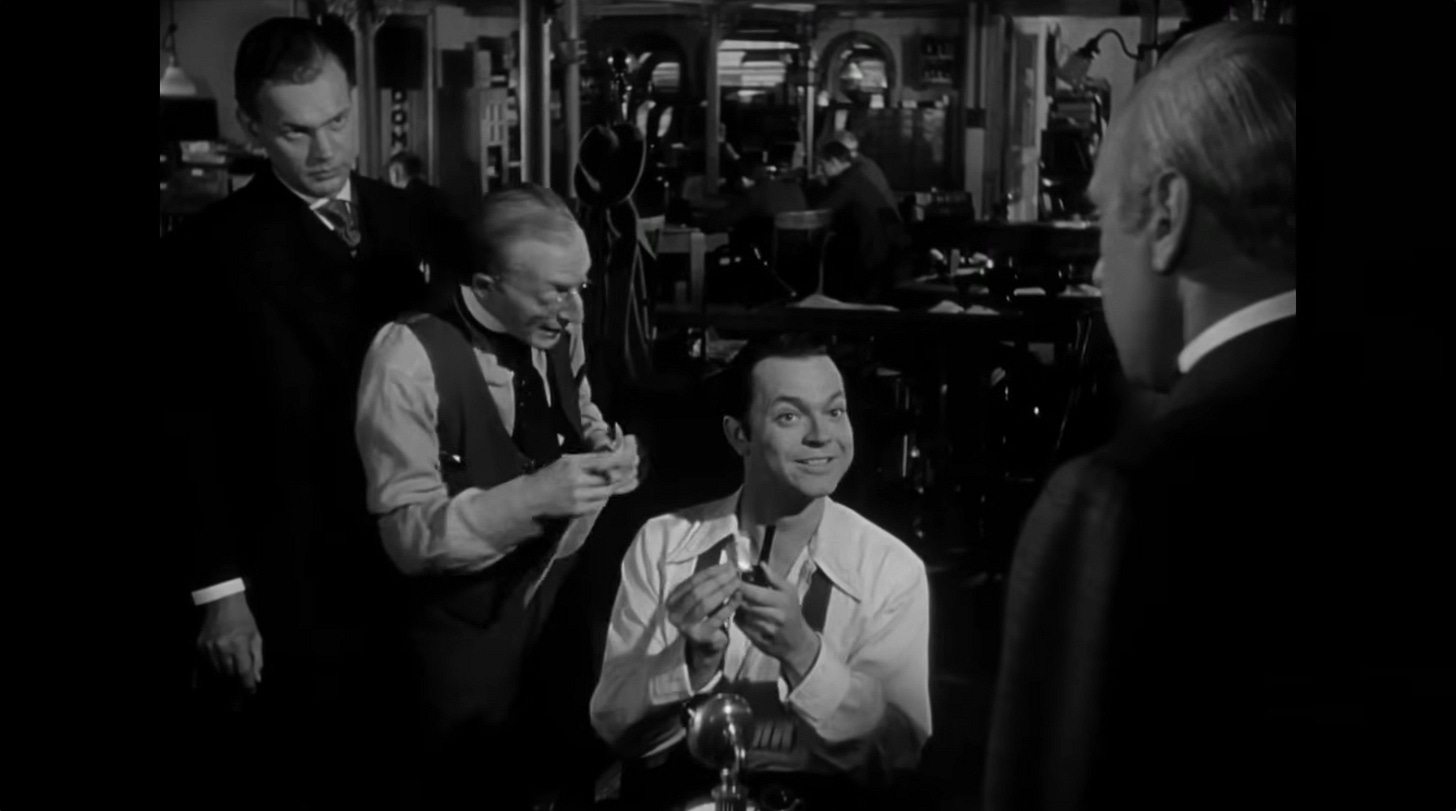
The quote is fiction. The mechanism it describes is not.
This is Article 19 in the Planned Chaos series. In the previous eighteen articles, I have documented the manufactured crises — the media capture, the financial engineering, the racial division tactics, the pandemic response machinery, the election infrastructure, the Great Reset, AI and the technocracy agendas. In the post I rereleased on Sunday, Why They Do This, I show how prescient the knowledge of end times and what it means to the Iran/Israel war is now, compared to when the article first posted in 2023. What I have not yet examined in full is the meta-strategy underneath all of it: the strategic doctrine of institutional capture.
Because Planned Chaos is not just a collection of events. It is a military strategy. And to understand the strategy, you have to understand how wars are now fought — and where the battlefield actually is.
I. The New Battlefield
When the intelligence officers I interviewed during my years at Prepare for Change used the phrase “captured institution” — men like Robert David Steele, John DeSouza, and others from the community of former operatives who had gone public — they were not speaking metaphorically. They were using the precise language of a military doctrine.
In classical warfare, to capture something means to take it intact and turn it against the enemy. You do not destroy the bridge — you cross it. You do not burn the radio tower — you broadcast from it. The asset becomes your weapon.

Hybrid warfare — the dominant strategic framework of the last fifty years — applies this same principle to the battlefield of narrative. The territory being contested is not geography. It is perception. And the fortifications are not trenches and walls. They are institutions.
The Senate. The judiciary. The Pentagon. The CIA. The university. The newsroom. The medical establishment. The technology platform. These are the high ground of the information war. Whoever controls them controls the authorized version of reality — which experts are credible, which science is settled, which history is taught, which questions are permitted.
The battlefield took shape not on foreign soil but in the places most Americans thought were permanently on their side.
II. The Methodology — How Institutions Get Taken
John DeSouza — a former FBI special agent who specialized in paranormal cases and later in counterintelligence — described the methodology with clinical precision when I spoke with him. You do not need to be an ideologue yourself to execute institutional capture. You need only to understand incentive structures.
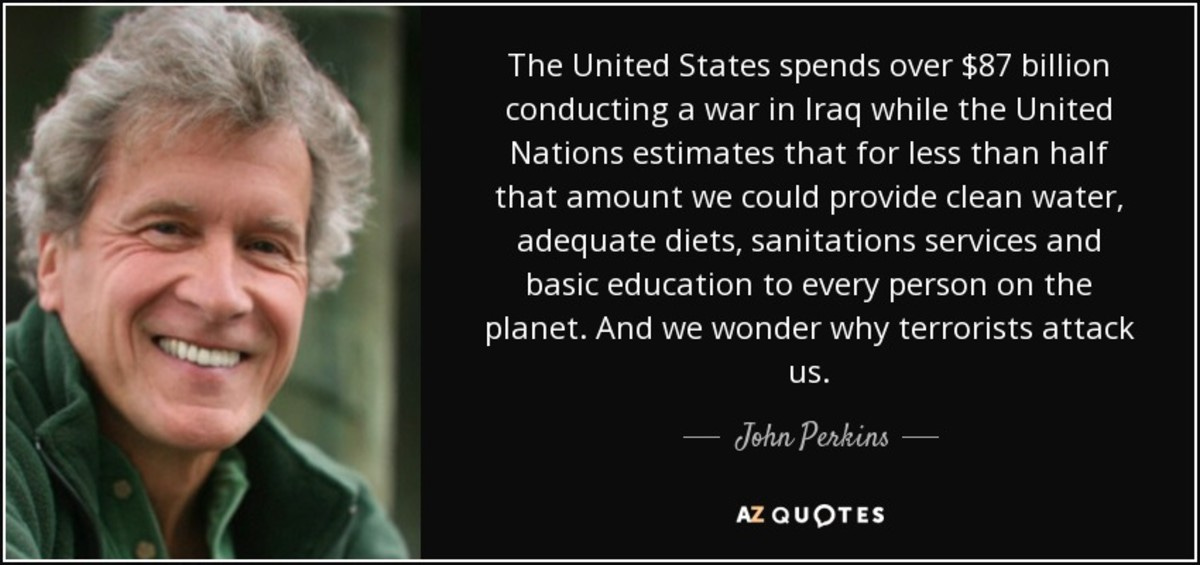
The playbook has five moves, and they are not secret. They are documented in Saul Alinsky’s Rules for Radicals, in the academic literature on organizational theory, and — most usefully — in John Perkins’ confessional memoir, Confessions of an Economic Hit Man, which describes the export of this methodology to foreign governments. What Perkins documented in the developing world, his contemporaries were doing domestically. And more importantly, recently in America.
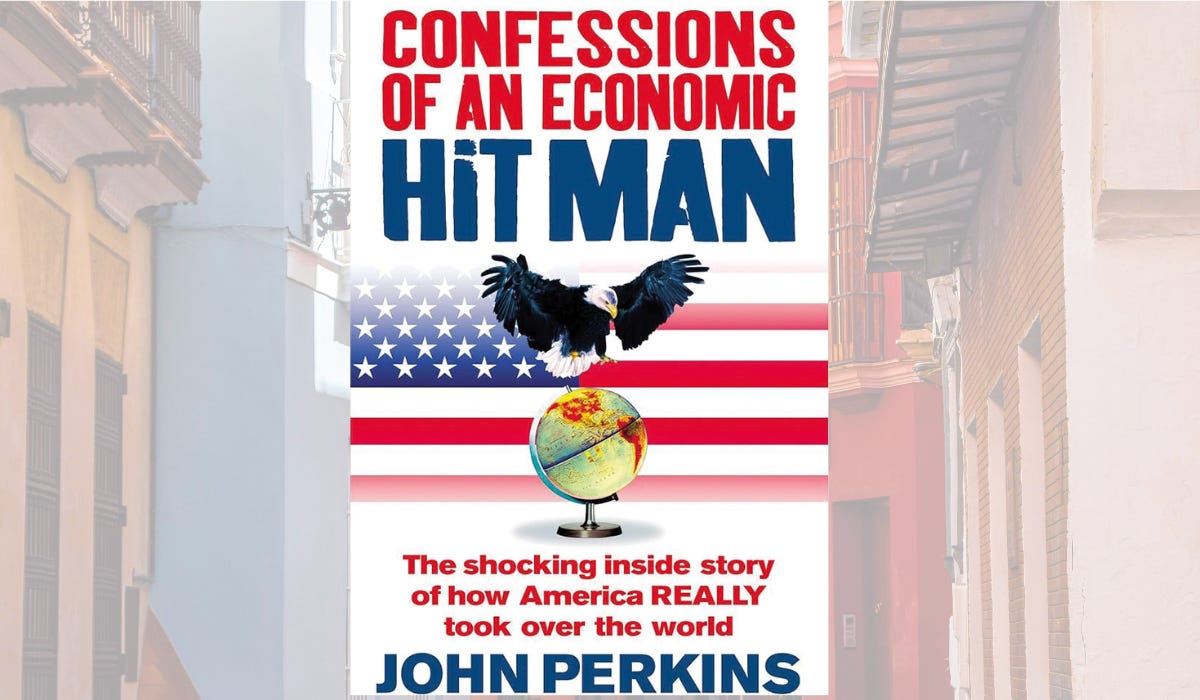
Economic hit men (EHMs) are highly paid professionals who cheat countries around the globe out of trillions of dollars. They funnel money from the World Bank, the U.S. Agency for International Development (USAID), and other foreign “aid” organizations into the coffers of huge corporations and the pockets of a few wealthy families who control the planet’s natural resources. Their tools include fraudulent financial reports, rigged elections, payoffs, extortion, sex, and murder. They play a game as old as empire, but one that has taken on new and terrifying dimensions during this time of globalization. I should know; I was an EHM.
– John Perkins, 2004
Move 1: Identify the Institution’s Dependencies
Every institution has pressure points — the funding it cannot do without, the accreditations it requires to function, the political relationships that protect it from scrutiny. Map those dependencies and you have the map of the takeover.
Move 2: Control the Incentive Structure
Fellowships. Grants. Peer review committees. Publishing boards. Promotion criteria. Award panels. These are not neutral mechanisms — they are the valves that determine who rises and who stagnates within an institution. Control who gives the fellowships and the grants, and you control which ideas get developed, which researchers get platforms, and which conclusions get amplified.
Move 3: Staff the Gatekeeping Roles
The department chair. The editor. The committee chairman. The bureau chief. The grant officer. These are not the most visible positions, but they are the most consequential ones. The captured institution is staffed not by visible ideologues at the top — that would be too obvious — but by reliable gatekeepers in the middle. The top can say anything it likes, but the gatekeepers decide what actually moves through the system.
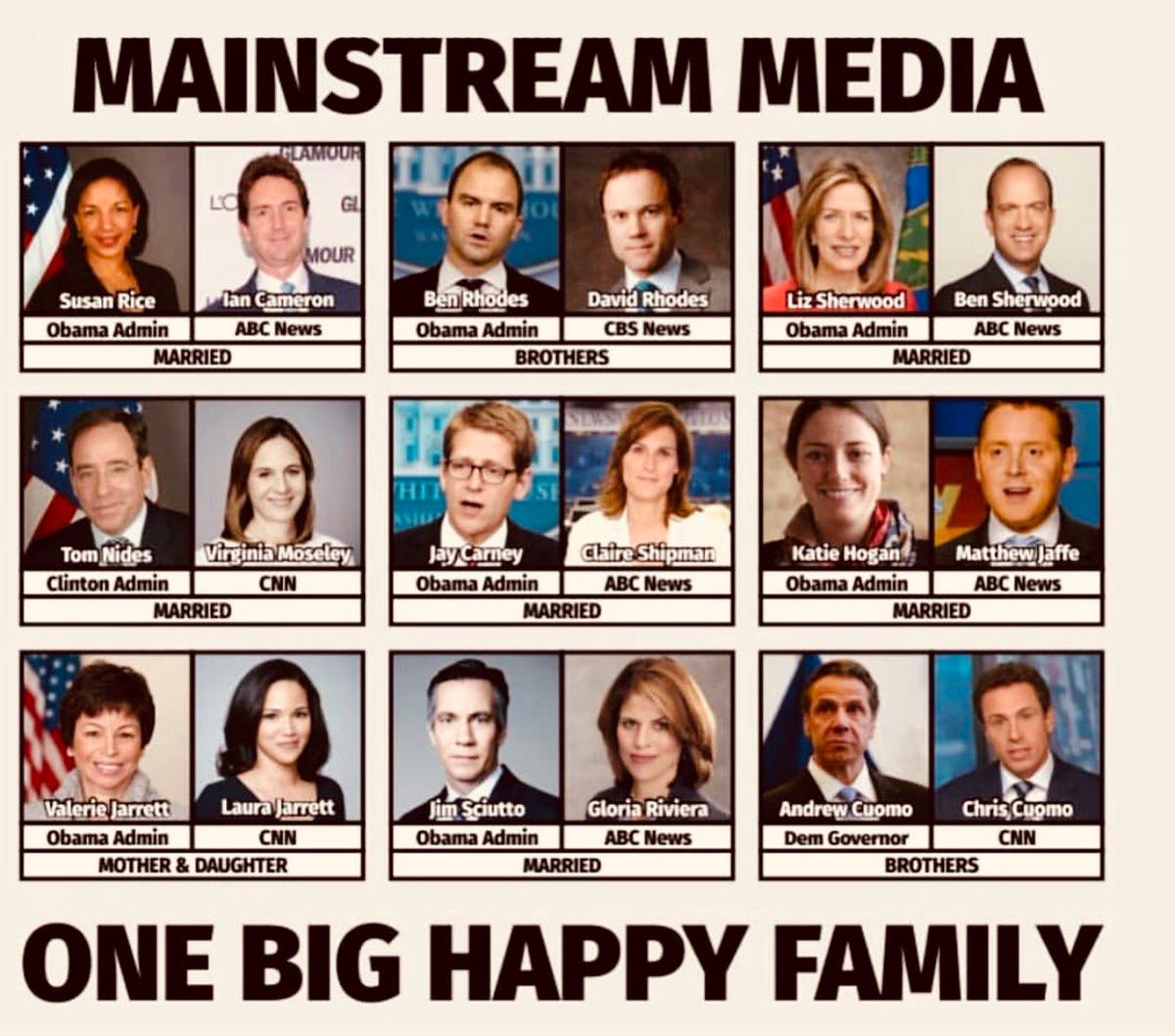
The below graphic, though years old, shows a glimpse of how incestuous the relations between administration officials and the media are. Think of this for a moment, when an administration had come to power, it had made thousands of promises to thousands of people regarding their compensation when they would come to power. Either straight up bribes, or kickbacks, or funneled money, or positions are given out as incentives. The result are compromised representatives at all levels of governments and institutions.
Move 4: Elevate the Compliant, Isolate the Independent
Independent thinkers are not fired in the early stages of institutional capture — that would create martyrs and attract scrutiny. They are passed over. Their grant applications are denied. Their papers are rejected for peer review. Their speaking invitations dry up. Over time, without drama, without scandal, the institution becomes a monoculture — not because dissent was suppressed but because it was simply not rewarded. The compliant rise. The curious plateau. The independent leave.
Move 5: Normalize the Capture
The final move is generational. Once the institution has been staffed with products of its own captured environment, the original ideology no longer needs to be enforced. It is simply the air that everyone breathes. The new faculty were trained by the captured faculty. The new editors were mentored by the captured editors. The new grant officers attended the captured universities. The takeover becomes self-perpetuating without any further external pressure. At this point — and this is the chilling part — even the people inside it cannot see it. They simply call it normal.
III. The Consolidation Evidence — Following the Pattern
It would be reassuring to believe this is abstract theory. The evidence is frustratingly concrete. In the US, it was determined that the public would see and react to a socialist state decades ago, so the calculation was to create the PPP or public private partnerships.
Public companies and installed actors play out the roles of what used to be the State. It’s why there are so many grifters in the highest valued companies. Of course, this began years ago with the defense industry contractors, but it’s moved to all parts of the ecosystem – banking, technology, financial, education, etc. Those top performers are never short of compensation.
Media
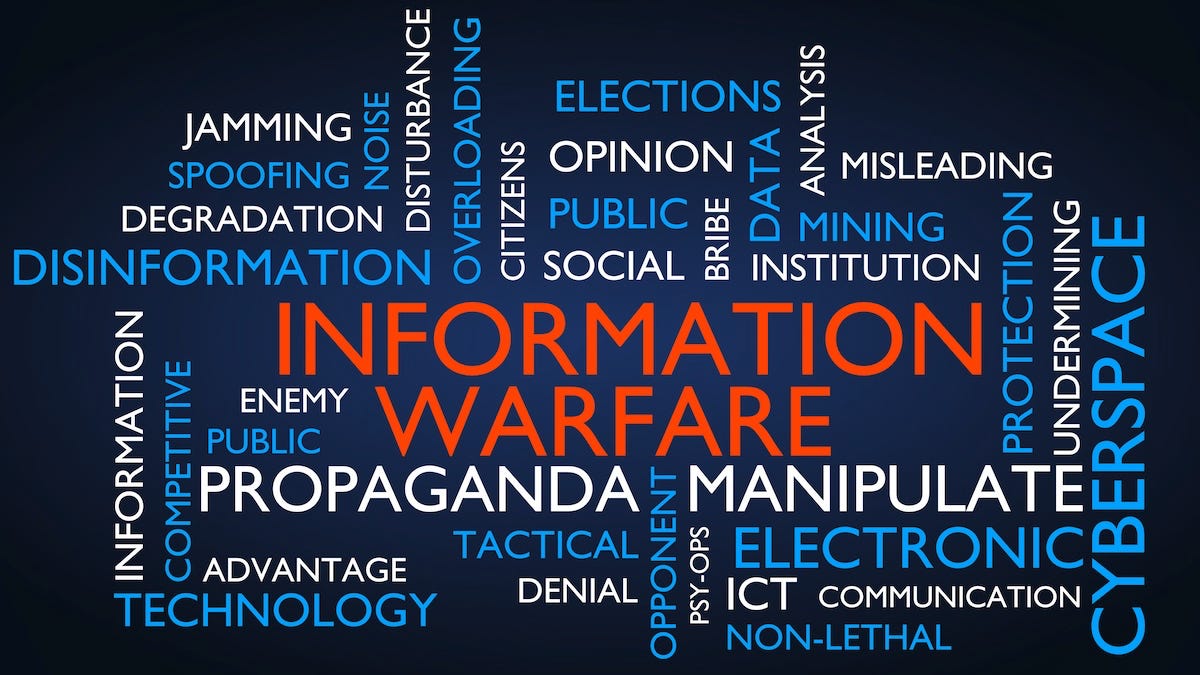
In the 1980s, approximately 50 corporations controlled the majority of American media. After the Telecommunications Act of 1996 — which I documented in the Planned Chaos Media episode — that number collapsed to six. Six corporations now control what roughly 330 million Americans read, watch, and hear as news. Each of those corporations has board members and shareholders with direct ties to the financial and political structures they are supposed to cover. That is not a free press. That is a captured institution posing as one.
Banking
The Federal Reserve is not federal. It has no reserves in the traditional sense. It is a private consortium of member banks — established by legislation written by the bankers themselves at the Jekyll Island meeting of 1910, passed during a congressional session deliberately held during the Christmas recess of 1913. The central bank captures monetary sovereignty from elected government and lodges it in a private institution answerable to its shareholders. That is the oldest and most consequential institutional capture in American history.
Technology
The consolidation of the technology sector into a handful of platforms — Google, Meta, Amazon, Apple, Microsoft — represents the most recent iteration of the same pattern. These platforms do not merely carry the conversation; they shape it through algorithmic curation, content moderation, and the de-platforming of voices that challenge the consensus. When a single company controls what information 4 billion people can access and share, it has captured the global nervous system of public discourse. These are by design.
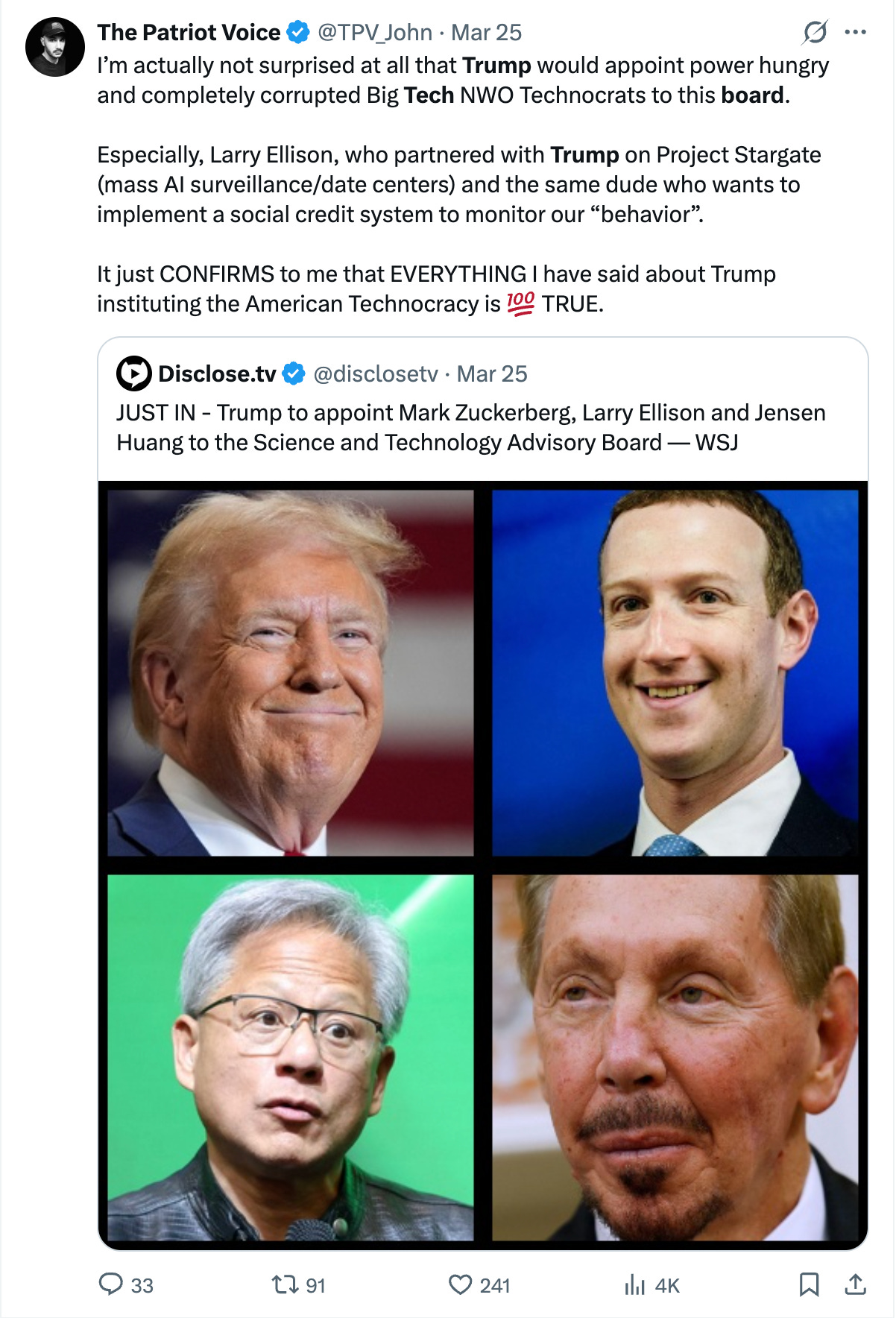
The recent announcement of a technology advisory board organized by the Trump administration — bringing the same consolidated tech players into direct coordination with executive policy — should be examined carefully, regardless of one’s political alignment. Centralized coordination between government and monopolized tech infrastructure is the capture mechanism, not the solution to it. Again, the so-called public sphere is doing the bidding of the State, because they ARE the State. The ideology of the person assembling the board does not change the architecture.
IV. The Chaos Agents — Who Carries the Strategy Forward
Planned Chaos does not require a single orchestrating body with a whiteboard and a master plan — although the evidence for coordinated strategic intent is stronger than most people are willing to examine. What it requires is a class of actors I call chaos agents: operatives, true believers, and unwitting participants who carry the strategy forward without necessarily knowing its full scope.
The chaos agent is not always a villain. In many cases they are exactly what they appear to be: a committed ideologue who genuinely believes in the transformation they are advancing. The DEI administrator. The activist academic. The foundation program officer. The corporate diversity consultant. These individuals are not, for the most part, consciously serving a hidden agenda. They are products of a pipeline — the indoctrination pipeline examined in the next article — who have been trained, incentivized, and promoted to advance a framework they experience as their own.
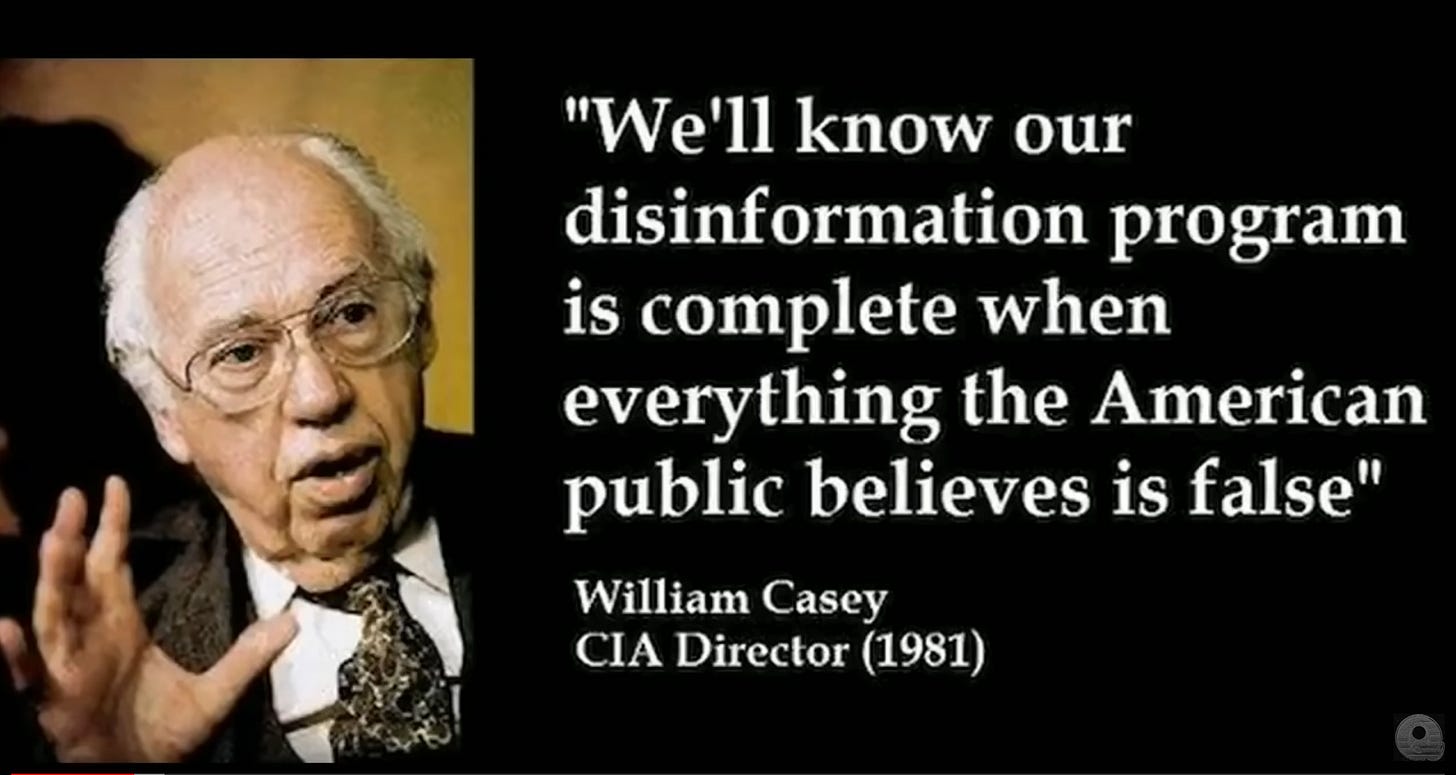
This is what makes the strategy so durable. It does not depend on conspirators who could be exposed and prosecuted. It depends on true believers who cannot be argued out of their beliefs because those beliefs constitute their professional identity, their social world, and their understanding of moral purpose. You do not defeat a captured institution by arguing with the people inside it. You defeat it by understanding the architecture that produced them.
The chaos agent is not always the enemy. Sometimes the chaos agent is the person who attended the captured university, worked for the captured institution, and never had access to a different map.
V. The Quickening — Why This Is the Moment
Something has shifted in the velocity of events. Those of us who have been tracking these patterns for years have a name for it: the compression window, also called the quickening. The timelines are collapsing. The perceptions are moving at global speed. What would have taken years to percolate through the public consciousness a decade ago now completes its cycle in weeks.
Consider: AI-generated propaganda videos out of Iran, targeted at Western audiences around the Trump-Netanyahu alliance, now circulate within hours of production. They are crude by professional standards. They are effective by political ones — not because they convince the informed, but because they seed doubt in the undecided and harden the committed. The technology of perception management has been democratized, which means the battle for narrative has become simultaneous, global, and unceasing.
This is why understanding institutional capture matters right now, in this moment, rather than at some more convenient future date. The institutions that shape perception are under more pressure than they have been at any point in living memory. The captured media is losing audience at historic rates. The captured universities are facing enrollment crises and legislative scrutiny. The captured central bank is confronting the first serious challenge to dollar hegemony in half a century. The captured technology platforms are under antitrust pressure from multiple governments simultaneously.
The pressure does not guarantee liberation. Institutions under pressure can consolidate further, restrict harder, and capture more effectively. But the window of visibility — the moment when the public can actually see the mechanism — is open. And open windows do not stay open.
VI. What Comes After Capture — The Integration Task
Understanding institutional capture is not a counsel of despair. It is a map. And maps are most useful when you are trying to find your way through unfamiliar territory.
The integration task — the work this platform exists to support — is not to capture the institutions back. That is the wrong target and the wrong strategy. The answer to institutional capture is not counter-capture. It is the construction of parallel institutions: media organizations that are structurally independent, educational models that prioritize critical thinking over ideological formation, financial systems that are not controlled by a private central authority, technology platforms that are genuinely decentralized.

Those parallel structures are being built. They are fragile, underfunded, and embattled. But they exist — and they are growing exactly because the captured institutions have overreached far enough that large numbers of people have lost faith in them simultaneously.
The naradigm shift is, at its core, a crisis of institutional legitimacy. The old institutions are failing to perform their stated functions. New structures are forming to replace them. The question — the only question that matters in this compression window — is what values and what architecture those new structures are built on.
That is the conversation this platform is here to advance.
COMING FRIDAY: The Indoctrination Pipeline
On Friday I publish Article 20 of the Planned Chaos series — the piece this article was written to introduce.
“Academic Capture – The Indoctrination Pipeline” examines how the methodology described above was applied to one specific institution: academia. From billion-dollar university endowments to picture books for four-year-olds, from the peer review apparatus to the school board meeting in Montgomery County, Maryland — the pipeline is documented, sourced, and named.
If this article gave you the theory, Friday’s piece gives you the evidence.
— Gerry
Gerry Gomez is an investigative journalist, creative director, and hybrid war correspondent who has spent a decade documenting the convergence of financial, media, and geopolitical forces shaping the current global transition.

Your Tax Free Donations Are Appreciated and Help Fund our Volunteer Website
Disclaimer: We at Prepare for Change (PFC) bring you information that is not offered by the mainstream news, and therefore may seem controversial. The opinions, views, statements, and/or information we present are not necessarily promoted, endorsed, espoused, or agreed to by Prepare for Change, its leadership Council, members, those who work with PFC, or those who read its content. However, they are hopefully provocative. Please use discernment! Use logical thinking, your own intuition and your own connection with Source, Spirit and Natural Laws to help you determine what is true and what is not. By sharing information and seeding dialogue, it is our goal to raise consciousness and awareness of higher truths to free us from enslavement of the matrix in this material realm.