 EN
EN FR
FR

The oil price is just the tip of the iceberg that could cause major problems across the globe
The surge in oil prices in light of the war on Iran has grabbed most of the headlines. For many observers, the severity of the crisis is measurable in the daily changes in the Brent ticker. Some analysts have also begun pointing to emerging stress in fertilizer markets. But beneath these familiar markers, several less visible – and in some cases more systemic – signals are now flashing red.
RT takes a look at the ominous signs that don’t always show up in the news.
Naphtha
Naphtha, a feedstock for petrochemicals, is a classic behind-the-scenes actor. Rarely in the headlines, naphtha is critical to the production of much modern technology, not to mention a whole host of everyday plastics, car parts, medical supplies, packaging – you name it. Naphtha sits at the base of the petrochemical supply chain, where it can wreak havoc if it’s not in supply.
So what exactly is naphtha? It is a liquid hydrocarbon mixture derived from the distillation of crude oil. It is then “cracked” at extreme temperatures to extract ethylene and propylene, which is upstream from a slew of chemical processes that produce the high-purity chemicals, solvents, and plastics that are used in numerous industries, including as supporting inputs in semiconductor manufacturing. Because naphtha is not a core chip material input itself, its role is often overlooked.
Unsurprisingly, naphtha generally exhibits a strong positive price correlation with Brent crude. It is a refinery product, so crude costs are an important driver of pricing. However, its price can diverge meaningfully because it is primarily used in petrochemicals and not simply as a fuel. Naphtha supply disruptions have already made themselves felt in parts of Asia, even causing shortages of plastic bags in South Korea. Incidentally, South Korea has purchased Russian naphtha for the first time in four years.
Several large petrochemical companies, such as LG Chem and Lotte Chemical, are having to cut production or shut cracking facilities due to feedstock shortages. This has disrupted supplies of plastics and packaging, impacting products from consumer goods to medical supplies.
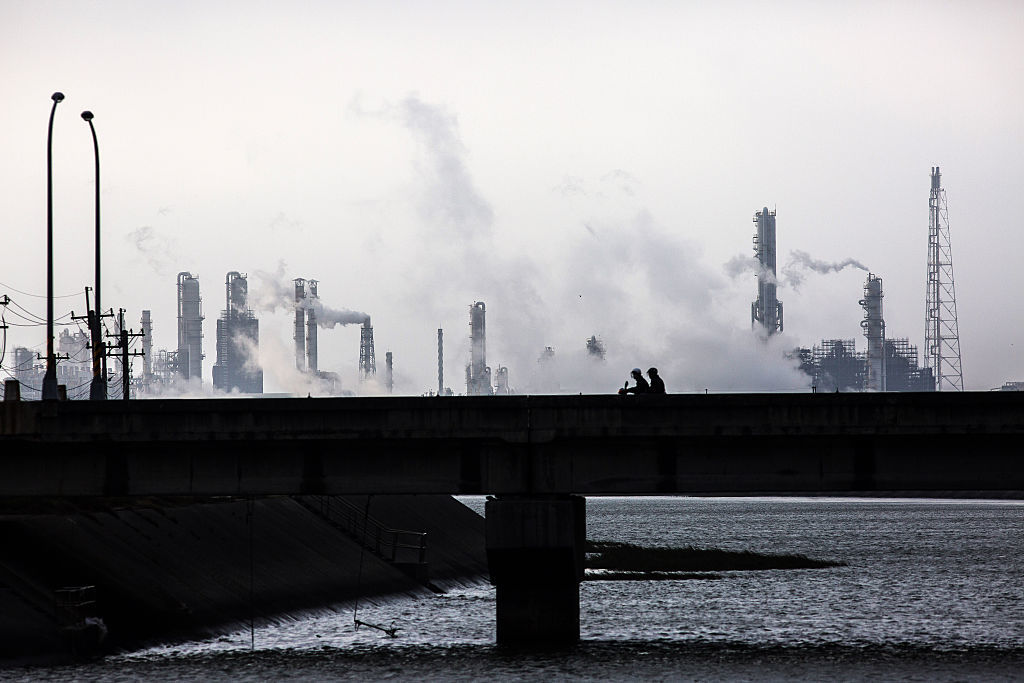
Mailiao naphtha cracker facilities, Yilan, Taiwan. © Getty Images / Billy H.C. Kwok/Getty Images
For industrial heavyweight Japan, for example, the disruption to the flow of naphtha is arguably the most pressing economic fallout from the crisis in the Middle East. Japan gets around 60% of its naphtha from overseas. The Middle East is responsible for over 70% of those imports, according to the Japan Petrochemical Industry Association.The 40% of Japan’s naphtha that comes from domestic refineries isn’t exactly immune to problems in the Middle East – 90% of the oil these refineries use comes from the same region.
Diesel
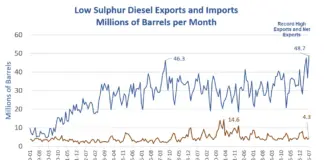
Diesel is a middle distillate fuel, meaning that it is heavier than gasoline but lighter than fuel oil. It is called “the fuel of the real economy.” It powers all the heavy stuff: trucks, ships, construction, mining, agriculture.
Of particular concern is the fact that diesel prices rise faster than gasoline in nearly every energy crisis. Because it is a critical heavy-transport fuel it has low demand elasticity – meaning diesel consumers will keep buying even at higher prices. Also, it is much harder to ramp up diesel refining quickly. Refineries generally operate at high utilization and have inflexible configurations, limiting their ability to respond quickly to demand surges.
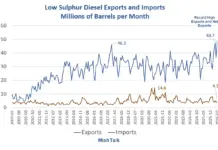
Because diesel is the fuel for the “real economy,” price spikes can be broadly inflationary. According to BloombergNEF, diesel at $5 per gallon in the US could increase prices to consumers by 35%.
Diesel cost an average of $5.61 a gallon nationwide as of last Thursday, according to the American Automobile Association. That is just over $2 above the average on the same date last year and 63 cents more than a month earlier.
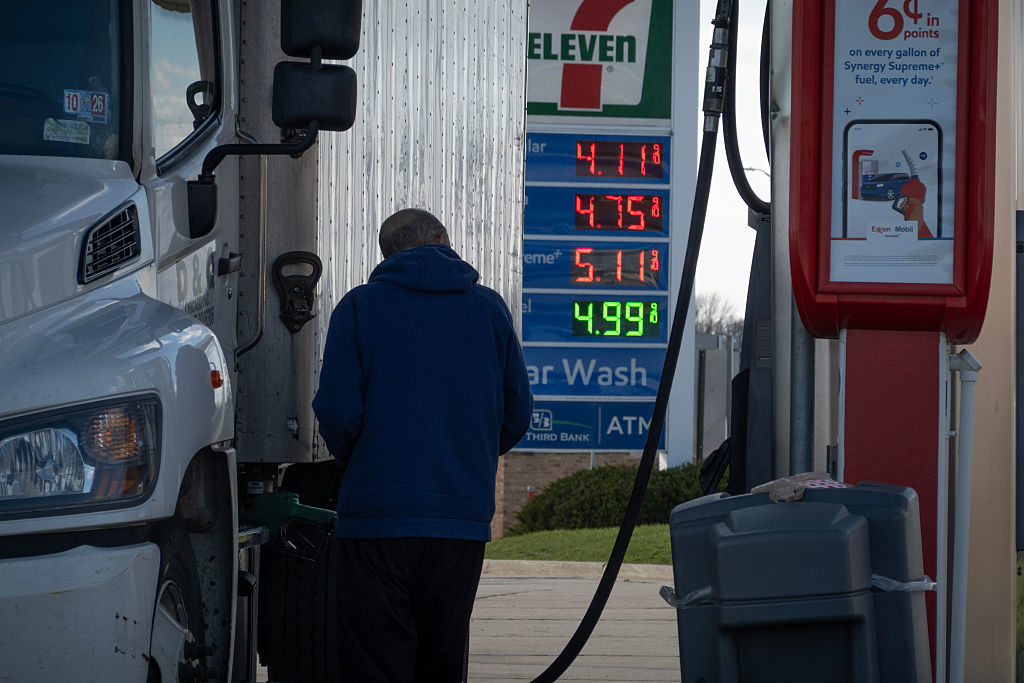
A driver buys diesel fuel for his truck, April 6, 2026 in Belvidere, Illinois, US. © Getty Images / Scott Olson/Getty Images
Diesel prices have also surged across Europe. Analysts are now warning of potential shortages of both jet fuel and diesel this summer. These two fuels are often grouped together as middle distillates and can to some extent be substituted or blended.
Aluminum
The Iran war has triggered a major crisis in the global aluminum market that could reverberate across numerous sectors of the economy.
Consultancy Wood Mackenzie estimates that the global market is staring at a supply deficit of up to 4 million metric tons this year, which would be the largest in over 25 years. JPMorgan has warned that the global aluminum market has entered a supply “black hole.”
Prices are forecast to exceed $4,000 per tonne. For comparison, the long-term “normal” range is $1,500-$2,500 per tonne. The majority of aluminum producers in the Gulf, which account for around 9% of global supply, have been unable to make shipments to world markets. Meanwhile, a missile strike last month damaged the Al Taweelah smelter operated by Emirates Global Aluminium. Repairs will reportedly take up to a year.
As smelters run through stocks of raw materials, production shutdowns could be forthcoming. But shutting down aluminum smelter isn’t the same thing as turning off an appliance and turning it back on with the flip of a switch. Smelters run around-the-clock at extremely high temperatures. If you shut them down, the molten metal solidifies and damages the equipment. Restarting them is extremely costly and technically challenging and sometimes entails a full rebuild.
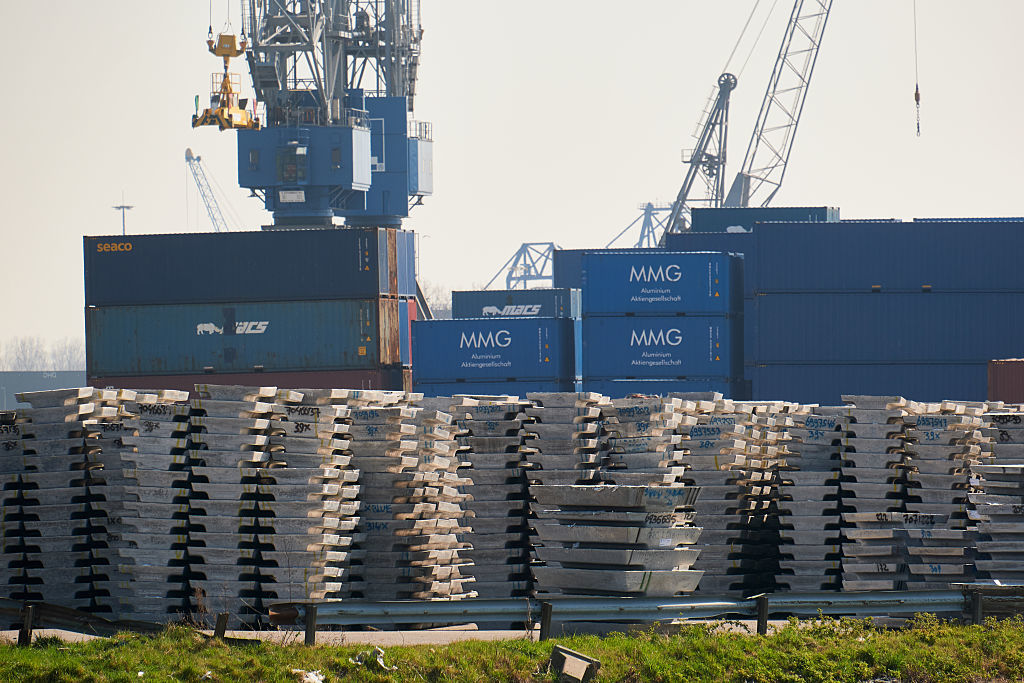
Aluminum stored at the Port of Rotterdam, Rotterdam, Netherlands. © Getty Images / Pierre Crom/Getty Images
It is currently Western manufacturers taking the brunt of the crisis and partly by the doing of their own countries’ policies. China and Russia are both among the world’s main sources of aluminum but both have been cut off from Western markets because of tariffs and sanctions.
Crack spreads
The gap between what a refiner pays for crude oil and the price at which it sells the finished product is called the crack spread – the word to describe the refining process of “cracking” large hydrocarbon molecules into smaller ones (gasoline, diesel, naphtha, etc.)
A normal crack spread is between $10 and $20, although it can vary by product and region. What we are seeing now is crack spreads over $50. This means refined fuels are becoming more valuable relative to crude oil. This will show up in naphtha and diesel (already discussed above) and in gasoline prices at the pump. Crack spreads therefore provide a useful indicator of fuel-related cost pressures faced by consumers.
Meanwhile, what we’re seeing is a windfall for refiners. In crises such as the current one, pricing power shifts to the most capacity-constrained stage in the system, where output cannot be easily expanded. In this case – and often in oil markets – it is the refining stage.
Helium
Helium, a byproduct of natural gas processing, is a small market that punches well above its weight. Helium is essential in the high-tech world. It has important uses in chipmaking for which there is no easy substitute.
Currently, the global supply of helium is significantly disrupted and reports of rationing are already emerging. The war has thrown a wrench in both the production and transportation of helium. Supply chains for high-tech goods are already feeling the effects. If dislocations continue, this could start to noticeably interfere with production of goods such as electronics, automobiles, and even smartphones.
Helium production is highly concentrated in certain countries. Qatar, a large natural gas supplier, produces nearly a third of global supply, according to the US Geological Survey. However, the Ras Laffan Industrial City, the single largest helium production site in the world, sustained damage from a missile in early March. The Qatari government estimates that it will take up to five years to fully repair the site.

Your Tax Free Donations Are Appreciated and Help Fund our Volunteer Website
Disclaimer: We at Prepare for Change (PFC) bring you information that is not offered by the mainstream news, and therefore may seem controversial. The opinions, views, statements, and/or information we present are not necessarily promoted, endorsed, espoused, or agreed to by Prepare for Change, its leadership Council, members, those who work with PFC, or those who read its content. However, they are hopefully provocative. Please use discernment! Use logical thinking, your own intuition and your own connection with Source, Spirit and Natural Laws to help you determine what is true and what is not. By sharing information and seeding dialogue, it is our goal to raise consciousness and awareness of higher truths to free us from enslavement of the matrix in this material realm.






















The 'Just in Time' inventory model is dead. The CoVid lockdowns killed it. The current disruption to world trade, along with VERY poor economic & growth policies initiated by many countries, is causing unrest and discord around the World. It is going to get worse, so buckle up and prepare accordingly.
Planned disruption for humanity. While not all of us are awake, some of us see the reality. Big rush to disarm the people for total control and to leave us vulnerable, setting fires at the egg farms, promise of famine and the promise of soaring gasoline prices to try to keep us from traveling. Just like pushing the death jabs aka Bioweapons, this shit is going to continue because none of the sociopaths have been hanged yet for Crimes against Humanity. Sounds like another round of the Globalist New World Order Madness Genocidal Agenda. No Amnesty for Murder!
I am an avid gardener, and all my fertilizer comes from the North Atlantic in the form of fish emulsion and dried powdered seaweed. Why can't farmers use these fertilizers – I can attest to their effectiveness and that they are not harmful to the general population in adulterated food and polluted air. Also, I am slowly ridding myself of plastics (not easy, but doable) and using glass and ceramics. I have not entered a fast "food" establishment in over a decade, eat only GMO-free, organic food, and do not use microwave, air-fryer or other techy gadget to cook anything. Can we not look to glass manufacturers and restart that industry; can we not refuse the farmers who rely on using non-organic methods to grow GMO-laden foods? I take inspiration from the Amish and German Baptists who live near me; they are not dependent on computers, chemical fertilizers/additives, and plastics. They have a market in a nearby town with an old fashioned cash register and take only cash or checks for purchases – no computer tech required! I believe that if human society returned to simpler ways of life, the "wizards behind the curtain" could be outfitted and undermined. Unfortunately, so many (but not all) of the younger generations are so brainwashed and manipulated, that I doubt a return to simpler living could be achieved without a major catastrophe. Hope is best achieved by turning away from the "wizards" and living your life with simplicity so as to be virtually unaffected by their evil psychopathic lust for power.