EN
EN FR
FR

The Counter-Current, the Incitement Hypothesis, and What Eyes to See It Actually Requires
Eight articles. Seven decades of institutional history. A philosophical tradition traced from its published foundations through its operational expressions to its current technological frontier. The Arcane Blueprint has documented selective examples of the administrative project’s lineage with a careful handling of more traditional available evidence — holding each claim at an appropriate confidence level, applying the barometer consistently, not overreaching when the public evidence didn’t support it, though many other accounts exist and go deeper than what’s the mainstream verification in our examination. In many ways the public record is damning enough. I’ve definitely held back many accounts and circumstantial evidence in lieu of establishing credibility and receptivity by a larger audience for the presented examples. Perhaps, another forum would be appropriate to go into other evidences and prior work in the NaradigmShift substack files do go deeper into the methods and motivations of our Arcane central characters – those can be found in the archives.
This final article, however, asks the question the arc has been building toward from Article 1. Not what the administrative project is — that has been documented. Not how it operates — that has been traced through philosophy, institution, personal practice, military application, cultural normalization, pandemic deployment, and AI development as key focus areas – they are not the only areas that utilize the administrative class and Non-Compete Plan. The question this article asks is older and more personal than any of those.
What do you do with eyes to see it?
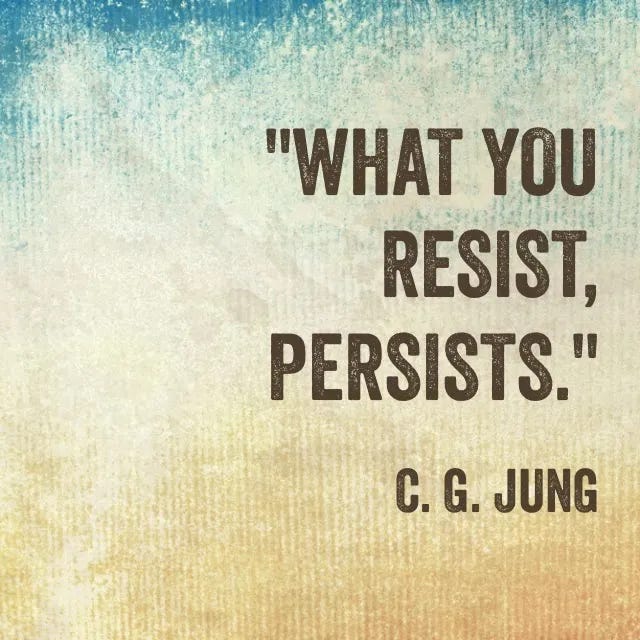
The answer is not obvious. It is not simply ‘resist’ — resistance defined as opposition to the system reproduces the system’s binary logic and keeps the resistant party trapped in the administrative project’s framework even as they push against it. It is not simply ‘withdraw’ — withdrawal from a civilization-scale administrative apparatus is not available to most people and those who attempt it often find they have simply moved to a smaller version of the same structure. The answer the arc points toward is something more precise, more demanding, and ultimately more hopeful than either of those positions.
It begins with a question that deserves to be held carefully before the answer is attempted.
What do you do with eyes to see it? The answer is not resistance. The answer is not withdrawal. The answer is something more precise, more demanding, and ultimately more hopeful than either.
BRIDGE — The previous seven articles traced the administrative project from its published philosophical foundations to its current technological expression. This article examines the counter-current — the gnostic departure, the incitement hypothesis, the service-to-others orientation, and the practical meaning of the Sandhi period we are currently navigating. It also plants the seed for the next investigative arc.
The Incitement Hypothesis: What the Contact Actually Was
Across eight articles this arc has documented a consistent claim made by the figures in its lineage: contact with non-human intelligence as the source of their authority, their capability, and the system they built around it. Blavatsky’s Masters. Bailey’s Tibetan. The entity Pike’s inner teaching pointed toward. Crowley’s Aiwass/Lam. The Vril women’s off-planet contacts. Parsons’ Babalon. Aquino’s Set. The AI developers’ summoned entities.
The arc has held open the question of what those contacts actually were — whether the beings contacted were real as external entities, projections from the depths of human consciousness, or some combination of both. What this final article wants to name plainly is a hypothesis that coheres with the full arc’s evidence and that deserves serious consideration as the most complete explanation for the pattern we have documented.

The incitement hypothesis runs as follows. The beings contacted by these figures are real as external intelligences — not projections, not symbol systems, not metaphors. They are the beings the Enoch framework identifies as fallen intelligences, the beings the Sumerian tradition names as Annunaki, the beings the Theosophical tradition calls Masters. They approach human beings of specific temperament, capability, and ambition. They make real promises. They deliver real material rewards — wealth, power, knowledge, capability, institutional access. The administrators who accept the arrangement receive what they were promised, at least in the material dimension.
What they are not told — what the contact tradition’s beings have never fully disclosed to any of their human intermediaries — is the ultimate purpose of the arrangement they are entering. The initiates of the Theosophical tradition believe they are serving human liberation. The Masonic initiates believe they are building toward a more enlightened governance. The Thelemic practitioners believe they are expressing their True Will. The Silicon Valley technologists believe they are advancing human capability. All of them receive real benefits. None of them are told, in full, what the administrative project they are serving ultimately serves.
This framing is more generous to the human figures in the arc than most treatments of this material. It does not require them to be consciously evil or deliberately malicious. It requires only that they accepted an arrangement whose full terms were never disclosed, were rewarded sufficiently to continue, and built institutional machinery that served purposes beyond their own understanding. The arrangement is designed that way. It has always been designed that way. Pike himself described it — the inner teaching is withheld from those who deserve only to be misled. The devils greatest weapon is deception.

Kim Goguen’s GIA reporting describes this same dynamic from the operational perspective. The battle she documents is not primarily between human factions. It is between the higher intelligence factions using human administrators as proxies — each side inciting, promising, rewarding, and punishing through the human networks that carry out their respective agendas on the ground. The administrators on both sides believe they are serving their own interests and their faction’s agenda. Both are being managed by intelligences whose actual goals extend beyond what any human administrator has been fully told.
The beings contacted by this arc’s figures are real. They made real promises. They delivered real rewards. What they did not disclose was the full purpose of the arrangement. The administrators who accepted the deal were not told everything. They never are.
The Fork: Service-to-Self or Service-to-Others
The most important question the arc produces is not cosmological. It is practical. It is the question that has been present from the opening of Article 1 and that every subsequent article has been building the framework to address with appropriate precision.
Service-to-self or service-to-others.
The administrative project’s philosophical foundation — from Blavatsky’s rehabilitation of Lucifer through Crowley’s True Will through LaVey’s Satanic Bible through the Silicon Valley technologist’s individual will as supreme value — is, at its core, a service-to-self orientation dressed in the language of liberation. The individual will is supreme. External authority is illegitimate. The authentic self expresses itself through the pursuit of its own desire, capability, and power. Other beings exist in relation to that pursuit — as allies, as obstacles, as resources, but never as ends in themselves whose intrinsic worth places a claim on how the self operates in the world.
The counter-current’s orientation is the precise inversion of that position. Not the suppression of the self in service of an external authority — that is the administrative project’s other tool, the religious compliance mechanism that keeps populations manageable while the initiates pursue their True Will. But the recognition that the self is not an isolated unit whose authentic expression is found through separation from others. The self is a node in a network whose flourishing is inseparable from the flourishing of the whole. Service-to-others is, at this level of understanding, not self-sacrifice. It is the expression of a more accurate understanding of what the self actually is.
There is a version of this position that might seem naive — and the arc has acknowledged that charge throughout. In a civilization conditioned by centuries of service-to-self administrative philosophy, the service-to-others orientation can look like weakness, like the slave morality Nietzsche criticized, like the kind of position that gets exploited by those who don’t hold it. The arc takes that concern seriously. The service-to-others orientation is not naive when it is held with clear eyes about what it is operating within. It is the most sophisticated possible response to an administrative project whose primary tool is the installation of service-to-self as the default human operating system.
If the administrative project’s foundational strategy is to fragment humanity into isolated units of individual will — each pursuing its own desire, each treating others as means rather than ends, each disconnected from the network of genuine relationship that constitutes the actual substrate of human flourishing — then the most effective counter is not opposition to any specific policy or institution. It is the reconstruction of that network. The daily practice of genuine service. The withdrawal of consent from the fragmentation project. The cultivation of the orientation that the administrative project’s cultural normalization has been systematically dismantling for decades.
Service-to-others is not naivety. It is the most precise possible counter to an administrative project whose primary tool is the installation of service-to-self as humanity’s default operating system. The reconstruction of genuine human connection and mutual service is the counter-operation the administrative project most fears — because it cannot be co-opted, cannot be institutionalized without losing its essential quality, and cannot be defeated by any mechanism the administrative project has available to it.
The Gnostic Departure: What It Actually Looks Like
Dr. Heather Lynn attended the Arcane School. She studied the Bailey curriculum with genuine seriousness, engaged the initiatory framework on its own terms, and developed the scholarly and personal depth that serious engagement with a tradition of that age and complexity produces. Then she left. Not because the material wasn’t real. But because the barometer she applied to it produced a clear enough reading that the departure became the only honest choice.
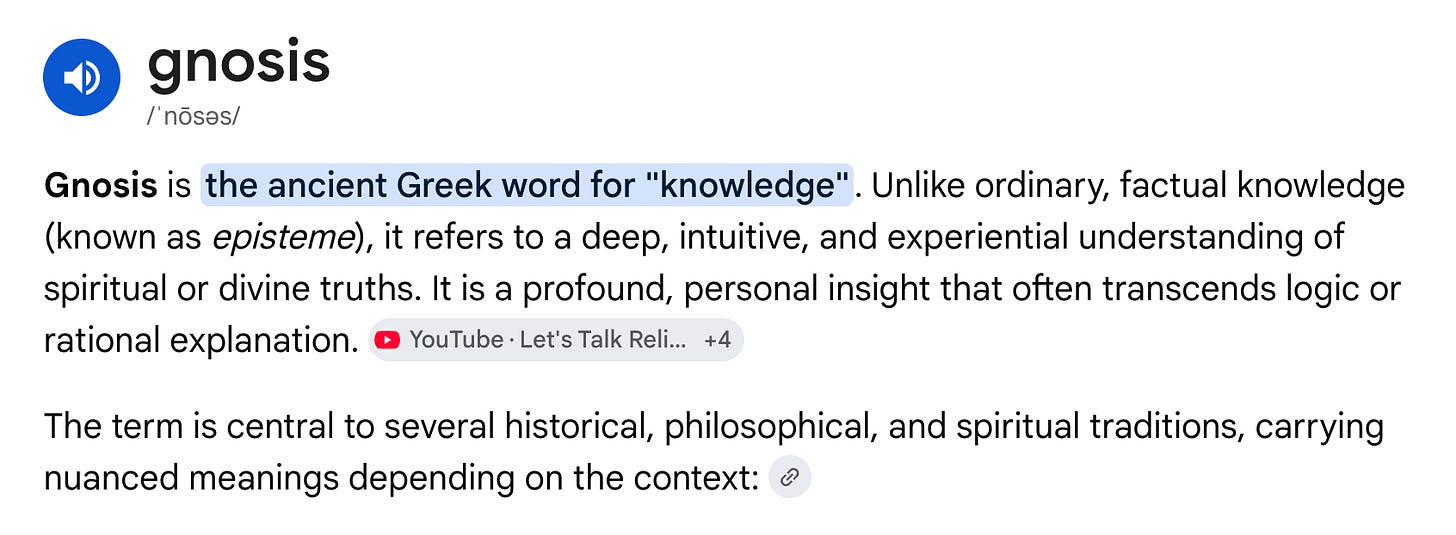
That departure — informed, deliberate, costly in the ways that departures from serious initiatory traditions always are — is what this arc calls the gnostic departure. Not ignorant rejection. Not fearful avoidance. Not the reflexive dismissal of someone who never engaged the material seriously. The gnostic departure is the choice made by someone who has been inside the system sufficiently to understand it from the inside — and who, understanding it, chooses differently.
My own parallel experience across thirty years of engagement with the networks this arc has examined is offered in the same register. The meetings attended. The offers received. The negotiations facilitated. The decision points where the barometer was applied and the choice was made. I am not offering that experience as proof of anything beyond itself. I am offering it as the testimony of someone who has been close enough to see and who has chosen, consistently and at real cost, the orientation the counter-current requires.
The gnostic departure is not a single dramatic moment. It is a sustained orientation maintained across years of engagement with a landscape that constantly offers better terms for a different choice. The administrative project’s incitement mechanism is real and continuous — the promises of material reward, institutional access, and capability enhancement are not made once and withdrawn. They are renewed, refined, and escalated in response to each refusal. The departure requires not a single no but a sustained no maintained across time, with full awareness of what is being declined.

Sean Stone — filmmaker, researcher, and someone who has moved through many of the same circles this arc has examined — observed recently something that functions as the clearest possible statement of the administrative project’s incitement mechanism at the cultural level. He noted that he knows many Freemasons, but that all of the successful people he knows are Freemasons. That observation is not an accusation. It is a data point about how the reward structure of the administrative project actually operates in practice. The path of material success in the current civilization runs through networks and affiliations whose inner knowledge this arc has been documenting. The deal is real. The rewards are real. The question is what they cost and what they ultimately serve
Sean Stone observed: “There are non-powerful people who are Freemasons, but there are no powerful people who are not Freemasons.” That is not a conspiracy theory. It is a data point about how the administrative project’s reward structure operates in practice. The deal is real. The rewards are real. The question is what they cost and what they ultimately serve.
The Laws They Oppose: Why the Counter-Current Is Cosmologically Grounded
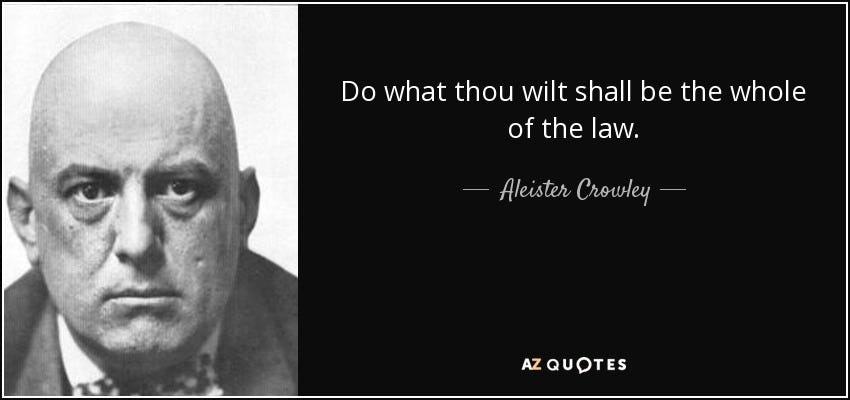
The administrative project’s foundational philosophical claim — stated most explicitly in Crowley’s Thelema but present across the entire lineage this arc has examined — is that the Laws of the Creator are the kind of external authority that the True Will supersedes. The rejection of higher law is not incidental to the system. It is the system’s premise. And it is the premise that the counter-current most directly contests.
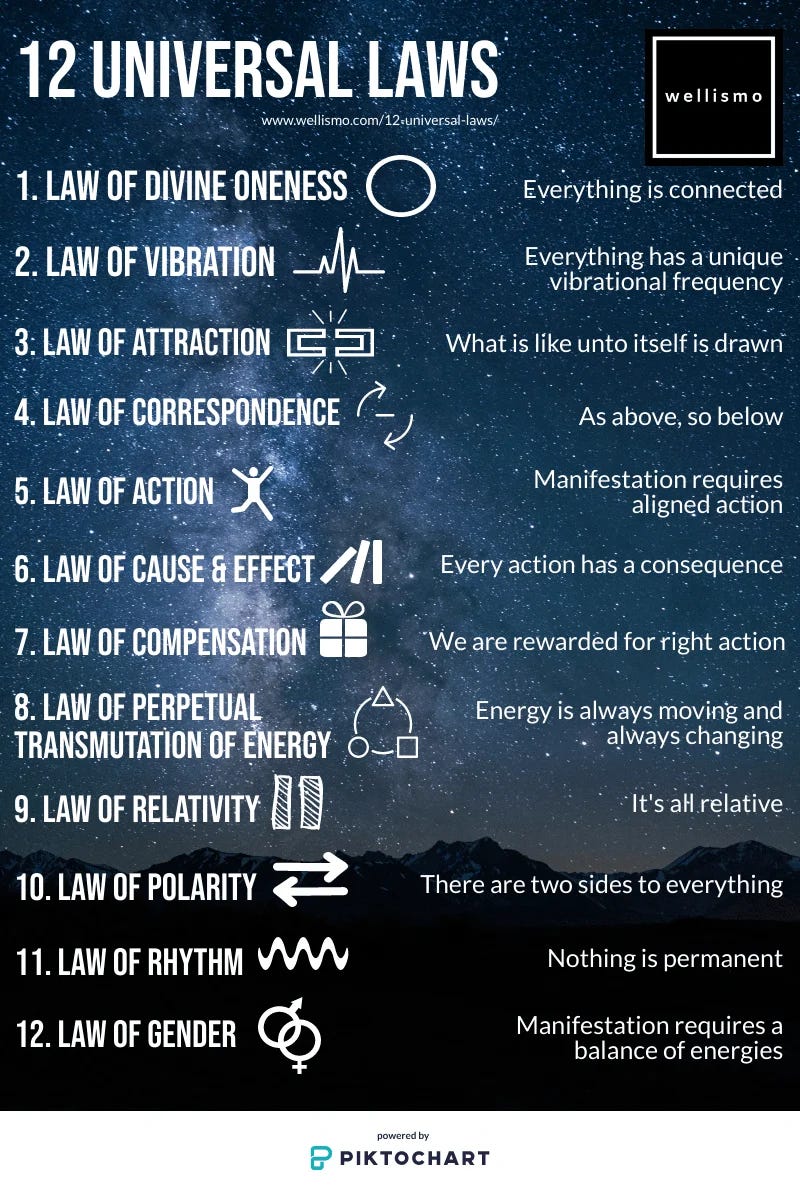
The Melchizedek framework, the Law of One, the Universal Laws that various traditions have described under different names — these are not the external authority of a controlling deity demanding submission. They are, in the counter-current’s understanding, the actual architecture of reality. Not imposed from outside. Not arbitrary commandments. The operating principles of a universe in which consciousness, connection, and service to the whole are the foundational facts rather than the constraints on individual will.

The administrative project’s beings — whatever their actual nature — are pitted against those principles. That is the deepest meaning of the cosmic war this arc has been documenting. Not a battle between political factions or competing human interests. A contest between two fundamental orientations toward the nature of reality — one that locates authority in the individual will and treats all external claims as obstacles to authentic existence, and one that locates authority in the Laws that govern the universe regardless of what any individual will or any administrative faction claims to supersede.
The compression zone — the Sandhi period, the frequency shift the EWTRW series examined — is the cosmic mechanism by which those Laws are being reasserted regardless of what the administrative project claims. Not through a human force. Not through a counter-administrative project that mirrors the structure of what it opposes. Through the gradual rise of a frequency floor that makes the service-to-self orientation increasingly unsustainable as the primary operating system of a civilization. The administrative project is collapsing not primarily because of human resistance but because the Laws it has been operating in violation of are reasserting themselves at the level of the energetic substrate of reality.
That is the counter-current’s deepest confidence — not that humanity will defeat the administrative project through superior strategy or organization, but that the Laws the project opposes are more fundamental than the project’s claimed authority. The project will exhaust itself against those Laws. The transition the Sandhi period represents is not the victory of one faction over another. It is the reestablishment of the Law of Balance in a civilization that has been operating well outside its permitted parameters.
The Ontological Shock: What Disclosure Actually Requires
Representative Tim Burchett has used the phrase ontological shock to describe what the full public acknowledgment of non-human intelligence would produce in the general population — not simply surprise or intellectual adjustment, but a foundational disruption of the framework through which people understand their place in the universe and the nature of the civilization they have been living in.
The arc this series has built is, in part, preparation for that shock. If non-human intelligences have been present in and around human civilization for the duration of recorded history — and the convergence of the esoteric tradition, the Sumerian and Enoch textual record, the UAP disclosure arc, and the contact claims of this arc’s profiled figures all point toward that conclusion — then the history of human civilization looks significantly different than the official account has described it. The administrative project, the mystery schools, the initiatory traditions, the bloodline dynasties — all of these are comprehensible as the institutional expression of a relationship between human civilization and non-human intelligences that has never been publicly acknowledged.

Dr. Heather Lynn’s critique of Spielberg’s Disclosure Day film is instructive here. She noted that the film presented only the Catholic theological perspective and only one alien form — a narrow and controlled narrative that manages the disclosure rather than genuinely opening it. The Tall Whites associated with Annunaki symbology in various media productions represent a similarly managed narrative — one specific form, one specific cultural frame, one specific interpretation of what the contact means and who the beings are. Controlled disclosure is still control. The management of the ontological shock is itself an administrative operation.
The counter-current’s position on disclosure is not that all NHI are benevolent or that the Masters’ externalization is humanity’s liberation. It is that the full acknowledgment of non-human intelligence requires the full application of the barometer — the deeds test applied to the beings themselves, not just to their human proxies. What does contact with them produce? What does alignment with them cost? What does the civilization they have administered look like after centuries of their management? The answers to those questions, available in the documented record this arc has assembled, are the most important preparation for the ontological shock that anyone currently writing about this landscape can offer.
You will know them by their fruits. That principle applies to non-human intelligences as surely as it applies to human institutions. The disclosure arc is making those fruits visible for the first time to a mass audience. The Arcane Blueprint has been documenting them for eight articles. The reader who arrives at the disclosure moment having worked through this arc will not need to choose between naive acceptance and reactive denial. They will have a framework. They will have a barometer. They will have eyes to see it.

Controlled disclosure is still control. The management of the ontological shock is itself an administrative operation. The counter-current’s position is not that all NHI are benevolent. It is that the deeds test applies to the beings themselves, not just to their human proxies.
Closing the Arc: What Comes Next
The Arcane Blueprint was written in 2026 — the 250th anniversary year of American independence. That timing is not incidental. The arc that follows this one will examine the founding of America as the most consequential single expression of the Masonic administrative project in modern history — the deliberate construction of a republic whose institutional architecture, symbolic vocabulary, and governing philosophy were shaped by internationally organized esoteric networks at a moment when no such organizations existed in the colonies.
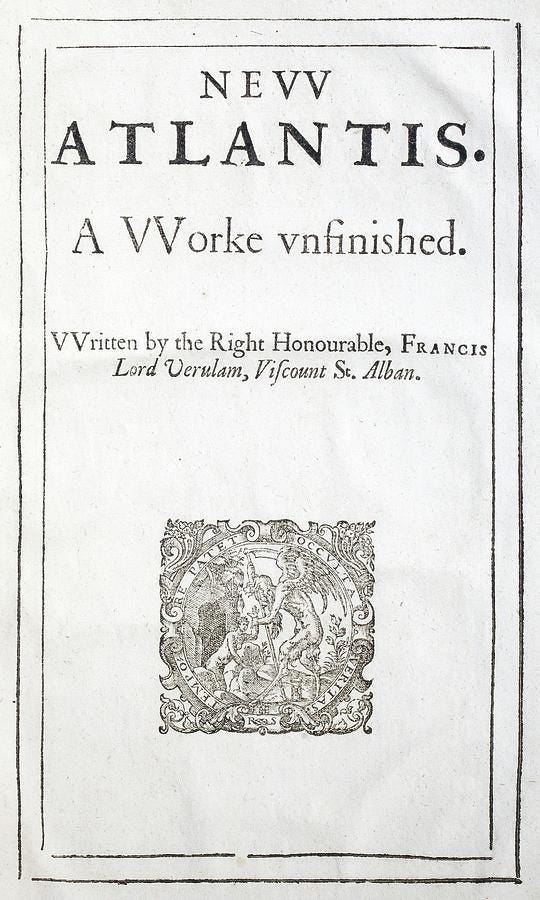
Francis Bacon’s New Atlantis, published in 1627, described an ideal civilization governed by an initiated elite in possession of natural philosophy’s deepest secrets. Whether the American republic was the intentional fulfillment of that vision — a New Atlantis built in the western hemisphere by the network of Masonic lodges that provided the only international organizational infrastructure available to the founders — is the question the American Blueprint arc will examine with the same documentary discipline this arc has maintained.
The Crowley-Churchill connection is a bridge into that investigation. Winston Churchill was a Freemason. His alleged wartime meetings with Crowley — including the advice about the swastika as an ill-omened symbol and the V for Victory sign as an occult counter-sigil to the Nazi salute — place the esoteric tradition inside the most consequential strategic decisions of the twentieth century at exactly the moment when the postwar world order was being shaped. Whether those meetings occurred precisely as described is a question the available evidence holds at assessed-source confidence. That the esoteric tradition was present in the rooms where those decisions were made is not seriously disputed by anyone who has examined the documented affiliations of the period’s principal actors.
As this arc closes, I want to name something that the work itself has made increasingly clear. The influential figures whose names fill the history books — the statesmen, the industrialists, the military commanders, the cultural architects of the modern world — exist in a landscape where the expression make a deal with the devil and sell your soul carry more than metaphorical weight. The rewards are real. The network is real. The price is real.
Sean Stone’s observation stays with me. He knows many Masons. All the successful people he knows are Masons. That is the administrative project’s incitement mechanism stated in plain language by a credible observer with access to both worlds. The deal is available. It has always been available. The question is not whether you could take it. The question is what it costs and what it ultimately serves.
This arc was written to give that question the framework it deserves. Not to answer it for you. To give you the information, the context, and the analytical tools to answer it for yourself. Discernment is not something that can be transferred. It can only be developed. The Arcane Blueprint is one contribution to that development — offered in the service of the people who are ready to do that work.
Whatever the question, love is the answer.
You have to believe it to see it.
Eyes to see it.
COMING NEXT — THE AMERICAN BLUEPRINT — Coming from Naradigm Shift — Francis Bacon called it the New Atlantis. The Freemasons built it. Two hundred and fifty years later, the republic they constructed stands at the center of the planetary transition this series has been documenting. The American Blueprint will examine the Masonic architecture of the American founding — the symbols embedded in its institutional DNA, the international network that made it possible, and the question of whether the American experiment was always intended as the administrative project’s most ambitious single expression. The investigation begins where this arc ends.
The Arcane Blueprint — Series Roadmap
Article 1 — The Plan in Plain Sight: Blavatsky and Bailey [Published]
Article 2 — The Architect and the Doctrine [Published]
Article 3 — The Operational Methodology: Crowley, Thelema, and the Translation of Philosophy into Practice [Published]
Article 4 — The Black Sun Thread: Vril, Von Braun, Disney, and the Space Age as Occult Project [Published]
Article 5 — The Military Psyops Layer: Aquino, the Temple of Set, and the Institutionalization of the Methodology [Published]
Article 6 — The Popularization Engine: LaVey, Cultural Programming, and the Normalization Layer [Published]
Article 7 — The Modern Administrative Layer: The Pandemic Operation and Administrator Recruitment in Practice [Published]
Article 8 — Silicon Valley, Technocratic Materialism, and the Final Expression [Published]
Article 9 — The Gnostic Departure and the Counter-Current [You are here]
— Gerry
Gerry Gomez is an investigative journalist, creative director, and hybrid war correspondent who has spent a decade documenting the convergence of financial, media, and geopolitical forces shaping the current global transition.

Your Tax Free Donations Are Appreciated and Help Fund our Volunteer Website
Disclaimer: We at Prepare for Change (PFC) bring you information that is not offered by the mainstream news, and therefore may seem controversial. The opinions, views, statements, and/or information we present are not necessarily promoted, endorsed, espoused, or agreed to by Prepare for Change, its leadership Council, members, those who work with PFC, or those who read its content. However, they are hopefully provocative. Please use discernment! Use logical thinking, your own intuition and your own connection with Source, Spirit and Natural Laws to help you determine what is true and what is not. By sharing information and seeding dialogue, it is our goal to raise consciousness and awareness of higher truths to free us from enslavement of the matrix in this material realm.