EN
EN FR
FR

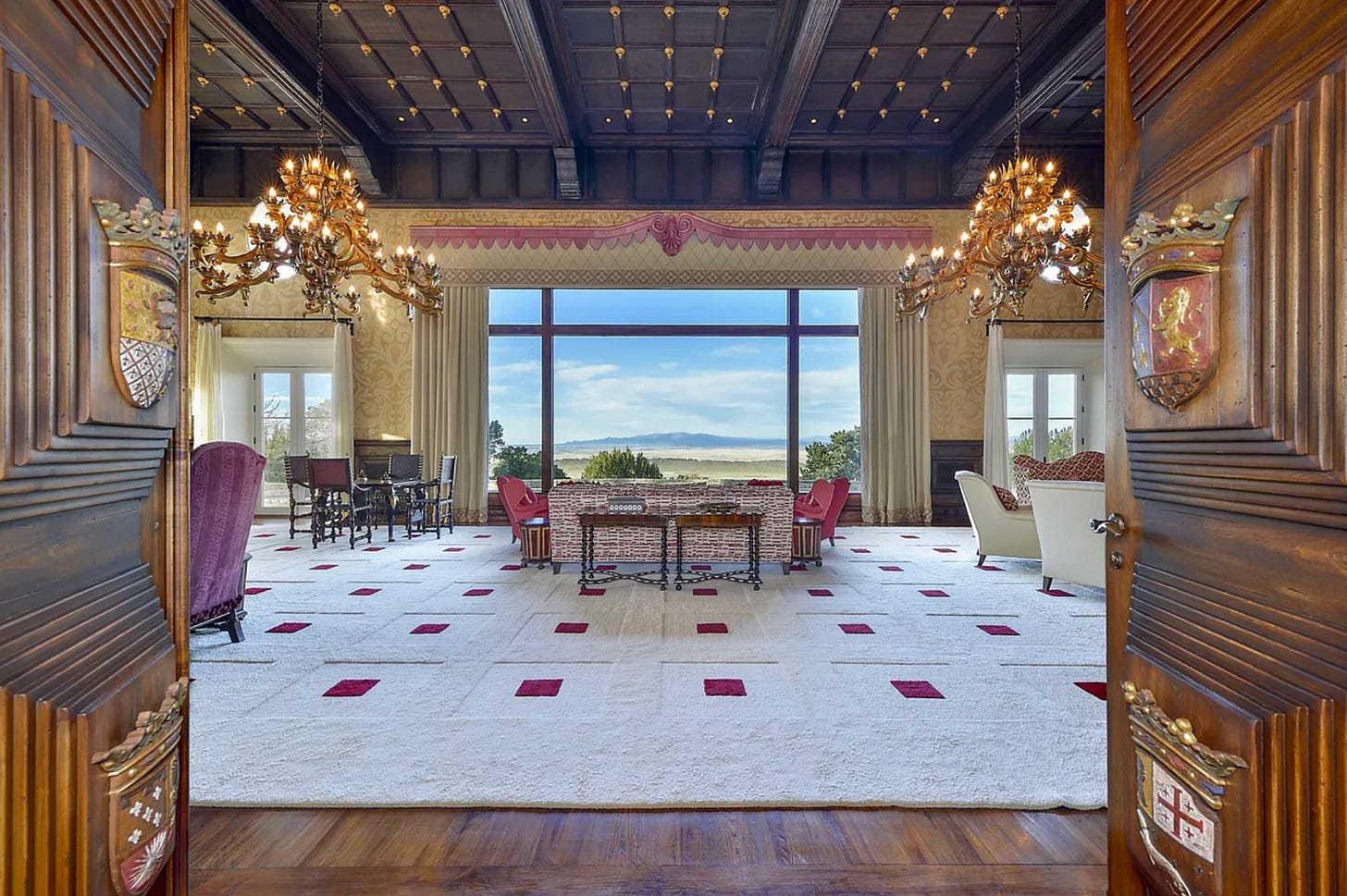
BY Alisa Valdes-Rodriguez,
I don’t think that’s a coincidence.
For 33 years, the identity of the architect who designed Jeffrey Epstein’s 33,000 square-foot Zorro Ranch mansion has not been made public.
But after digging through the more than 3 million publicly available documents in the federal Epstein files, I finally found a blueprint that tells us who it was. And what that document reveals goes far beyond the name of the company.
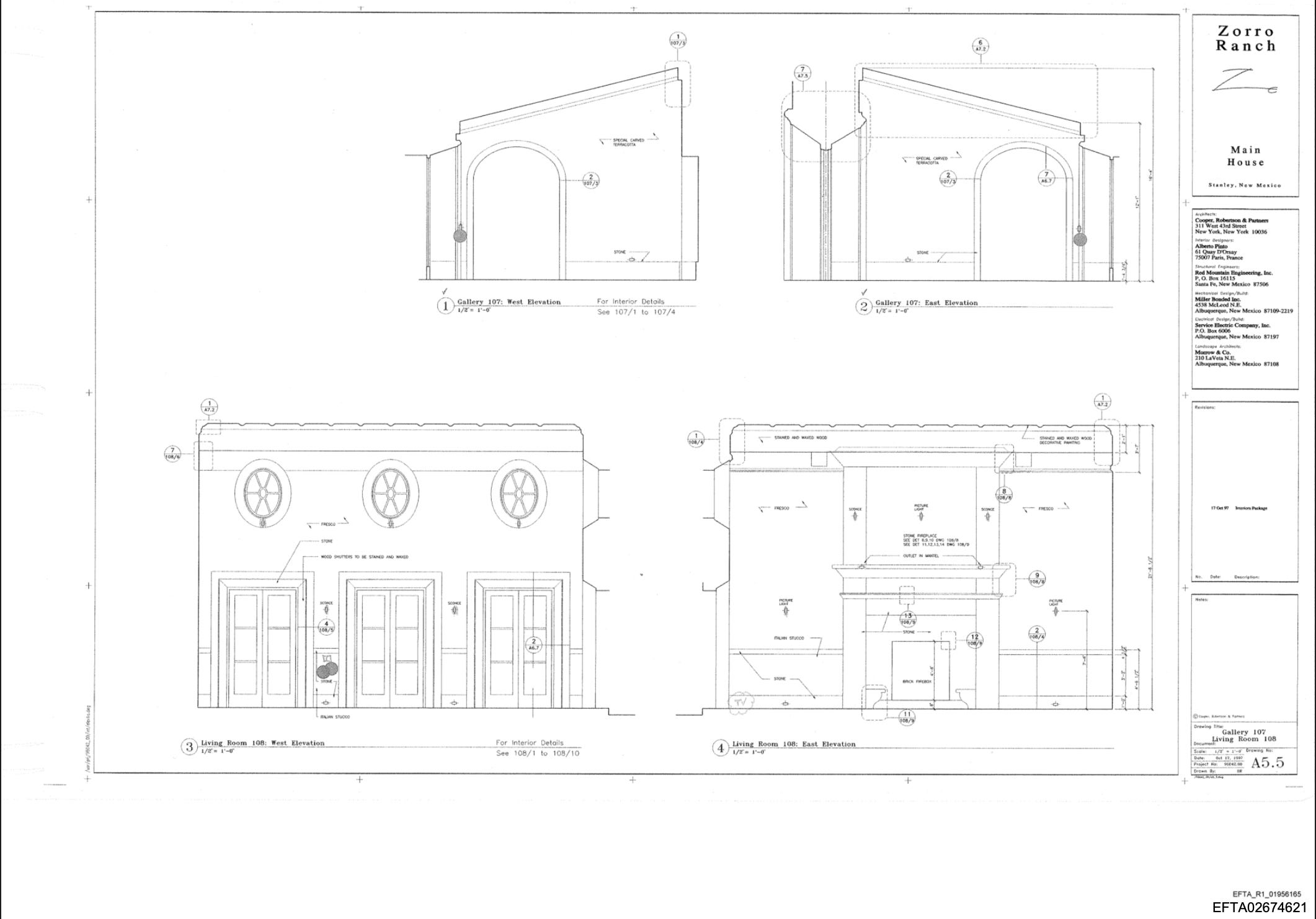
The document — EFTA02674621, a set of architectural drawings bearing the stamp of Cooper, Robertson & Partners, 311 West 43rd Street, New York — identifies the firm that designed Epstein’s main house at his 7,600-acre ranch in Stanley, New Mexico. Project number 96042.00. Dated October 17, 1997. Drawing sheet A5.5, Gallery 107 and Living Room 108.
This investigation took months of document review across more than three million federal files.
Let me start by making this perfectly clear: Cooper, Robertson & Partners doesn’t usually build vacation ranch houses in the American southwest. It is one of the most elite urban planning and architecture firms in the history of New York City — the firm that designed Battery Park City, the Hudson River Esplanade, and the expansion of the Museum of Modern Art. A firm whose founders shaped the physical fabric of Manhattan for half a century.
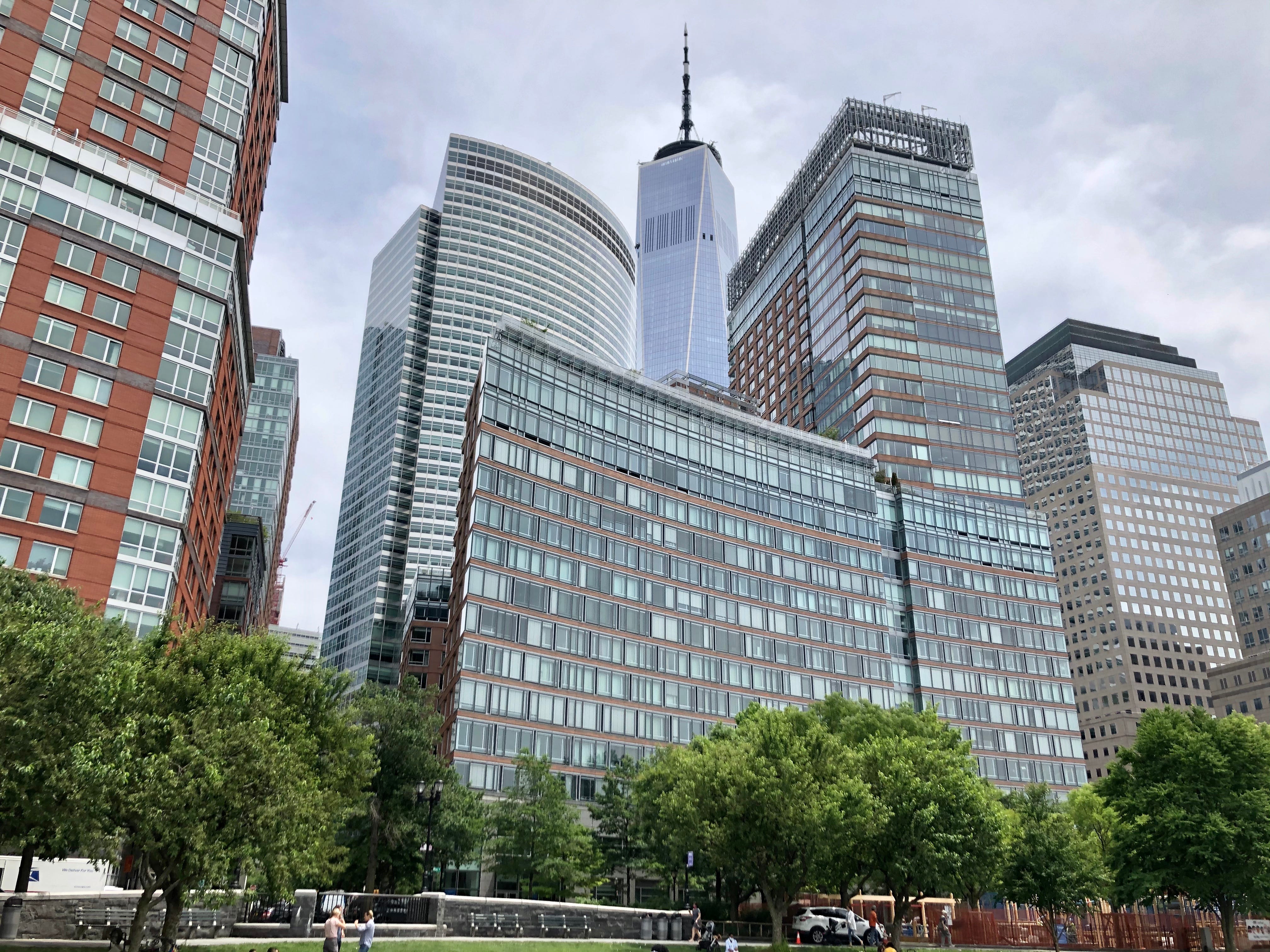
So, how the hell did a New York City company known for massive, high-profile projects in New York City and, oh, I don’t know, at Harvard, Yale and Columbia University, come to anonymously design a private compound in rural New Mexico, for the most famous pedophile and sex trafficker and — it seems — transnational intelligence asset in the history of the world? And what can we learn about Epstein and his network by tracing the relationship between him and the architects that designed it?
(Please note: This is a different company than the construction contractor that built the house, based on the architect’s design. That company was Bradbury Stamm, and I wrote about them a couple weeks back.)
The Wexner Bridge
I’m pretty sure Epstein hired Cooper and Robertson on the advice of a guy named Les Wexner.
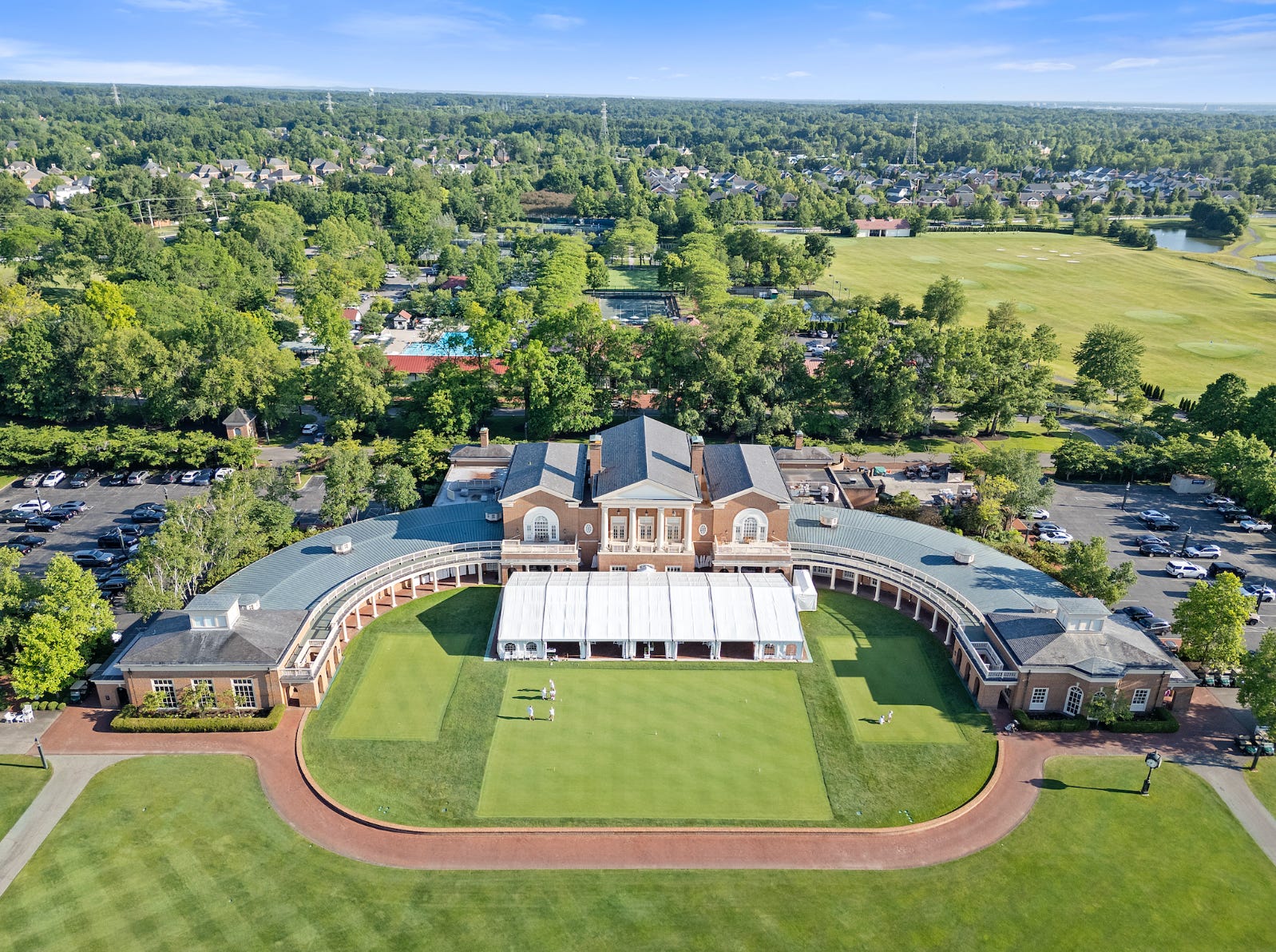
The firm’s founders — Alexander Cooper and Jaquelin T. Robertson — had been working since 1989 for Leslie Wexner’s New Albany Company in New Albany, Ohio, designing the master plan for Wexner’s Georgian-style planned community outside Columbus. Robertson personally designed the New Albany Country Club and led architectural training for the community’s builders.
Jeffrey Epstein is often described as a “disgraced financier.” However, several high-level intelligence whistleblowers have said it is far more likely the “financier” identity was a construct. The files I’ve read support this, and I firmly believe Epstein was an intelligence asset masquerading as a billionaire finance guy. In that role, he held power of attorney over Wexner’s finances. It appears that Epstein’s startup capital for his finance front likely came directly from this relationship, and indirectly from The Mega Group, a collection of wealthy Zionist Jewish-American businessmen who formed an alliance to support Israel’s zionist government. I’ve written about the Mega Group here previously.
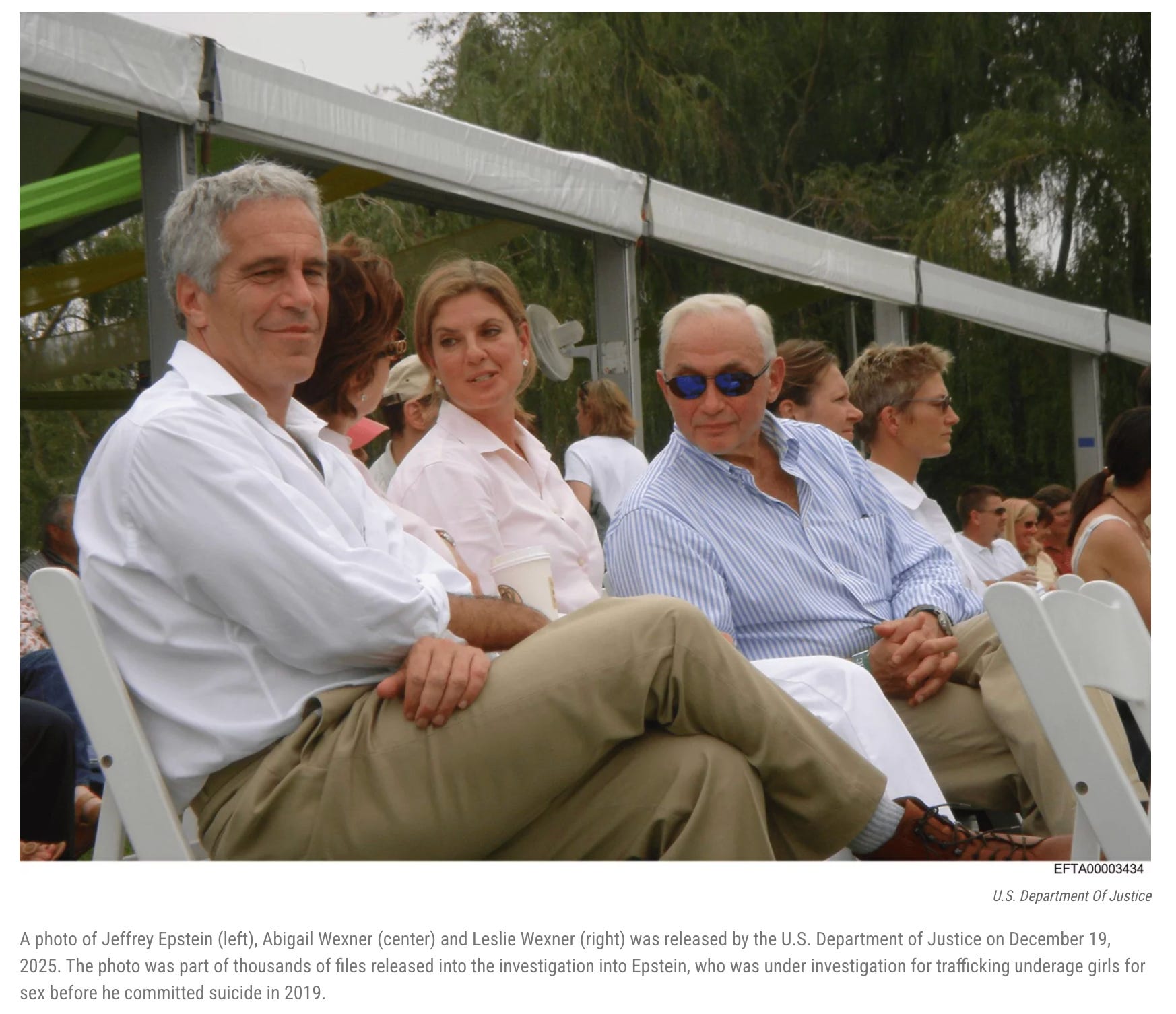
Wexner was a founding member of The Mega Group, which I wrote about here.
Like Epstein, Wexner had a public persona (owner of The Limited, Victoria’s Secret, etc.) and a secret one. He is widely regarded as an asset for Israeli military intelligence. His wife Abigail Wexner, born Abigail Koppel, is the daughter of Yehuda Koppel, a man who served in SHAI — the Haganah’s intelligence arm and the predecessor to Israel’s central military intelligence directorate AMAN. In the 1950s Yehuda Koppel moved to New York to open an office for Israeli state-owned airline El Al, which became a front for Mossad and Shin Bet agents according to CIA and South African intelligence.
Epstein owned property in New Albany less than a mile from Wexner’s 60,000-square-foot estate. He purchased the New Albany estate the same year he bought the Zorro Ranch land, in 1993, and used the same architectural firm that built the New Albany master-planned community for Wexner.
Cooper Robertson’s footprint outside New York City is notably limited, and it maps with precision onto Epstein’s property network: New Albany, Ohio. Palm Beach area, Florida. Stanley, New Mexico.
I have a hard time believing these are the happy coincidences of geography.
To me, they look to me like the coordinates of a shared and secret world.
The Mentor
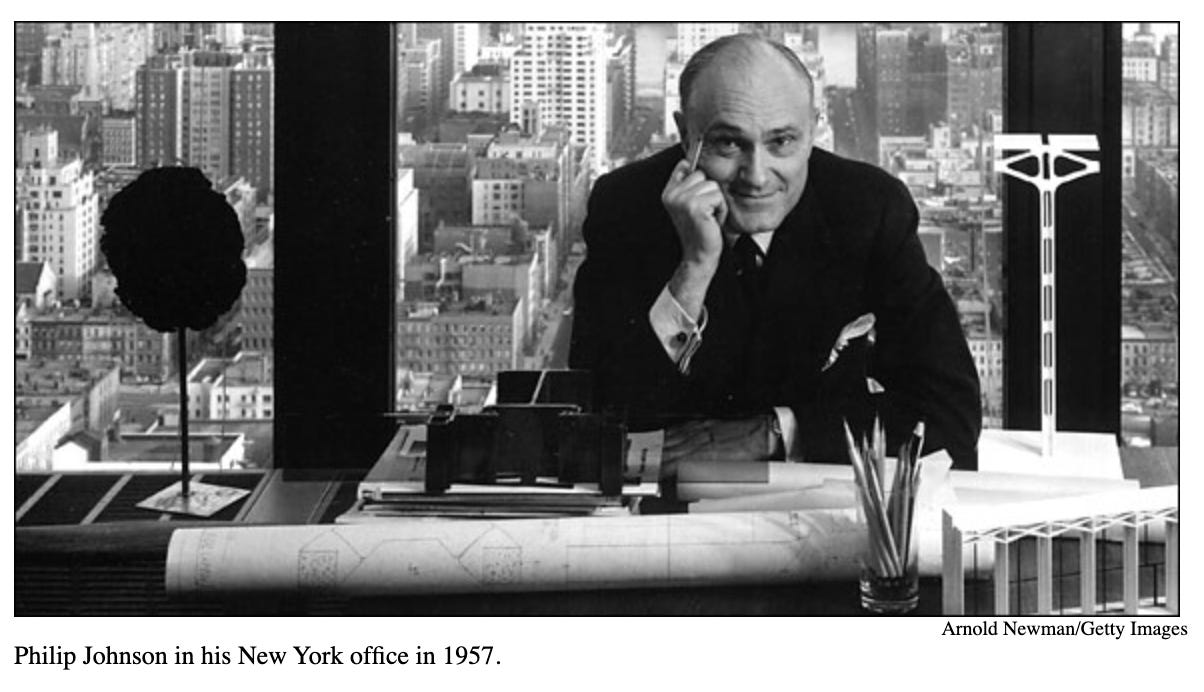
To understand Cooper Robertson, you must understand the man who shaped both its founders.
Alexander Cooper and Jaquelin Robertson both trained under and worked for Philip Johnson — the architect who, for half a century, functioned as the supreme tastemaker and gatekeeper of American architecture. Johnson decided who built what for whom. His patronage made careers. His network was the American architectural establishment.
Philip Johnson was also, by his own admission and by the findings of multiple FBI investigations, an active asset of the Nazi state in Germany.
Johnson spent the 1930s traveling to Germany, attending Hitler Youth rallies, meeting with senior officials of the Nazi intelligence apparatus including the Gestapo, and writing for American fascist publications. The FBI opened at least five investigations into his activities. A bureau memorandum to J. Edgar Hoover warned that Johnson was “essentially an active agent of the Nazi state” — and that he was “the most dangerous man” to have working in any agency with access to military secrets.
He was never charged. He was wealthy, and he was protected. (Sound familiar?)
After the war, Johnson reinvented himself as the dean of American modernism — and then, in 1956, received a commission that remains one of the most peculiar transactions in the history of architecture during the Cold War.
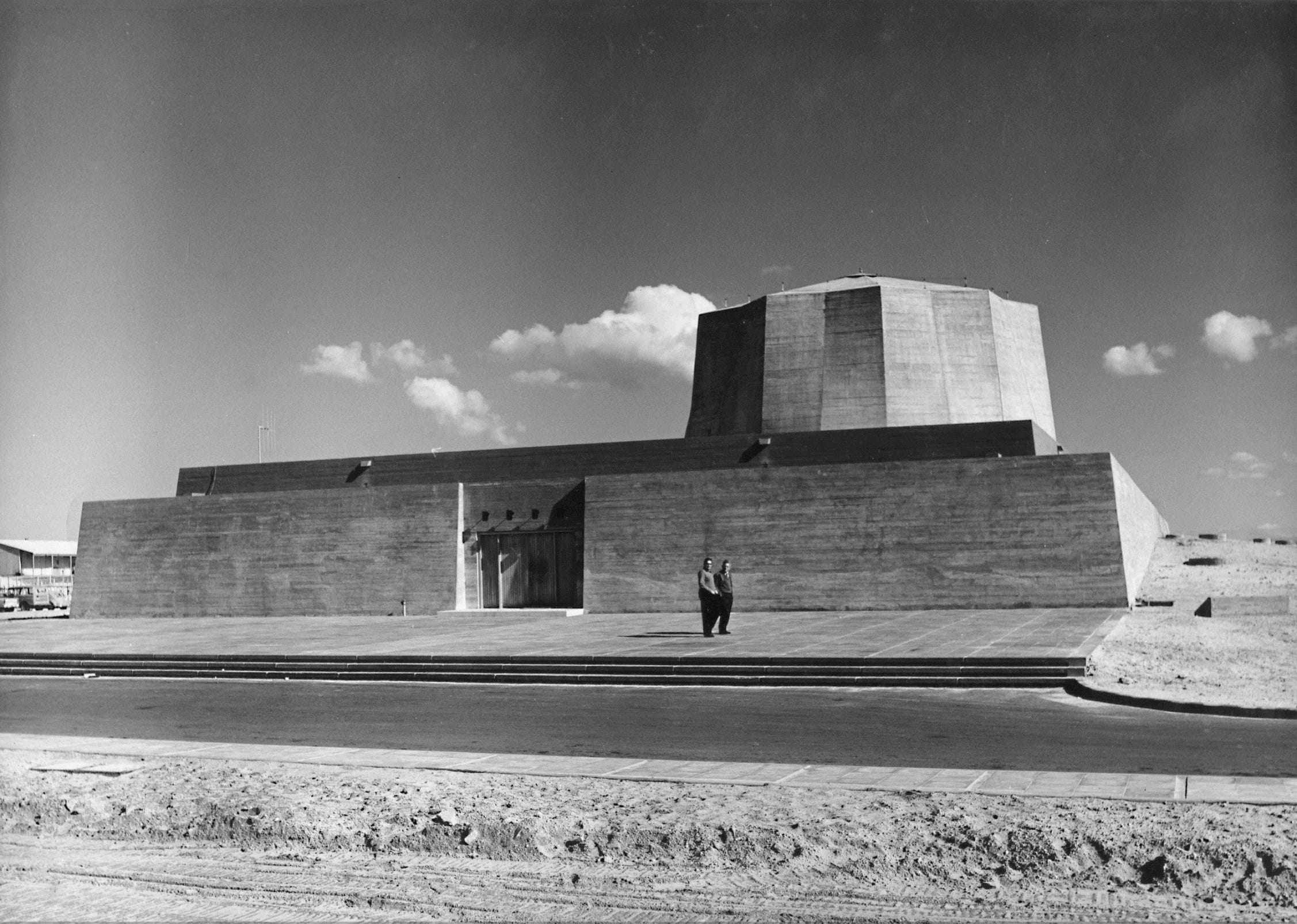
In 1956, Johnson was commissioned by the Israeli government to design the Soreq Nuclear Research Center — built to house a nuclear reactor donated by the American Atoms for Peace program under President Dwight D. Eisenhower. It was Edward Warburg, a friend of Johnson’s from their Harvard days, who introduced the architect to Teddy Kollek and Shimon Peres — then acting director general of the Israeli Ministry of Defense — who commissioned Johnson to design the building.
One of the stipulations of the Atoms for Peace program was that an American architect design the reactor building. The Israelis were never obligated, however, to choose an American architect with Nazi inclinations. Yet they did, for some reason.
Johnson called the Soreq facility his temple. Severe security measures prevented him from entering the building when he visited Israel in 1966. It became, by his own account, one of his favorite works.
The two men most shaped by Johnson’s professional world — Cooper and Robertson — went on to found the New York City firm that designed Jeffrey Epstein’s compound in New Mexico, equidistant between Los Alamos National Laboratory, and Sandia National Laboratories, two of the United States’ top nuclear weapons labs.
When Epstein was asked why he chose New Mexico, he said he liked its proximity to The Santa Fe Institute, which was founded by nuclear weapons scientists from the labs. Nine years before Epstein bought Zorro Ranch, Ghislaine Maxwell’s father, Robert Maxwell, was in New Mexico, selling Israeli-backdoored bugged software to Sandia National Laboratories and Los Alamos National Laboratories. Whistleblowers at Sanda reported the bugged software to the FBI. The U.S. Attorney General at the time under President Ronald Reagan, Edwin Meese, shut the investigation down.
One of Epstein’s closest neighbors at Zorro Ranch, which whom he shared more than 2 miles of fence-line, was a man named Henry Singleton, a former OSS officer turned defense contractor, who also happened to be one of the co-trustees for the blind trust of Ronald Reagan during his presidency.
Robertson and the CIA
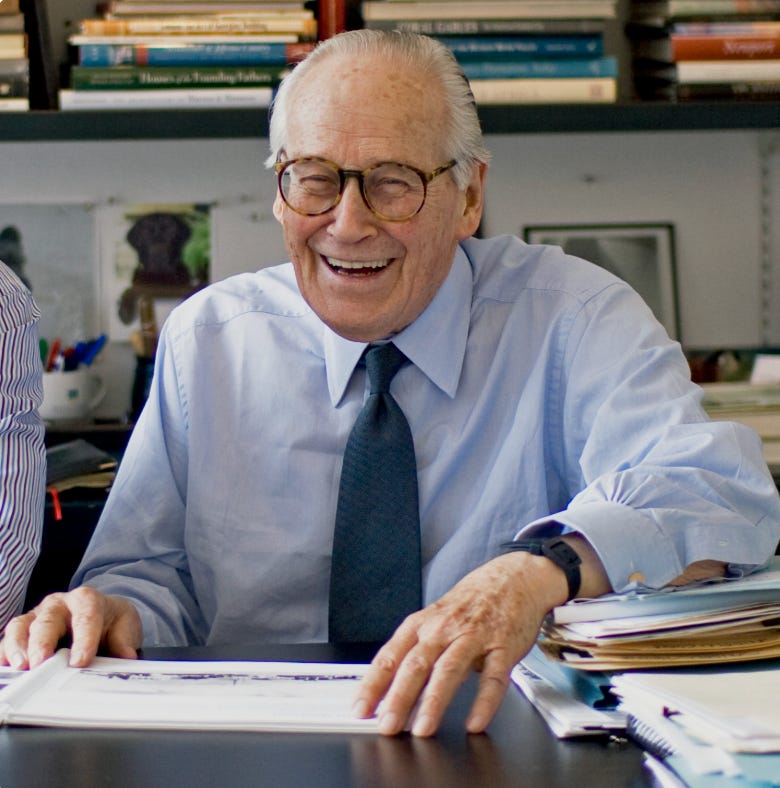
Jaquelin Robertson did not arrive at Cooper Robertson carrying only Johnson’s influence. He carried his father’s world as well.
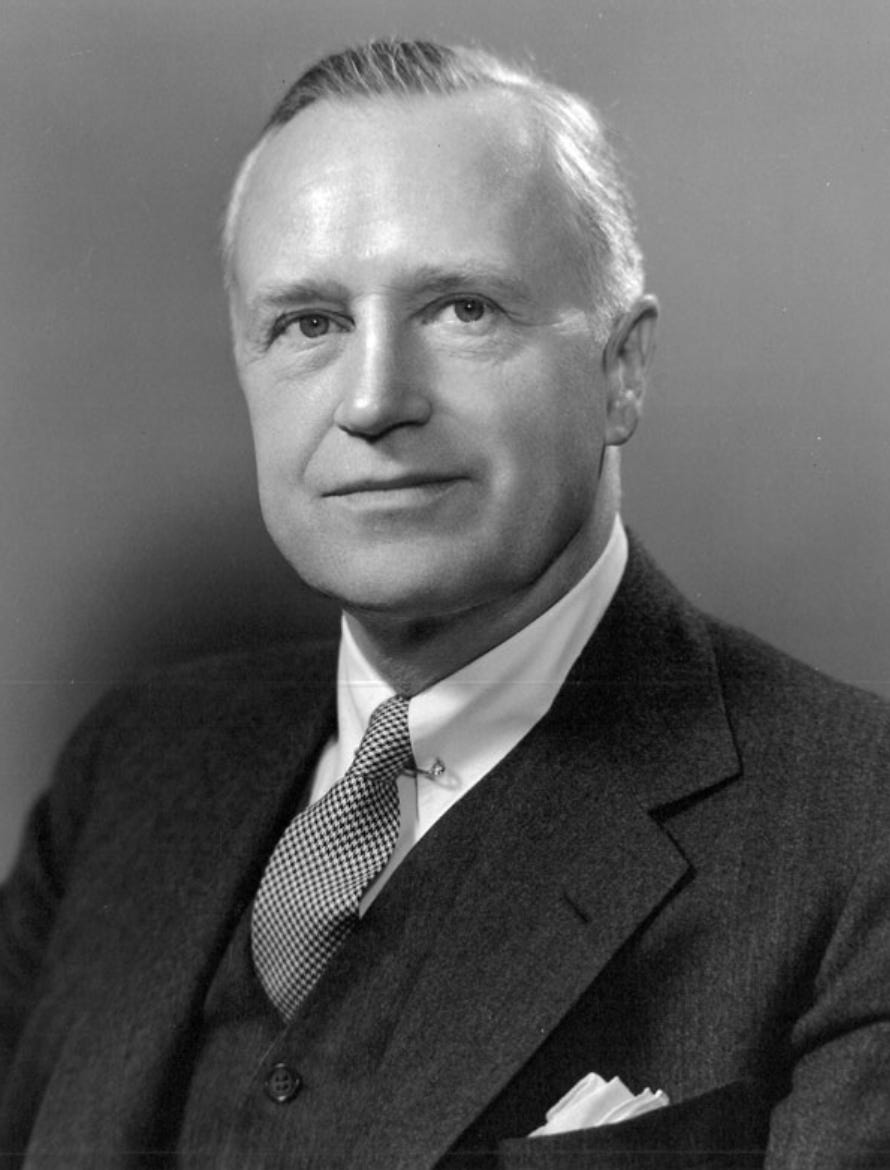
Walter S. Robertson, Jaquelin’s father, was John Foster Dulles’s Assistant Secretary of State in the 1950s and played a central role in shaping the Eisenhower administration’s anti-Communist China policy. Declassified State Department records place Walter Robertson in the same rooms as Allen Dulles — Director of the Central Intelligence Agency, and a former OSS officer who worked with Singleton — coordinating covert Cold War policy on China with State, Defense, and CIA simultaneously. John Foster Dulles ran State. His brother Allen ran the CIA. Walter Robertson was their Asia point man.
Jaquelin Robertson, one of the architects of Epstein’s Zorro Ranch house, grew up in that world. He spent part of his childhood in Beijing, where his father operated at the intersection of American foreign policy and covert intelligence. He described himself as “a child of two architectural settings — one a provincial, rural, Anglo-American, Georgian-Palladian one, the other an exotic, foreign, imperial and highly cosmopolitan one.”
He was educated at Yale. He was a Rhodes Scholar at Oxford. He trained under Philip Johnson. Between 1975 and 1977 he served as Managing Director of a planning firm in Tehran, directing the design of Shahestan Pahlavi — Shah Mohammad Reza Pahlavi’s new capital center. Three years of work for one of the most intelligence-saturated client states in Cold War history — the same Shah whose government had been installed by a CIA coup launched by the Eisenhower administration that employed Robertson’s father.
Robertson received the Thomas Jefferson Foundation Medal in Architecture in 1998 — the same year Epstein’s entity Zorro Development Corp. signed a formal communications station agreement with the State of New Mexico’s Office of Communications on the ranch property. By 2016, Epstein had a private military/industrial grade bidirections microwave radio communications network established at Zorro Ranch, linking it to the top of Sandia Crest.
Robertson was also, by the end of his career, the man who prepared the master plan for Monticello — Jefferson’s estate, built and maintained by enslaved people deliberately rendered invisible through landscape design. Robertson understood that tradition intimately. At Monticello, as architectural historians have documented, Jefferson designed the landscape so that the enslaved workforce could not be seen from the main house. Architecture concealed the people who made it possible.
Jaquelin Taylor Robertson was a descendant of two American presidents: James Madison and Zachary Taylor. Both were Virginia slaveholders. Robertson was raised on Milburne, a Georgian estate in Richmond commissioned by his father in 1933 — one of that city’s most prominent properties.
He spent eight years as Dean of the University of Virginia School of Architecture — the university Thomas Jefferson built, literally, using enslaved labor. In 2020, the year Robertson died, UVA completed its Memorial to Enslaved Laborers — a formal acknowledgment of the people whose bodies built the institution Robertson led.
Previous reporting in this series has established in granular detail that the Zorro Ranch main house is a deliberate architectural replication of George Washington’s Mount Vernon. The correspondence is documented across siting, garden geometry, interior color schemes, heraldry, and outbuilding placement.
It includes a structure positioned in precisely the same spatial relationship to the main house as the slave quarters at Mount Vernon — with a sally port entry system, the double-door controlled-access design used exclusively in prisons and detention facilities. This is the only building at Zorro with bars on all its windows, and those windows are evenly spaced and of uniform size.
The architect who designed that compound was a Virginia aristocrat trained by a Nazi spy, who spent his career romanticizing and perpetuating the architectural language of the plantation class — and who intimately understood, through his work at Monticello, how great American estates used design to render invisible what was happening inside them.
What Was In The Basement
The federal Epstein files contain multiple versions of the Zorro Ranch Ground Floor and Basement plans — Drawing A2.7, appearing under document numbers EFTA02674622, EFTA02725489, EFTA01114019, and EFTA01114017. The presence of multiple versions of the same drawing in a federal evidence archive indicates this plan traveled through multiple hands.
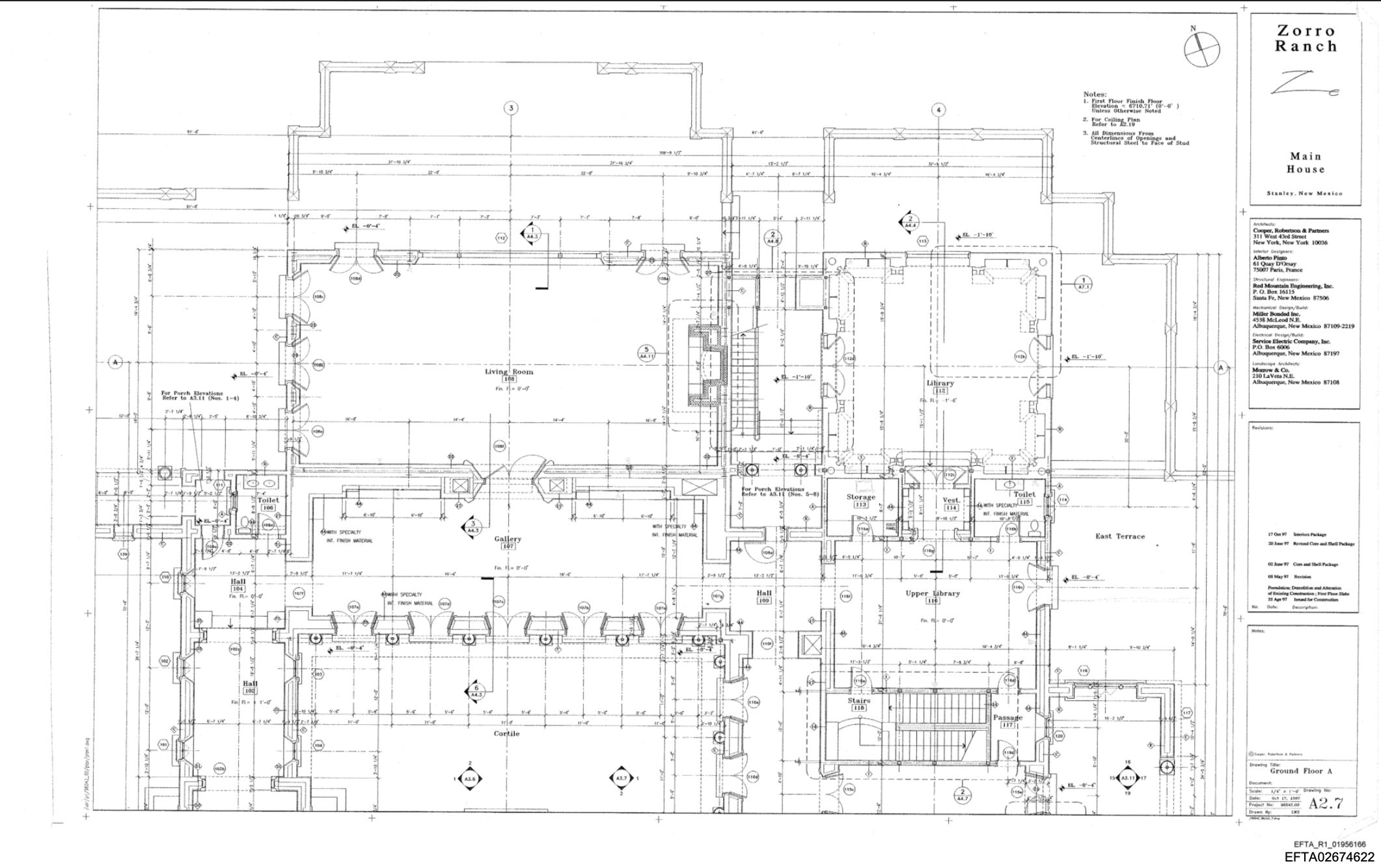
The basement plan reveals a space that defies residential classification.
Mechanical Room 001 occupies the majority of the basement footprint — approximately 3,200 square feet of subgrade space beneath a house whose living areas include a Gallery, Living Room, Library, Upper Library, and formal Hall. A residential mechanical room serving HVAC and utilities for a house of this size would typically occupy 400 to 600 square feet. This room is multiples of that.
The general notes on the basement plan specify that foundation wall penetrations require their own separate mechanical drawings. In standard residential construction, foundation wall penetrations do not require independent documentation. They require it when what passes through those walls — conduit, cabling, shielding systems — demands separate record.
The revision history on every version of this plan includes a final entry that reads: “Foundation, Demolition and Alteration of Existing Construction — First Floor Slabs — Issued for Construction — April/May 1999.”
The house was designed in 1997. The interiors package was issued in October of that year. Two years later, after construction was substantially complete, someone ordered the demolition and alteration of the first floor slabs — the concrete foundations of the rooms directly above the basement. That is unusual modification of what exists between the ground and what lies beneath it, on a fairly new structure.
One version of the basement plan carries a notation that has not been explained: “Existing Construction to Remain.” When these drawings were issued, there was already construction on the site being worked around. Something was already there before Cooper Robertson drew a single line.
The basement plan’s notes footer reads on every version: “See Notes on Coversheet for Hatched Areas.” That coversheet — containing specific annotations for flagged sections of the basement — has not yet been located in the public Epstein file production.
What The Walls Were Made Of
Directly above the basement, the ground floor plan — Drawing A2.7 — carries a notation that appears in multiple locations throughout the central social spaces of the house:
“WITH SPECIALTY INT. FINISH MATERIAL”
The notation appears in the Toilet 106 corridor. In the Gallery 107 zone. In Hall 104. Adjacent to Vent 114 — the ventilation room — and Toilet 115.
Standard interior finish materials do not receive this designation. The term “specialty interior finish material” in architectural practice refers to materials specified for acoustic treatment, electromagnetic shielding, or radiation containment — the construction vocabulary of secure facilities, classified spaces, and SCIF-grade construction.
The ventilation room designation is particularly significant. Ventilation systems are the primary vulnerability in any underground secure space. Specialty finish material in a ventilation room is the treatment you specify when you are addressing exactly that vulnerability.
The interior elevations of Gallery 107 and Living Room 108 — Drawing A5.5, EFTA02674621 — show what was placed over whatever the specialty finish material was:
Special carved terracotta at the upper wall and arch zones of Gallery 107. Dense fired ceramic, custom fabricated, specified for both surfaces.
True fresco on multiple wall surfaces of Living Room 108. Italian stucco on the lower walls. Stone fireplace. Decorative painting on upper surfaces.
True fresco requires skilled artisans and weeks of application per wall section. Italian stucco is similarly specialized. Special carved terracotta is custom fabricated to specification.
These finishes share one property beyond their expense and beauty: they are dense, heavy, layered, and permanent. Applied over any substrate — including specialty finish material — they render what is beneath them permanently invisible.
Whatever the specialty finish material was. Whatever the foundation wall penetrations carried. Whatever was modified in the 1999 post-construction slab demolition. It is now buried under some of the most beautiful and permanent interior surfaces that money could specify.
Cooper Robertson designed the concealment as elegantly as they designed everything else.
The Compound
Previous reporting in this series has established what was built at Zorro Ranch in granular detail.
The main house — 33,000 square feet — was constructed not by a residential builder but by Bradbury Stamm Construction, New Mexico’s largest industrial contractor, whose portfolio includes classified facilities at Los Alamos National Laboratory and Kirtland Air Force Base. Bradbury Stamm’s telephone number appears in Epstein’s personal black book, inexplicably listed among the ranch staff rather than its own entry. Why the state’s premier classified-facility contractor built a private ranch house that was designed by a New York City architectural firm with ties to Israeli nuclear and military intelligence, Les Wexner and the CIA has never been explained.
The Pattern
My ongoing investigation into Zorro Ranch, Epstein and New Mexico has documented, across multiple pieces, the thesis that Jeffrey Epstein and Ghislaine Maxwell were not operating a private criminal enterprise. They were operating infrastructure — for the harvesting of intelligence, the compromise of powerful figures, and the penetration of the most sensitive scientific and military networks in the American Southwest.
The architect of Epstein’s primary American compound trained under a man who was a Nazi spy who went on to build Israel’s nuclear research facility. That architect’s co-founder was the son of the Eisenhower administration’s covert intelligence point man for Asia — the man who sat beside CIA Director Allen Dulles, who served in the OSS with Epstein’s next-door neighbor at Zorro, Henry Singleton, who went on to become one of the top weapons engineers and defense contractors in the world. The Zorro Ranch compound was built by the Bradbury Stamm, the same contractor who builds classified facilities at Los Alamos and Kirtland. The property hosted a state communications station from 1998. Its microwave licenses point toward Sandia Crest. Its basement contains a space too large to be residential, with foundation wall penetrations requiring separate documentation and post-construction slab modification. Its walls are lined with specialty finish material buried under permanent decorative surfaces.
Still Working. Post-Conviction.
Jeffrey Epstein was convicted of sex crimes in 2008. The relationship between Epstein and Cooper Robertson did not end there.
Federal financial records released in the Epstein files — EFTA01206643 and EFTA01206644, a detailed FY2014 bank activity writeup for Epstein’s LDB-MS POA account — show two payments to Cooper Robertson in the summer of 2014:
June 5, 2014 — Cooper Robertson — Field House — $18,045.00 June 28, 2014 — Cooper Robertson — SH — $12,227.93
Six years after his conviction, Epstein was paying Cooper Robertson invoices. The “SH” designation indicates Southampton. “Field House” indicates one of his other properties. The firm was actively working for him on multiple properties simultaneously
.
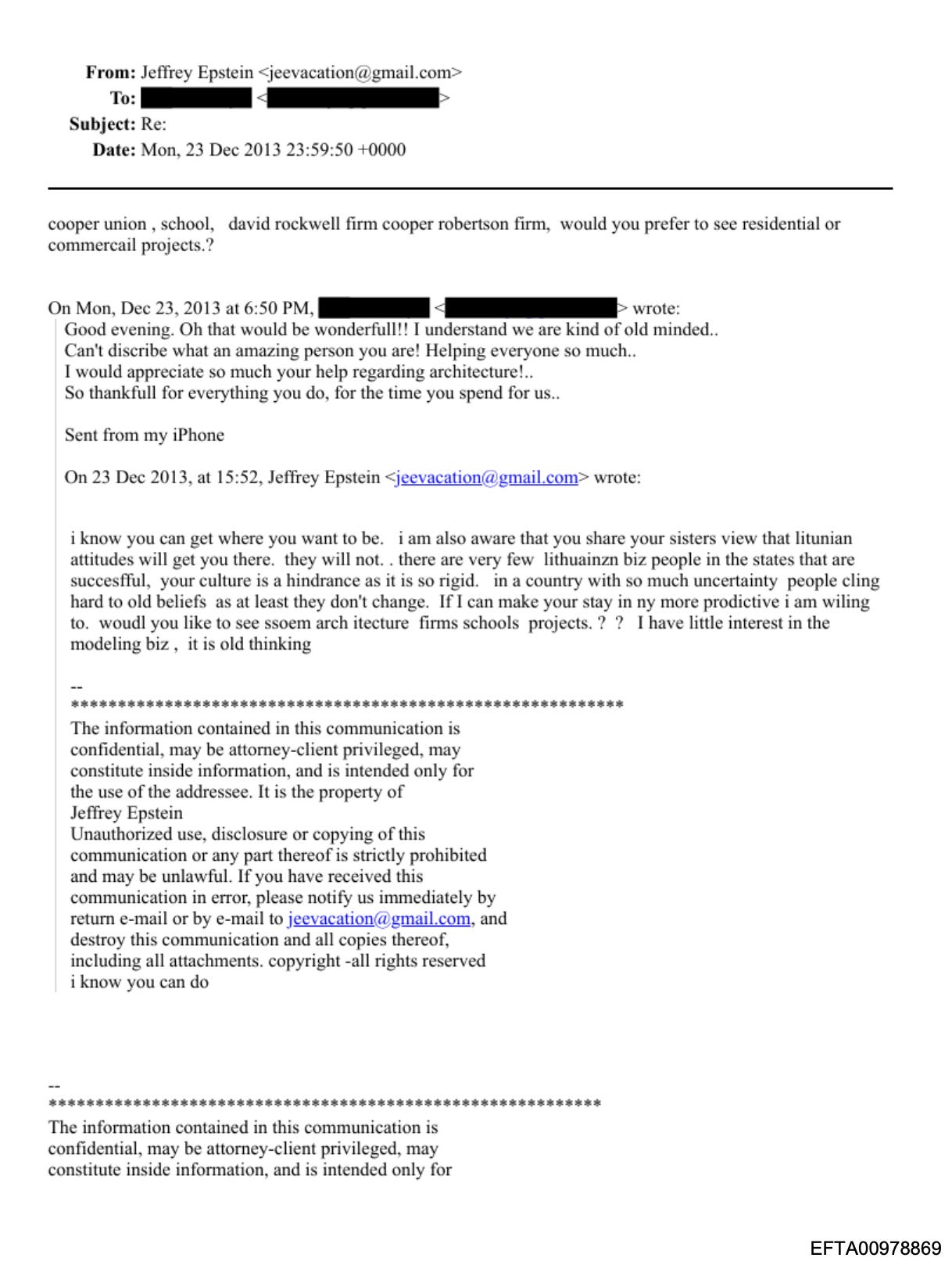
In the same month as the first payment, December 2013, a separate federal document — EFTA00978869 — captures Epstein’s own words in an email to a young Lithuanian model he was cultivating. Noting her interest in architecture, he tells her he can introduce her to some of the best in the field. He writes: “cooper union, school, david rockwell firm cooper robertson firm, would you prefer to see residential or commercial projects?”
Cooper Robertson went defunct on November 3, 2025, acquired by the firm Corgan. That acquisition transferred whatever institutional knowledge, records, and liability the firm carried regarding its work for Jeffrey Epstein.
Source: https://alisav.substack.com

Your Tax Free Donations Are Appreciated and Help Fund our Volunteer Website
Disclaimer: We at Prepare for Change (PFC) bring you information that is not offered by the mainstream news, and therefore may seem controversial. The opinions, views, statements, and/or information we present are not necessarily promoted, endorsed, espoused, or agreed to by Prepare for Change, its leadership Council, members, those who work with PFC, or those who read its content. However, they are hopefully provocative. Please use discernment! Use logical thinking, your own intuition and your own connection with Source, Spirit and Natural Laws to help you determine what is true and what is not. By sharing information and seeding dialogue, it is our goal to raise consciousness and awareness of higher truths to free us from enslavement of the matrix in this material realm.