EN
EN FR
FR

by Jennifer Margulis,
True or False?
When you get diagnosed with cancer, or someone you love does, everyone on the planet—from cancer survivors, family, “friends” on social media, to strangers, doctors, and natural healers—starts sharing all sorts of cancer advice with you.
You’re suddenly regaled with myriad suggestions for what supplements to take; why you absolutely must follow the latest anti-cancer fad protocol; and how person X dodged the Grim Reaper and made a miraculous recovery by doing Y.
The very best thing about all of this unsolicited advice? It’s a mishmash of contradictions. Especially when the advice is about what you should be eating.
Eat only raw meat!
Never eat raw meat, but become a total carnivore!
Water-only fast!
Don’t ever fast!
Carrots contain too much sugar, don’t ever eat them!
You get the idea.
It’s all a little overwhelming, especially at first. Especially when you wake up every morning surprised that you’re still alive.
Trying to get high quality information in this age of mind-fullness, artificial “intelligence,” and snake-oil sellers disguising themselves as caring healers is difficult.
And … if you’re lucky enough to lose your eye to ocular cancer (yay me!), reading anything on-line, which causes me both eye strain and headaches, is also challenge.
I’ve been doing my best to learn as much as I can. I know that cancer **is** curable. I remain stubbornly optimistic. I’m inspired by the stories of miraculous recoveries and the good folks who go from hospice to healthy. But it’s been really rough.
I don’t wish a cancer diagnosis on anyone. It’s devastating to watch so many friends, colleagues, and acquaintances die from this disease. And the suffering some of my friends have experienced is beyond anything I could have imagined before going through it myself.
Still, cancer is also very interesting.
Being alive is too.
I don’t want my body to be overwhelmed by this disease but I also find it curious—and sometimes even funny—that I have an extraordinarily rare cancer and I have somehow become the test subject in an (admittedly rather unscientific and messy) experiment.
My husband likes to say that curiosity is everything. I think he’s right.
Cancer is teaching me all the lessons.
“Beekeepers don’t get cancer”
Last year an apiarist told me about an old wives’ tale. She said the scuttlebutt in the beekeeping world is that “beekeepers don’t get cancer.”
Many anti-cancer protocols insist on zero sugar and no sweeteners of any kind, whether natural or artificial. But this apiarist is a firm believer in the healing power of honey, as well as in the immune benefits of bee stings.
All of this piques my curiosity. Is it really true that beekeepers don’t get cancer? And if beekeepers don’t get cancer, why not?
Is it the honey? Is it the bee stings? Is it that they’re spending most of their days outside in the healing sunshine, soaking up the vitamin D?
Is it that they’re also digging in the dirt a lot and we know getting down and dirty—playing in the dirt, keeping animals, growing organic food—helps us avoid chronic diseases, autoimmune disorders, and cancer, at least according to pediatric neurologist Maya Shetreat-Klein, M.D., author of The Dirt Cure?
Is it that most beekeepers usually live on farms, eat fresh, whole foods, and generally follow a more active and healthier lifestyle than many modern-day humans who eat ultra-processed foods and live sedentary lives?
Is it something else entirely?
Researching human health and longevity is notoriously complicated.
A cure for one person with cancer may have no effect on another patient’s disease. It may even accelerate cancer growth in someone else with the same diagnosis.
The pre-cancer Jennifer was such a know-it-all.
The Jennifer 2.0 is knowledgeable but nuanced, less certain, and much less judgmental.
So, I can’t give you a definitive answer about beekeepers and cancer. Like with many health questions, I’m not sure what I think. But I can share with you some of what my research has revealed.
Fuzzy chemists
Bees aren’t just adorable and wonderful and good for the planet in so many ways. They’re also little fluffy six-legged chemists and builders.
They make something called propolis—a sticky, resinous material also known as “bee glue.” They use this propolis to seal cracks in their hives, protect the colony from predators, and help keep certain non-beneficial microbes out of the colony, according to ScienceInsights.org.
Propolis is chemically fascinating. [1] Its composition changes depending on where the bees live, which flowers and other plants the bees are frequenting, and the season.
We have interesting data showing that propolis can be protective against cancer, and may also be an effective anti-cancer bee product for treating cancer patients.
This may in part be due to a compound found in propolis called CAPE: caffeic acid phenethyl ester.
Say that five times fast. I double dare you.
Why caffeic acid phenethyl ester (CAPE) matters
In a peer-reviewed scientific article published in 1996, a team of scientists from the University of Texas found that CAPE blocked activation of NF-κB. NF-κB activation is an inflammatory factor involved in immune signaling, inflammation, cell survival, and cancer-related stress responses. [2]
This is a little confusing and complicated—as is a lot of cancer biochemistry.
If I may simplify: blocking NF-κB activation is good and has the potential to help fight against cancer.
NF-κB matters because some cancer cells use inflammatory survival programs to avoid dying.
For example, in 2001 scientists discovered that NF-κB activity is required for tumor-cell survival in activated B cell-like diffuse large B cell lymphoma. [3]
CAPE has also been studied in gastric epithelial cells exposed to Helicobacter pylori, the bacterium linked to ulcers and gastric cancer.
In a 2005 study, published in the British Journal of Pharmacology, Egyptian scientists found that CAPE inhibited H. pylori-induced NF-κB and AP-1 DNA-binding activity in a dose-dependent way.
That study also found that CAPE reduced H. pylori-induced cell proliferation, inflammatory cytokines, and COX-2 expression. [4]
In an earlier study on colon cancer, a team of researchers in Taiwan found that CAPE inhibited capillary-like tube formation, reduced invasion by CT26 colon adenocarcinoma cells, lowered MMP-2 and MMP-9 activity, and reduced VEGF production in mice. [5]
VEGF stands for vascular endothelial growth factor. VEGF promotes the formation of new blood vessels that then feed nutrients to cancer cells. In the 2003 Taiwanese study when CAPE was given intraperitoneally (that is, administered via entry into the small bowel), it reduced pulmonary metastasis and lowered blood levels of VEGF.
CAPE has also been studied in breast cancer cells. In 2004, scientists in Japan found that CAPE appeared to help push some cancer cells from survival mode toward self-destruct mode. [7]
At the same time, another study, published in 2009, found that CAPE was eliminated rapidly after intravenous administration in rats, with a half-life of only about 21 to 27 minutes. [6]
Questions remain: What does it mean that CAPE has such a short half-life in vivo? Are these studies biologically relevant to humans struggling with cancer? What’s the best and most effective way to get CAPE into the human body? Does it do anything when taken orally as opposed to being administered intravenously? What kind of dosing do we need to give a human patient in order for it to be effective? And how do we source the propolis that has the largest concentrations of anti-cancer properties?
So we know—sort of—that propolis in general and CAPE in particular can help mitigate cancer-induced inflammatory, apoptotic, angiogenic, and invasive pathways.
Might this be one reason beekeepers don’t get cancer as often as non-beekeepers?
And then there’s the bee venom…
When I met with the apiarist last year, she did a sting test on me. Epi-pen and antihistamines in hand, she put a bee on my abdomen and had it sting me near my liver.
I love getting stung by bees. ~Said no sane person ever.
It hurt.
I also felt bad for the bee, whose life was then forfeit.
And I had a full-blown immune reaction, with swelling and redness and itching that started the next day and lasted for nearly a week.
Ouch.
No fun.
Pain notwithstanding, bee venom is touted as a powerful anti-inflammatory.
(An interesting aside: blue scorpion venom is another treatment that is used by integrative doctors to fight cancer. Blue scorpions are native to Cuba. I don’t know what compounds are contained in their venom but ever since I heard about this—when I was looking for an in-patient hospital to go to outside the United States—I’ve wanted to find out.)
Back to bees. Bee venom, which contains a mixture of bioactive compounds, has two peptides that are thought to be beneficial to human health. A peptide is a short string of amino acids and a building block of protein. The two peptides are:
1. Melittin, a 26-amino-acid peptide
2. Apamin, an 18-amino-acid peptide
Melittin is a main component of honeybee venom. It interacts with cell membranes and can rupture cells.
Cancer cells don’t like having their membranes disrupted.
(Neither do healthy cells.)
In 2020, an interesting and important study on bee venom’s effects on cancer was published in the prestigious journal Nature. [8]
An international team of scientists based in Australia and the United States found that honeybee venom suppressed growth factor receptor activation in HER2-enriched and triple-negative breast cancer cells.
Melittin was especially potent in aggressive breast cancer subtypes.
For the biochemists and uber science geeks: It appeared to suppress EGFR and HER2 phosphorylation, interfering with downstream PI3K/Akt and MAPK signaling.
Triple-negative breast cancer is notoriously hard to treat. HER2-enriched cancers are as well.
While that study didn’t show that bee stings cure breast cancer, it did find that melittin is biologically potent and mechanistically interesting.
Another study on ovarian cancer, published in 2012, found that bee venom inhibited the growth of SKOV3 and PA-1 ovarian cancer cells, increased death receptor expression, and inhibited JAK2/STAT3 signaling. [9]
The problem with bee venom, which is a problem with almost every potential anti-cancer treatment (including chemotherapy and radiation), is that it also has the potential to damages healthy cells.
Still, I think it’s fair to assume that beekeepers get stung by bees regularly, and that this is likely another reason for why they don’t get cancer as often as the rest of us.
But the best avenue for melittin as a cancer treatment is probably not having cancer patients get stung over and over again by bees.
Instead, scientists would need to develop a safe and effective way to safely deliver melittin so that it can destroy cancer cells without doing excessive harm to the human host.
One way to do this may be by suspending the melittin in microscopic globules of oil.
Scientists in China examined whether melittin-lipid nanoparticles designed to target lymph nodes could trigger a systemic anti-tumor immune response. [10]
Those experiments, published in Nature Communications in 2020, found that α-melittin nanoparticles promoted tumor antigen release in place, activated antigen-presenting cells in lymph nodes, increased antigen-specific CD8+ T-cell responses, and inhibited both primary and distant tumor growth in a B16F10 melanoma mouse model.
In that mouse model, α-melittin nanoparticles produced dramatic inhibition of both primary and distant tumors.
This study seems particularly important to me, perhaps because I have metastatic melanoma. It suggests that when melittin is packaged and delivered intelligently, it can become a local immune activator and an effective way to inhibit tumor growth.
What about honey itself?
Honey is a chemically complex substance that contains hundreds of different compounds.
Not all honey is created equal.
Honey can degrade over time. And many varieties of honey—like so many other foods—have been found to be contaminated with known carcinogens.
The mother of all honeys, known for its healing properties and used even in conventional medicine, is Manuka honey.
Manuka honey comes from bees that pollinate the Manuka tree, Leptospermum scoparium, a flowering tree in the myrtle family native to New Zealand.
A key compound in Manuka honey is methylglyoxal, or MGO.
In a 2009 Czech study of 61 Manuka honey samples, MGO levels ranged from 189 to 835 mg/kg, and antibacterial activity rose in close correlation with MGO concentration.
The Czech scientists concluded that MGO was the dominant bioactive compound responsible for the characteristic antibacterial properties of Manuka honey above about 150 mg/kg. [11]
Antibacterial properties, check.
Wound healing potential, check. (When an 82-year-old friend went to the doctor the other day for a wound on his leg that would not heal, they slathered the wound with Manuka honey and put a dressing over it.)
What about anti-cancer properties?
In a 2021 review article, scientists in Italy explained that MGO has a dual role in tumor progression.
At high levels, MGO can be cytotoxic and push cells toward apoptosis.
Apoptosis is programmed cell death.
It’s what we want healthy cells to do when they’re misbehaving.
When you have cancer, this normal, life-saving apoptosis shuts off. Cancer cells have unchecked growth, which is a problem since they will eventually grow themselves out of existence by killing the host.
At the same time, according to the Italian researchers, at lower levels, cancer cells may adapt to MGO stress in ways that actually encourage and support tumor progression, the opposite of what we want a cancer treatment to do. [12]
“Poking the bear” is how an ozone engineer named Steve (more about him behind the paywall of this post), who has dedicated the second half of his career to helping people fight cancer, describes sub-therapeutic cancer treatment dosing.
You don’t want to wake the bear up and make him angry. You want to usher the bear out of your body and make sure it never returns.
A 2024 Manuka honey breast cancer study
Natural health advocates make a huge to do about manuka honey.
Perhaps there’s a there there.
I’m not sure.
But I can tell you that a 2024 preclinical study done by a team of scientists at UCLA reported that Manuka honey inhibited human breast cancer progression in laboratory and animal models. [13]
This study used human breast cancer cells transplanted into mice.
In MCF-7 breast cancer cells, Manuka honey inhibited proliferation at 0.3 to 5.0 percent methylglyoxal (MGO).
At 2.5 percent MGO, it reduced proliferation of MCF-7 cancer cells but not non-malignant human mammary epithelial cells.
It also stimulated apoptosis, increased PARP cleavage, activated AMPK, inhibited AKT/mTOR signaling, and reduced phosphorylated STAT3.
In mice with established MCF-7 tumors, orally administered Manuka honey significantly inhibited tumor growth. The study reported an 84 percent reduction in established tumor growth.
This UCLA study wasn’t a randomized clinical trial in women with breast cancer.
And it doesn’t “prove” that eating Manuka honey is an effective treatment for breast cancer.
But it does suggest that Manuka honey may be a powerful way to help breast cancer patients heal.
I love bees.
And I enjoy eating honey.
I also like the idea that some of the natural substances made by the diligent and tireless work of bees could help us humans.

So, is it okay to eat honey and use bee products if you have cancer?
For over a year after I was diagnosed with ocular melanoma, I ate nothing sweet. No refined sugar, date sugar, or coconut sugar. No maple syrup. No honey. I did eat some fruit, including blueberries, but I avoided over-ripe bananas, raisins, dates, and sweet apples.
Now I eat a little local honey.
I still have more questions than answers.
What honey is best to eat?
Are there some bee products I should be using on a daily basis?
Can honey or bee products actually treat cancer?
If so, what’s the best way to administer them? And what’s the optimal dosing?
Yikesamundo. No wonder those of us trying to use the best of allopathic medicine and more natural modalities end up feeling overwhelmed.
Treating cancer is complicated.
Miracle-cure marketing is not.
There’s no one more willing to fall for false promises than a bone-weary, desperate cancer patient (and their family) worried about dying.
Don’t believe the hype, whether it’s allopathic or alternative. When it comes to bees and cancer, here are my take-aways:
Bee-derived compounds show potential in treating cancer.
Getting stung by bees is also likely beneficial to the immune system (as long as you don’t have an anaphylactic reaction).
Manuka honey is biologically active, appears to have several anti-cancer properties, and has shown promise in preclinical breast cancer rodent studies.
Honey and bee-derived compounds may be effective cancer-busters—especially if scientists, clinicians, and patients can figure out the best delivery methods, proper dosing, and safety issues.
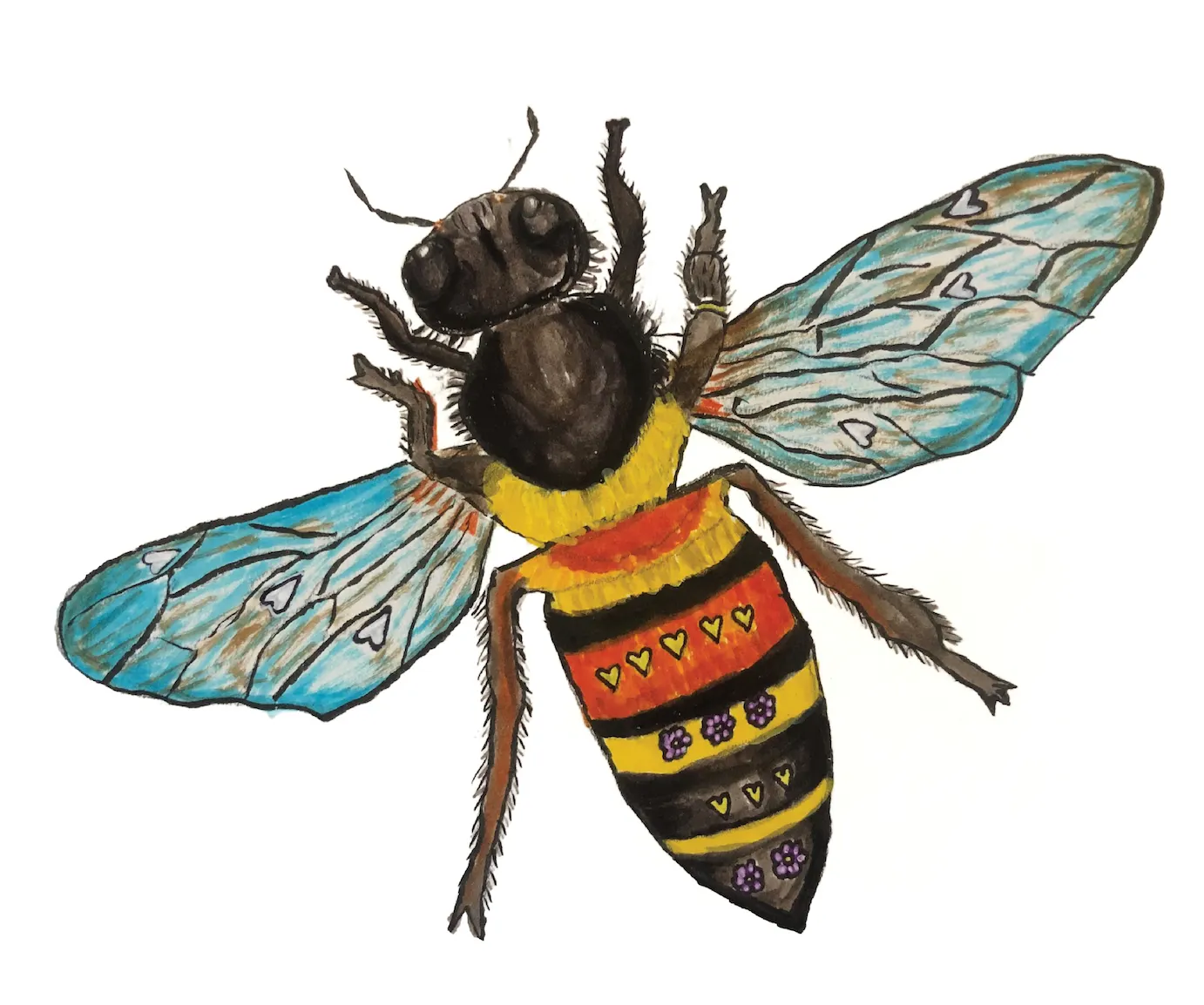
In the meantime, I don’t think I’ll become a beekeeper in this lifetime. But I am working very hard to not die from stage four metastatic melanoma, and I will keep drawing bees.
About the author:
Jennifer Margulis, Ph.D., is an award-winning investigative journalist and book author. She has worked on a child survival campaign in Niger, West Africa; appeared live on prime-time television in Paris, France; and been a fellow at the Schuster Institute of Investigative Journalism in Waltham, Massachusetts. Her books, which have sold over 300,000 copies combined, have been translated into Chinese, Estonian, German, Korean, and Vietnamese. A sought-after speaker and writing coach, she is also an internationally recognized advocate for medical freedom and toxic-free living.

Your Tax Free Donations Are Appreciated and Help Fund our Volunteer Website
Disclaimer: We at Prepare for Change (PFC) bring you information that is not offered by the mainstream news, and therefore may seem controversial. The opinions, views, statements, and/or information we present are not necessarily promoted, endorsed, espoused, or agreed to by Prepare for Change, its leadership Council, members, those who work with PFC, or those who read its content. However, they are hopefully provocative. Please use discernment! Use logical thinking, your own intuition and your own connection with Source, Spirit and Natural Laws to help you determine what is true and what is not. By sharing information and seeding dialogue, it is our goal to raise consciousness and awareness of higher truths to free us from enslavement of the matrix in this material realm.