EN
EN FR
FR

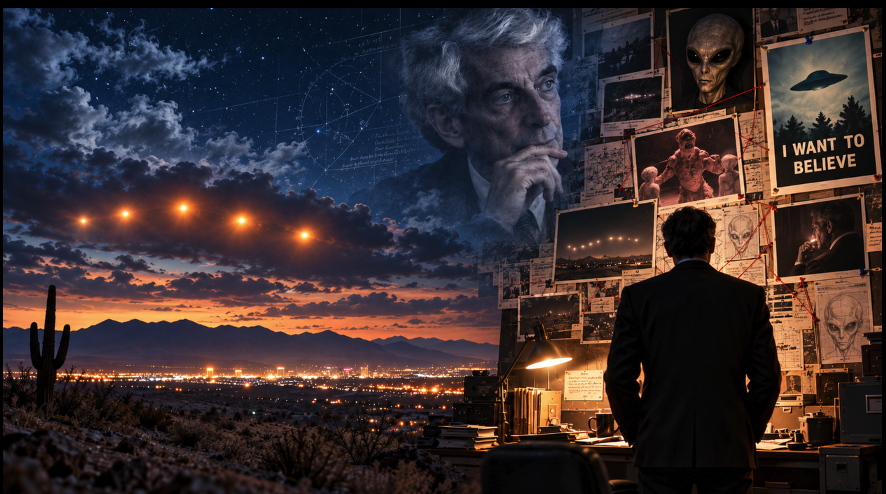
The UFO Illusion: Real Encounters, Manufactured Threats, and the Art of Deception
By Kat Carroll
(an 8 to 13 min read)
I’ve been following what goes on in the sky, and the things that go bump in the night, since I was young. Science fiction books, television programs, and movies opened the door to fascinating possibilities about our universe, other civilizations, and perhaps even other dimensions of reality.
From Star Trek and its many spin-offs to The X-Files, Millennium, Fringe, and Supernatural, these stories entertained us while challenging our perceptions of what might be possible. Some explored advanced technology and space exploration, while others ventured into government secrecy, paranormal experiences, altered consciousness, and the manipulation of reality. Some of it created a generation of conspiracy theorists. (Ahem).
But how much of what we watched was imaginative fiction, and how much might have been inspired by actual scientific research, military programs, or recorded events?
Some researchers refer to this possibility as soft disclosure, while others suggest predictive programming, gradually conditioning audiences to accept ideas that once seemed impossible. After all, one of the cleverest ways to introduce a controversial idea is to disguise it as entertainment. If someone questions whether it might be true, the obvious response is that it’s “just a TV show.”
Stories can shape not only what we fear, but what we believe is possible. That brings me to one of the researchers whose work helped inspire both scientific investigations and popular entertainment.
Jacques Vallée: A Scientist Who Questioned the Narrative
 Jacques Fabrice Vallée, born September 24, 1939, in France, is an astronomer, computer scientist, author, venture capitalist, and one of the most influential researchers in ufology.
We don’t hear much about him beyond his books. He seems a rather private man, and I had difficulty even finding photographs of him.
His career included early work in astronomy, computing, and networked information systems. In 1969, Vallée joined the Stanford University Computer Center, and in 1970 he began consulting with physicist Peter Sturrock’s Institute for Plasma Research.
Those details caught my attention because Stanford was associated with another remarkable field of investigation: remote viewing, the controversial study and practice of acquiring information beyond the ordinary senses.
I’ve explored this subject in my own research and recently published an article discussing remote-viewing sessions involving possible future events. Two events appeared to mirror earlier viewing sessions, while two others have yet to occur. Beyond Fear: Disclosure and the Evolution of Consciousness Remote Viewing Possible Futures
But before returning to that connection, let’s revisit a movie that introduced audiences to a character inspired by Vallée.
Close Encounters of the Third Kind
In Steven Spielberg’s 1977 film Close Encounters of the Third Kind, French filmmaker François Truffaut portrayed Claude Lacombe, a scientist investigating extraordinary UFO encounters. The character was inspired in part by Jacques Vallée.
What fascinates me isn’t simply the arrival of extraterrestrial spacecraft. It’s how certain individuals experience an overwhelming attraction to Devils Tower in Wyoming.
Richard Dreyfuss’s character, Roy Neary, becomes obsessed with an image he cannot explain, as well as others. Some make it to the location and all are interrogated. LaComb discovers that others have experienced similar compulsions, but generally on paper, not a mountain in their living room!
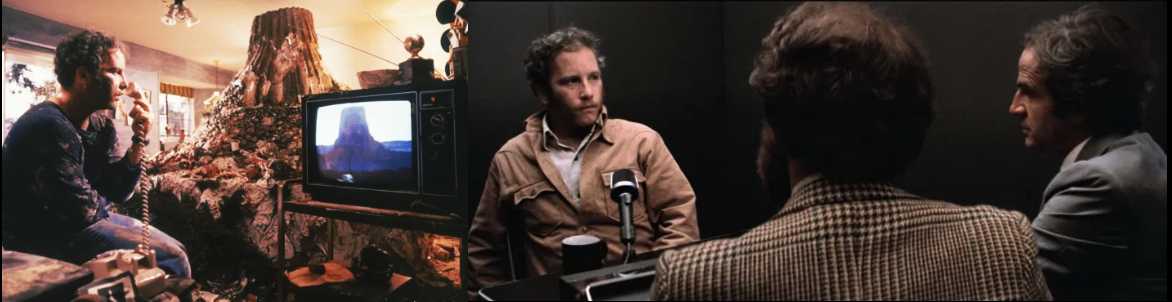 Their encounters changed their perceptions, priorities, and behavior.
Was it communication? An invitation? Some form of telepathic influence? In the movie, the military wants witness away from the mountain, but Lacomb, (just like Jacques Vallée), recognizes the strange psychic connection and wants to study it.
What if an extraordinary encounter influenced what someone thinks, believes, or does without that person understanding the source?
That question leads directly into Vallée’s research.
From Stanford to the Study of Consciousness
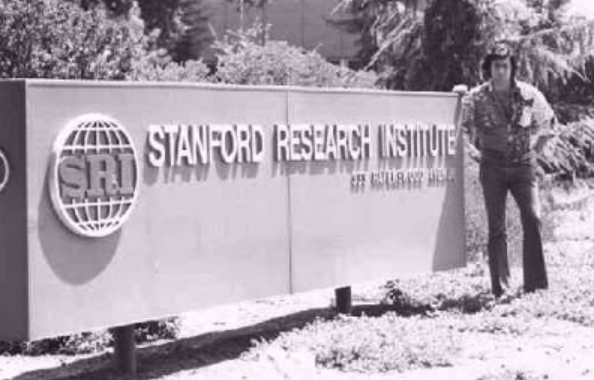
While researching Vallée’s career, I wondered whether he had crossed paths with scientists involved in remote-viewing research at the Stanford Research Institute, or SRI. Given his connections to Stanford, applied physics, information systems, and plasma research, it seemed a reasonable possibility.
So I dropped a question into a search engine—and wasn’t disappointed.
Vallée had indeed interacted with researchers including physicist Harold “Hal” Puthoff, who worked with Russell Targ and psychic researcher Ingo Swann at the Stanford Research Institute, the group studying and experimenting with remote viewing. Rice University’s archival collection even contains a record titled Ingo Swann Remote Viewing Training of Jacques Vallee, dated November 1981.
That’s a fascinating intersection of fields that are often discussed separately: UFOs, physics, intelligence research, human consciousness, and nonlocal perception.
These researchers did not necessarily share the same conclusions, but all were exploring questions about the limits of human perception.
Remote viewing is sometimes questioned because sessions involving future events cannot be verified until those events occur. Known targets, however, provide opportunities for immediate feedback, allowing viewers to assess their impressions and improve through practice.
Despite its documented history in intelligence and military programs, the effectiveness of remote viewing remains debated. Yet experienced practitioners have reported noteworthy results.
In a March 25, 1997 interview with Art Bell, professional remote viewer Joseph McMoneagle discussed the following performance ranges:
| Measure | Reported performance |
| Successful contact with a target | 60–65% |
| Accuracy of information when contact succeeds | 35–88% |
| Exceptional sessions | Approaching 100%, but rare |
These are McMoneagle’s reported figures rather than a universal statistical average.
In remote viewing, we’re taught to describe perceptions rather than prematurely name or identify a target. Even an incomplete session can contain remarkably accurate details. The practice encourages quieting the analytical mind, receiving impressions, and evaluating them afterward.
Scientists and intelligence researchers were investigating whether consciousness might interact with reality in ways conventional scientific models did not, or could not, adequately explain. Much of the government’s remote-viewing research remained classified until the 1995.
And Vallée was exploring related mysteries from another direction.
Messengers of Deception: The UFO May Not Be What It Appears
Vallée and astronomer J. Allen Hynek, another contributor to Spielberg’s Close Encounters, were never satisfied with the assumption that unidentified flying objects must be spacecraft arriving from distant planets. In his 1979 book Messengers of Deception: UFO Contacts and Cults, Vallée examined not merely where unidentified objects originated, but what happened to individuals and societies following reported encounters.
What beliefs emerged? What movements developed? What messages were attributed to the supposed visitors? And perhaps most importantly, who benefited from those messages?
I recently listened to two presentations by Jason Samosa, published in July and August 2025, revisiting Vallée’s work. (Links appear in the Resources section.)
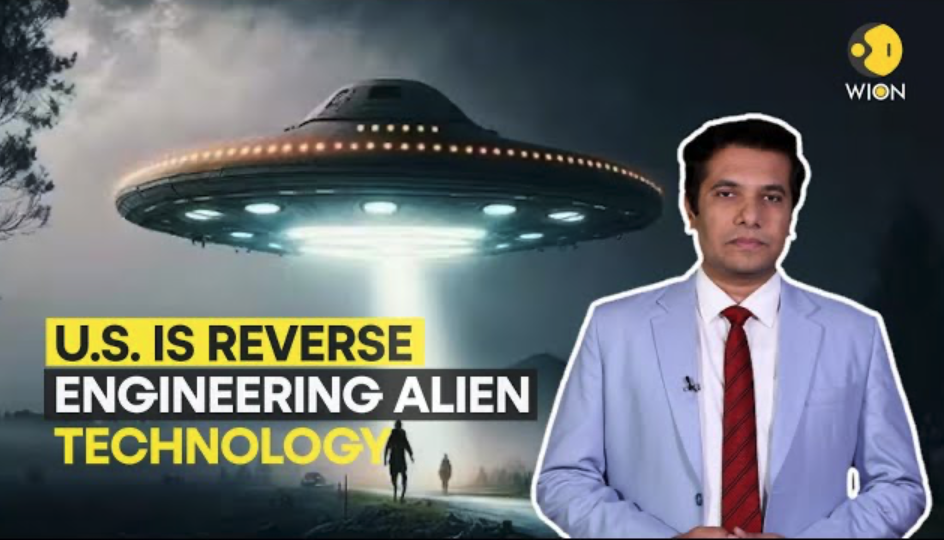 Samosa examines Vallée’s theories about manipulated perceptions, contactee movements, and the possibility that some apparent UFO encounters could be deliberately manufactured.
An extraordinary encounter might involve a genuine physical object, yet the witness’s interpretation could be influenced by unusual sensory effects, prior beliefs, suggestion, or misleading information supplied afterward.
That reminds me of a case I discussed in my earlier article, Do Not Be Afraid of What You Don’t Understand.
Terry Lovelace and his friend Toby, both military men, reported an alleged abduction during a camping trip. After listening to Terry’s account, I wondered whether they might have experienced a covert military operation, particularly because they were separated and prohibited from discussing the incident afterward.
Why prevent witnesses from comparing their experiences? We needn’t dismiss their experience to question the explanation attributed to it.
Something extraordinary may have occurred without being exactly what the witnesses believed it to be.
Major Murphy and the Possibility of Manufactured Encounters
In Messengers of Deception, Vallée introduces an intelligence-connected character named Major Murphy. (Connected to intelligence? What a surprise! LOL!) The conversations are set during the 1970s, long before The X-Files arrived on television in 1993.
Interestingly, Major Murphy was not one identifiable military officer. Vallée later acknowledged creating the character to represent perspectives drawn from several people he had interviewed, allowing him to explore sensitive ideas without identifying individual sources.
“Murphy” discusses technologies and techniques that might produce experiences witnesses could interpret as encounters with extraordinary aerial objects or beings. Among the possibilities were experimental circular aircraft (saucers), electromagnetic effects, drugs, hypnosis, altered perception, and methods of influencing memory.
This brings me to another interesting possibility: electromagnetic fields and human perception.
Neuroscientist Michael Persinger investigated whether patterned magnetic fields could produce sensations of an unseen presence, fear, or altered perception, although his findings remain debated.
Could some of the dread or unusual feelings reported during UFO encounters be a physiological response to electromagnetic fields? And if certain effects can be reproduced experimentally, might someone learn to exploit them, making an encounter seem far more extraordinary—or frightening—than it actually was?
Murphy’s fictionalized discussions raised the possibility that organizations might intentionally confuse genuine UFO reports with manufactured incidents. And Vallée was asking these questions during a period when the public was beginning to learn just how far intelligence agencies had gone in researching human behavior.
It makes me feel like we’re all lab rats!
MKULTRA: When Mind Control Wasn’t Science Fiction
 In August 1977, the United States Senate held hearings examining the CIA’s MKULTRA program.
The program involved research into drugs, hypnosis, psychological influence, and attempts to modify human behavior. Some experiments were conducted on individuals who didn’t even know they were participating.
These activities are documented in government records, including the 1977 Senate hearings and material subsequently released through Freedom of Information Act requests. John Greenewald Jr.’s The Black Vault maintains an extensive collection of these documents.
Consider the timing.
Close Encounters and Star Wars both hit the theaters in 1977. Vallée was investigating the manipulation of extraordinary experiences during roughly the same period that the public was learning about government-sponsored experiments involving perception and behavior.
Were these investigations connected in ways that have yet to be fully understood?
Samosa’s second presentation explores additional accounts involving unusual sensory effects, possible artificial memories, and allegations that some apparent abductions involved human operators. Entertainment via movies and Sci Fi TV shows is a good way to confuse or difuse the public interest in real accounts.
That takes me right back to The X-Files.
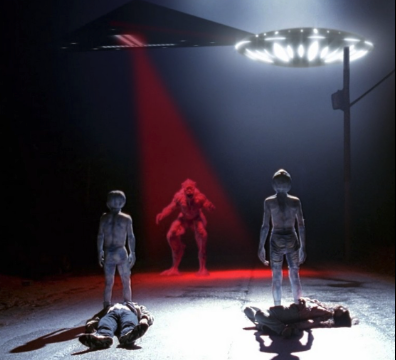
The episode “Jose Chung’s ‘From Outer Space’” explores conflicting eyewitness accounts and the possibility that alien-abduction stories could conceal classified military experiments.
“My Struggle” similarly revisits the idea that an extraterrestrial invasion narrative might be a conspiracy created by human beings. The plot reveals that nuclear testing during World War II attracted aliens to Earth, leading to a decades-long government conspiracy involving genetic manipulation and a viral outbreak linked to extraterrestrial DNA.
But where did creator Chris Carter find his inspiration?
One significant influence was Harvard psychiatrist Dr. John E. Mack, whose investigations into reported alien abductions helped shape Carter’s thinking. Carter even attended one of Mack’s hypnosis sessions involving an alleged abductee.
Combine that with Carter’s interest in government secrecy following Watergate, and the show’s recurring themes become easier to understand.
Samosa also discusses accounts found in Mark Pilkington’s Mirage Men and Nick Redfern’s Final Events, both of which explore controversial claims involving intelligence operations, unusual experiences, and possible deception. I dropped a link to a place where you can watch Mirage Men for free.
Government records have established that some agencies did investigate methods of influencing perception and behavior. Whether those techniques were successfully combined to stage specific UFO encounters is another question, one deserving careful investigation. And you know I love rabbit hole investigations. See Perception Management.
If a person can be made to perceive or remember an experience that differs from what physically occurred, how would investigators determine what really happened?
The Art of Plausible Deniability
“Plausible deniability is the ability of a person or organization to deny a connection (knowledge, responsibility, or involvement) to a controversial action in a manner that cannot be conclusively disproved. In the study of language and communication, indirect speech and insinuation are analyzed as ways for a speaker to preserve deniability about the intended meaning of an utterance.”
In other words, they confuse the heck out of the listener.
Science fiction can explore possibilities that might otherwise be dismissed as absurd. It can also reflect genuine scientific developments and concerns about emerging technologies. Consider what we can accomplish today.
Coordinated drone formations create enormous shapes that transform or seemingly disappear in the night sky. Metamaterials can alter particular optical properties, and artificial intelligence can generate convincing images, voices, and videos.
Someone observing a formation from a distance might believe they’re watching a single enormous object rather than numerous coordinated smaller ones. Think about the Fourth of July celebrations where drones have replaced fireworks. It’s pretty amazing technology. Could they have been used elsewhere?

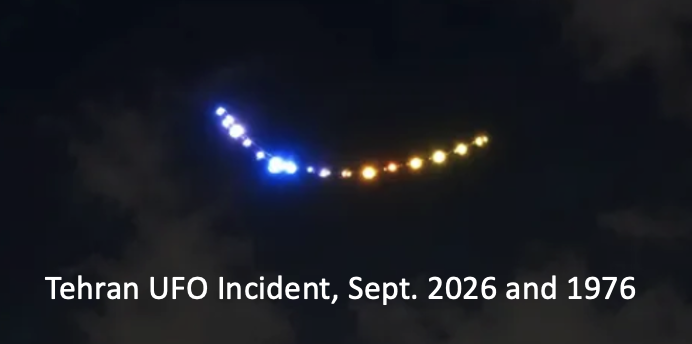
None of this explains every historical UFO sighting, particularly those occurring long before such technologies existed. Nor does it mean that every unusual encounter was manufactured.
But it complicates the task of distinguishing natural phenomena, advanced human technology, deliberate illusions, and something genuinely unknown.
Could genuine phenomena coexist with manufactured encounters designed to confuse investigators—or deliberately shift public perception? And if so, who’s directing the show?
The Psychological Consequences: Waiting for Someone to Save Us
Vallée also examined the social consequences of certain UFO contact movements, including what Samosa describes as intellectual abdication.
Suppose humanity becomes convinced that superior beings possess all the answers. Why would most struggle to improve the world if an advanced civilization is expected to arrive to solve all our problems?
Some religious traditions anticipate the return of a divine savior. Certain extraterrestrial contact narratives promise benevolent visitors bringing miraculous technologies. Other predictions anticipate a disclosure event that will suddenly reveal everything concealed from humanity.
I respect people’s spiritual beliefs, and I certainly hope for peaceful contact with other civilizations. But I question what happens when hope—or hopium—becomes dependency.
With conflicts, economic uncertainty, environmental challenges, and technological upheaval, who wouldn’t welcome a little assistance? Yet if we continually wait for someone else to save humanity, we risk surrendering our responsibility to improve our own future. We may abdicate something important… Our sovereignty and autonomy.
Vallée also warned that some contact movements promoted ideas of superior extraterrestrial ancestry or ideal civilizations requiring people to surrender individual choice and democratic participation. Those beliefs don’t characterize everyone interested in UFOs or spiritual contact. Nevertheless, they illustrate how promises from supposedly superior intelligences could be used to justify authority over others. We can see elements of Ethnocentrism and supremacismin these beliefs.
And that raises another provocative possibility.
What if some of these messages have been deliberately encouraged for decades—and amplified in recent years?
The Manufactured Threat: From Vallée to Steven Greer
Another researcher who has repeatedly warned about manufactured extraterrestrial threats is Dr. Steven Greer.
On May 9, 2001, Greer organized the first Disclosure Project press conference at the National Press Club in Washington, D.C., where military, government, intelligence, and other witnesses discussed alleged encounters, classified programs, and advanced technologies. He recently was interviewed about the 25 year anniversary of the first disclosure project: The 2026 Press conference – 25th Anniversary of the 2001 Disclosure Press Conference
Since that first conference, Greer has continued to argue that some UFO incidents could involve human-developed technology and that a manufactured extraterrestrial threat might be exploited to justify greater military spending, space-based weapons, and expanded control over the population. And he has the insiders and whistleblowers to tell of their involvement.
He has also alleged that advanced energy and propulsion technologies have been concealed from the public.
One historical claim frequently associated with this scenario comes from Dr. Carol Rosin, who worked with rocket scientist Wernher von Braun. Rosin has said that von Braun warned her about successive external threats being used to justify the militarization of space, culminating in the prospect of an extraterrestrial enemy.
Although these claims don’t establish that such a plan exists, they raise a question worth considering. Could an extraterrestrial threat narrative persuade the public to accept policies that might otherwise encounter significant resistance?
Problem, Reaction, Solution
Problem–Reaction–Solution (PRS) is a three‑stage pattern—create or amplify a problem, provoke a public reaction of fear or urgency, then introduce a pre‑planned solution.
A crisis needn’t be manufactured for someone to exploit it. But what if certain events were deliberately staged to produce a desired  response?
Imagine authorities announcing that humanity faces an unknown external threat requiring unprecedented defensive measures. Would people accept increased surveillance, military expansion, or restrictions they previously opposed? Imagine living in an Orwellian dystopia. A totalitarian society characterized by mass surveillance, propaganda, disinformation, and the manipulation or denial of objective truth. That’s the worst case scenario.
Or consider another scenario.
What if officials suddenly acknowledged that extraordinary energy or propulsion technologies had been developed years earlier but remained classified?
That revelation could transform civilization. Yet another question would arise: would these discoveries genuinely empower humanity, or would access remain controlled by a handful of powerful institutions? A proposed solution can appear beneficial while still concentrating authority.
This is why the distinction between disclosure and liberation matters. One does not automatically guarantee the other.
The Information War: What Can We Still Believe?
In a world of artificial images, manipulated recordings, competing narratives, and rapidly advancing technology, distinguishing fact from fiction has become increasingly challenging.
Genuine evidence can be dismissed as fabrication, while convincing illusions circulate as truth.
George Orwell’s 1984 explored a society in which information was manipulated to control human behavior. Today, algorithms, artificial intelligence, and the constant repetition of competing narratives introduce challenges Orwell could scarcely have imagined.
Yet information itself is not our enemy. The greater danger lies in surrendering our ability to question, investigate, and think independently.
That brings us back to Vallée’s central concern: an extraordinary encounter may affect not only what we believe about the universe, but how we respond to the world around us.
So Who Is Really in Control?
I’ve followed UFO reports for most of my life and personally witnessed things I still cannot adequately explain. Those experiences have encouraged my curiosity, not diminished it.
Some sightings may involve natural phenomena, advanced human technology, or deliberate deception. Others may represent something genuinely beyond our present understanding. And one possibility doesn’t necessarily exclude another.
There is also another perspective worth considering.
 What if some manifestations are not attempts to deceive humanity at all, but expressions of a deeper relationship between consciousness and the universe? Or if you will, a conscious universe that requires our participation.
What if some manifestations aren’t intended to deceive humanity, but to remind us of our connection to something greater?
Researcher Rey Hernandez proposes that consciousness is fundamental to reality, with the brain acting as a biological antenna rather than the source of consciousness itself. His Contact Modalities framework explores how UFO encounters, near-death experiences, and other extraordinary phenomena might arise from a shared field of consciousness.
It’s an intriguing hypothesis that offers an alternative to interpreting every mysterious encounter as either extraterrestrial visitation or human manipulation.
Perhaps the most valuable lesson from Vallée’s investigations is that what happens after an extraordinary encounter can matter as much as the encounter itself. Our beliefs, expectations, and responses help shape what happens next.
We can welcome peaceful contact without waiting for someone else to solve humanity’s problems. We can question official narratives without automatically rejecting every discovery. And we can embrace advancing technology without surrendering our freedom of choice.
We have work to do here and now: protecting our environment, strengthening our communities, preserving knowledge, developing beneficial technologies, and learning to coexist peacefully.
Those responsibilities belong to us, regardless of what exists beyond our planet.
It’s possible that the greatest revelation won’t arrive from a spacecraft, emerge from a classified document, or accompany some long-promised disclosure announcement.
It may come from recognizing that humanity has possessed the ability to influence its collective future all along.
The universe may hold mysteries beyond anything we’ve imagined. But our future is not something we must wait to receive. It’s something we can consciously create.
Editor’s Note: A Documentary Worth Watching
While completing this article, I revisited the 2013 documentary Mirage Men, based on Mark Pilkington’s investigations into UFO disinformation.
The film features former Air Force intelligence investigator Richard Doty, who discusses how fabricated extraterrestrial stories were used to mislead UFO researchers and divert attention from sensitive military activities. His admissions raise an uncomfortable question: How many seemingly extraordinary encounters have been influenced by deliberately misleading information?
What particularly struck me was how closely these accounts echoed questions Jacques Vallée had raised decades earlier.
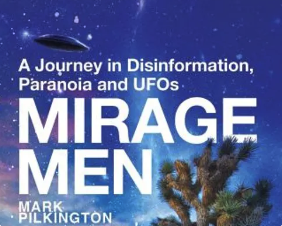 If you’ve followed the research presented here, I encourage you to watch Mirage Men and draw your own conclusions. Sometimes the illusion isn’t the sighting itself, but the story we’re encouraged to believe about it.
Where readers can watch it
Mirage Men — streaming options — Currently lists free viewing through Pluto TV, YouTube Free (with ads), and Kanopy.
Additional free streaming options — Also lists Tubi, Fawesome, and FlixHouse.
Official Mirage Men website — Information from the filmmakers.


Resources
- Jacques Vallée, Messengers of Deception: UFO Contacts and Cults (1979)
Buy from Amazon. Read the PDF online - Jason Samosa, Jacques Vallée’s Most Controversial UFO Theory,Part 1 and Part 2
- Rice University Archives, Ingo Swann Remote Viewing Training of Jacques Vallee (1981)
- Joseph McMoneagle, Remote Viewing Secrets; Art Bell interview, March 25, 1997
Non Local Consciousness: The Science, Philosophy, and Future of the Extended Mind
- U.S. Senate, Project MKULTRA hearings (1977)
- John Greenewald Jr., The Black Vault — CIA MKULTRA Collection
- Mark Pilkington, Mirage Men
- Nick Redfern, Final Events
- Transduction of the Geomagnetic Field as Evidenced from Alpha-Band Activity in the Human Brain, eNeuro (2019)
- Rey Hernandez, A Greater Reality

Your Tax Free Donations Are Appreciated and Help Fund our Volunteer Website
Disclaimer: We at Prepare for Change (PFC) bring you information that is not offered by the mainstream news, and therefore may seem controversial. The opinions, views, statements, and/or information we present are not necessarily promoted, endorsed, espoused, or agreed to by Prepare for Change, its leadership Council, members, those who work with PFC, or those who read its content. However, they are hopefully provocative. Please use discernment! Use logical thinking, your own intuition and your own connection with Source, Spirit and Natural Laws to help you determine what is true and what is not. By sharing information and seeding dialogue, it is our goal to raise consciousness and awareness of higher truths to free us from enslavement of the matrix in this material realm.