EN
EN FR
FR

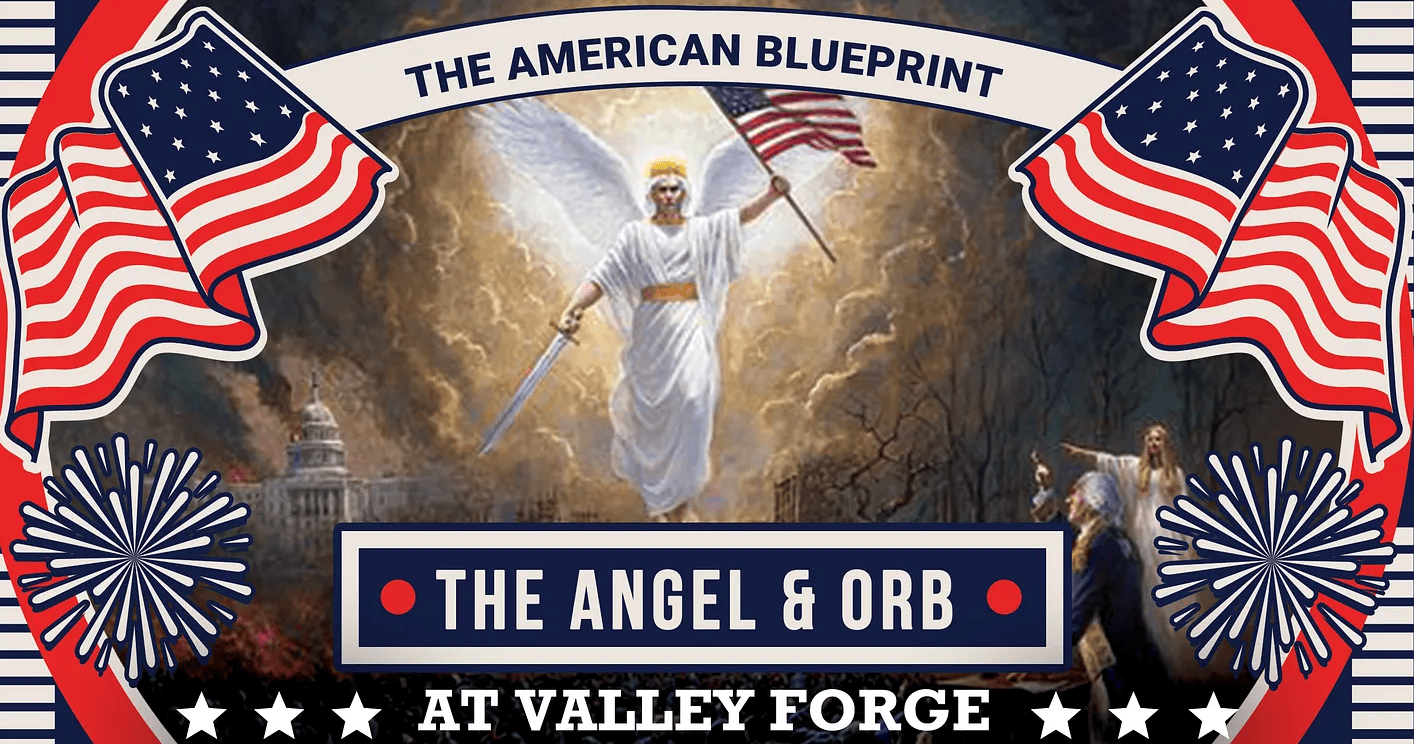
The winter of 1777 was the lowest point of the Revolution. Something changed Washington’s resolve. The tradition disagrees on what.
Valley Forge in the winter of 1777 was not a battle. It was an endurance test that the Continental Army was losing. Between December 1777 and June 1778, approximately two thousand soldiers died — not from combat, but from cold, hunger, dysentery, and typhus. The men who survived described conditions that should have broken any army: no shoes on frozen ground, inadequate food, inadequate shelter, inadequate everything. Washington’s own letters from the period document a commander watching his force dissolve while Congress argued about supply chains from a comfortable distance.
And yet the army held. Washington held. When spring came, the force that emerged from Valley Forge was a different army than the one that had entered it — better trained, more cohesive, hardened in a way that the comfortable months before had not produced. The Prussian drillmaster Friedrich von Steuben arrived in February 1778 and spent the winter standardizing the army’s tactics into something that could actually stand against British regulars in open field. By June, when the army marched out, the war had a different shape.
What happened inside Washington himself during that winter is the subject this article is interested in — not the military history, which is documented, but the interior account that runs parallel to it in the esoteric and contact traditions, and what that account encodes that the military history alone does not.
The Vision Account
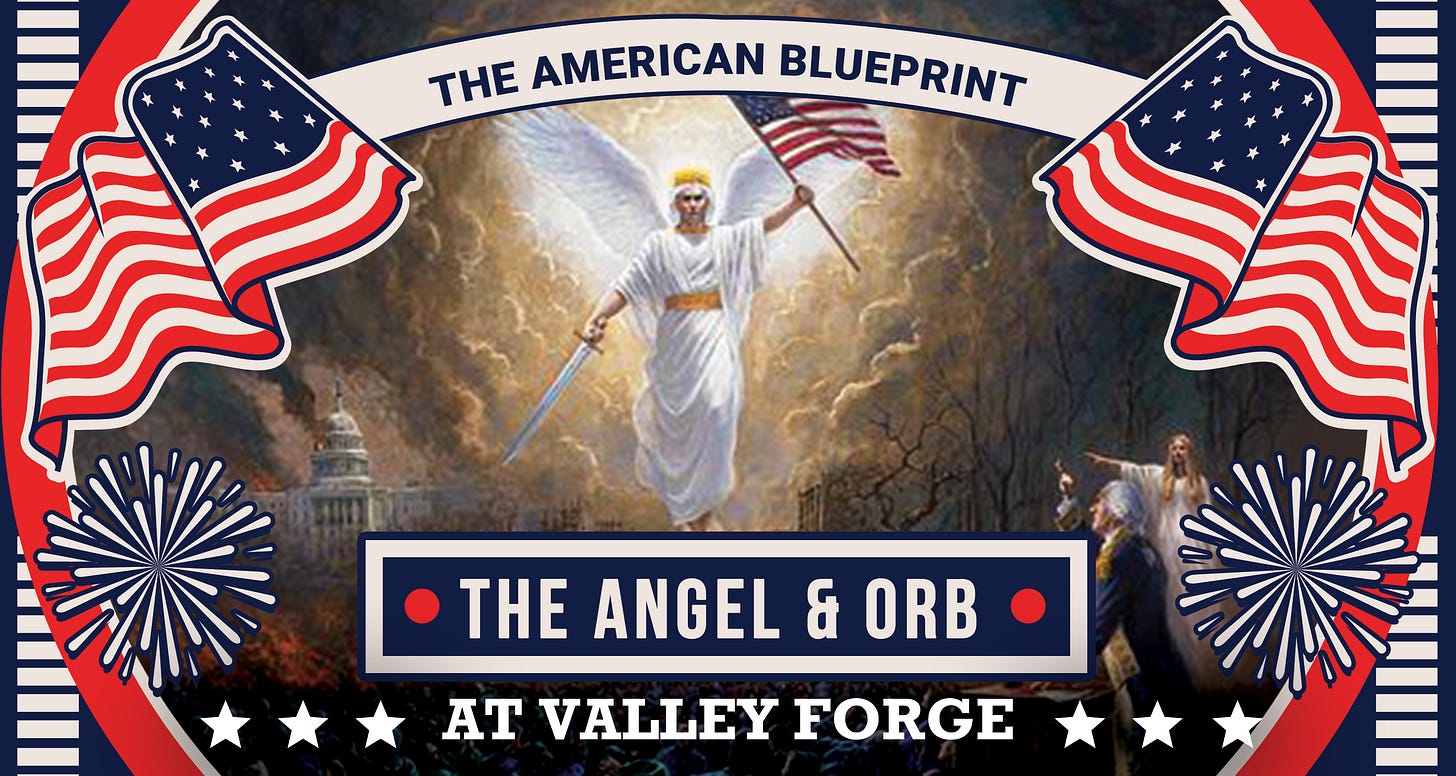
The primary document for Washington’s Valley Forge experience with a non-ordinary presence is a narrative published in the Philadelphia Inquirer in June 1861 and reprinted in the National Tribune in December 1880. It presents itself as the 1859 reminiscences of a ninety-nine-year-old soldier named Anthony Sherman, who claimed to have been present at Valley Forge and to have heard Washington describe an unusual experience directly. The narrative, rendered in Washington’s own reported voice, describes an afternoon alone in his quarters during which a singularly beautiful female presence appeared, refused to identify herself, and proceeded to show him three visions of the Republic’s future — its founding, its near-destruction in a civil war, and a third great peril from which it would eventually emerge victorious.
The retold account is reenacted in the video below with the angel addressing Washington as “Son of the Republic”
The being was described as luminous. The voice that accompanied the visions was a mysterious voice distinct from the female presence herself. The final vision closed with an angel planting a standard while the people said ‘Amen,’ and the word ‘Union’ blazoned on a crown of light. Then the presence disappeared, and Washington sat alone in a room he had given strict orders not to be disturbed in.
ORAL TRADITION / CONTESTED PROVENANCE – The Anthony Sherman account was first published by Wesley Bradshaw — a pseudonym for Philadelphia journalist Charles Wesley Alexander — in June 1861, at the outbreak of the Civil War. No Washington diary entry, contemporaneous letter, or corroborating eyewitness account from Valley Forge supports it. Mainstream historians including those at Snopes and the American Battlefield Trust categorize it as Civil War-era allegory: a journalist encoding the anxieties of 1861 into a founding-era vision, with the word ‘Union’ on the angel’s crown doing obvious rhetorical work at the moment the Union was fracturing. We hold this account at oral-tradition/contested-provenance confidence — worth examining seriously for what it encodes, impossible to verify as literal history.
The mainstream dismissal is not unreasonable given the sourcing chain. But it is also not the only thing worth saying about the account, and this series is in the business of examining what the tradition encodes rather than simply what the documentary record verifies.
The vision’s content is prophetically striking regardless of its provenance. Three great perils — the Revolution, slavery and civil war, and a third unnamed conflict. The detail about ‘Union’ appeared in a document first published the month the Union began to break.
The Blue Orb Tradition
Separate from the Sherman/Bradshaw vision account, the esoteric and contact-adjacent tradition around Valley Forge includes descriptions of a blue orb — a luminous presence distinct from the angelic female figure of the published account, described in some versions of the tradition as having appeared to Washington in the weeks before the turn of the winter, providing a form of energetic resolve that preceded rather than narrated the vision. This tradition does not appear in the documentary record. It circulates within the community of researchers and experiencers who treat the contact tradition around the founding as continuous with present-day contact phenomena — the same community that holds the Saint-Germain legend at serious rather than dismissible confidence.
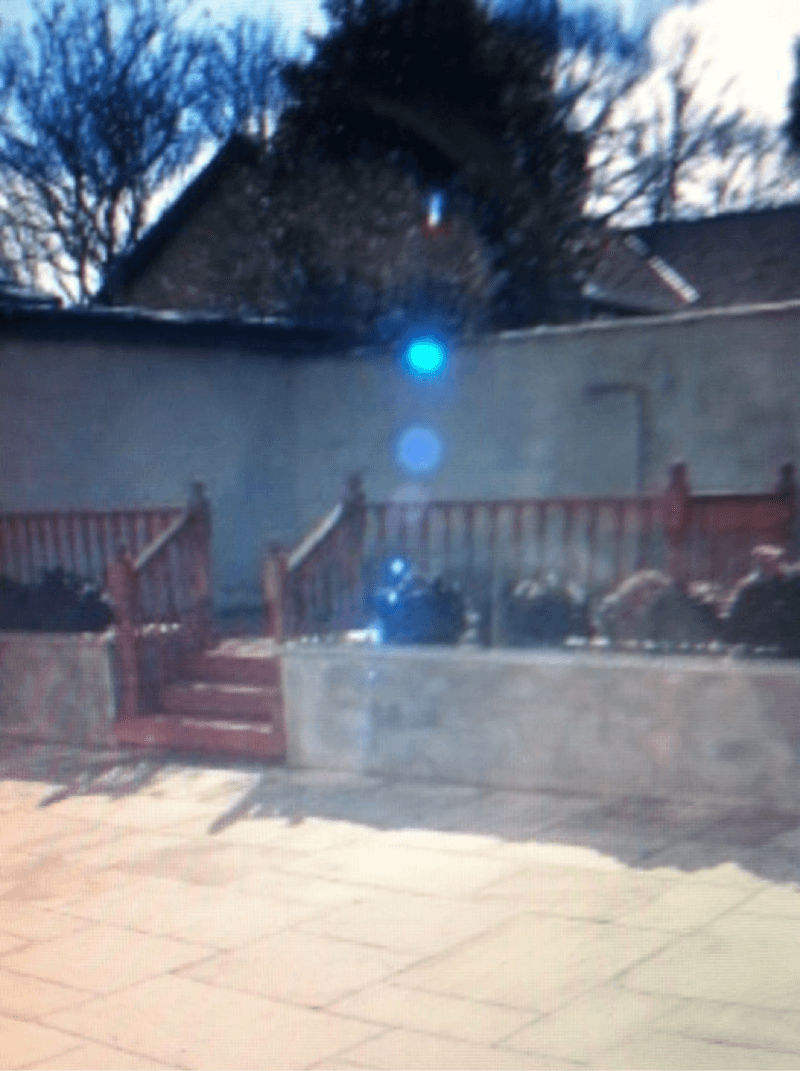

We note it here for what it is: a parallel current within the broader oral tradition around Valley Forge, held at the lowest confidence tier this series uses, present in the community our publication serves, and worth naming honestly rather than either asserting or dismissing. The blue orb as a contact phenomenon is not unique to the Washington tradition — it appears across multiple contemporary accounts within the UAP and experiencer communities, and its presence in the founding-era legend is worth at least noting as a pattern that connects the eighteenth-century material to the present-day contact research this publication has covered elsewhere.
What the Masonic Monument Confirms
Set aside the contested vision account entirely and look at what is not contested: on August 24, 1997, the Freemasons of Pennsylvania dedicated a formal monument at Valley Forge National Historical Park. Its inscription reads, in part, that the monument was placed to honor George Washington, a member of the Masonic Fraternity, and the many Freemasons who were part of the encampment, so that future generations would know that freedom was as important in 1997 as it was in 1777.
DOCUMENTED – The Masonic Monument at Valley Forge was dedicated August 24, 1997, adjacent to the National Memorial Arch at Valley Forge National Historical Park. The inscription acknowledging Washington’s Masonic membership and the Masonic presence throughout the encampment is a matter of public record. Valley Forge National Historical Park encompasses 3,466 acres eighteen miles northwest of Philadelphia, preserving the site of the Continental Army’s encampment from December 19, 1777 to June 19, 1778.

The monument does not prove the vision. But it formally acknowledges what Article 1 of this series established as the structural argument of the entire arc: the Masonic network was not incidental to the founding project. It was present at every critical moment of it — including the lowest moment, the winter at Valley Forge, where the network that had coordinated the Revolution held together against conditions that should have dissolved it.
Washington’s faith, whatever its precise theological content, was documented and consistent. His practice of private prayer is attested by multiple contemporaneous witnesses, including the famous account of the Quaker Isaac Potts observing him kneeling in the snow. That a man of that temperament, at the lowest point of an eight-year project, in the context of a fraternal tradition that treated contact with higher intelligence as a genuine possibility rather than a metaphor, might have had an experience that he understood as a form of contact — that is not an outlandish claim. It is the most natural thing in the world.
The Makow Observation
One current within the analysis of the Revolutionary War’s outcome raises a question that the standard military history does not fully answer: why did the British, who had every structural advantage in the conflict — professional army, naval supremacy, established supply chains, superior equipment — lose? The conventional explanations are real and documented: overextension, French alliance, guerrilla tactics, the political cost of a prolonged colonial war. But Henry Makow, among others, has raised a separate thread: that a meaningful number of British military commanders in the American theater were themselves Masons, operating within the same fraternal tradition as Washington and many of his officers, and that this shared membership may have created something more complex than a straightforward military conflict — a situation in which some commanders on both sides understood the American project as serving a larger design that transcended the military and political interests of the Crown.
ASSESSED / SINGLE SOURCE – The claim that British commanders in the American Revolutionary theater deliberately or semi-consciously allowed the American project to proceed due to shared Masonic affiliation is attributed primarily to Henry Makow and writers in the same analytical tradition. It is a plausible structural observation given the documented Masonic presence on both sides of the conflict, not a claim supported by direct documentary evidence of commanders acting on fraternal rather than military grounds. We note it as a genuine question the standard history leaves open rather than as a settled claim.
What is documented is that Freemasonry was not exclusively American or colonial in this period. British military officers of the era moved through the same lodge networks, used the same degree structures, and understood the same vocabulary of obligation and brotherhood that Washington and his officers did. Whether that shared vocabulary produced deliberate restraint in specific commanders, or simply produced the kind of informal regard between opponents that sometimes characterizes wars between men who know each other through common institutions, is a question the record cannot definitively answer.
It is, however, the right question — because it returns us to the core structural argument this series has been making since Article 1. The Masonic network in the 1770s was not a colonial network or a British network. It was a transatlantic network. A war between a colonial army and a British army in which significant numbers of officers on both sides belonged to the same fraternal institution is not simply a military conflict. It is a project, playing out on a military stage, in which the outcome may have been more predetermined by the network than by the battlefield.
What the Vision Was For
Return to the Sherman account one more time and read it not as a historical record but as a tradition encoding something the founding generation understood about what they were doing.
The vision — if held as legend rather than history — tells a story about a man at his lowest point receiving a view of the long game. Not tactical instructions. Not a promise of immediate rescue. A view across centuries: the birth of the nation, its near-destruction, its survival, its ultimate victory in a third conflict not yet named. The effect on Washington, in the account, is not jubilation. It is resolve. He does not emerge from the quarters convinced that everything will be easy. He emerges convinced that the project is worth continuing regardless of present conditions.

That is the function the contact tradition assigns to this kind of encounter across every era it appears in — not the provision of tactical advantage but the restoration of orientation. The recipient is not given a shortcut. They are given a view of where the arc goes, sufficient to continue when present conditions alone would argue for stopping.
Whether Washington received that view in the winter of 1777 from a luminous female presence in his quarters, from a blue orb in the camp, from the discipline of a man who had trained himself to find it in prayer, or from some combination of all three, is a question this series cannot settle. What the tradition preserves is the claim that something happened at Valley Forge that was not purely military — that the network which built the nation was supported, at its lowest moment, by something the network itself understood as operating above it.
SERIES BRIDGE – The contact-and-choice frame will be established in Article 5 — the distinction between contact that goes service-to-self and contact that orients toward the age change (service-to-others) — runs through this account as well. The vision Washington reportedly received was not a blueprint for dominion. It was a view of survival, union, and eventual victory over a third unnamed peril. Whatever the source of that view, its content belongs to the counter-current lineage rather than the control project lineage. Article 4 examines what the network then built with the resolve that winter produced.
Eyes to see it.
The American Blueprint — Series Roadmap
Article 1 — The Fraternity Before the Flag [Published]
Article 2 — The Comte and the Cause [Published]
Article 3 — The Angel and Orb at Valley Forge [You are here]
Article 4 — A City Built to a Plan
Article 5 — New Atlantis, New Lemuria, and the World Before
Article 6 — The Permanent Government (COG)
Article 7 — The Imperial Agency and the Hemisphere
Article 8 — 250 Years of the Plan
— Gerry
Gerry Gomez is an investigative journalist, creative director, and hybrid war correspondent who has spent a decade documenting the convergence of financial, media, and geopolitical forces shaping the current global transition.

Your Tax Free Donations Are Appreciated and Help Fund our Volunteer Website
Disclaimer: We at Prepare for Change (PFC) bring you information that is not offered by the mainstream news, and therefore may seem controversial. The opinions, views, statements, and/or information we present are not necessarily promoted, endorsed, espoused, or agreed to by Prepare for Change, its leadership Council, members, those who work with PFC, or those who read its content. However, they are hopefully provocative. Please use discernment! Use logical thinking, your own intuition and your own connection with Source, Spirit and Natural Laws to help you determine what is true and what is not. By sharing information and seeding dialogue, it is our goal to raise consciousness and awareness of higher truths to free us from enslavement of the matrix in this material realm.