EN
EN FR
FR

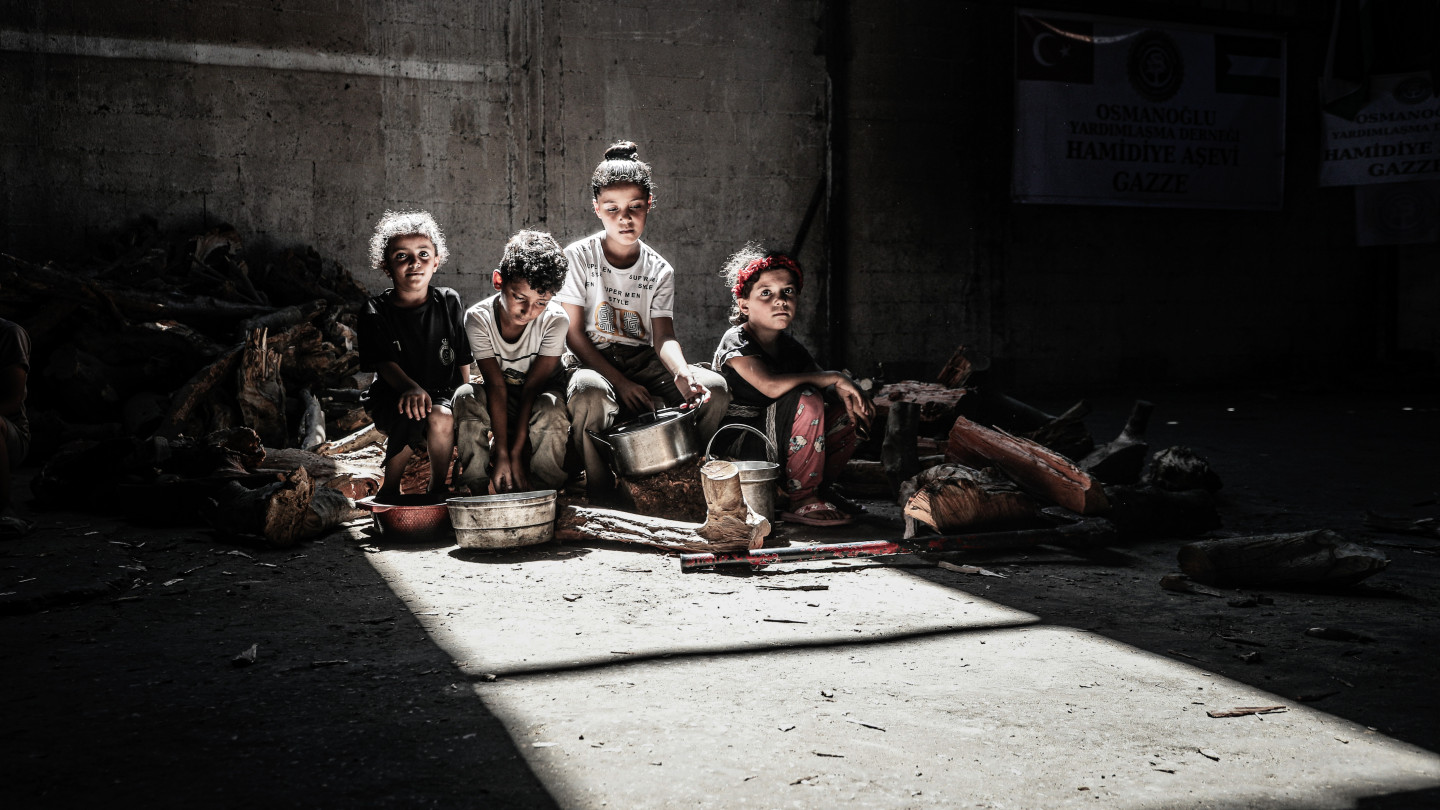
Since Israel launched its genocidal war on Gaza in October 2023, the long daily wait for news of the arrival of food aid trucks has been a source of constant worry for Palestinians in the Strip.
News may travel by word of mouth: “120 food aid trucks made it across the border today,” but Palestinians see no trace of this food, not in the streets of the camps nor inside the schools overcrowded by displaced people.
As Gazan families continue to be gripped by starvation, they ask, “Where have these food aid trucks disappeared to?”
The story of Gaza’s food aid begins at the border crossings with Israel, where only a limited number of trucks make it across the border after hours of inspection.
But even after crossing the border into Gaza, the journey is no less complicated — in fact, it is more dangerous.
Between Israeli checkpoints, a lack of Palestinian security forces and the destruction of security surveillance systems due to the war, small networks of smugglers lurk, waiting for the opportune moment to apprehend food aid trucks on their way to warehouses.

‘We heard the sound of bullets, and then the aid truck disappeared’
At an UNRWA school in Khan Younis, South Gaza, Um Nasser sits on a dilapidated pavement cradling her frail baby. In a hushed voice, she recalls the last time she saw an aid truck.
“We were standing waiting for our turn to get food,” she tells The New Arab.
“A nearby truck pulled up to the street next to the school. Suddenly, we heard gunfire. Three young armed men stopped the aid truck, and after a few minutes, there was no trace of it. The driver was trembling with fear, and all I understood was that the truck had gone, and we got none of the food.”
Um Nasser is not alone. Dozens of witnesses who wished to remain anonymous told The New Arab that they had witnessed the same scene: food aid trucks that were due to arrive disappearing within minutes, as if the ground had swallowed them up.
Some are rerouted to secret warehouses, and others are unloaded in houses that serve as headquarters for black market operations.

From checkpoints to the black market
According to truck drivers and food aid workers who spoke to The New Arab on condition of anonymity, the seizure of food aid trucks tends to occur shortly after the trucks cross the border.
Truck drivers work under constant pressure and fear, recalling stories of being threatened with weapons by people who instruct them to change their route and to drive to other destinations.
One driver, who asked not to be named, said, “Once I was given a message that read, ‘Don’t go to the [official food aid] centre, instead turn left after the roundabout. If you don’t, people will stop you by force.’ I understood the message. I am human and don’t want to risk my life. I went to the other place as directed and unloaded the truck.”
At these alternative destinations, food aid trucks are unloaded, and a new chapter begins: the selling of food aid on the black market at extortionate prices.
“We paid 50 dollars for a bag of flour, which should have been free.”
In a narrow alleyway of Nuseirat Camp, Abu Mohammed stands in front of a small wooden table. On it are a few cans of beans.
He says with suppressed anger, “Before the war, I used to buy a bag of flour for only six dollars. Today, bags of flour cost $50 each. How? Who is responsible? How is it that food that was meant to be free food aid is being sold at these prices?”
Gaza’s black market is not a new phenomenon; however, since the latest ceasefire, which went into effect in October 2025, it has become more organised.
Small networks of looters and smugglers seize the food aid from trucks and resell it on the black market through intermediaries. Today, food aid baskets bearing the logos of international humanitarian agencies are openly for sale.
Who is responsible?
With Gaza’s internal security forces and administrative infrastructure decimated by over two years of war, the Strip’s roads have been left unguarded.
Aid agencies acknowledge that monitoring the aid has become virtually impossible and that they have lost contact with a number of their distribution points. Gaza’s catastrophic humanitarian situation has created a breeding ground for an economy of chaos.
One aid worker for a humanitarian agency speaking on the condition of anonymity says, “We send food aid, but we don’t know where it ends up. We have lost the ability to monitor it internally. Without a monitoring system, there will always be an opportunity for the aid to be seized.”
Is it possible to save aid trucks?
Experts have suggested using QR codes on food aid trucks to enable real-time monitoring of their perilous journeys.
The idea is that aid agencies would be able to monitor the journey of the aid trucks from the border to their intended destination.
Other ideas have included creating community teams to protect aid trucks or creating safe, monitored corridors for them.
But the bigger question remains: can the safe delivery of food aid be guaranteed in a besieged area lacking security and a stable government?
Like many Palestinians in Gaza, Um Nasser is not sure. “We are not asking for much,” she says.
“We just want the food aid to reach people before it gets lost. Every day I hear that food aid trucks have made it in, and every day I return to my tent empty-handed.”
Haya Ahmed is a doctor and freelance writer from Gaza
Source: https://www.newarab.com

Your Tax Free Donations Are Appreciated and Help Fund our Volunteer Website
Disclaimer: We at Prepare for Change (PFC) bring you information that is not offered by the mainstream news, and therefore may seem controversial. The opinions, views, statements, and/or information we present are not necessarily promoted, endorsed, espoused, or agreed to by Prepare for Change, its leadership Council, members, those who work with PFC, or those who read its content. However, they are hopefully provocative. Please use discernment! Use logical thinking, your own intuition and your own connection with Source, Spirit and Natural Laws to help you determine what is true and what is not. By sharing information and seeding dialogue, it is our goal to raise consciousness and awareness of higher truths to free us from enslavement of the matrix in this material realm.