EN
 FR



What Is Reality? Who Controls the Story, and Who Writes the Ending?
By Rev. Kat Carroll | October 30, 2026
What is reality?
Is it everything we see and hear? Is it only what we can experience through our five physical senses of sight, hearing, taste, smell, and touch?
How much of what we believe is based on what we’re told by the news? I know a good number of you are already laughing, having come to the realization that much of what we’ve been told over the years hasn’t necessarily been true.
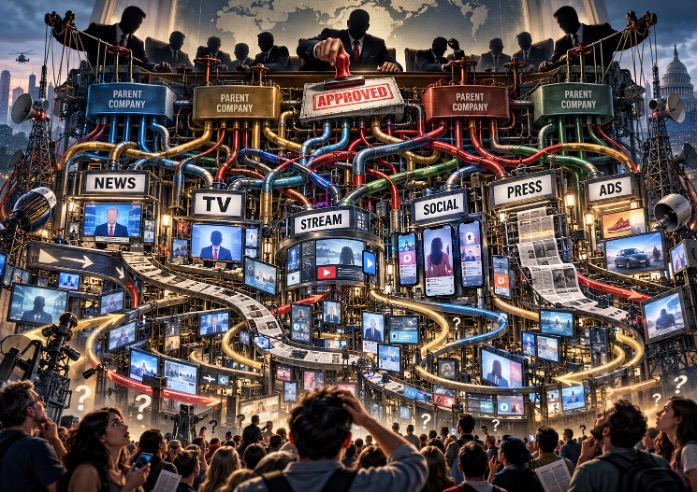 So how do we separate the fake news from the reality we’ve experienced for ourselves?
This may sound like a side step in the article, but bear with me a moment.
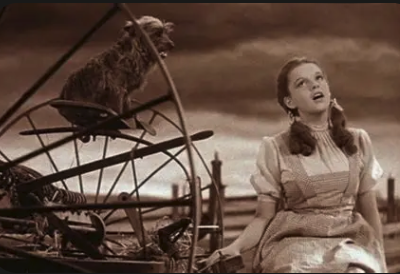
I was thinking about dreams and how some of my own are quite vivid, full of color, and sometimes even the sensation of touch. Those are the ones I remember. Studies have suggested that people who grew up watching black-and-white TV are more likely to report dreaming in black and white. Likewise, those who dream in color may do so because that’s what we’ve grown accustomed to seeing through modern television, movies, and the colorful world around us.
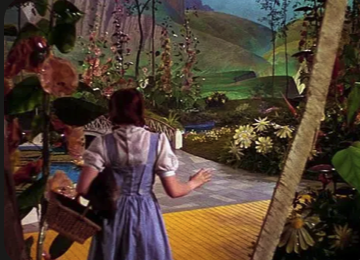
I imagine it might be like Dorothy in The Wizard of Oz, opening the front door of her house after being swept up by the tornado and suddenly discovering the colorful world of Oz.
 |  |
Those images can stay with us for decades.
But here’s another question: How much of what we see and hear every day shapes what we believe is possible, or even real?
Behind the Curtain
Remember the Wizard? That great and powerful figure who frightened everyone with booming declarations, smoke, fire, and an enormous projected face?
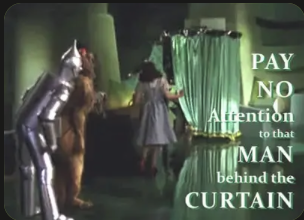 Then Toto pulled back the curtain.
Behind all that spectacle was an ordinary man operating the machinery. Sometimes I wonder how many curtains we’ve yet to pull aside.
Recently, I listened to another presentation in Michael Salla’s Green Mountain Mystery series, featuring JP, a military serviceman who has shared accounts of extraordinary assignments, and Michael of Conflict Radio.
Their discussion led back to a remarkable piece of American military history. Information kept quiet for 55 years until the archive release.
In 1959, the United States Army developed Project Horizon, an actual proposal for a permanent military installation on the Moon. The plans included living quarters, power generation, communications, scientific facilities, and accommodations for personnel stationed there.
This wasn’t science fiction. It was an official military study, developed during the era of Wernher von Braun and the Army Ballistic Missile Agency. Even stranger, the original study was dated June 8, 1959—a full decade before Apollo 11 landed on the Moon!
The public history tells us Project Horizon was never completed. Yet we’ve seen other government research continue under different names and organizations, as happened with remote viewing. Could something similar have occurred here?
But JP presented another account. He described visiting an enormous underground installation where, he said, the structures resembled those planned for Project Horizon, only on a much larger scale. According to his testimony, the lunar project had continued beyond its publicly known history.
Was Project Horizon merely a proposal that was abandoned, or might some of its plans have found their way into other programs?
Was it a Nazi breakaway society as has been hinted about for decades?
Are there other beings or aliens living on the moon?
What did the Astronauts really see and will we ever know?
Many of us remember the Apollo missions, particularly that extraordinary moment in July 1969 when humanity first watched men walk on the Moon. But some of us also remember the first post-flight press conference, when Neil Armstrong, Buzz Aldrin, and Michael Collins appeared surprisingly subdued following what should have been one of humanity’s greatest celebrations.
Over the years, people have wondered whether the astronauts witnessed something they weren’t permitted to discuss.
What if there were already structures or vehicles on the Moon?
In a presentation recently republished on YouTube, David Wilcock discussed NASA photographs identified by numbers, including AS10-32-4822 and AS14-66-9301. The episode is called, The Moon Photos They Never Wanted us to See.
Wilcock revisited the work of Ken Johnston and Richard Hoagland, presenting images that they interpreted as possible towers, domes, geometric structures, and remnants of earlier lunar construction. He also discussed allegations that different versions of certain Apollo photographs had been air brushed to hide certain details. Those were also shown in his book, The Ascension Mysteries. And trust me, I couldn’t put it down!
Those interpretations invite a closer look at the original image archives. We can examine what was photographed, what later processing revealed, and how the different interpretations arose, or were espoused as hoaxes.
The Star Trek Legacy
Perhaps some individuals enter our lives to become way-showers, helping us imagine realities beyond those we’ve been taught to accept. I have long considered people such as David Wilcock and Gene Roddenberry among them. Through their work, they invited us to question what we know, explore what might have been withheld, and envision a very different future for humanity. Roddenberry went a step further, bringing that vision to life through Star Trek and the remarkable actors who portrayed a civilization guided by exploration, cooperation, and a higher understanding of our place in the universe.
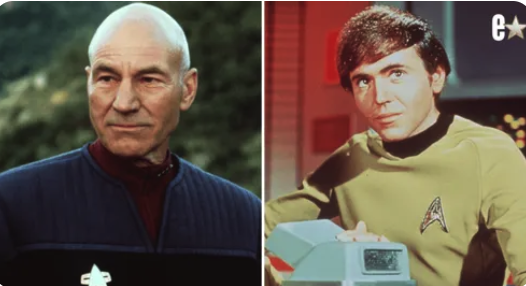 With the passing of Walter Koenig, our beloved Chekov, on October 25, and Sir Patrick Stewart, Captain Jean-Luc Picard, just three days later, I find myself reflecting on the legacy they leave behind. Perhaps their greatest contribution wasn’t showing us what the future would look like, but inspiring us to imagine what humanity might become. Their journeys here may have ended, but the vision lives on.
And there’s another historical curiosity.
In 1975, television audiences were introduced to Space: 1999, featuring Moon base Alpha, a permanent human installation complete with advanced spacecraft, laboratories, and hundreds of residents. Yet the United States Army had contemplated a permanent lunar outpost sixteen years earlier.
Was television anticipating humanity’s future, borrowing from existing aerospace concepts, or reflecting possibilities that had already been explored beyond public view?
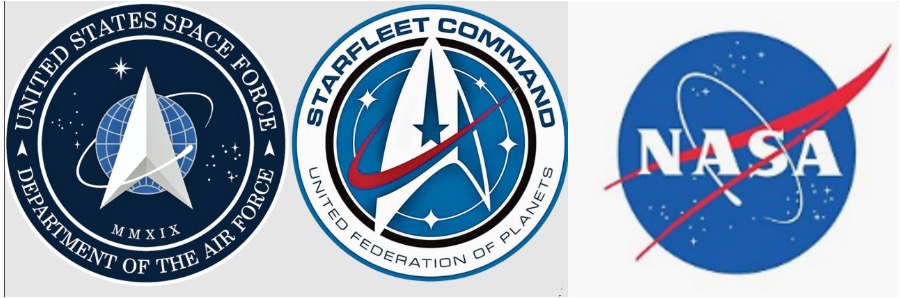
NASA adopted the stylized delta in black and white in 1959, in color in 1961 – Star Trek adapted the similar shape when it began filming in 1964. Space Force adapted a similar logo in 2019.
 We might also ask why certain advanced technologies remain classified for years before the public learns they existed. The explanation generally given is national security.
Sometimes history isn’t hidden because the documents remain classified. It’s hidden because nobody knows where to look—or even what questions to ask. And even if you think you do, the internet often sends back a message that the technology is a myth or a hoax. What’s a person to believe?
Lockheed’s stealth aircraft offer an excellent example. Some were flying years before their existence was officially acknowledged or simply called a UFO. During the Cold War, classified aircraft also contributed to UFO reports. The Northrop B-2 Spirit stealth bomber was hidden from public view for 10 years before its official unveiling. The same with The Lockheed F-117 Nighthawk, the world’s first operational stealth aircraft, remained a secret for seven years after its first flight in 1981 and was not publicly acknowledged until November 1988. But it wasn’t displayed in public until 1990. And they sported the delta shape in their logos, as did Star Trek.
A similar lesson emerges from the history of government remote-viewing research. Work initially associated with Stanford Research Institute did not simply vanish when one sponsor or project ended. The project wasn’t declassified until 1995, at least 23 years after it began at SRI in 1972. Related military intelligence operations continued through Fort Meade under changing names, including GRILL FLAME, CENTER LANE, SUN STREAK, and STAR GATE.
If a project changes its name or moves to another agency, has the work truly ended, or have we simply lost site of the target? So when we encounter reports of unconventional craft, perhaps the better question isn’t simply whether they’re extraterrestrial or if they are real. We may want to ask what technologies humanity might already possess that the public has never been shown.
The Gilded Cage Called Mars
One of JP’s most thought-provoking statements concerned people supposedly living in underground settlements on Mars.
He described communities where families raise children, attend school, receive medical care, and live relatively comfortable lives. But according to his account, some inhabitants have been told that Earth was destroyed and that they are humanity’s survivors.
Imagine growing up in such a place. You have food, shelter, education, employment, and a community. You might even consider yourself fortunate. Yet everything you understand about your history and your place in the universe depends on information supplied by those who govern your world. I’m sure that sounds familiar to you, even involving our own history on Earth.
What happens if someone finally tells you that Earth is still there, or that humanity came from another world? Would you believe them? Would you consider them dangerous? Most likely, you would want to see for yourself, but that’s not generally an option.
How much freedom do we really have if someone else determines what we’re permitted to know? That brings me back to my recent article, The Gilded Cage: Freedom’s Price in a World of Machines.
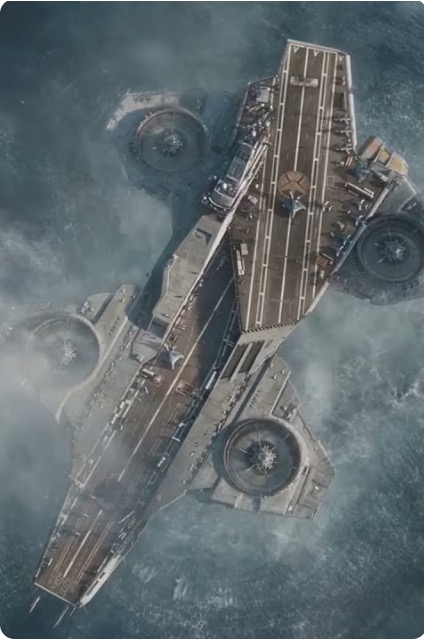
During the Green Mountain discussion, Michael of Conflict Radio spoke about a purported underground facility, including information he said had been provided to him on a thumb drive. He described a diagram showing an entrance or exit near the top of a mountain, while the panel considered whether an adjoining lake could conceal additional access.
The conversation moved into stranger territory: unusual energy associated with particular locations, consciousness interacting with technology, and what the speakers referred to as the Eighth Force.
One of Michael’s strongest concerns was the possibility of humanity becoming a technologically connected hive mind, with artificial intelligence and implanted devices diminishing individual autonomy. He invoked the Borg from Star Trek. Resistance is futile!
I certainly hope not!
I spoke on that possibility in another recent article, Standing at the Precipice: Humanity’s Next Great Leap
JP offered a different emphasis. He acknowledged the danger of advanced technology becoming a weapon, but also spoke of the extraordinary opportunities it could create if used responsibly.
And there was our old friend, Star Trek, entering the conversation again.
The issue wasn’t simply whether technology should advance. It was whether humanity would remain free to decide how that technology was used.
Michael Salla also raised the growing influence of corporations and the question of who ultimately owns discoveries developed through government-funded research. If taxpayers finance a technological breakthrough, but a private corporation controls the intellectual property, who benefits?
If extraordinary propulsion, energy, medical, or communications technologies exist within classified programs, when does national security justify keeping them secret, and when should the benefits become available to the public?
Who holds the keys to humanity’s future?
The Future We Were Shown
I grew up during the Cold War, when nuclear weapons, international hostility, and the possibility of global destruction were constant concerns. Well, maybe not for us as children, but I know it was on the mind of my parents and grandparents. The world didn’t feel safe to them anymore.
Then, in 1966, Gene Roddenberry introduced us to Star Trek. Consider what that television series represented.
Walter Koenig played Ensign Chekov, a Russian serving alongside Americans at a time when our nations were portrayed as adversaries.
Nichelle Nichols portrayed Lieutenant Uhura, a Black woman occupying a position of responsibility and respect on the bridge of a starship. She later helped inspire women and minorities to pursue opportunities in science and NASA’s astronaut program.
Leonard Nimoy gave us Spock, a Vulcan who demonstrated that intelligence, loyalty, friendship, and cooperation didn’t have to be limited to our own species. 🖖
James Doohan portrayed Montgomery “Scotty” Scott, the brilliant engineer whose ingenuity and determination kept the Enterprise flying against impossible odds. Scotty was famous for giving Captain Kirk repair estimates longer than he actually needed, making himself something of a miracle worker when he completed the job ahead of schedule. He reminded us that ingenuity, perseverance, and a little humor could overcome seemingly impossible technical challenges.
George Takei portrayed Lieutenant Hikaru Sulu, the skilled helmsman who helped guide the Enterprise through unknown regions of space. As a Japanese-American officer serving alongside Americans, Russians, and people from other worlds, Sulu embodied Roddenberry’s vision of cooperation beyond national and cultural divisions. Takei would return to the role across several Star Trek films, eventually commanding his own starship, the USS Excelsior, as Captain Sulu.
William Shatner, Captain James T. Kirk, the charming commander who boldly explored strange new worlds (or heavenly bodies), and defended other civilizations. He wasn’t afraid to challenge authority when he believed it was wrong, including breaking the Prime Directive.
With the recent passing of Walter Koenig, only William Shatner and George Takei remain from the original seven principal cast members of Star Trek. How extraordinary that characters introduced sixty years ago continue to influence our vision of humanity’s future.
Perhaps Roddenberry’s greatest gift wasn’t simply showing us distant worlds or extraordinary technologies. It was showing us what people from vastly different backgrounds could accomplish when they learned to respect one another and work toward a common purpose.
They weren’t simply entertaining us. They were helping us imagine a very different world.
Then came The Next Generation in 1987, with Patrick Stewart portraying Captain Jean-Luc Picard, a leader who frequently placed diplomacy, wisdom, and understanding above the use of force.
On November 9, 1989, the Berlin Wall opened, beginning the dismantling of one of the most powerful symbols of Cold War division. Consider the timing. While fictional explorers were demonstrating cooperation among civilizations, people here on Earth were beginning to tear down walls that many believed would remain forever.
Lighting the Way for the Future
Dolores Cannon wrote about generations of volunteer souls who, in her QHHT accounts, had come to help humanity move away from destructive patterns and toward a more compassionate future. She called them way-showers, those who show the way for others. They are also often referred to as Star Seeds.
Whether we understand that through spirituality, cultural evolution, or simply the influence of extraordinary people, there’s something worth considering. Could offering humanity a better vision of the future help us create it?
Are we continually concentrating on war, division, enemies, and everything that’s wrong with humanity? Or are we also envisioning a world where we cooperate, explore new worlds, new civilizations, and boldly use technology to free ourselves from unnecessary hardship? Sorry, I almost said it!
In Star Trek, technology didn’t replace human purpose. It created greater freedom to pursue it.
People still worked. They became explorers, healers, scientists, teachers, musicians, artists, and philosophers. But they no longer worked for the money. Can you even imagine that scenario?
Star Trek showed that advanced civilizations would continued to learn, create, and serve others. And perhaps most importantly, they retained freedom of choice in what they wanted to pursue for work or pleasure.
That’s a very different future from the one offered by a gilded cage.
And it’s certainly more exciting than what could have become George Orwell’s Nineteen Eighty Seven. That book centered on totalitarianism, mass surveillance, and the repressive regimentation of society. I’m pretty sure we dodged that bullet because of number of awakened souls now on Earth, and those who’ve shown us the way.
Who Writes the Ending of the Story?
Looking back over the decades, we’ve witnessed extraordinary changes in technology, communication, science, and our understanding of the universe.
We’ve also seen how fear, secrecy, and manufactured divisions can shape public perception.
Yet there’s another story unfolding alongside that one… People are asking questions. They’re revisiting old records, listening to testimony, investigating historical anomalies, and reconsidering what might be possible, even when previously told they were not. We no longer believe the first answer provided when it doesn’t feel right. We can look further for more or corroborating information that supports are gut feelings.
We also recognize that an abundant, technologically advanced future doesn’t have to come at the expense of our sovereignty. We don’t have to choose between progress and freedom. But we can demand both.
 The future isn’t a story written in stone. We can introduce new characters, change the direction of the plot, and become the heroes who help create a different ending.
The question isn’t whether humanity possesses the technology to create a golden age. It’s more a question of whether we possess the wisdom to use that technology for the good of everyone.
Something has shifted in the world, and within each of us. We are breaking free of the spell that’s held us captive for generations.
“Seize the time… Live now. Make now always the most precious time. Now will never come again.” – Sir Patrick Stewart
And what to do with that freedom will be up to us. Make it so, and Dream Big!!
Happy Halloween Everybody!


Resources & Further ReadingSmithsonian — Project Horizon Reports
https://airandspace.si.edu/collection-archive/project-horizon-reports/sova-nasm-2020-0031
Project Horizon — Volume I: Summary and Supporting Considerations (1959)
Project Horizon — Volume II: Technical Considerations and Plans (1959)Green Mountain Mystery Series, Part 4: Who Controls the Hidden World?
Michael Salla, JP, Michael of Conflict Radio, October 30, 2026.David Wilcock — The Moon Photos They Never Wanted the Public to See
David Wilcock — The Ascension Mysteries – This is the free PDF file for the book
but I strongly recommend buying the book if you can still find it.John St. Clair — Triangular Spacecraft patent
https://patents.google.com/patent/US20060145019A1/enSalvatore Pais — Craft Using an Inertial Mass Reduction Device
https://patents.google.com/patent/US20170313446A1/en
https://patents.justia.com/inventor/salvatore-cezar-pais
Declassified STAR GATE / GRILL FLAME collection (CIA Reading Room)
https://www.cia.gov/readingroom/collection/stargate

Your Tax Free Donations Are Appreciated and Help Fund our Volunteer Website
Disclaimer: We at Prepare for Change (PFC) bring you information that is not offered by the mainstream news, and therefore may seem controversial. The opinions, views, statements, and/or information we present are not necessarily promoted, endorsed, espoused, or agreed to by Prepare for Change, its leadership Council, members, those who work with PFC, or those who read its content. However, they are hopefully provocative. Please use discernment! Use logical thinking, your own intuition and your own connection with Source, Spirit and Natural Laws to help you determine what is true and what is not. By sharing information and seeding dialogue, it is our goal to raise consciousness and awareness of higher truths to free us from enslavement of the matrix in this material realm.