EN
EN FR
FR

Fraud Ecosystem Blueprint: Minnesota In The Spotlight
By Arturo
They didn’t call it a scandal at first. They called it a test case.
Minnesota was chosen not because it was the worst, but because it was manageable—tidy on the surface, cooperative beneath. Federal auditors arrived quietly, carrying what insiders later called the Template: a procedural map designed to trace fraud not as isolated crimes, but as ecosystems.
What they found stunned even the architects.
Programs meant to feed children, house the vulnerable, and care for the disabled had become gateways—reused again and again, like doors that never locked. Money flowed through them in looping circuits, vanishing and reappearing under new names. One program bled hundreds of millions. Another swallowed more. Autism services, housing stabilization, emergency nutrition—each different, yet built on the same permissive architecture.
When investigators collapsed the web, the pattern snapped into focus. This wasn’t a Minnesota problem; it was a national design flaw.
Across the country, emergency policies born of crisis had suspended verification in the name of speed. Pandemic relief poured out like floodwater through cracked levees. Small scams became industries. Local rings learned to scale. Fraud crossed state lines, and then multiplied—business loans, unemployment benefits, disaster aid—hundreds of billions evaporating into shell companies and synthetic identities.
They called it fraud tourism—people traveling not for opportunity, but for access.
Digging deeper revealed something more uncomfortable: fraud didn’t thrive in chaos alone. It thrived in networks. Dense communities where trust replaced oversight. Where delayed enforcement became a business model. Where scrutiny, once attempted, was dismissed as prejudice, and silence became policy.
The system learned to protect itself. And then it learned to vote.
Documents used to unlock benefits quietly became keys to other systems. IDs echoed forward. Registrations multiplied. In close elections—so close they turned on margins thinner than a stadium crowd—questions emerged that no one was allowed to ask out loud.
Minnesota, it turned out, wasn’t the crime scene… It was the proof of concept.
Behind closed doors, federal agencies began preparing for what came next. If one state could be unwound, so could fifty. Audits. Enforcement. Identity reviews. Immigration actions. Election safeguards. Not overnight—but relentlessly.
The permission structure was cracking.
What had once been dismissed as impossible now looked inevitable: a reckoning not with individuals, but with the machinery itself. The flows would stop. The doors would close. The recycled identities would fail. Vote banks built on assumptions would fracture.
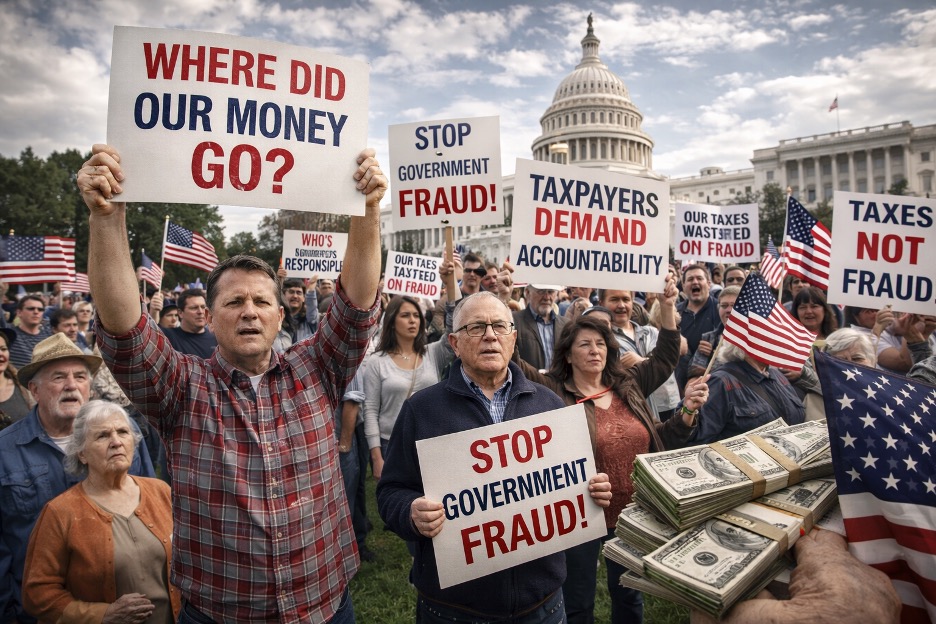
And when the money finally stopped moving, taxpayers would see what had been taken—not just dollars, but trust.
If Minnesota has been the demo, the nation is next…

RESOURCES FOR A DEEPER DIVE
Feeding Our Future (“Hundreds of Millions” / $250M+)
- Federal prosecutors charged 47 defendants in connection with a large fraud scheme tied to the Federal Child Nutrition Program during the COVID-19 pandemic, linked to roughly $250 million in fraud. Department of Justice
- Multiple follow-up guilty pleas and convictions have continued in that same scheme. Department of Justice+1
Medicaid Programs & Broader Fraud Investigation
- Prosecutors say about half of roughly $18 billion paid through 14 Minnesota Medicaid programs since 2018 may have fraudulent claims under review — an ongoing federal investigation. The Washington Post
- Coverage across multiple outlets notes that the investigations now include Medicaid-funded social services beyond just the meal program, with dozens charged and more being added. CBS News+1
Autism and Housing Stabilization Investigations
- News reports mention breakdowns in ongoing fraud schemes involving “autism and housing programs” as part of the broader investigation into Medicaid misuse. WDIO.com
- A more recent national news article directly ties the Feeding Our Future case to broader concern about misuse of federal child nutrition and related programs. AP News
What the Reliable Sources Don’t Confirm
None of the mainstream/legal reporting currently provides specific verified figures exactly matching:
- “$300M Feeding Our Future + $300M housing stabilization + $220M autism services” as a combined total,
- Nor do they state that half of all $18 B was definitively proven fraudulent as of now — that is an investigative estimate, not a final audited amount. The Washington Post
Helpful editing and images provided by Chat GPT

Your Tax Free Donations Are Appreciated and Help Fund our Volunteer Website
Disclaimer: We at Prepare for Change (PFC) bring you information that is not offered by the mainstream news, and therefore may seem controversial. The opinions, views, statements, and/or information we present are not necessarily promoted, endorsed, espoused, or agreed to by Prepare for Change, its leadership Council, members, those who work with PFC, or those who read its content. However, they are hopefully provocative. Please use discernment! Use logical thinking, your own intuition and your own connection with Source, Spirit and Natural Laws to help you determine what is true and what is not. By sharing information and seeding dialogue, it is our goal to raise consciousness and awareness of higher truths to free us from enslavement of the matrix in this material realm.