EN
EN FR
FR


The more things change, the more they stay the same…
Until they change again
Rev Kat Carroll
Reading time – 6.5 to 10 minutes that will expand your trivia knowledge
I am amused at the number of changes we experience in a lifetime. Not the obvious ones—seasons, solar cycles, or the slow shift of constellations—but the everyday changes that quietly reshape how we live.
Meat, vegetables and fruit, once grown at home, were later made more convenient through local grocery stores.
Before the age of refrigeration, (early 1900s and through the 1940s and 1950s), local grocers, dairies, bakers, and specialty shops routinely delivered groceries directly to homes – and sometimes were even put away by your local grocery boy.
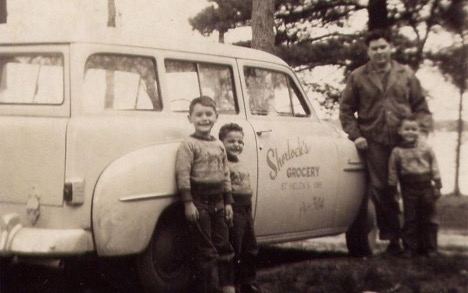
Skip forward a generation or two and we push shopping carts down ever-growing refridgerated, and dry good isles in large grocery outlets. Then came the debacle of getting your items home… “Paper or plastic?” became a common question at checkout.
The Plastic bags were created by Swedish engineer Sten Gustaf Thulin in the early 1960s. His design produced a simple, strong bag with a high load-carrying capacity, and was patented worldwide by Celloplast in 1965. As his son Raoul said later, Sten believed that durable plastic bags will be not single-used but long-term used and could replace paper bags, which required chopping down trees.
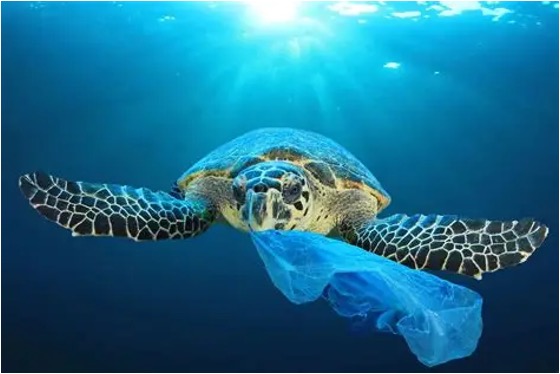 During Covid, single use plastic bags became the trend, allegedly to prevent spreading disease. But when they ended up along roadsides, choking water ways, and the animals who swam there, multi-use bags were introduced. But it was still an environmental problem to resolve.
You also noticed that you were suddenly being charged a dime a bag, whether it was paper or plastic. I used my plastic bags to store items that can be recycled, glass bottles, cans and plastic containers, until it was full enough to take out to the recycle bin outside.
While we saved some trees, the plastic bags began piling everywhere because they didn’t break down. But… Paper can be recycled, as can cardboard so, no more plastic bags and that’s better for the environment. And just like that, paper bags are back in style.
 To help clean up the problem, some stores, (and smart shoppers), have switched to using reusable cloth bags and plastic bins, as they can be stacked, washed, folded and reused for years. You can even use storage boxes or hanging file bins, the kind sold at office supply stores.
If this idea takes off, it will be very similar to how groceries were delivered in boxes in the 20th century.
Amazon Fresh has been delivering to doorsteps, something I tried for the first time this year. I’ll never understand the waste of the paper bags, often opening a sealed bag to find only one or two items that could have easily fit into a bag with more items.
But if you think about it, the majority of our food is packaged in plastic wrap.
Seems we have more work to do!
In a Star Trek future, perhaps food can be beamed directly into your refrigerator or pantry. Or better yet, appear ready made by a computer that responds to your verbal request…
As Picard would say, “Tea, Earl Gray, Hot.”
What about transportation?
The same cycle shows up in how we move.
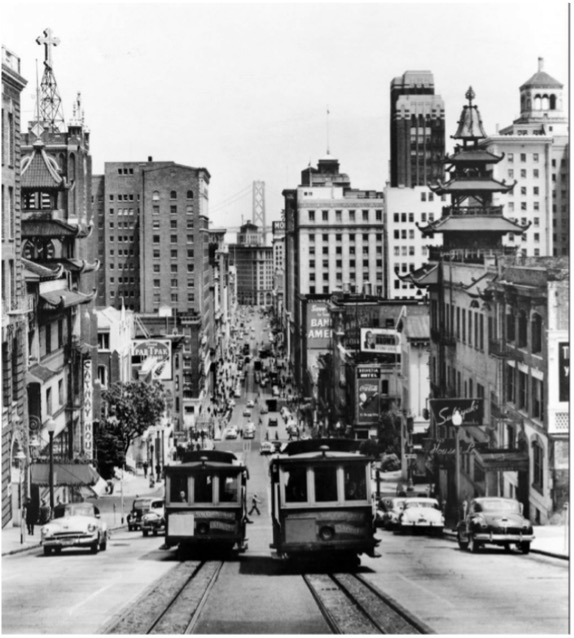 Horses and later horse drawn carriages were built for comfort in early days. Those were replaced by gas motor carriages. Electric vehicles were being explored, along with the electric buses and trolly cars in big cities like San Francisco.
Early steam and gasoline cars were clunky and frighted horses that were still in large use for transportation in urban areas, and some cities. Electric had the advantage of being quiet but was cost prohibitive but for those who could afford such extravagant forms of transportation.
The first electric vehicle… often considered the first practical electric car in the United States, was demonstrated publicly in 1890 and was showcased at the 1893 World’s Columbian Exposition in Chicago.
An electric vehicle held the vehicular land speed record until around 1900. But speed was never the issue; it was how far one could travel before requiring a recharge. That remains an issue even today.
The Price of Progress
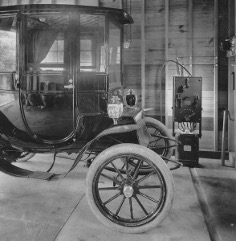 Early electric cars were never the cheaper option. In the early 1900s, they cost significantly more than gasoline-powered vehicles. A Ford Model T sold for around $850 in 1908 and dropped to $650 by 1912, while electric roadsters often sold for $1,500 to $3,000.
Compare that to the average price of a new Tesla all-electric car in 2026 which ranges from $36,990 to $114,990, depending on the model and configuration.
Compact SUVs: Average price of $36,517
Full-Size Trucks: Average price of $64,790
Electric Vehicles (EVs): Average price of $52,345, which is higher than the overall average.
In those early days of EV type cars, the appeal wasn’t affordability, but ease of use. Electric cars were quiet, clean, and didn’t require hand cranking—a dangerous and physically demanding task common to early gasoline vehicles.
In urban areas, where electricity was available, they made sense. But once mass production slashed the cost of gasoline cars and infrastructure expanded outward, electric vehicles were priced out of the mass market. They are making their way back, but still at a higher price than most gas motor cars and trucks.
But with those cheaper prices came the exhaust and smog produced by those early gasoline engines. And it remained a problem for decades. That is, until the invention of the Catalytic Converter in 1975 to reduce emissions.
Early EV in some cities had street charging, but not in the way we imagine today.
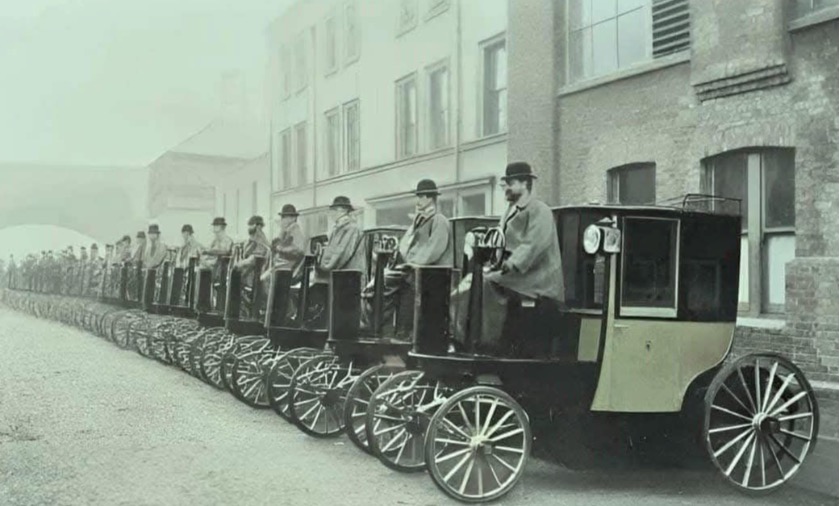
The above photo is of the Hummingbird Taxis that first debuted in London, 1897. The electric taxis were built by the London Electrical Cab Company that recognized the need for a cleaner, more efficient alternative to traditional modes of transport. The quiet nature of these cabs made them appealing to passengers, offering a smoother and more pleasant ride through the busy streets of London, where noise and pollution were constant issues.
They laid the groundwork for the eventual rise of electric vehicles, showing that electric power could offer a viable alternative to steam and horse-drawn transportation.
Electricity was available mostly in wealthy urban districts.
- Some EV owners charged at:
- home
- in depots
- garages
Battery swapping existed for fleets (especially taxis).
This gave EVs a functional advantage in cities, but not a price advantage at that time.
While newer EVs have higher initial costs, they are generally cheaper to operate and maintain, resulting in substantial long-term savings, especially for some high-mileage drivers with home charging access. And now, San Francisco has been using autonomous, electric taxi’s, but not without some issues of their own. Disruptions in power, and wifi connectivity have left some passengers stranded for a time, including in 2026.
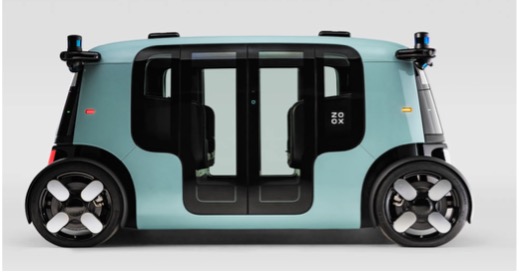
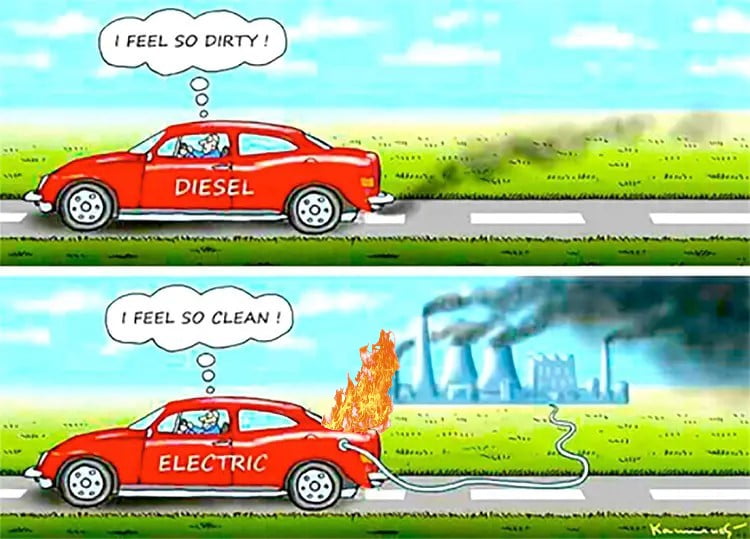
Here we are, trying to support the environment by producing new models of electric, or hybrid engines that you can charge at home, or at a number of growing locations. But where do you think that power to charge your EV come from? It’s ironic!!!
Perhaps in the not so distant future, we’ll circle back to flying vehicles such as the Vimāna – the mythological flying palaces or chariots described in Hindu texts and Sanskrit epics.
Stavatti Aerospace is actually working on next-generation military, commercial, and general aviation aircraft. The company aims to improve efficiency, safety, and performance while reducing the cost of ownership and operation through innovative design and manufacturing approaches. Stavatti is linked to claims of developing anti-gravity flight technology, primarily through the alleged use of patents by Salvatore Pais, a former U.S. Navy researcher.
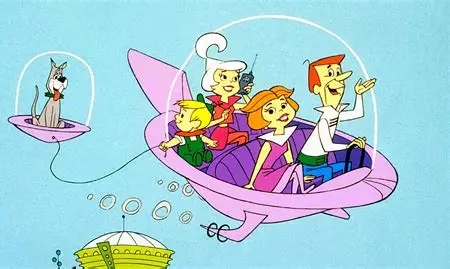 Honestly, I’ve been waiting for flying cars since the Jetson’s! (1962)
And perhaps you’ll note the cell phone being held by the daughter. Technology that would not be available to the public until 1983.
Changes in dietary standards
I recently wrote an article on how Robert Kennedy as turned the food pyramid upside down. Healthy home cooked meals were replaced by boxed cereals, frozen waffles and pop tarts. The very foods with higher sugar that were produced to make life easier, also made us fatter. Real sugar was replaced by synthetic sweeteners that carry health risks, and left us unsatisfied.
Red meat and eggs were dubbed as bad for our health, even carcinogenic. But now, that pyramid has flipped.
So, what are we to believe in an ever-changing world? What’s next?
Nothing Changes but Change Itself
Change has always been part of the world. Nothing stays fixed for long—not systems, not technologies, not even civilizations that once thought themselves permanent. Not even institutions once thought too big to fail.
Things appear, disappear, and then—often to our surprise—reappear. Sometimes improved. Sometimes complicated. Sometimes carrying new problems alongside old solutions.
Progress, it turns out, isn’t a straight line. It’s a spiral – and we often find ourselves circling back to original thoughts and inventions.
What’s striking is how often we cycle back to beginnings… not because we failed, but because something essential was often lost along the way. Convenience promised ease but often delivered new problems down the road. Efficiency made life easier in some ways, but also made us less connected. Commercial and Federal control scaled systems, but thinned our trust. Eventually, the human nervous system noticed the imbalance, and quietly, people have begun to course-correct.
People walk more, or ride bikes.
Some now grow their own food again (without the toxic pesticides)
We want to know who made the thing we’re buying (or what’s in it)
People want to reconnect – not just in text messages; but by hearing voices, seeing smiling faces and being greeted by those warm hugs we all missed during the pandemic.
Change is inevitable, yes—but so is remembering our roots, our true beginnings, as families, and tribes of man.
There used to be a saying that everything changes but death and taxes. Even that feels outdated. We’re beginning to understand that consciousness doesn’t simply vanish—that the soul, whatever name one gives it, isn’t bound by the same rules as institutions or economies. And taxes? Well… even those systems may be in for their own reckoning.
What doesn’t change is far simpler, and as old as time.
Human curiosity.
The desire to understand our place in the world.
The pull toward nature and how best to work with it.
The need for love, belonging, tribe.
The longing to be part of something meaningful, rather than synthetic, or merely efficient.
Civilizations rise and fall. Tools come and go. Old ideas are buried, rediscovered, and rebranded. But beneath it all, the human heart keeps asking the same questions it always has—and keeps finding its way back to what feels right, and real.
And somehow, like an original version of GPS, our heart always shows us the way,
if we take the time to stop, breath, listen – and feel our way back to what’s truly important.
Community and compassion.
Only by working together can we solve challenges that arise in each era. And to remember where we’ve been before.

Resources:
The Electric Vehicle Evolution
Comprehensive Review of Red Meat Consumption and the Risk of Cancer
The Fifty Year Rehabilitation of the Egg
How Sweet it is…or is it? The Cover up of Artificial Sweeteners
Flipping the Food Pyramid – How the Last 100 Years Reshaped What We Eat
Craft Using an Inertial Mass Reduction Device + (Salvatore Pais Patents)

Your Tax Free Donations Are Appreciated and Help Fund our Volunteer Website
Disclaimer: We at Prepare for Change (PFC) bring you information that is not offered by the mainstream news, and therefore may seem controversial. The opinions, views, statements, and/or information we present are not necessarily promoted, endorsed, espoused, or agreed to by Prepare for Change, its leadership Council, members, those who work with PFC, or those who read its content. However, they are hopefully provocative. Please use discernment! Use logical thinking, your own intuition and your own connection with Source, Spirit and Natural Laws to help you determine what is true and what is not. By sharing information and seeding dialogue, it is our goal to raise consciousness and awareness of higher truths to free us from enslavement of the matrix in this material realm.