 EN
EN FR
FR


Pistis Sophia and the Thirteen Repentances
A Modern Path of Return
Rev. Kat Carroll
There is so much chatter in social media about ascension. But so little information on how to obtain higher states of consciousness.
I’ve written multiple articles about focusing on that which is good versus the darker information being shared, specifically to keep one’s vibration higher and clearer. In my last article, I discussed Love versus Loosh and how feeding the wrong inner wolf may be keeping us from elevating our consciousness.
I also mentioned some of the oldest ‘gods,’ spirits, and the other names they went by in antiquity. There are other beings and essences in the world that predate the Bible. Their teachings were threatening to religious authorities of the time, leading to the destruction of texts and the silencing of those who shared them. Many early passages that emphasized personal empowerment and direct connection to the divine were edited out, shifting authority outward rather than inward.
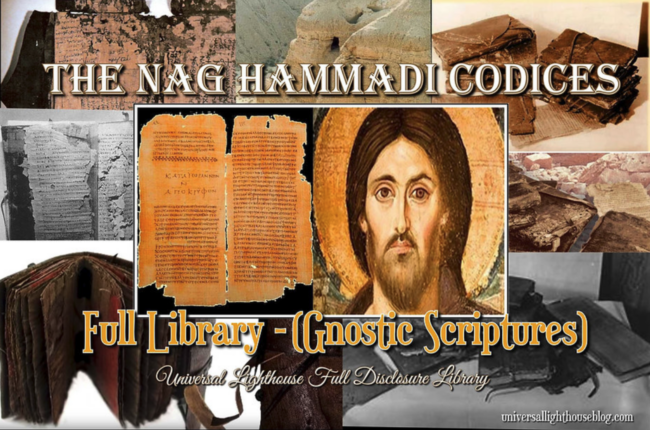
In 1945, a collection of ancient manuscripts was discovered in sealed jars near Nag Hammadi in Upper Egypt. These handwritten texts had remained hidden for centuries. They are confirmation of what is in the modern bible and more. Their emergence coincided with the end of World War II, a moment of global upheaval and re‑evaluation. I don’t believe in coincidence, and this timing feels significant. Once translated, these texts offered insight into early spiritual teachings that emphasized direct knowing rather than institutional control.
The Coptic Bible preserves a much larger canon than the later European Protestant Bible, retaining texts and teachings that were eventually removed or deemed non‑canonical. This broader tradition reflects an earlier, less centralized form of Christianity; one that emphasized inner knowledge or gnosis and direct experience.
But there was another set of instructions that remained largely hidden and seldom discussed until more recent years: the Pistis Sophia manuscript, discovered in Egypt in 1773… centuries before the Nag Hammadi texts came to light.
The Pistis Sophia symbolizes the human soul’s journey from divine origin to descent into matter and eventual return to light. Pistis means faith or faithfulness. Sophia is more than a name; it means wisdom.
At the highest level, Sophia is not merely a character, but Wisdom as a living emanation of the divine Source, an aeonic expression, or movement of divine intelligence into form. In this sense, she is less a separate being and more a process: consciousness exploring itself through creation. Think Logos, Word, or Light, but expressed through a feminine orientation of receptivity, intuition, gestation, and remembrance.
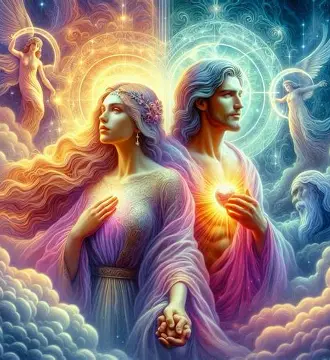 This is why Sophia has long been associated with what many traditions now call the Divine Feminine, not as gender, but as a mode of knowing and being that emphasizes inner listening, coherence, and relational wisdom rather than domination or control. It’s about balancing the energies, male and female.
From an astrological and symbolic perspective, many see our current era as one of rebalancing: the re‑emergence of feminine principles long suppressed, often described through imagery such as the phoenix rising, planetary alignments associated with Mary or the Great Mother archetype, and cycles of renewal following collapse.
The manuscript spans roughly 300 pages, making it the longest and most complete Gnostic text ever recovered.
At a mythic level, the story of Pistis Sophia closely mirrors what mythologist Joseph Campbell later described as the Hero’s Journey: a descent from origin, a confrontation with deception and loss, a period of suffering and trial, and an eventual return—transformed, bearing light and wisdom back into the world. It makes me realize that there is nothing new under the sun!
At its core lies something institutional religion has long struggled with – Sophia’s thirteen repentances, not prayers asking for forgiveness, but invocations describing an inner process of return and the remembrance of ones true nature.
The Pistis Sophia offers instruction for anyone seeking higher awareness—what earlier traditions might have described as becoming more “angelic,” or closer to Source. Some mystical traditions extend this symbolism further, suggesting that Sophia’s descent can also be read as an allegory for the world itself; a soul-consciousness entering density and generating the conditions of material existence. In this reading, the so‑called “fall from grace” is not a punishment, but a creative descent, giving rise to physical reality and the forgetting of our celestial or angelic nature.
In the text, this journey is witnessed and guided by Jesus after his resurrection. Rather than a distant savior figure, he appears as a living embodiment of the Light of Lights, descending into the lower realms to restore what has fallen. His acts, such as placing a wreath of light upon Sophia, symbolize the restoration of inner vision and the gradual reclaiming of divine light.
Being light, in this framework, is not a static state but an ongoing process of purification, illumination, and return. It also reminds us we are more than the physical body… we are  consciousness having a human experience. The illusion of separation, sometimes described as archonic distortion, is addressed not through battle but through awareness.
Higher consciousness, recognizing that we were never truly separated from Source, is described as unfolding through engagement with a series of thirteen repentances. According to the Pistis Sophia, these were spoken aloud, contemplated, and lived with over time rather than rushed or mechanically repeated.
The Thirteen Repentances of Sophia — Reframed for Today
When stripped of archaic language and theological framing, the thirteen repentances describe a progressive clearing of interference; a process by which consciousness releases distortion and becomes receptive again to its source.
Below are the traditional spoken phrases attributed to Sophia in the ancient Pistis Sophia text, followed by an accessible modern interpretation of each. The spoken words were originally vocalized aloud and contemplated afterward—but the meaning they point to is what the practice invites us to engage with in our own inner field.
First Repentance
“O Light of Lights, in whom I have believed from the beginning, hear my repentance now… save me, O Light, for wicked thoughts have entered into me… And I looked to the height, so that the Light might help me.”
Modern Interpretation
This stage begins with the realization that the mind can hold confusion and misinterpretation — and with the choice to turn one’s attention upward, toward clarity and coherence rather than downward into fear or distraction.
Second Repentance
“O Light of Lights, I have believed in thee. Do not leave me in the darkness… Save me, O Light, from the lion-faced power… My light-power has been taken away… Do not abandon me.”
Modern Interpretation
A recognition that trust in source does not bind us to past missteps. It is an affirmation of letting go of self-limiting attachments while acknowledging the struggle of reclaiming one’s direction.
Third Repentance
“O Light of the powers, give heed and save me… Let those who persecute me return quickly to the darkness… Save me, O Light, for I am lacking in my light…”
Modern Interpretation
This speaks to the dissolution of identification with conflict, grievance, or inner resistance. It is the opening to surrender emotional reactivity and to invite inner peace.
Fourth Repentance
“O Light whom I have trusted, hear my repentance… My light has been taken from me… I have forgotten my mystery… My power has diminished within me… Now at this time, O Light, arise and seek after my power and my soul.”
Modern Interpretation
Here the self acknowledges dissociation from one’s essence — and invites remembrance. It is a turning back toward one’s inner source of strength.
Fifth Repentance
“O Light of my salvation, I sing praise to thee… My light has diminished… Now at this time, O Light, wilt thou perhaps fulfil thy ordinance in the Chaos?”
Modern Interpretation
This is an honest facing of confusion and disorientation, accompanied by a surrender into trust rather than resistance.
Sixth Repentance
“I have sung praises to thee, O Light, in the darkness… Hear my repentance… O Light, if thou dost remember my sins, I shall not be able to come before thee… And my power trusted in the light in the Chaos below.”
Modern Interpretation
A recognition that shame and judgment hold no power when one’s attention is turned toward understanding and integration.
Seventh Repentance
“O Light, I have raised up my power to thee… I have believed in thee; do not make me despised… Concerning my transgression… forgive my transgression, for it is great.”
Modern Interpretation
This corresponds to releasing self-criticism and accepting one’s own journey of learning — including the missteps — without internal exile.
Eighth Repentance
“I have hoped in thee, O Lord. Let me not be put to shame… Thou art my support and my refuge… Reveal thy face over thy servant and save me in thy mercy.”
Modern Interpretation
A return to trust with openness and humility — not in fear of abandonment, but in the company of unfettered hope.
Ninth Repentance
“O Light, smite down those who have taken my power from me… May their power become like dust… My power will flourish in the light…”
Modern Interpretation
Here, the focus is on reclaiming personal strength and discernment, not through hostility or judgment, but through resolution and inner alignment.
Tenth Repentance
O Light of Lights, I have trusted in the Light that was not true, and I was brought into affliction. Deliver me from the power of those who oppress me, for my strength is in You alone.
Modern interpretation:
This repentance marks the clear recognition of false authority. It is the moment of seeing where trust was misplaced—whether in external systems, beliefs, leaders, or inner narratives that promised illumination but led instead to confusion. Here, wisdom reclaims discernment and consciously withdraws energy from what no longer serves truth.
Eleventh Repentance
Hear me, O Light, for I have grown weary in the darkness. My power is diminished, yet my hope remains fixed upon You.
Modern interpretation:
This stage reflects spiritual exhaustion, not failure. It acknowledges the fatigue that comes from prolonged separation, struggle, or inner conflict. Rather than collapse, this repentance represents surrender—allowing grace, support, and restoration to replace striving.
Twelfth Repentance
O Light of Lights, save me, for strangers have taken my light from me, and I am unable to rise without Your aid.
Modern interpretation:
Here, wisdom recognizes that parts of the self have been fragmented or given away—through fear, trauma, false identities, or external control. This repentance is an act of reclamation, calling lost aspects of consciousness back into coherence and wholeness.
Thirteenth Repentance
Now, O Light of Lights, I sing praise to You, for You have heard me and delivered me. I will proclaim Your wonders forever.
Modern interpretation:
The final repentance is no longer a plea—it is integration. Wisdom has been restored, not as escape from the world, but as embodied awareness. Gratitude replaces longing. The soul does not return unchanged; it returns bearing insight, compassion, and the capacity to reflect light into the world.
Twelfth Repentance
O Light of Lights, save me, for strangers have taken my light from me, and I am unable to rise without Your aid.
Modern interpretation:
Here, wisdom recognizes that parts of the self have been fragmented or given away—through fear, trauma, false identities, or external control. This repentance is an act of reclamation, calling lost aspects of consciousness back into coherence and wholeness.
Thirteenth Repentance
“Hearken unto me singing praises unto thee, O Light of lights… Save me, O Light, in thy great mystery and forgive my transgression… But I looked up to the height to thee, O Light, and I believed in thee… If now thou dost wish to come to save me — great is thy compassion — hear me truly and save me.”
Modern Interpretation
This final stage expresses acceptance of deeper receiving — not resignation, but trust that arises once resistance dissolves.
The full thirteen repentances (and more) appear in extended form within the Pistis Sophia, each containing multiple verses and layers of meaning. For the sake of clarity and accessibility, what is presented here is a distilled overview paired with modern interpretation. Readers who wish to explore the full original text and its broader context can do so at:
Culmination of Wisdom — The 13 Repentances of Sophia
https://culminationofwisdom.org/13-repentances-of-sophia/
Intention and understanding of what is being expressed and felt are far more important than the exact words themselves. The term repentance, as used here, is misleading to modern ears. In the original Greek, metanoia means a change of mind, or more accurately, a re‑orientation of consciousness. In contemporary language, this might be called recalibration.
Read this way, the thirteen repentances are not confessions of guilt, but moments of inner realignment, stages in which wisdom turns down the noise, releases false authority, and becomes able to receive the signal once again. You might also consider the false authority and noise as the external sources of information, from TV news to social media, each vying for your attention.
What continues to stand out in the Pistis Sophia is that nothing is forced. There is no demand to ascend, awaken, or graduate from the world. Instead, there is a quiet acknowledgment of choice.
We can remain focused in a third‑dimensional experience shaped by duality; conflict, polarity, right and wrong… or we can begin to sense a larger field of unity, where awareness widens and participation shifts from reaction to coherence.
Neither path is condemned.
The text doesn’t insist that everyone must see or know the same things at the same time. It suggests that revelation is available, but reception depends on readiness. We have a right to know, and we also have the right to decide how we engage with what unfolds.
If we’re honest, most of us have little direct influence over judicial or political outcomes. Watching events unfold can inform us, but it can also consume our energy. What remains within our reach is how we respond internally.
 We can choose to feed fear, outrage, and helplessness or, we can choose to feed coherence.
Sending positive energy, whether understood as prayer, intention, or focused awareness, may not make headlines, but it steadies the field. It lowers emotional temperature and creates conditions where wiser outcomes can emerge.
Some recognize this as the Maharishi Effect: the principle that a relatively small number of people holding coherent, positive intention can influence the larger whole. Others may see it reflected in quiet acts of peace, such as Buddhist monks walking across the country in silent prayer.
Participation doesn’t always look like action. Sometimes it looks like presence.
And perhaps one final pattern is worth noticing.
The Pistis Sophia surfaced during the era of the American Revolutionary War, a time of upheaval and re‑imagining of authority. The Nag Hammadi texts emerged at the end of World War II, another moment when humanity stood at a crossroads.
Each rediscovery occurred during periods of profound disruption. And each time, what re‑emerged were teachings centered not on fear or domination, but on remembrance, love, and a more direct relationship with the divine.
Coincidence… or divine timing?
The Pistis Sophia doesn’t tell us which choice to make. It simply reminds us that we have one.
What will you choose?

Additional Resources
Pistis Sophia by G.R.S. Mead 1921
Culmination of Wisdom: The 13 Repentances of Sophia
Nag Hammadi Library (overview and translations)
The Pistis Sophia: An Introduction (Theosophical Society of America)

Your Tax Free Donations Are Appreciated and Help Fund our Volunteer Website
Disclaimer: We at Prepare for Change (PFC) bring you information that is not offered by the mainstream news, and therefore may seem controversial. The opinions, views, statements, and/or information we present are not necessarily promoted, endorsed, espoused, or agreed to by Prepare for Change, its leadership Council, members, those who work with PFC, or those who read its content. However, they are hopefully provocative. Please use discernment! Use logical thinking, your own intuition and your own connection with Source, Spirit and Natural Laws to help you determine what is true and what is not. By sharing information and seeding dialogue, it is our goal to raise consciousness and awareness of higher truths to free us from enslavement of the matrix in this material realm.


















Another great article. Appreciate your translations of the repentances. TY. Also validates the pull I've felt lately to go more w/in to cultivate direct knowing.
❤️
It clearly resembles 'The Lord's Prayer' as said by Jesus to his apostles.
Rev. Carroll. I love your writings. For me simple is best. My acension triggers are gratitude and forgiveness…
I think of all those things I am grateful for and I forgive my self first and look for another I may have offended.
Cheers. Jim
To quote from the Disney's Mandalorian…. "This is the way" 😁 And you know the way!
Thank you Jim!