 EN
EN FR
FR

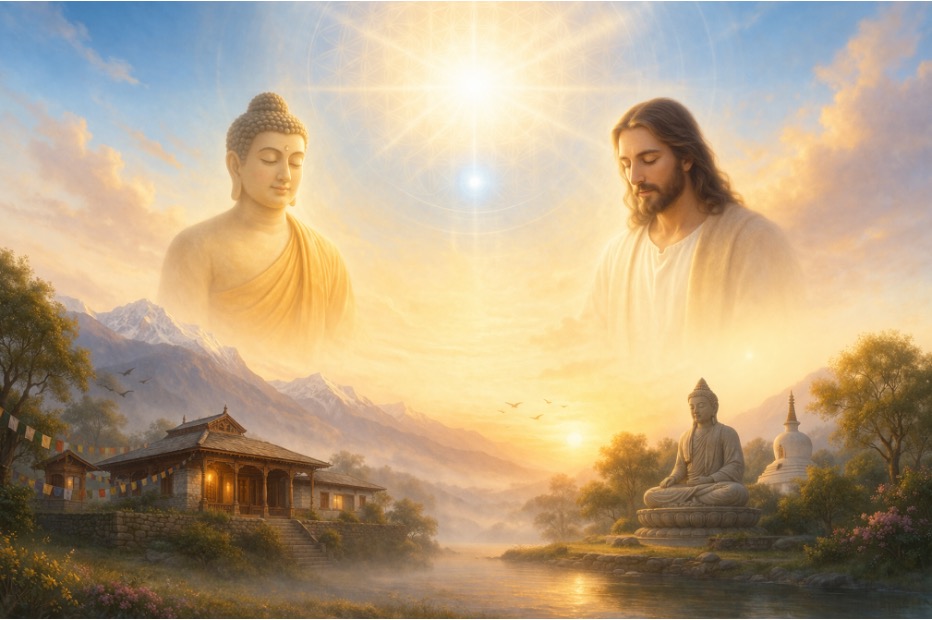
Christianity, Buddhism and the Tao of Contact:
When Awareness Becomes the Bridge
Rev. Kat Carroll
This article was inspired by who friend who has long been studying the Tao Te Ching and Hua Hu Ching. I can see the effects it has had on his life. When I spoke with him recently, I can see how it’s also shaped what we both consider the contact experience with non-human intelligent beings. And for most UFO enthusiasts, it may be confusing, and not what you think.
As one who has delved into multiple religions, while not claiming one to convert to, I can appreciate how Buddhism has shaped my life as well. So, I wanted to share some of what he put down in his book, with you. But first, some of the concepts for the lay person, and a bit of how the teachings likely influenced Jesus.
In Buddhism, a Bodhisattva is one who has attained—or is striving toward—awakening, yet chooses to delay personal liberation in order to help others reach that same state. It is a path of compassion, service, and conscious sacrifice.
Bodhisattva is a combination of two Sanskrit words: Bodhi, meaning “awakening” or “enlightenment” and Sattva, meaning “being”, as pertaining to a person who has achieved, or is striving towards, bodhi (‘awakening’ or ‘enlightenment’).
Perhaps you know someone who fits this description.
To delay one’s nirvana is to release attachment to personal desire as the ultimate goal. It is to step beyond the cycle of birth, death, and rebirth—not by escaping it, but by returning to assist others through it, perhaps over several lifetimes.
Buddhism, often associated with Eastern traditions, predates Christianity by roughly 500–600 years, originating in what is now Lumbini, Nepal. Over time, it spread across Central, East, and Southeast Asia, influencing cultures and philosophies along ancient trade routes such as the Silk Road. Today, its teachings reach over a billion people worldwide, continuing to evolve while retaining its core message of inner transformation.
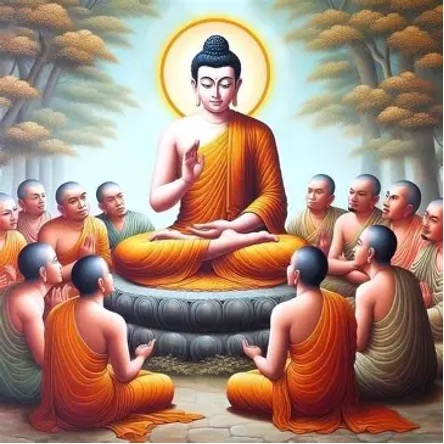 Siddhartha Gautama, known as the Buddha, lived around 563–483 BCE. Christianity, centered on the life and teachings of Jesus of Nazareth, emerged in the 1st century CE. In the span of human history, this is not an insurmountable gap. It invites the question of whether certain truths, once realized, are rediscovered again and again—appearing through different teachers, in different lands, at different times.
“When the student is ready, the teacher appears”.
Some have gone further, suggesting that these teachers may be connected at a deeper level. While not supported by mainstream Christian traditions, there are esoteric perspectives that propose a continuity of consciousness across lifetimes (reincarnation). These views point to striking similarities in the teachings of Siddhartha Gautama and Jesus—compassion, detachment from materialism, inner transformation, and service to others—as evidence of a shared or recurring spiritual influence.
There are also accounts, found in alternative and mystical traditions, that suggest Jesus traveled east during his unrecorded early years, encountering and studying with spiritual communities. Certain writings claim that Jesus traveled to India during his “lost years” (ages 14–29), studied Buddhism, and later returned to teach in Israel—making him a possible reincarnation of the Buddha.
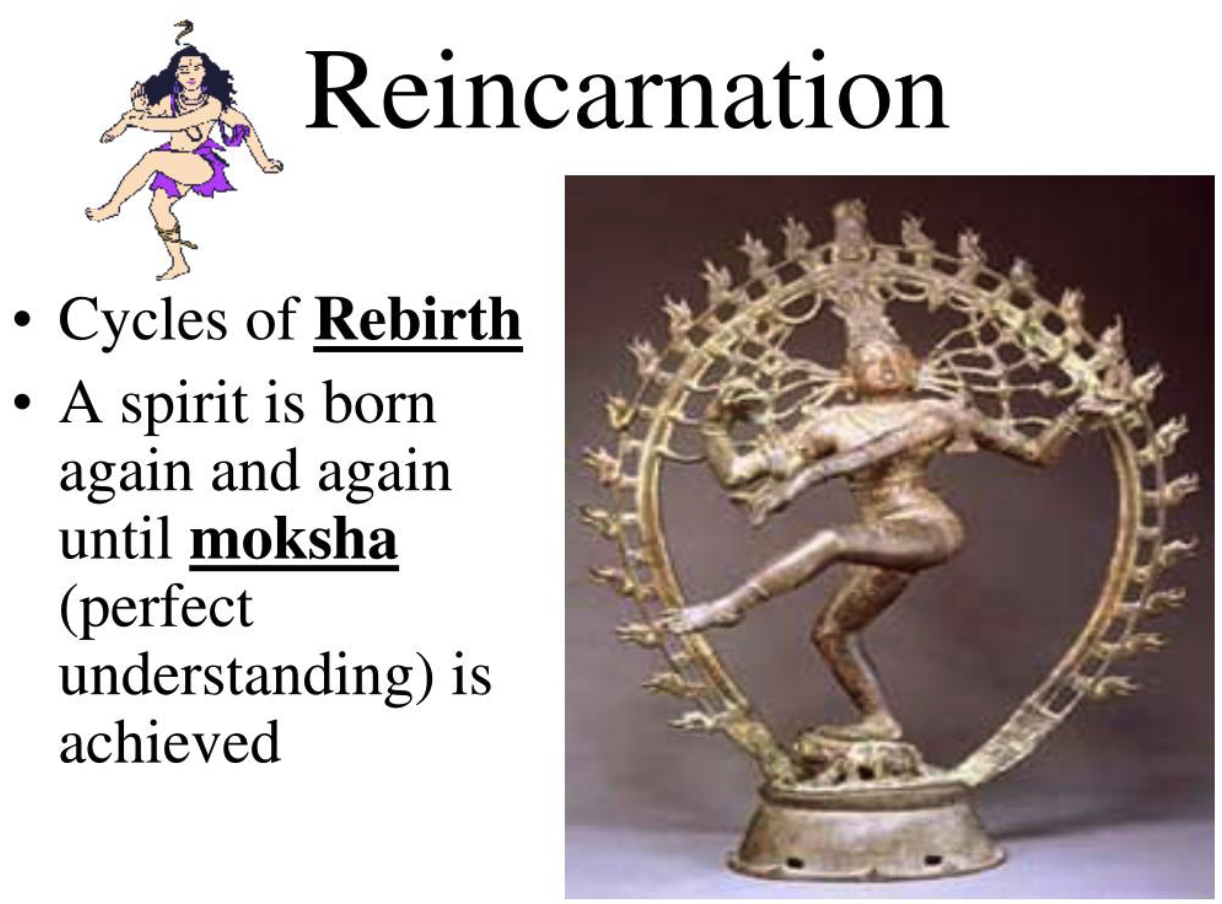 Some near-death experiencers and metaphysical writers, have described a unifying field of consciousness from which figures such as Buddha, Jesus, and Krishna emerge—expressing the same underlying truth through different forms and eras, again suggesting reincarnation.
While these ideas remain speculative, they raise an intriguing possibility: that throughout history, humanity has been guided not only by isolated individuals, but by recurring expressions of a higher awareness, appearing when and where they were most needed.
Accounts such as those explored in the Roza Bal shrine in Kashmir continue to raise questions about the later life of Jesus, suggesting that the story may not have ended where Western narratives conclude.
There are lesser-known traditions that suggest a different continuation of the story of Jesus after crucifixion. According to Ahmadiyya teachings, Jesus survived the crucifixion, traveled eastward, and lived in the Indian subcontinent, eventually dying in Srinagar, Kashmir. His tomb is said to be located in the Khan Yar Street area of the city, within the Roza Bal shrine, which is dedicated to a figure known locally as Yuz Asaf—interpreted by some as a variant of “Isa,” or Jesus.
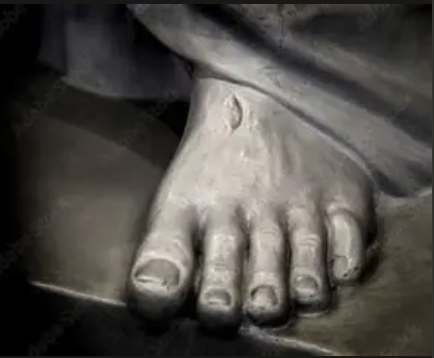 Accounts associated with this tradition also reference physical evidence, including castings of footprints believed to correspond to crucifixion wounds. Some sources suggest he lived into his 70’s—while local records in Kashmir place him in his later years, other interpretations propose he may have lived to over 100 years. While these claims remain outside mainstream scholarship, they continue to be explored by researchers and travelers who have visited the site firsthand.
There is a growing recognition that those who are spiritually centered may be among the first to receive deeper insights—whether through contemplation, prayer, meditation, or direct experience. And at times, teachers appear when the need is great.
But not all teachings were allowed to flourish.
Suppression, Control, and the Shaping of Doctrine
Early Christianity contained a range of interpretations about the nature of the soul, salvation, and humanity’s relationship with the divine.
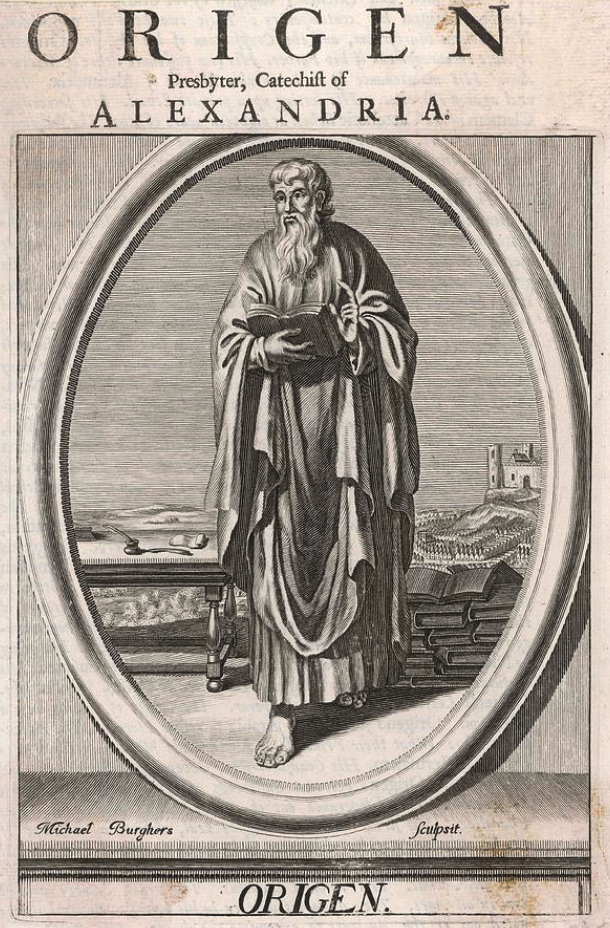 One such voice was Origen of Alexandria (c. 185–254 AD), a theologian who proposed that souls existed prior to the material world as spiritual intelligences created by God. According to his view, these souls fell through free will and were incarnated into physical form to undergo a process of purification and eventual return.
While Origen did not teach reincarnation in the classical Greek or Eastern sense, his ideas introduced a continuity of the soul that extended beyond a single lifetime.
These concepts, however, posed a problem for the Catholic Church of Rome.
So to, were the true teachings of Jesus of Nazareth. Knowledge about inner knowing and having the power of God within would negate the need for control via religion.
This could lead people to reject authority, taxes, and ecclesiastical control. And therein lies the truth of it. Reincarnation would interfere with control of the people, so that concept was banned by the church rather than allow parishioners to evolve to higher states of consciousness and being. And books that would have been included in the bible were removed, also considered heretical. But the Ethiopian Bible still has all 81 books… Interesting that Tao also has 81 books!
Beliefs surrounding the soul’s journey were labeled heretical, not solely because they conflicted with doctrine, but because they threatened the structure that doctrine supported.
And therein lies a deeper question:
Was the shaping of religious belief always about truth… or more about maintaining order and authority?
The Recurring Pattern of Teachers
Across cultures and centuries, there are stories of individuals who appear at pivotal moments—bringing insight, clarity, or a shift in awareness—and then quietly stepping away.
Origen of Alexandria also offered ideas that hint at a longer arc of spiritual development. He taught that salvation would ultimately be universal (apokatastasis), meaning that all souls—even those considered fallen—would eventually be restored to God, though this process could unfold across many ages. This suggests a cyclical or successive journey of the soul, which some scholars have interpreted as a form of reincarnation. In his work First Principles, Origen speculated about the possibility of souls inhabiting different bodies across successive ages, while rejecting the idea of multiple incarnations within a single age.
Tao and universal consciousness are deeply interconnected concepts in Taoist philosophy, where the Tao is understood not as a personal deity but as the primordial, ever-flowing source and fundamental principle of all existence. The Tao is described as the “Great Mother”—empty yet inexhaustible, giving birth to infinite worlds and always present within every individual.
Mainstream Buddhist traditions affirm the cycle of rebirth; however, core doctrine also teaches that once a Buddha attains parinibbana—final nirvana—they no longer return to that cycle. In this sense, enlightenment represents a complete liberation from rebirth. Yet the Bodhisattva path offers a different expression: one who, though capable of liberation, chooses to return in service to others until all may awaken.
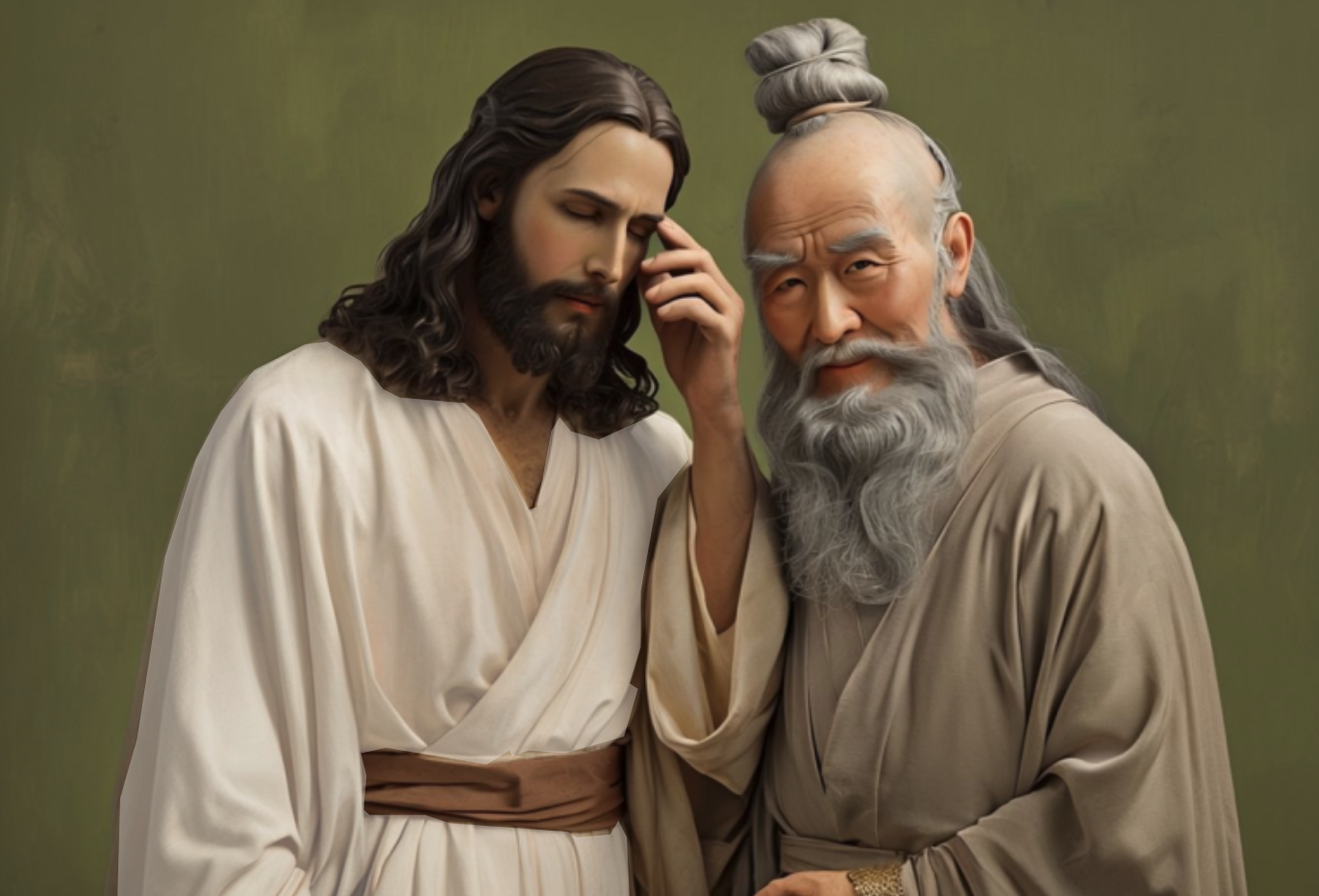
This idea of returning teachers is not limited to Eastern traditions. Within certain interpretations of the Bible, Jesus is linked to Elijah through references to John the Baptist as “Elijah who was to come,” suggesting continuity of spirit across lifetimes. In Jewish mysticism, particularly in the Zohar and the teachings of the Arizal, the concept of gilgul (reincarnation) is explored more directly. Moses, for example, is described as a reincarnation of Abel, whose soul was rectified through his mission to lead the Israelites and deliver the Torah.
Taken together, these perspectives suggest that the concept of reincarnation—or at least continuity of the soul—was not always foreign to Western thought, but may have been diminished or removed over time as doctrines became more centralized and controlled.
Across traditions, the pattern remains:
In Buddhism, the Bodhisattva returns in service to others.
In Christianity, Christ teaches love, forgiveness, and inner transformation.
In Taoist philosophy, the sage leads without imposing, guides without controlling, and departs without attachment.
The Tao Te Ching speaks of a way of being that flows with reality rather than attempting to dominate it. It suggests that true wisdom does not seek recognition, and true guidance does not create dependence.
And like the Essenes, and Christianity, it teaches that the kingdom, and God, are already within you.
The best teachers do not gather followers.
They awaken something within the individual.
And once that awakening begins, the teacher is no longer required in the same way.
The Tao of Contact: When Awareness Becomes the Bridge
(Inspired in part by The Tao of UFO and personal experience)
In modern discussions surrounding disclosure, much of the focus has been placed on physical craft, advanced technologies, and the possibility of beings arriving from elsewhere.
But what if contact has never been limited to the physical?
What if it has always included a more subtle—and sublime—form of interaction—one that occurs through awareness, intuition, and states of expanded perception?
Many individuals across different backgrounds describe experiences that do not fit neatly into a “nuts and bolts” framework:
- moments of profound insight arising seemingly from beyond their own thinking
- guidance received during meditation or prayer
- encounters in dreams that feel more real than waking life
- a sense of communication that is not spoken, yet clearly understood
- or seeing lights or light beings in the sky, or in the room with them, in order to provide information, or healing
These experiences are often deeply personal, and difficult to quantify. Yet they share a common thread.
For some experiencers, including myself, there is also a profound feeling associated with these moments of contact. It is an experience of unconditional love—one that surpasses even the deepest forms of human love we know whether between parent and child, partners, or family. It feels expansive, all-encompassing, and beyond condition or expectation. The closest word I can find to describe it is agape—a love that transcends our ordinary understanding and seems to arise from a deeper, universal source.
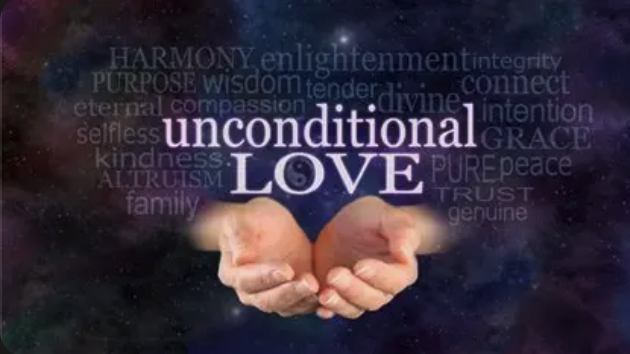
In Taoist terms, this reflects the principle of wu wei—action without force. Influence without domination.
In this light, contact may not always be something that arrives dramatically from the sky, but something that emerges quietly within consciousness.
A bridge, not built of metal or machinery…
but of awareness itself.
Service, Sovereignty, and the Path Forward
There is a concept found across multiple traditions:
that growth, awakening—or what some call ascension—is not achieved through control or religious dogma, but through personal responsibility and service to others.
To let go of ego-driven desires.
To act with compassion.
To assist others in their own understanding.
The Bodhisattva embodies this.
Christ taught it.
The Tao reflects it.
And perhaps, in our current moment, it is being remembered again.
Not through institutions or declarations.
But through individuals—in quiet moments of clarity,
in conversations that shift perspective,
in guidance that appears just when it is needed.
We are left, then, with a possibility:
That disclosure is not a single event to be announced…
But a gradual recognition.
That the boundary between the physical and the conscious,
the seen and the unseen,
may be more permeable than we were taught.
And that contact—real, meaningful contact—
may begin the moment we become aware enough to recognize it.
A Note of Acknowledgment
Before closing, I would like to acknowledge a friend whose work has helped shape the direction of this exploration.
Norman Michael Murburg Jr., known publicly as Mike Murburg, is a Florida-based attorney, author, who has been practicing law since 1986. A graduate of Princeton University (A.B. in History) and Florida State University College of Law (J.D., honors), he has built a respected legal career specializing in Social Security Disability. He also studied religion at Princeton.
Beyond his legal work, Mike is a lifelong experiencer and contactees, as well as a student and practitioner of Taoist philosophy. His book, The Tao of UFO, brings together ancient Taoist principles with modern contact experiences, offering a perspective that moves beyond the conventional “nuts and bolts” narrative and into the realm of consciousness and awareness. And I have to say, I’ve really been enjoying reading it!
Mike also leads a monthly HICE (Human Initiated Close Encounter) group at his ranch in West Central Florida and has contributed to research through the Foundation for Research into Extraterrestrial and Extraordinary Experiencers (FREE). In addition, he shared insights through his podcast IMHO.LOVE (which is being considered for a reboot) and a large body of educational content online.
I have known Mike since 2018, when we were introduced through a mutual friend while practicing CE-5 and remote viewing. He is one of those rare individuals you feel fortunate to meet, and honored to work with in any capacity. His work—and particularly The Tao of UFO—has helped articulate a spiritual connection I have long sensed, but he has expressed with clarity and depth.
And though he may disagree, I consider him a Bodhisattva.
About the Book
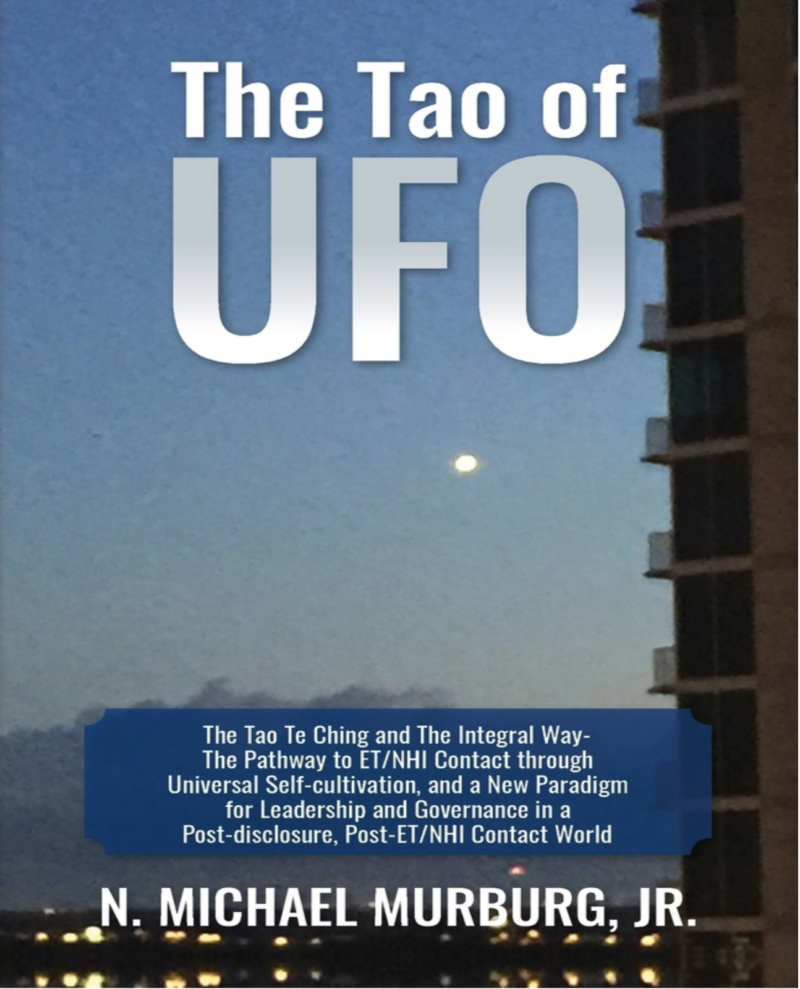
The Tao of UFO explores how ancient Taoist wisdom—particularly the Tao Te Ching and Hua Hu Ching—can be understood as a framework for consciousness, connection, and contact. Drawing from a personal contact experience, the book presents the Tao as a unifying field of awareness and suggests that spiritual alignment, inner refinement, and non-force (wu wei) are key to humanity’s readiness for meaningful interaction with non-human intelligences. Rather than focusing on technology or craft, it reframes contact as a process of inner development—one that points toward universal truth, expanded awareness, and our place within a larger, conscious cosmos.
The light on the cover of The Tao of UFO comes from a moment of contact that Mike told me about during a recent phone conversation. As Mike describes the encounter, a light appeared while he was receiving information. With little battery left on his phone, he asked for time to take a photo—and the light held until he captured it. Then the phone died and the light disappeared into the distance.
A small moment, but one that suggests “they” are aware, responsive, and perhaps even willing to assist.
Mike, thank you for sharing your experiences, and listening to my own.

Related articles:
Tomb of Jesus’ In Kashmir–Roza Bal Shrine
Tomb Raider: Jesus buried in Srinagar?
Can fallen angels be redeemed?

Your Tax Free Donations Are Appreciated and Help Fund our Volunteer Website
Disclaimer: We at Prepare for Change (PFC) bring you information that is not offered by the mainstream news, and therefore may seem controversial. The opinions, views, statements, and/or information we present are not necessarily promoted, endorsed, espoused, or agreed to by Prepare for Change, its leadership Council, members, those who work with PFC, or those who read its content. However, they are hopefully provocative. Please use discernment! Use logical thinking, your own intuition and your own connection with Source, Spirit and Natural Laws to help you determine what is true and what is not. By sharing information and seeding dialogue, it is our goal to raise consciousness and awareness of higher truths to free us from enslavement of the matrix in this material realm.



















I'm behind on my PFC reading, this article is a great birthday present from you Rev Kat!!! It's as if you were sitting in on a conversation my sister and I were having, I am going to send her this article. This is confirmation for us that we are enlighten!!! 💋
MsAaH
Thanks Angela! I'm so glad it resonated with you and your sister! Something is going on the world, a spiritual reset that may include the entire planet! I hope you get a chance to read the April 1st article too. It indicates that this is what is happening to us! At least in my humble opinion!
Wonderful article! I'm not an experiencer, but the UFO topic has long fascinated – particularly re promoting growth in awareness & consciousness – & is one I've been revisiting lately.
Thank you Stargazer – The interesting thing about contact is it can appear in a number of ways, or modalities, and in ways you many not recognize or anticipate. We have a predesposed idea that contact comes in metal craft or gray aliens (we can thank Hollywood for that). And sometimes something happens that we dismiss as a trick of the eye, or coincidence.
I'm working on an article about that right now!
I appreciate that you read and commented on this article! 🥰