EN
 FR


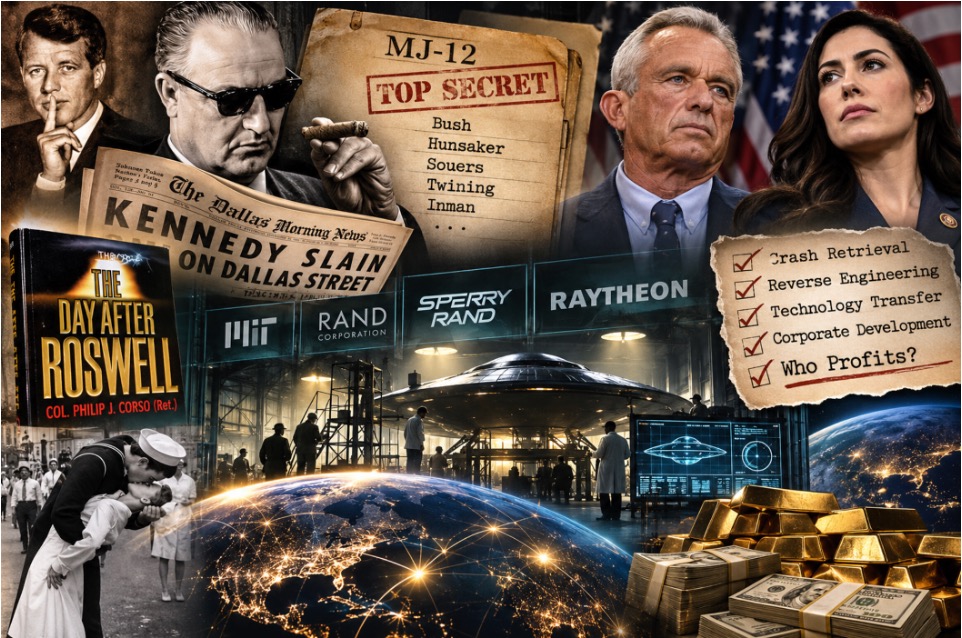
Who Won WWII and Who Inherited Future Technology?
Rev. Kat Carroll
Who won the war sounds like a silly question. Of course, the Allies won the war. All the photographs of ticker tape parades said so, right?

 |  |  |
Who could ever forget the most iconic victory kiss in history? V-J Day in Times Square is a photograph by Alfred Eisenstaedt that portrays a US Navy Sailor kissing a total stranger after grabbing her on Victory over Japan Day (“V-J Day”) in Times Square, New York, August 14, 1945.
We marvel at all the celebrations after the fighting had stopped. But people didn’t realize that something new was about to begin – an age of huge technological breakthroughs. Some of it would be used for good like exploring space. But much would be used in future wars.
So, what did humanity win if much of the secret German technology would later be used in new and more destructive ways?
And so began an age of secrecy surrounding and protecting many of best technological breakthroughs that has continued for the last 80 to 100 years. And those who covet it guard it fiercely.
 Through Operation Paperclip, German scientists and engineers were brought into American research and military programs, sometimes with their wartime affiliations concealed or rewritten. Along with them came valuable technological knowledge: the V-2 rocket program, advanced jet aircraft, missile guidance systems, aeronautical research, and developments in electronics, optics, and chemistry.
Germany had long been a leader in engineering, including automobile manufacturing through companies such as Porsche, Volkswagen, Mercedes-Benz, and BMW. Following WWII, the United States and Soviet Union competed to acquire Germany’s scientists, technical documents, equipment, and inventions. What had begun as weapons research would eventually help shape aviation, missile development, and the space race.
The Age of Secrecy
Germany surrendered in May 1945, but the war in the Pacific continued until the atomic bombing of Hiroshima and Nagasaki in August. Japan formally surrendered on September 2, 1945. The world had entered the atomic age, and America had demonstrated the destructive power of its newest weapons.
Within two years of the atomic bombings, America was recruiting former enemy scientists from Nazi Germany, reorganizing its intelligence apparatus, establishing new layers of military secrecy, and dealing with reports of unidentified flying objects. Below is the timeline of that convergence.
| Date | Event |
|---|---|
| August 1945 | Atomic bombs dropped on Hiroshima and Nagasaki; WWII ends |
| 1945–1946 | Operation Paperclip expands, bringing German scientists into American programs |
| January 1946 | Truman establishes the Central Intelligence Group |
| July 1947 | Roswell incident and the Army’s initial flying-disc announcement |
| July 26, 1947 | Truman signs the National Security Act |
| Sept. 18, 1947 | CIA and National Security Council formally begin operating under the new framework |
The National Archives and CIA histories document that remarkable institutional transformation.
The Office of Strategic Services (OSS) was formed on June 13, 1942, following the attack on Pearl Harbor. The government recognized the need for a centralized organization to gather and analyze intelligence regarding foreign threats. The OSS was dissolved in 1945, but its intelligence functions passed through successor organizations and eventually became part of the CIA. The CIA has since played a central role in U.S. intelligence operations, including strategic analysis, espionage, and covert operations. Its development has been shaped by evolving geopolitical priorities, statutory authorities, and oversight mechanisms.
Who Watches the Watchers?
Operation Paperclip brought German scientific expertise into American programs. The OSS-to-CIA transition carried forward wartime intelligence expertise.
Something within the CIA shifted in the early 1950s, and they began experimenting on people under the guise of Cold War fears about Soviet “brainwashing” of prisoners of war and the desire to develop counterintelligence techniques.
One of the first major programs was Project BLUEBIRD, which began in 1950 under CIA Director Roscoe H. Hillenkoetter. It was renamed Project ARTICHOKE in August 1951, after Walter Bedell Smith had become CIA director. These programs investigated whether people could be coerced into acts against their will through drugs, hypnosis, and other psychological methods. Experiments involved prisoners, intelligence personnel, and other subjects, with researchers investigating substances such as LSD and other drugs. The goal was to determine if such methods could produce amnesia, suggestibility, or “mind control” for interrogation purposes.
Hillenkoetter was replaced by a new director in October 1950, amid concerns about the CIA’s ability to anticipate threats. But wouldn’t you know, he would later become a member of the National Investigations Committee on Aerial Phenomena (NICAP), formed in 1956. Hillenkoetter served on NICAP’s board of governors for approximately five years. Donald E. Keyhoe, NICAP director and Hillenkoetter’s Naval Academy classmate, wrote that Hillenkoetter wanted public disclosure of UFO evidence.
Perhaps Hillenkoetter’s best-known statement on the subject was reported in The New York Times on February 28, 1960:
“Behind the scenes, high-ranking Air Force officers are soberly concerned about UFOs. But through official secrecy and ridicule, many citizens are led to believe the unknown flying objects are nonsense.”
Another particularly interesting figure was Allen Dulles, who directed OSS intelligence operations from Switzerland during WWII. In 1945, Dulles participated in secret negotiations with SS General Karl Wolff, helping arrange the surrender of German forces in Italy through what became known as Operation Sunrise. Dulles later joined the CIA and became its director in 1953.
As the war ended, the OSS was officially dissolved, but many of its personnel, intelligence networks, and methods continued through successor organizations. The names and agencies changed, but much of the intelligence infrastructure survived.
And then there’s Majestic 12 (MJ-12)
Who were these people, and what were they involved with before joining this group?
The following individuals were described in the Eisenhower Briefing Document as “designated members” of Majestic 12, but not necessarily listed in order.
- Lloyd Berkner

- Detlev Bronk
- Vannevar Bush
- James Forrestal
- Gordon Gray
- Roscoe H. Hillenkoetter
- Jerome Clarke Hunsaker
- Donald H. Menzel
- Robert M. Montague
- Sidney Souers
- Nathan F. Twining
- Hoyt Vandenberg

The “alleged” members of Majestic 12 shared common ties as high-ranking U.S. government officials, military leaders, and elite scientists deeply integrated into the nation’s post-World War II national security infrastructure. Several held pivotal roles in the newly formed intelligence community, including the first three Directors of Central Intelligence—Sidney Souers, Hoyt Vandenberg, and Roscoe Hillenkoetter. James Forrestal became the first Secretary of Defense, while Gordon Gray served in senior national-security positions.
The group included top scientific advisers such as Vannevar Bush, wartime head of the Office of Scientific Research and Development, and Jerome Hunsaker, chairman of NACA, NASA’s predecessor. Others, including Nathan Twining and Robert Montague, held important military and weapons-development positions.
Forrestal died on May 22, 1949, after falling from a 16th floor window at Bethesda Naval Hospital. His death was officially treated as suicide, although researchers have questioned the circumstances.
Allen Dulles was removed as CIA director by President Kennedy following the failed Bay of Pigs invasion of Cuba in 1961. Dulles had also personally authorized the CIA’s MKULTRA program in 1953, involving experiments with drugs, hypnosis, and other methods of influencing human behavior.
These individuals frequently operated within overlapping scientific, military, and national-security institutions. Several had identifiable connections to MIT, ranging from academic appointments to research collaborations and advisory relationships.
Why does that matter?
One of them, Vannevar Bush, had a particularly interesting connection to John G. Trump, the MIT electrical engineer who examined Nikola Tesla’s papers after Tesla’s death in 1943.
Bush was an important mentor and professional superior to John G. Trump (uncle of President Donald Trump) at MIT. Bush guided Trump’s early doctoral research, while physicist Robert Van de Graaff became his principal research mentor. Their careers later intersected in wartime electrical and defense research.
At least three of the twelve names also had direct corporate connections to aviation, aerospace, or defense technology companies. Others occupied influential positions overseeing military research and development.
Note: If you want a deeper dive into this history, there is no one better than Dark Journalist — Daniel Liszt’s X-Series (IMO)—
His investigations explore postwar intelligence networks, classified technology, UFO secrecy, and the competing interests surrounding disclosure.
The People, Corporations, and Technological Connections
| Individual | Corporate / institutional connections | Technological significance |
|---|---|---|
| Vannevar Bush — Original alleged MJ-12 | MIT, Raytheon, National Defense Research Committee | Wartime research administration, electronics, weapons development. Mentor to John G. Trump, who examined Tesla’s papers. |
| Jerome C. Hunsaker — Original alleged MJ-12 | MIT, NACA, Bell Laboratories, Goodyear, Chrysler, Sperry / Sperry Rand | Aircraft engineering, gyroscopes, aviation navigation and electronics; government-industry research coordination. |
| Sidney Souers — Original alleged MJ-12 | Naval Intelligence, Central Intelligence Group, National Security Council | Intelligence coordination and national-security planning. |
| Nathan Twining — Original alleged MJ-12 | U.S. Air Force, military aviation research and development | Aircraft technology, military procurement, and investigations of unidentified aerial phenomena. |
| Bobby Ray Inman — Later alleged MJ-12 roster | NSA, CIA, MCC; consortium participants included Sperry, Honeywell, Motorola, RCA, and AMD | Advanced microelectronics, computing, and shared corporate research. |
| Donald Douglas / Arthur Raymond — Not listed as MJ-12 members | Douglas Aircraft, Project RAND | Government-sponsored aerospace research, satellite studies, and strategic technological planning. |
There’s a thread running through these names: scientific research, military intelligence, corporate development, and the control of advanced technology.
The RAND Corporation, which emerged from Project RAND under Douglas Aircraft shortly after WWII, offers one example. Its early research examined German rocket technology and the possibilities of artificial satellites, demonstrating how wartime developments could become the foundation for new military and aerospace programs.
And that brings us back to my original question: Who inherited the technology, and who benefited financially?
Follow the Money
One company that I’ve kept my eye on for quite some time is Raytheon.
Raytheon’s history connects Vannevar Bush, MIT, wartime research, advanced electronics, aerospace, missiles, classified defense programs, and enormous government contracts.
Today, Raytheon is part of RTX Corporation, alongside Collins Aerospace and Pratt & Whitney. Raytheon Technologies Corporation changed its name to RTX in July 2023.
Raytheon’s financial history also includes documented government-contracting misconduct.
In October 2024, Raytheon entered agreements with the Department of Justice resolving investigations involving defective contract pricing, foreign bribery, and export-control violations. The resolutions involved more than $950 million in payments.
According to RTX’s 2025 annual report:
RTX CORPORATION — 2025
$88.6 billion — Annual company revenue
$28.0 billion — Raytheon segment revenue
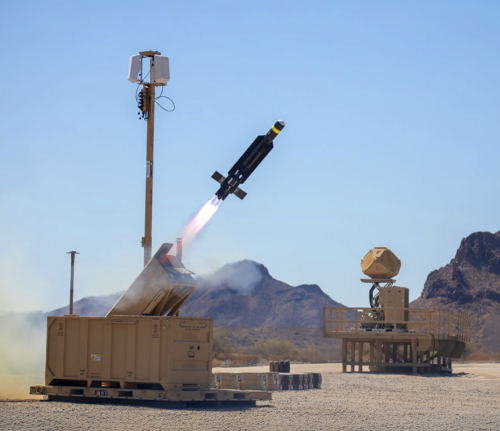
And look at what its businesses produce: missile-defense systems, radar, sensors, hypersonic technologies, space-based systems, aircraft engines, navigation, and communications equipment.
That’s quite a portfolio.
The five largest American defense contractors include Lockheed Martin, RTX, Boeing, Northrop Grumman, and General Dynamics.
According to the Congressional Research Service, these five corporations received approximately 30% of all Department of Defense contract obligations in fiscal year 2024.
And America isn’t their only customer. Weapons, aircraft, surveillance equipment, and military technologies are also sold to governments around the world. Because it’s all about the money. 💰 🎶
How Can Weapons of War Bring Peace?
The United States sells billions of dollars in military equipment to countries around the world, including nations in the Middle East where conflicts have continued for generations.
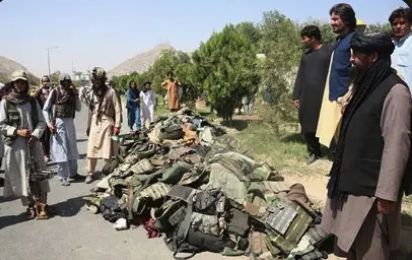 And what about the weapons left behind when America withdrew from Afghanistan in 2021? According to the Department of Defense, approximately $7.1 billion in equipment previously supplied to Afghan security forces remained in the country, much of it falling under Taliban control.
Weapons don’t always remain in the hands of those who originally purchased or received them. They can be captured, transferred, resold, or used in conflicts far removed from their original purpose.
Consider Ukraine. Since Russia’s invasion in 2022, the United States and its allies have supplied billions of dollars in weapons, ammunition, and military equipment. Much of the American funding has gone into U.S. defense manufacturing, replacing weapons sent overseas and financing new production.
Meanwhile, the corporations manufacturing these systems continue receiving contracts for new weapons, ammunition, surveillance technologies, maintenance, and replacements. Governments often justify military spending as necessary to preserve peace through strength and deterrence. But when the same industries benefit financially from preparing for war, fighting wars, and rebuilding military stockpiles afterward, shouldn’t we look closer at the motives for war?
How can we expect lasting peace when preparing for the next war has become such a profitable business?
 The prophet Isaiah offered an interesting alternative thousands of years ago.
What would our largest weapons manufacturers produce if we stopped preparing for the next war? Plowshares?
Imagine Lockheed Martin, RTX, Boeing, General Dynamics, and Northrop Grumman directing more of their engineering expertise toward advanced transportation, clean energy, medical technologies, environmental restoration, and space exploration.
These corporations already possess scientific talent, sophisticated manufacturing facilities, and technological capabilities that could serve many civilian purposes.
Peace wouldn’t necessarily mean the end of their prosperity. It would mean changing what they’re paid to produce.
What If the Best Technology Has Yet to Be Shared?
You know how I feel that a lot of science fiction is a form of soft disclosure. Some TV shows and movies stand out more than others.
I sometimes wonder whether we’re living in our own version of the science-fiction movie Elysium. In the film, ordinary people struggle on Earth while those living in space enjoy technologies that could dramatically improve life for everyone.
What if something similar could happen here? What if technologies capable of providing abundant energy, extraordinary medical advances, or even revolutionary forms of transportation have existed for decades, but remain largely inaccessible to the public?
Imagine being able to travel across the planet in minutes, or perhaps even instantaneously. How would that change our civilization?
And who gets to decide when humanity is ready to receive those discoveries?
Perhaps we will go through some sort of action where these secrets can no longer be hidden. Or maybe, one person will be brave enough to challenge the system to cause a breakthrough for all.

In Elysium, the main character ultimately sacrifices his life to make advanced medical technology accessible to everyone, not just the privileged living in space.
If super-high technology for the elite does exist in private locations on and off the planet, making it available to those on the surface would be like bringing Heaven to Earth.
With Diwali taking place this week, we celebrate the victory of light over darkness, good over evil, and knowledge over ignorance.
In honor of those celebrations, I’d like to leave you with Michael Jackson’s Earth Song. 🎶
May we have Victory of the Light! 🌟

Resource List
- Secret Agents, Secret Armies: The Short Happy Life of the OSS — National WWII Museum
- Defense Security Cooperation Agency — Foreign Military Sales
- DSCA — India C-130J Support, Lockheed Martin
- DSCA — Pakistan F-16 Sustainment, Lockheed Martin
- SIPRI — World’s Largest Arms Companies
- Department of Justice — Raytheon 2024 Settlement
- RTX Corporation — 2025 Annual Report
- Congressional Research Service — Defense Department Contractors
- Smithsonian — Jerome Hunsaker’s Corporate and Aerospace Connections
- Sperry Marine — Corporate History
- SEC — HAARP Antenna Subcontract Records
Related Articles by the author:
Rediscovering Remnants of a Cosmic War — German advanced technology, Vril, and the alleged extraterrestrial connections.
Disclosure: When Did UFOs and ETs Become a Threat? — The historical evolution of UFO encounters and the emergence of the extraterrestrial threat narrative.
Disclosure, Consciousness and the Future of Human Freedom — MJ-12, disclosure, secrecy, and the implications for human freedom.
The UFO Illusion: Real Encounters, Manufactured Threats, and the Art of Deception — The relationship between genuine encounters, possible manufactured threats, and intelligence deception.

Your Tax Free Donations Are Appreciated and Help Fund our Volunteer Website
Disclaimer: We at Prepare for Change (PFC) bring you information that is not offered by the mainstream news, and therefore may seem controversial. The opinions, views, statements, and/or information we present are not necessarily promoted, endorsed, espoused, or agreed to by Prepare for Change, its leadership Council, members, those who work with PFC, or those who read its content. However, they are hopefully provocative. Please use discernment! Use logical thinking, your own intuition and your own connection with Source, Spirit and Natural Laws to help you determine what is true and what is not. By sharing information and seeding dialogue, it is our goal to raise consciousness and awareness of higher truths to free us from enslavement of the matrix in this material realm.