EN
EN FR
FR

There is so much talk about Iran and Israel, while the Russian and Ukrainian battle seems to have faded from the media. I’ve been giving a lot of thought to the issues unfolding in this region of the Middle East, and I feel there may be more to the story than meets the eye.
Indulge me for a moment as I walk through some of the history and prophecy surrounding this land—once as rich in its natural surroundings as it remains today in mystery, lore, and religion.
The Land Between the Rivers:
A Convergence of Civilization, Faith, and Power
Rev. Kat Carroll
(About a 10 minute read)
Land Between the Rivers
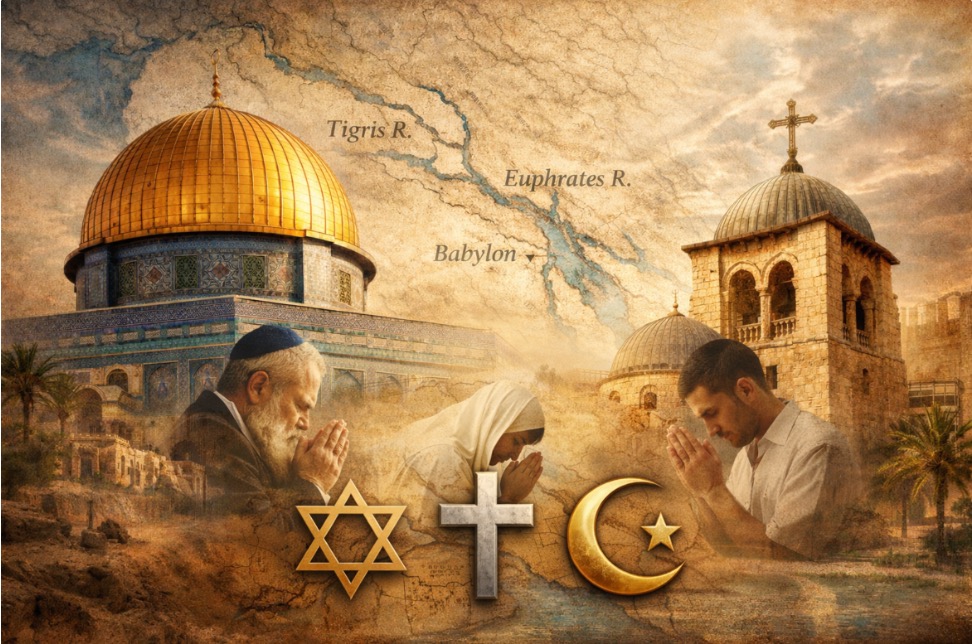
Long before modern headlines spoke of oil markets, nuclear tensions, or geopolitical rivalries, there was a fertile valley where two great rivers shaped the earliest chapters of human civilization. The region known as Mesopotamia literally means “the land between the rivers,” referring to the life-giving waters of the Tigris River and the Euphrates River.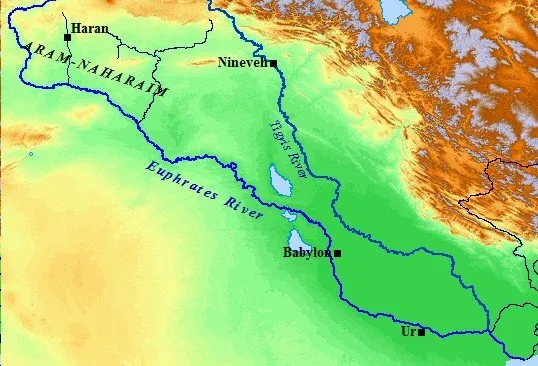
For thousands of years, seasonal flooding deposited rich soil across these plains, allowing agriculture to flourish in an otherwise harsh environment. In this fertile cradle, humanity began building cities, developing writing, measuring the movements of the stars, and creating systems of law and governance that would shape societies for millennia.
Ancient traditions also placed humanity’s beginnings in this same region. In the Book of Genesis, the story of the Garden of Eden describes a river flowing out of paradise and dividing into four branches—two of which are the Tigris and Euphrates. Whether interpreted as literal geography or symbolic memory, the story reflects a deep cultural awareness that something extraordinary once flourished in this land.
It was a place where water, fertile soil, and human curiosity converged—a birthplace not only of civilization, but of humanity’s earliest attempts to understand the cosmos and the divine.
Cradle of Civilization
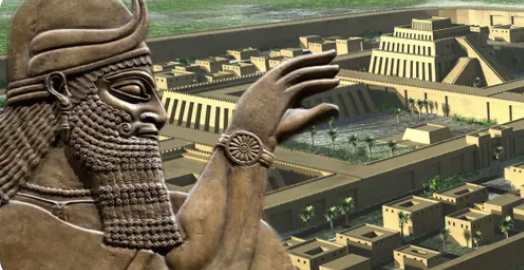 From this fertile valley rose the cities of Sumer, where urban life first began to take shape more than five thousand years ago. Here people developed irrigation canals, recorded transactions on clay tablets, and built temples aligned with celestial events.
These early societies were deeply connected to the rhythms of nature. The movements of the Sun, Moon, and stars were carefully observed, forming the basis for early calendars and agricultural cycles. Long before telescopes or digital clocks existed, ancient observers looked upward and sought meaning in the heavens.
The land between the rivers was fertile not only in soil, but in ideas.
Ancient Iran, Many Names, One Land
The land we now call Iran has been known by many names throughout history. Long before the rise of the Persian Empire, the region was home to the ancient kingdom of Elam, a powerful culture that interacted frequently with the cities of Mesopotamia, which means, middle river.
Later, the region became the heart of the Persian Empire under Cyrus the Great, whose rule over Babylon reshaped the political and spiritual landscape of the ancient Near East.
In biblical texts this expanding empire is often referred to as the kingdom of the Medes and Persians, reflecting the union of two closely related peoples who together formed one of the greatest empires of the ancient world.
The modern nation of Iran still occupies much of this same geographic space. Though the names of kingdoms and rulers have changed over millennia—Elamite, Median, Persian, Parthian, and others—the land itself has remained a central crossroads of civilizations, the very same landscape that continues to shape global events today.
A Crossroads of Faith
Over time, the region became more than a center of civilization. It became a crossroads of 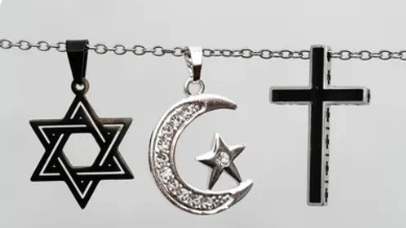 faith.
Three of the world’s major religious traditions—Judaism, Christianity, and Islam—all trace spiritual heritage to this same region and to the patriarch Abraham.
Despite theological differences, these faiths share striking similarities. Each emphasizes devotion to one God, moral responsibility, charity, justice, and compassion for the vulnerable.
Figures such as Moses and Jesus appear across multiple traditions, though understood differently within each faith. When viewed side by side, the shared roots of these religions are far more extensive than many realize.
Yet history shows that shared roots do not always lead to shared peace.
Empires Rising and Falling
Because of its geography, the land between the rivers became one of the most contested regions in human history. Whoever controlled this corridor controlled the trade routes connecting Africa, Asia, and Europe.
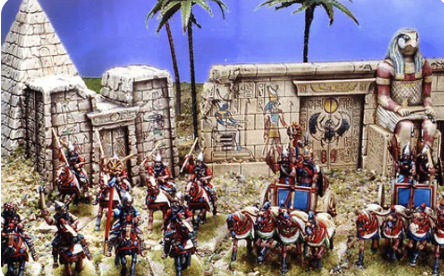 Across centuries, powerful empires rose and fell across these same plains—Assyrians, Babylonians, Persians, Greeks, Romans, and Ottomans.
Ancient prophetic writings reflect this turbulent history. In the Book of Daniel, dreams and visions symbolically describe kingdoms rising and falling one after another.
One passage even describes a spiritual struggle associated with Persia. When Daniel fasted and prayed for 21 days for understanding, a messenger finally arrived, and explained that he had been opposed by the “prince of Persia” until assistance came from Michael, the Archangel.
Whether interpreted literally or symbolically, the passage reflects an ancient belief that events unfolding among nations may mirror conflicts occurring in unseen realms.
Later chapters of Daniel describe the rise and fall of Persian kings, followed by the emergence of a powerful ruler whose empire would ultimately be divided and scattered to the four winds—an image many scholars associate with the conquests of Alexander the Great and the fragmentation of his empire among rival successors.
But it seems to be happening again, even now in 2026. And we don’t yet know how this current version of the story will unfold.
Prophecy and Persia
Another prophetic voice pointed toward the same region when speaking about future conflicts. The prophet Ezekiel, writing during the Jewish exile in Babylon, recorded a vision describing a coalition of nations rising against Israel in the “latter days.”
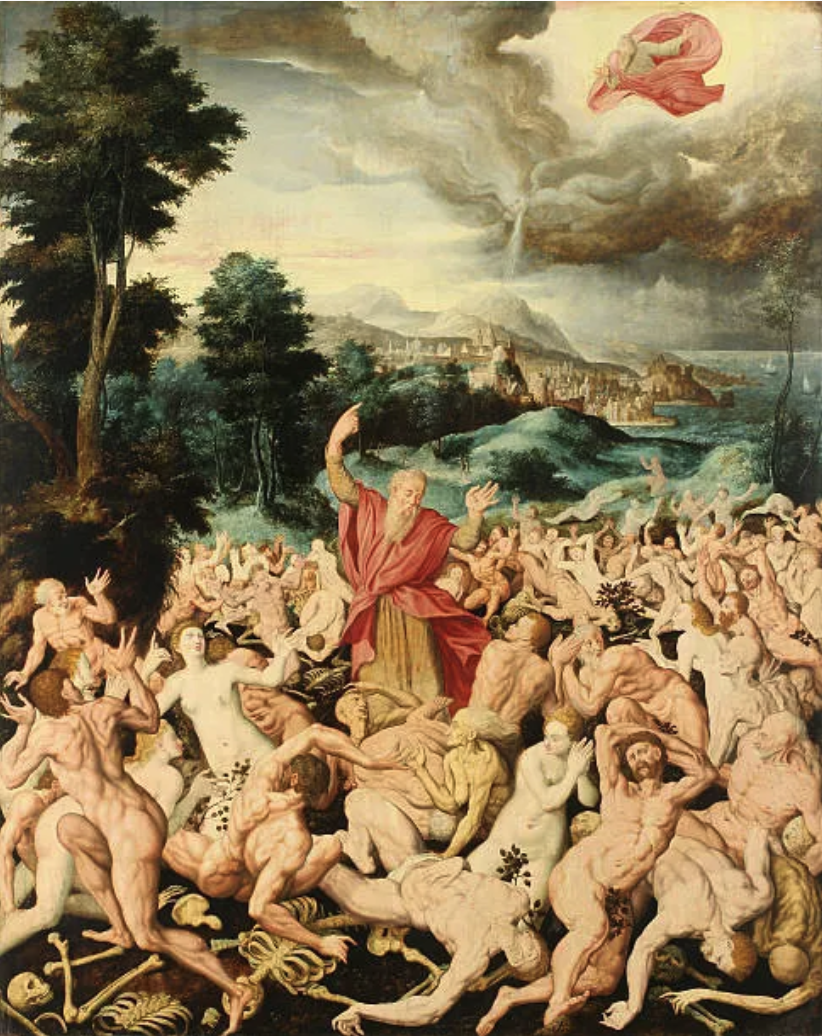
In the Book of Ezekiel, Persia—known today as Iran—is listed among the nations involved.
Ezekiel’s vision describes a massive invasion ultimately halted not by conventional warfare, but by catastrophic events and divine intervention.
For centuries scholars have debated whether these writings describe literal future events or symbolic reflections of recurring cycles of power and conflict. There are other similar stories with cities who’s names have been changed over history. Elam and the Elamites are now southwestern Iran, often referred to as the “high country” or “highlands.”
What is striking, however, is that the same nations mentioned in ancient texts still occupy the center of global attention today.
The War Scroll of Qumran
In the caves near the Dead Sea, archaeologists discovered ancient manuscripts known as the Dead Sea Scrolls. Among them was a document known as the War Scroll.
Written by a Jewish community living near Qumran, the scroll describes a cosmic struggle between forces of light and darkness involving both earthly armies and spiritual forces.
Its themes echo the earlier prophetic visions of Daniel and Ezekiel, suggesting that many ancient writers saw human conflicts as part of a larger spiritual drama.
Hermetic Symbology
Across many traditions, thinkers have suggested that the struggles of nations may reflect deeper forces beyond the visible world.
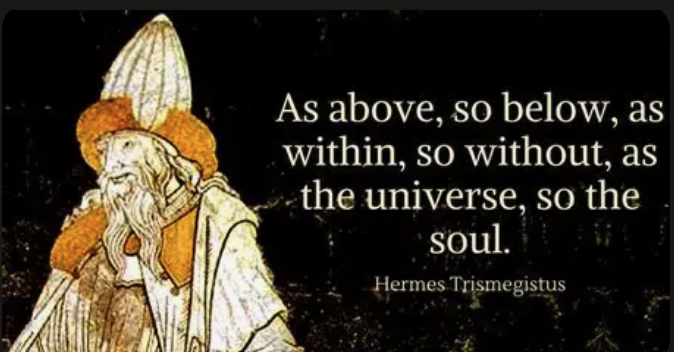 The Hermetic maxim “as above, so below; as within, so without,” associated with Hermes Trismegistus, proposes that patterns in the cosmos are reflected on Earth and even within the humanity.
A similar idea appears in Christian scripture. In Epistle to the Ephesians, readers are reminded that humanity’s deepest struggles are not merely against man:
“For our struggle is not against flesh and blood, but against the rulers, against the authorities, against the powers of this dark world and against the spiritual forces of evil in the heavenly realms.” –Ephesians 6:12
Jewish mystical teachings in Kabbalah also suggest that human actions affect the balance of spiritual forces represented in the Tree of Life.
Even in Eastern philosophy, Taoism teaches that harmony in the outer world reflects balance within individuals and societies.
Across cultures and centuries, a similar idea emerges: the conflicts we witness among nations may reflect deeper struggles within humanity itself, as well as in those unseen spiritual realms. Some traditions extend this mirror even further, suggesting that the Earth itself may reflect patterns similar to the human body—its landscapes, cultures, and conflicts echoing the same energetic imbalances that appear within individuals.
Oil, Power, and the Modern World
In the modern era, another layer has been added to the region’s strategic importance: energy.
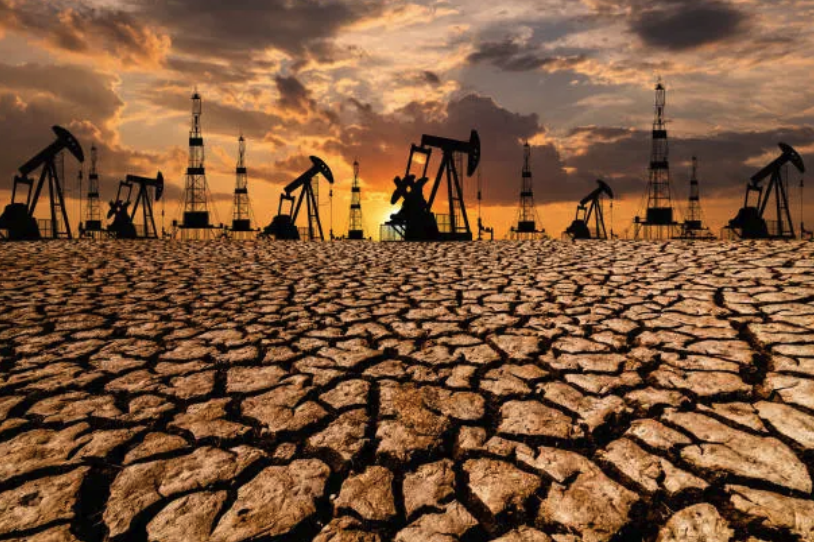 Vast petroleum reserves beneath the Persian Gulf transformed the area into one of the most economically and politically significant regions on Earth. Shipping routes such as the Strait of Hormuz now carry a substantial portion of the world’s oil supply. And yet that free flow of energy is being blocked.
What was once a crossroads of caravan routes has become a crossroads of global energy markets. And if the adage that energy flows where attention goes is true, there is a lot of attention now on the middle east to get that energy flowing once again.
The same land that once nurtured the earliest civilizations now sits at the intersection of geopolitics, religion, and resources.
The Convergence of Sacred Teachings
(Qur’an, New Testament, Kabbalah examples of compassion and love)
For thousands of years, the land between the rivers has been a crossroads of human history. Civilizations were born here, faith traditions took root, and empires rose and fell across the same fertile valleys. Prophets, mystics, and philosophers from many traditions looked upon this region and saw more than geography. They saw a stage upon which humanity wrestled with questions of power, faith, and destiny. Many wars have been waged in this area, leaving scars on the land—much like what we sometimes sense in places considered haunted, where unresolved struggles linger until addressed and released.
Across centuries, different traditions have suggested that the struggles we witness on Earth may reflect deeper forces—moral, spiritual, or internal—within humanity itself. Whether expressed through the prophetic visions of Daniel and Ezekiel, the mystical reflections of Kabbalah, or the Hermetic principle that what occurs above is reflected below, the message echoes across cultures: human history is not only shaped by kings, government, and armies, but by the choices made within the human heart.
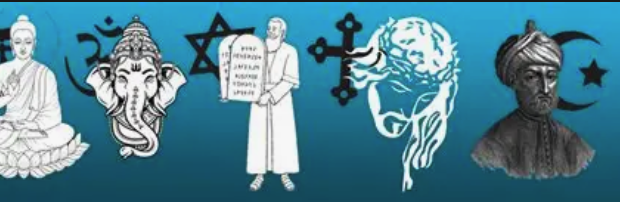
Today, the same region once remembered as the cradle of civilization often appears in the news as a place of tension and rivalry. Yet beneath the politics and competing narratives lies a deeper truth. The faiths that emerged from this land share far more in common than their divisions might suggest. Each speaks, in its earliest teachings, of compassion, justice, humility, and care for one another. I’ll list just a few of these sentiments that appear across the traditions.
Qur’an 30:21 reminds believers that God placed affection and mercy between people so that they might find tranquility together.
Romans 12:10 calls believers to be devoted to one another in brotherly love and to outdo one another in showing honor, emphasizing mutual affection and selfless respect.
Hebrews 13:1 urges Christians to continue in brotherly love, highlighting that this love should be persistent and enduring.
1 Thessalonians 4:9–10 affirms that believers have been taught by God to love one another and encourages them to do so even more.
John 13:34–35 records Jesus’ commandment: love one another as He has loved us, saying that this love will be the distinguishing mark of His followers.
Likewise, 1 John 4:7–8 declares that love comes from God and that those who love know Him—because God is love.
In Kabbalistic tradition, it is taught that God created the world because “the nature of the Good is to do good.” The Torah itself is said to emerge from the right side of divine compassion. These ideas share philosophical roots with other ancient traditions, including teachings preserved among the Essenes and even elements of Zoroastrian thought.
When Energy Centers Are Blocked
Some modern spiritual traditions propose that Earth itself mirrors the human body through a system of energetic centers often called Earth chakras. These locations—frequently associated with ancient sacred sites—are believed to sit along energetic pathways sometimes referred to as ley lines.
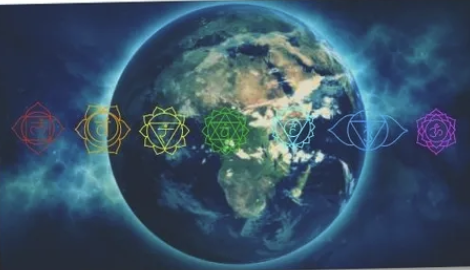 Within this framework, the region encompassing the Great Pyramids of Giza in Egypt, Mount Sinai, and the Mount of Olives in Israel is sometimes described as corresponding to the throat chakra, the center associated with truth, communication, and self-expression.
If viewed symbolically, this association raises an intriguing thought. The very region believed to represent humanity’s collective voice has also been a place where competing narratives, religious authority, political power, and cultural identity have struggled to be heard.
Throughout history, prophets arose in this land to speak truth to kings and nations. Yet the same region has also witnessed repeated attempts to silence dissent, control belief, and restrict who may speak or lead.
In some societies, that struggle has extended even further. Women, who carry and nurture life itself, have often faced deep restrictions on their freedom, movement, and ability to participate fully in public life. When half a society’s voice is limited or unheard, the imbalance can echo through generations… And perhaps through the land itself.
Seen through a metaphysical lens, the turmoil of the Middle East may mirror what happens when the throat chakra of the human body becomes blocked. When truth cannot be spoken freely, pressure builds, dis-ease may erupt. Eventually that pressure must find release.
Water, like energy, must flow in a healthy society. The rivers and reservoirs that once sustained life across the region have been diminishing in recent years. Parts of Iran now face prolonged drought conditions, reminding us that when the natural flow of water, like the flow of truth or communication is disrupted, the consequences ripple outward through both the land and the societies that depend upon it.
Closing Thoughts
Perhaps the enduring lesson of the land between the rivers is not simply that history repeats itself, but that humanity is repeatedly offered the same choice, and has been shown the proper path for thousands of years. The prophets of those ancient times taught the same concepts, and across multiple religious disciplines.
Will we follow leaders and ideologies that divide and dominate, or those that encourage understanding, cooperation, protection, and sharing with one another? Where is the compassion often mentioned in religious beliefs?
Civilizations rise and fall. Empires come and go. But the responsibility for shaping the future has always rested, quietly and persistently, in the hands and hearts of the people who inhabit the world.
History itself seems to move in cycles; climate, economics, conflict, and renewal, patterns that appear and reappear across centuries, much like the ancient rivers that continue to flow through the same land where civilization first began, but sadly, less abundant in current times.
If the ancient stories are right, the place where humanity once imagined a garden may still be inviting us to remember how to live together within it—and perhaps even to recreate that sacred space as stewards and creators upon the Earth.
If we can dream it, we can create it.

What is the strait of Hormuz and why is it crucial for oil supplies?
Earth Chakras – The Spiritual Centre
The Clash of Civilizations and the Remaking of World Order – Samuel Huntington

Your Tax Free Donations Are Appreciated and Help Fund our Volunteer Website
Disclaimer: We at Prepare for Change (PFC) bring you information that is not offered by the mainstream news, and therefore may seem controversial. The opinions, views, statements, and/or information we present are not necessarily promoted, endorsed, espoused, or agreed to by Prepare for Change, its leadership Council, members, those who work with PFC, or those who read its content. However, they are hopefully provocative. Please use discernment! Use logical thinking, your own intuition and your own connection with Source, Spirit and Natural Laws to help you determine what is true and what is not. By sharing information and seeding dialogue, it is our goal to raise consciousness and awareness of higher truths to free us from enslavement of the matrix in this material realm.