EN
EN FR
FR

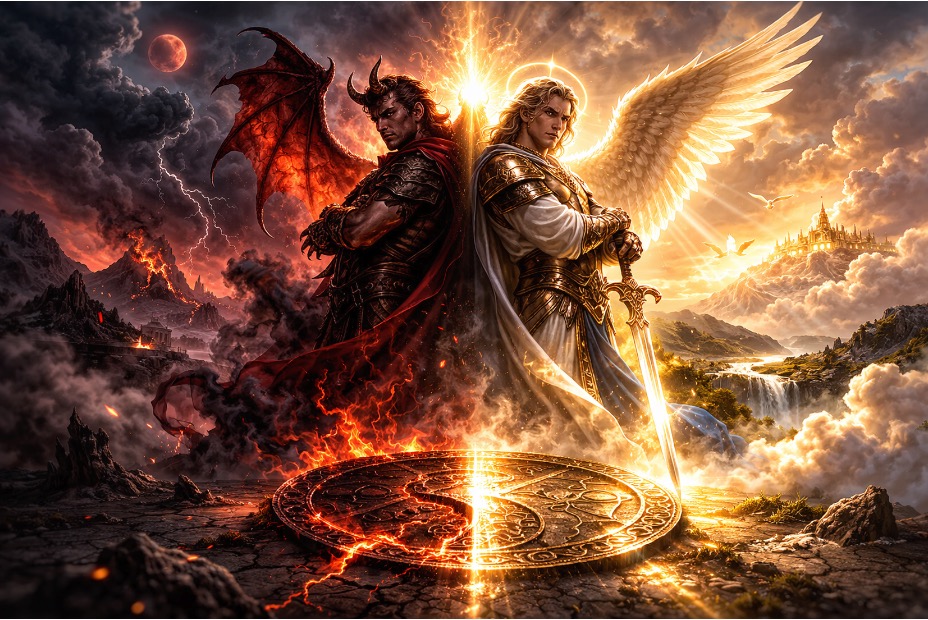
The Devil You Know, or The Story You Were Told
Rev. Kat Carroll
About a 5 min read
Happy St. Patrick’s Day! ☘️
A fitting day, perhaps, to talk about driving out snakes that were never actually in Ireland.
The story may have been less about literal creatures… and more about the quiet replacement of older belief systems, Pagan traditions, and spiritual practices tied to the land.
Which raises an interesting thought.
How many other stories have we accepted over time… without ever looking beneath the surface?
Let’s explore some of them.
Lucifer: The Light-Bearer
Once described in scripture as an “anointed guardian cherub” (Ezekiel 28:14), Lucifer was said to be a being of extraordinary beauty, wisdom, and proximity to the divine.
Positioned near the throne of God, walking upon the holy mountain, and dwelling in Eden (Ezekiel 28:13–14), this figure was not originally associated with darkness—but with light.
Some theologians, including Jonathan Edwards, viewed Lucifer as the highest of angels—exalted in wisdom, strength, and dignity. He was even associated with Venus, the morning star (Isaiah 14:12).
So how does a symbol once associated with light become one associated with evil?
Was it a fall from grace, or a shift in how the story has been told?
What if Lucifer was never meant to be understood as purely one or the other?
What if, like us, this figure carries both light and shadow—not as contradiction, but as function?
A catalyst, appearing when change is required.
Sometimes illuminating what has been hidden.
And at other times… disrupting what has become too rigid to evolve on it’s own.
Many Names, Many Facets
Before we go further, it’s worth pausing on something curious.
The name Lucifer, long associated with darkness, originally meant light-bearer—the morning star.
Even today, that root appears in unexpected places.
Luciferase, an enzyme found in nature, quite literally produces light—it glows in the dark. It had been tied to some types of Covid Vaccinations, leaving a mark on the skin that can be seen with sensitive cameras.
You may have also heard claims about a “Lucifer telescope” at the Vatican. That, too, is a misunderstanding. The instrument in question was part of the Large Binocular Telescope in Arizona, operated by a scientific consortium. Its name was later shortened to LUCI.
Still… the reaction to the name itself is telling. Because it raises a deeper question:
How much of what we believe is shaped not just by origin, but by association or other stories passed down through the ages?
Across time, this figure has been known by many names—each reflecting a different role, a different lens through which humanity has tried to understand it:
Satan — the adversary, the accuser
The Devil — the slanderer, the divider
The Serpent — subtle, persuasive, associated with knowledge and temptation
The Dragon — a symbol of immense power and opposition
The Accuser — bringing judgment and challenge
The Tempter — provoking choice
The Father of Lies — associated with distortion and deception
Beelzebub / Belial — later names tied to corruption or worthlessness
The Ruler of This World / Prince of the Power of the Air — titles suggesting influence over human systems
Each name tells a story. But perhaps more importantly… each name reveals a function.
And interestingly, none of these titles speak of light. Which raises another question:
Are Lucifer and Satan two sides of the same coin? One associated with illumination.
The other with opposition.
Different roles… appearing at different times.
One thing is for certain, the Devil and those who worship Satan are a lot different in meaning today than they were in the past. But is it not shining light on topics that are almost too dark to speak of in public?
Stories That Shaped Our Concept the Devil
Before we move further, there’s another layer worth considering.
Because when many of us picture Lucifer—the fallen angel cast from heaven, defiant, proud, and tragic—we may not be drawing solely from scripture.
Much of that imagery… comes from a story.
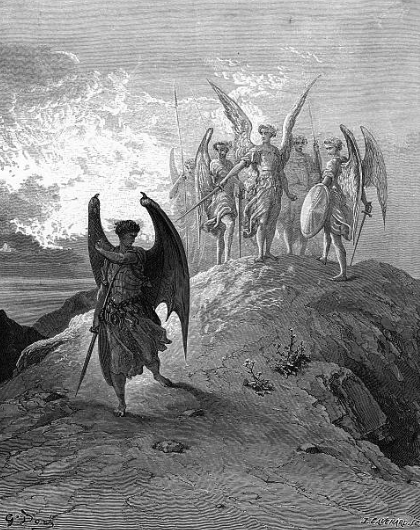 In the 17th century, John Milton wrote Paradise Lost, an epic poem that would go on to shape the way generations imagined the fall of Lucifer.
In it, Lucifer is not just a symbol of evil, but a complex and compelling figure—charismatic, rebellious, and unwilling to submit.
“Better to reign in Hell than serve in Heaven.”
It’s a powerful line. Memorable. Human, even.
But Milton was not the first to shape this image.
Centuries earlier, Dante’s Inferno offered a very different vision.
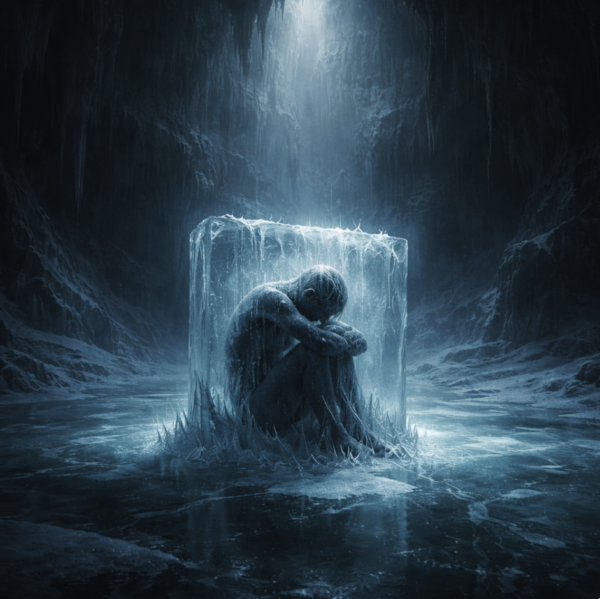 In Dante’s world, the deepest level of Hell is not fire… but ice. And at its center sits Lucifer, not as a ruler, but as a prisoner—frozen, immobilized within a realm of absolute cold.
No speeches.
No rebellion.
Only stillness.
Two visions.
Two very different devils.
One burning with defiance. The other trapped in silence.
Perhaps this, too, is symbolic.
Because while fire consumes and transforms…
ice preserves, halts, and holds things in place.
And if we look closely, both images tell a story.
One of chaos and destruction.
The other of stagnation and entrapment.
Both Milton’s Paradise Lost and Dante’s Inferno can be understood as allegories—stories that use vivid imagery and character to explore deeper truths about human nature, choice, and the consequences of imbalance. Perfect examples of extremes — Fire and Ice.
What about a different version of Lucifer, one that walks the line between good and evil?
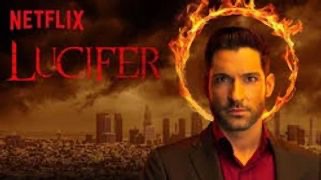 Even modern storytelling has begun to revisit this idea. In the Lucifer television series, the Devil is portrayed not as a purely evil figure, but as complex, self-aware, and even likable.
Choosing to leave Hell and live among humans, he forms an unlikely partnership with a detective, using his ability to draw out people’s deepest desires to uncover truth and motive. Though often indulgent and flawed, this version of Lucifer is also capable of growth, empathy, and ultimately… transformation. Even the night club he owns speaks of light as it’s called LUX, Latin for light. This show provides a striking shift from earlier portrayals, and another reminder that the story continues to evolve.
A Force for Change
If symbols can shift in meaning over time, then perhaps we should also look at the roles those symbols represent.
Because throughout history, whenever power becomes too concentrated, whenever systems begin to lose their balance, something emerges to challenge it.
When empires overreach.
When voices are silenced too long.
When truth becomes obscured beneath control.
Something rises.
Sometimes that force is loud and disruptive.
Sometimes it is quiet and transformative.
But again and again, it appears as part of a necessary repeating cycle. Because without challenge, systems stagnate. Without pressure, nothing evolves.
Christed Catalyst
Not all catalysts arrive in the same way.
Some come as rebellion.
Others come as resonance.
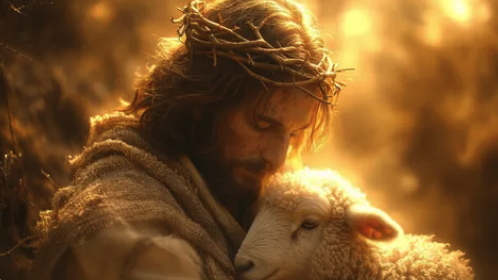 Figures like Jesus of Nazareth did not overthrow systems through force,
but through something far less predictable—a shift in consciousness.
A frequency, centered in love, compassion, and forgiveness.
And yet, even that presence did not arrive without disruption. His teachings gave power back to the people which would free them from the rules of religion. It did not go well.
Beliefs were challenged.
Structures were questioned.
Tensions rose.
Over 2,000 years later, we still celebrate his sacrifice, lessons and resurrection. If he could rise, we can too.
Change, no matter how it arrives, rarely comes without friction. And nature always strives to find balance.
A Pattern, Not a Person
So, perhaps the catalyst we’re exploring is not one thing.
Not one being, not one name; But a pattern, a frequency, an energetic force we may not see, but feel, until actions unfold before us (or in hindsight).
Sometimes that force appears as the rebel who resists authority. Sometimes as the teacher who transforms from within. And both, in their own way… serve the process of change.
History shows us that when rulers, institutions, or belief systems move too far from balance, it is often the people themselves who rise: sometimes peacefully, sometimes through upheaval—to restore a sense of sovereignty and control over their lives.
When the catalyst arrives, it’s not always welcomed, and not always understood. But often arrives at the very moment when change becomes unavoidable. When balance must be restored.
Closing Thoughts
These catalysts are not only found in the rise and fall of empires, or in the unraveling of systems that no longer serve. They also appear in our personal lives: sometimes unexpectedly… sometimes shaking us to the core.
Moments that challenge us.
Disrupt us.
Ask something more of us than we thought we could give.
And in those moments, we are offered a choice.
Not just to react…
but to reflect.
To pause, and ask:
What is this moment asking of me?
What is the lesson within today’s catalyst?
What needed to go so it could be replaced with something new and better?
Because whether it arrives as disruption or awakening…
the invitation is the same:
To grow.
To see more clearly (illumination)
And to become something new.
When something rises to challenge the world as we know it… we may not be looking at an enemy, but a catalyst for transformation.

This article was inspired by a recent talk from Courtney Brown of the Farsight Institute.
You can watch it here: Spotlight: Satan and the Rebel Problem
For a Deeper Dive:
Milton’s Paradise Lost Poem (all 12 books) in PDF Form
THE DIVINE COMEDY OF DANTE ALIGHIERI
20 History-Shattering Times Subjects Overthrew their Monarchies

Your Tax Free Donations Are Appreciated and Help Fund our Volunteer Website
Disclaimer: We at Prepare for Change (PFC) bring you information that is not offered by the mainstream news, and therefore may seem controversial. The opinions, views, statements, and/or information we present are not necessarily promoted, endorsed, espoused, or agreed to by Prepare for Change, its leadership Council, members, those who work with PFC, or those who read its content. However, they are hopefully provocative. Please use discernment! Use logical thinking, your own intuition and your own connection with Source, Spirit and Natural Laws to help you determine what is true and what is not. By sharing information and seeding dialogue, it is our goal to raise consciousness and awareness of higher truths to free us from enslavement of the matrix in this material realm.