 EN
EN FR
FR

by Paul Anthony Taylor,
Behind tight security and closed doors in Washington DC, some of the world’s most powerful political leaders, billionaires, military chiefs, and tech executives recently gathered for the 72nd annual Bilderberg meeting. Officially described as an informal forum for discussion, the event addressed issues ranging from artificial intelligence and warfare to global trade and geopolitics. Yet with no press access, no recorded minutes, and no public accountability, the real substance of these conversations remains hidden. In a world already facing deep political, economic, and social crises, such secrecy raises an important question: are these elite gatherings attempting to resolve global problems – or deliberately shaping them beyond democratic scrutiny?
Founded in 1954, we’re told that Bilderberg meetings were originally intended to foster cooperation between Europe and North America in the aftermath of World War II. Today, they bring together around 120 to 140 participants each year, drawn from politics, finance, industry, academia, and media. The 2026 meeting participant list followed this pattern, with roughly two-thirds of attendees from Europe and the rest from North America.
This year’s agenda reflected the turbulence of the current global landscape. Topics included artificial intelligence, the future of warfare, energy diversification, global trade, China, Russia, the Middle East, and the transatlantic defense-industrial relationship. These are not abstract issues. They are the defining challenges of our time, affecting billions of lives. Yet the discussions took place under the so-called ‘Chatham House Rule,’ meaning participants can use the information they hear but cannot reveal who said what. In effect, decisions that may shape the future of societies are debated in a setting where the public is deliberately excluded.
Reinforcing existing power structures
The guest list brought a wide concentration of power to the meeting room. Senior political figures mingled with Wall Street executives, heads of major multinational corporations, and leaders in emerging technologies such as artificial intelligence and defense systems. Representatives from the military and intelligence communities were also present, underscoring the close relationship between state power and private interests. When such a diverse yet tightly connected elite meets in private, it inevitably raises concerns about whose interests are being prioritized.
Particularly striking this year was the strong presence of figures linked to defense and advanced military technology. For discussions on the future of warfare, the gathering connected those shaping both policy and the tools of modern conflict. The growing role of artificial intelligence in military strategy, including autonomous weapons and drone systems, was reportedly a key focus. These developments carry profound ethical and humanitarian implications, yet they are being explored in forums shielded from public debate.
At the same time, major financial institutions and corporate giants were also well represented. Leaders from investment firms, global banks, and multinational companies had the opportunity to engage directly with policymakers. This blending of political authority and corporate influence is not new, but Bilderberg provides a uniquely private environment for such interactions. Without transparency, however, far from serving the broader public good, it simply reinforces existing power structures.
Undermining democracy
Supporters of Bilderberg claim the extreme secrecy allows for open and honest dialogue. Free from the pressures of media scrutiny and political posturing, they say, participants can exchange ideas more candidly. The official line insists that no decisions are made, no votes are taken, and no policies are formally agreed. However, this defense misses a crucial point. Influence does not require formal decisions. The opportunity to shape thinking, build alliances, and align interests behind closed doors can be just as powerful – if not more so.
Critics have long warned that these gatherings risk undermining democratic principles. In democratic societies, major decisions are supposed to be made transparently, with accountability to the public. Yet when key figures from government, business and security sectors meet in secret, it creates a parallel sphere of influence that operates beyond these safeguards. Even if no explicit agreements are reached, the very act of convening such a group can set agendas and priorities that later emerge in public policy.
The lack of independent media coverage only deepens the concern. Despite the high-profile nature of the attendees and the significance of the topics discussed, Bilderberg receives remarkably little attention from mainstream/legacy news outlets. This absence of scrutiny contributes to a sense that important conversations are taking place out of sight, reinforcing public mistrust in institutions. In an era marked by declining confidence in political systems, this lack of transparency is particularly damaging.
The presence of figures connected to intelligence agencies adds another layer of unease. Historically, Bilderberg has been linked to efforts by Western intelligence services to strengthen transatlantic cooperation during the Cold War. Today, the continued involvement of intelligence leaders suggests that security considerations remain central to its discussions. While national security is undoubtedly important, the blending of intelligence, politics, and corporate interests in a secretive setting raises fundamental questions about oversight and accountability.
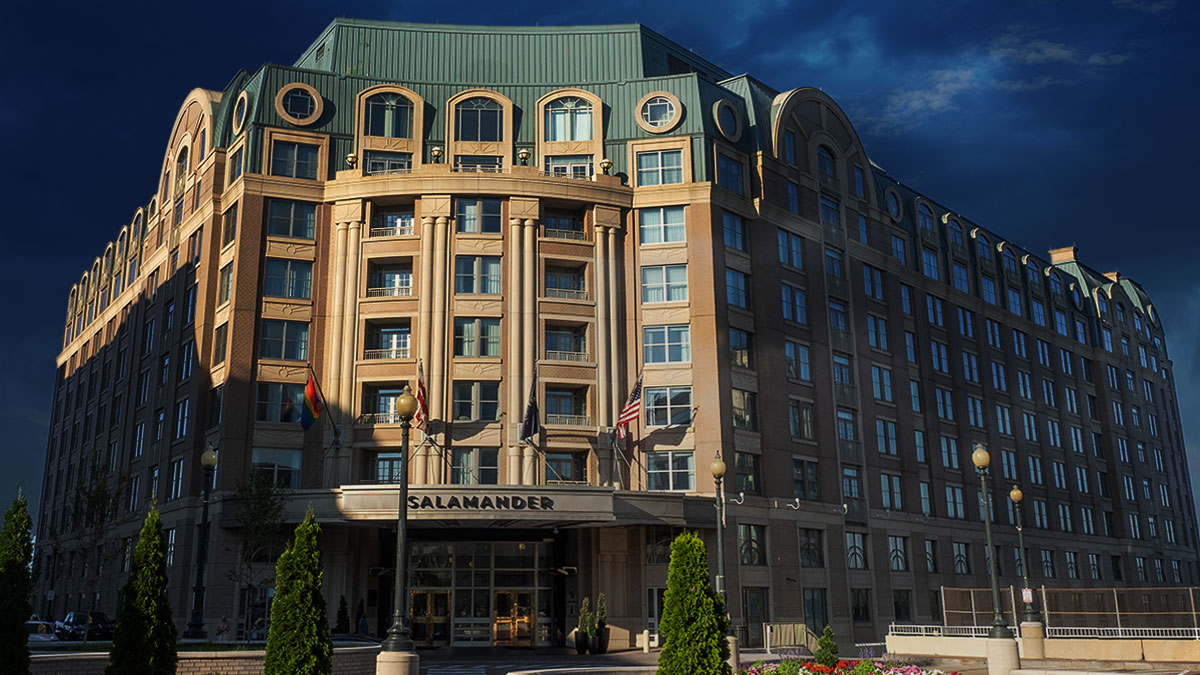
Even the symbolic aspects of the meeting carry weight. The choice of a luxury hotel, the Salamander in Washington DC, heavily guarded and sealed off from the public, reinforces the perception of an elite world operating separately from ordinary citizens. For many people struggling with rising living costs, economic uncertainty and political instability, the image of global leaders gathering in such exclusive conditions will seem deeply disconnected from everyday realities.
Not the solution, but part of the problem
In a time of mounting global challenges, the need for transparent, inclusive decision-making has never been greater. Finding solutions to the world’s problems requires public trust and broad participation. Secretive meetings among powerful elites risk eroding both. They may offer convenience for those inside the room, but they do nothing to build legitimacy in the eyes of the wider world.
Ultimately, the issue is not whether dialogue between influential figures should take place. The problem lies in how and where these conversations happen. When they are conducted behind closed doors, without accountability or public engagement, they contribute to a growing perception that global governance is drifting dangerously away from democratic control.
The 2026 Bilderberg meeting is a reminder of this troubling reality. At a moment when the world urgently needs openness, cooperation and trust, secrecy at the highest levels sends the opposite message. Far from being a solution to global instability, such gatherings have become part of the problem – reinforcing a system where decisions are shaped by a powerful few, while the many are left struggling in the dark.
Source: https://www.dr-rath-foundation.org

Your Tax Free Donations Are Appreciated and Help Fund our Volunteer Website
Disclaimer: We at Prepare for Change (PFC) bring you information that is not offered by the mainstream news, and therefore may seem controversial. The opinions, views, statements, and/or information we present are not necessarily promoted, endorsed, espoused, or agreed to by Prepare for Change, its leadership Council, members, those who work with PFC, or those who read its content. However, they are hopefully provocative. Please use discernment! Use logical thinking, your own intuition and your own connection with Source, Spirit and Natural Laws to help you determine what is true and what is not. By sharing information and seeding dialogue, it is our goal to raise consciousness and awareness of higher truths to free us from enslavement of the matrix in this material realm.

















So as to have zero restraints on avarice & those useless "goyim" rights! Like letting the criminals decide the Laws. Because could NEVER stand the light of day (like Satanism, pedophilia). Turn the world into Gaza as long as they get rich.