EN
EN FR
FR

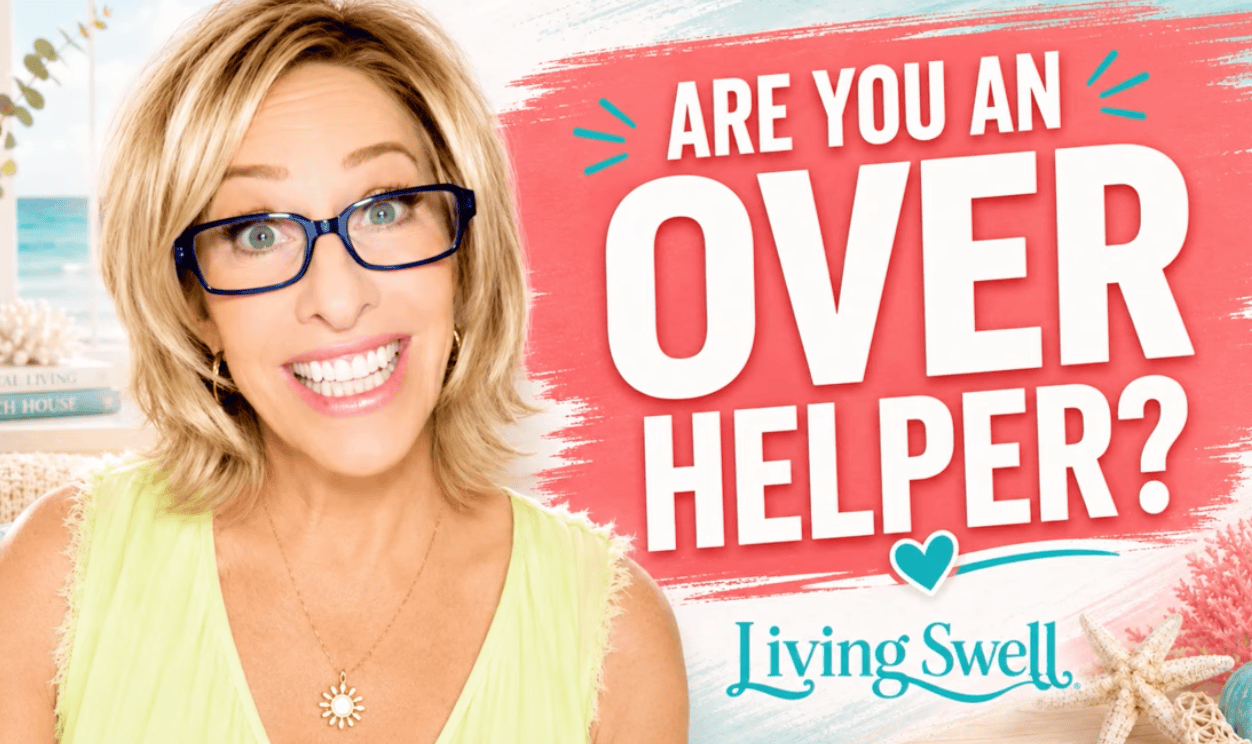
A little departure from my regular content…
Friends,
After a week of relentless media hogwashing with headlines head-LIES promoting fear and panic over (fake) outbreaks of the Aint-a-Virus, Ebola and now Diphtheria, I thought we could all use a break from the doom and gloom.
Occasionally I like to share with you a message that can help you improve your life and relationships (regardless of what the media is spinning).
In other words, to focus on empowering actions instead of giving away your time and attention and peace of mind to the headlines of the day.
I realize my positive encouragement content is not everyone’s cuppa tea, so feel free to pass on reading the rest of this article.
For those who are ready to take a break from the headlines, let’s dive in!
When Helping Ends Up Hurting
You’ve heard of being an overachiever… but have you ever considered that you might just be an over-helper?
Helping others isn’t a bad thing unless it comes at your own expense, or unless there’s a hidden agenda attached. And I say “hidden” on purpose, because sometimes it’s so subtle you don’t even realize it’s there.
This is just a friendly conversation because I’m not talking about deep psychological diagnoses or situations that require professional counseling regarding things like clinical codependency or extreme enabling. I’m talking about everyday people, maybe people like you or me, who genuinely want to help… even when our help isn’t wanted.
My entire life has basically been devoted to helping others. I call myself a professional encourager. But at some point, you have to ask: What happens when helping others starts costing you? When you neglect the areas of your own life that actually need attention?
Maybe you don’t ask for help because you’re always the helper. Maybe it feels uncomfortable as if asking would somehow mean you’re inadequate.
Is it possible that sometimes “helping” is actually about control?
A subtle sense of superiority like “I know better,” or “if they’d just listen to me, everything would be fine.”
That’s usually where helping crosses into over-helping.
One clear sign?
You’re neglecting yourself—your time, your responsibilities, your priorities—because you’re too busy fixing everyone else.
And of course it doesn’t help that our society places high value on helpers. We clap for generosity. We reward self-sacrifice. There’s even that old joke:
“If the purpose of life is helping others… what are the others here for?” 😂
Ask yourself:
Can you help without being attached to the outcome? While maintaining healthy boundaries?
Are you helping others at the expense of your own family? Your own responsibilities? Your own well-being?
Some people help for the accolades and appreciation. For the feeling of being needed. Often that motivation is subconscious and they may not even realize it.
But here’s what I want to emphasize:
People need to learn and grow on their own.
You figured things out, didn’t you?
Why assume others can’t?
Back in the day, we called this enabling—not allowing someone to learn, struggle, or grow. At the extreme, it looks like paying off someone else’s debts, doing tasks they’re fully capable of doing, or constantly fixing their messes. Over time, it creates dependency and sometimes even a sense of worth for the helper: If they need me, I matter.
You might know people like this who are always getting somebody else off the hook, always covering for them, always trying to fix others…
But constantly fixing others often leads to resentment. You might feel used, unappreciated, or taken advantage of.
Meanwhile, the other person never develops the same level of self-sufficiency you had to develop yourself.
So consider this:
One of the best ways to help someone is to let them help themselves.
I know how frustrating that can be especially when you’ve been through it, when you know the answer, when you can clearly see the path forward.
Obviously, there’s a big difference between genuinely helping someone who needs assistance—like getting something out of the attic when they can’t climb stairs, opening a jar they physically can’t open, or giving rides when they can’t drive—and inserting yourself where help wasn’t asked for.
Over-helping looks more like offering to redecorate someone’s home when they don’t want your input, then criticizing how they’re doing it. It’s a simple example, but you can easily see how that would apply to other situations.
If you’re repeatedly offering help that isn’t requested—and then feeling frustrated when the person doesn’t take your advice—you’ve drifted into the over-helper zone.
At the opposite end of the spectrum are people who always ask for help. Their decision-making muscles get lazy. Their independence weakens. Sometimes the most loving thing you can do is allow them to experience the consequences of their actions (or inaction).
Instead of defaulting to jump right into help mode, ask this first:
“Would you like help?”
And be prepared to respect the answer.
I remember I once worked with a wellness coaching client who made great strides—his health improved, his arthritis eased—and then he suddenly stalled. He realized that continued healing would have meant getting a job, taking responsibility, and no longer relying on illness as a lifestyle. Staying “stuck” was safer. So, for him, it was easier (or more preferable) to just remain ill.
Over-helping can also send a damaging message of: You’re not capable. Especially when help is unsolicited.
If someone asks for help, that’s different. You can share your experience. Point them to resources.
This reminds me of when my husband and I sold collectibles years ago. We’d carefully organize everything by category and color… But customers ignored all of it. They wanted to dig through the boxes and discover the treasures themselves.
I will never forget that lesson.
As frustrating as it can be, maybe the real help is stepping back and letting people discover their own treasures and experience the natural consequences of their actions. That’s often where the deepest growth happens.
The irony of this entire conversation is that I don’t have all the answers. And maybe I can’t solve your particular situation with over-helping either.
From Peggy Hall

Your Tax Free Donations Are Appreciated and Help Fund our Volunteer Website
Disclaimer: We at Prepare for Change (PFC) bring you information that is not offered by the mainstream news, and therefore may seem controversial. The opinions, views, statements, and/or information we present are not necessarily promoted, endorsed, espoused, or agreed to by Prepare for Change, its leadership Council, members, those who work with PFC, or those who read its content. However, they are hopefully provocative. Please use discernment! Use logical thinking, your own intuition and your own connection with Source, Spirit and Natural Laws to help you determine what is true and what is not. By sharing information and seeding dialogue, it is our goal to raise consciousness and awareness of higher truths to free us from enslavement of the matrix in this material realm.