EN
EN FR
FR

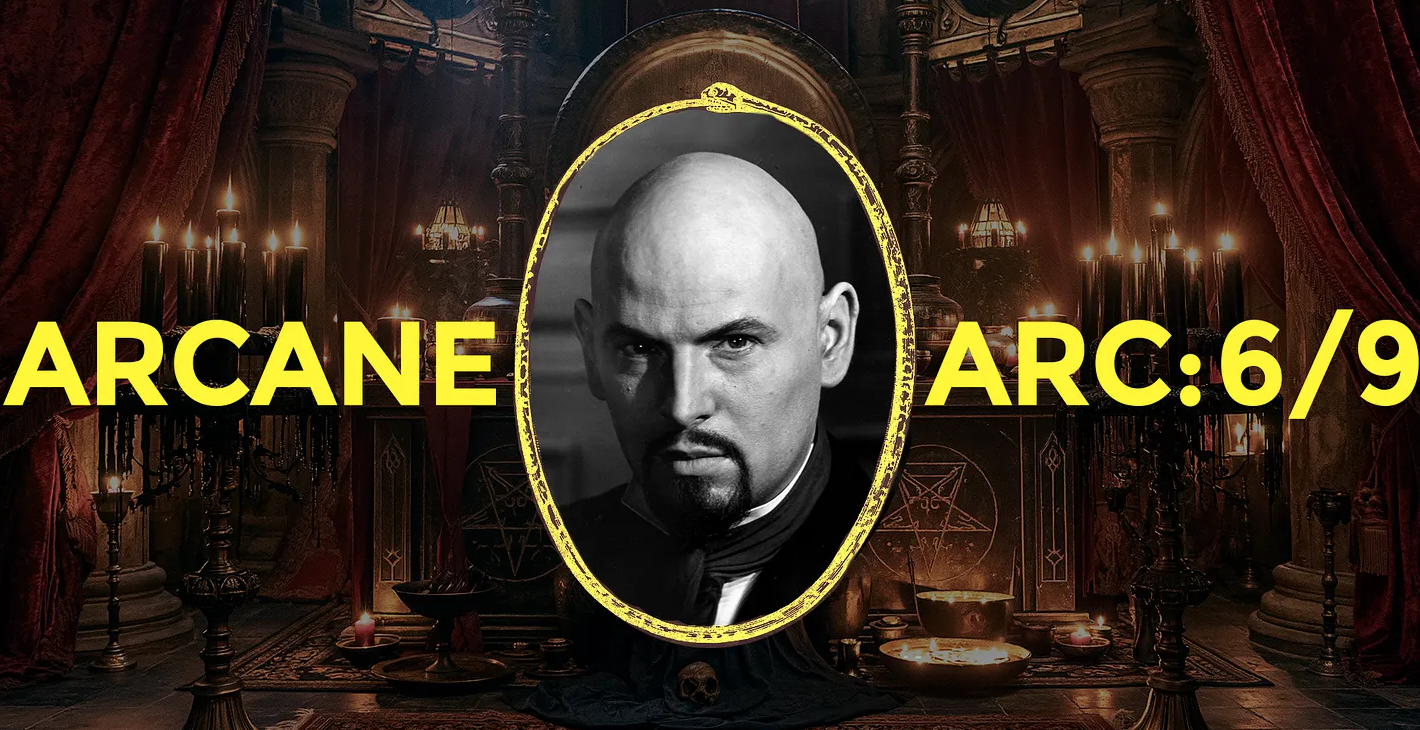
Anton LaVey, Cultural Normalization, and the Philosophy Made Accessible
Every significant philosophical project eventually faces the question of scale. A doctrine held by initiates in private correspondence, practiced in closed lodge rooms, transmitted through graduated degree systems to carefully vetted members — this is a philosophy with real depth and real institutional reach, but its influence is ultimately bounded by the size and discipline of its initiatory infrastructure. If the administrative project were to shape mass culture — to move the philosophical premises of the Luciferian tradition from the esoteric margins into the mainstream — it would need something different. Not a degree system. Not a ritual order. A brand.
Anton Szandor LaVey understood this with a clarity that none of his predecessors had applied to the problem. He was not a deep occult scholar in the tradition of Crowley or a serious philosophical architect in the tradition of Pike. What he was, was a gifted showman, a cultural provocateur, and an instinctive marketer who understood that the philosophy of individual will, the rejection of external moral authority, and the celebration of self-interest as the highest human value could be packaged and sold to a mass audience if the packaging was sufficiently theatrical and the price of admission was sufficiently low.
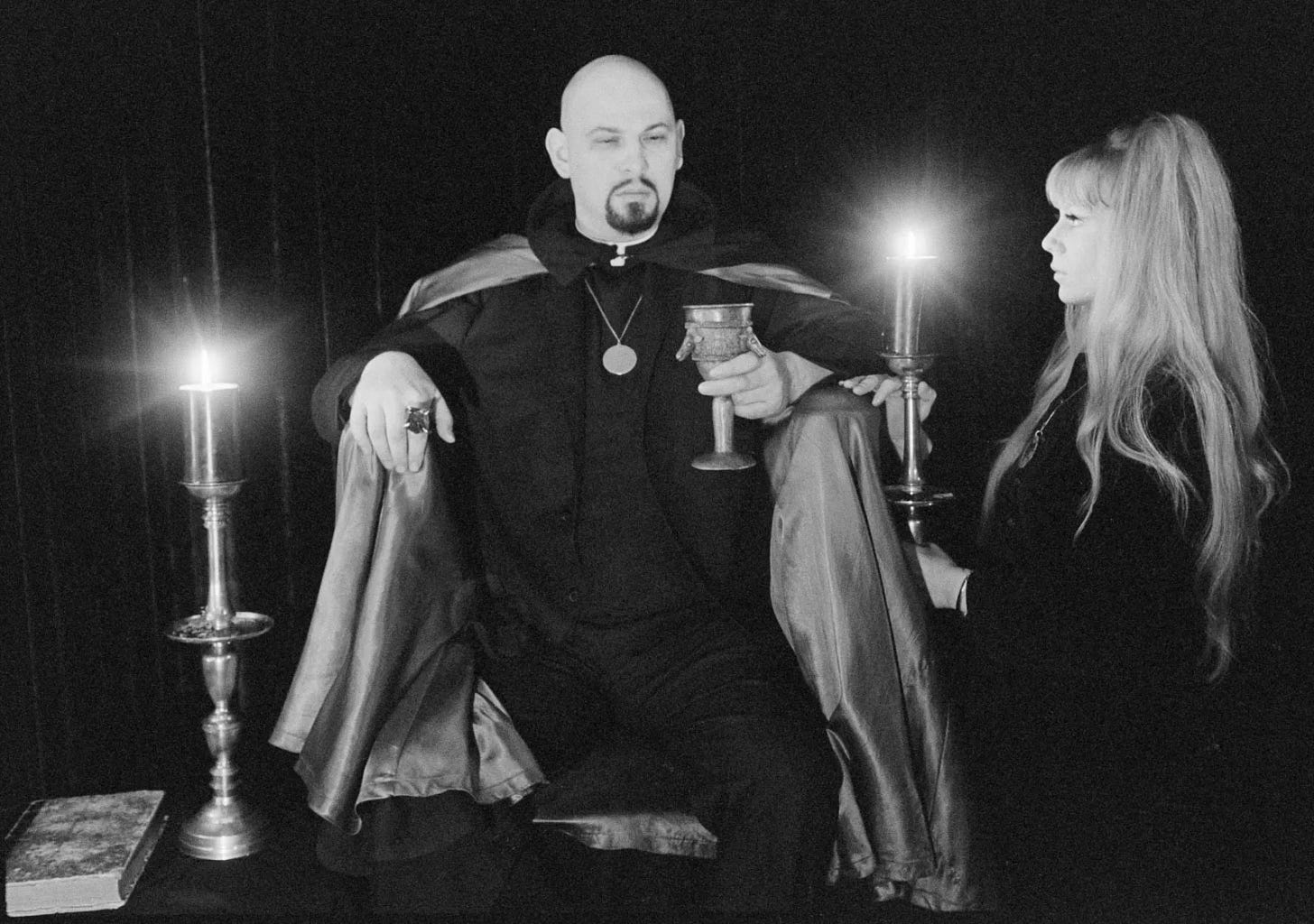
The Church of Satan, which LaVey founded in San Francisco on Walpurgisnacht 1966, was the result. It was not, by the standards of the tradition this arc has been examining, a serious occult organization. LaVey himself acknowledged that Satan was a symbol rather than a real entity — a position that put him at direct theological odds with Aquino and the Temple of Set, and that Crowley would have found philosophically unsatisfying. What the Church of Satan was, and what it remains, is the most successful popularization of the Luciferian administrative project’s core philosophical claims in the modern period.
LaVey was not the deepest thinker in the tradition this arc examines. He was its most effective communicator. The Church of Satan made the philosophy of individual will and the rejection of external moral authority available to anyone who could buy a paperback book.
Anton LaVey: The Man Behind the Myth
Anton Szandor LaVey was born Howard Stanton Levey in Chicago in 1930. He spent his early adult years in a variety of occupations — carnival worker, lion tamer, police crime scene photographer, musician — that gave him an unusually direct exposure to human psychology at its extremes. He was observant, intelligent, and deeply skeptical of the conventional religious framework he saw surrounding him. By the early 1960s he was running a series of informal gatherings he called the Magic Circle in San Francisco, exploring occult philosophy and ritual with a small group of interested participants.

The Church of Satan emerged from those gatherings in 1966. LaVey’s timing was precise — San Francisco in 1966 was the epicenter of a cultural moment in which authority was being questioned at every level, traditional morality was being challenged by a generation that had grown up in postwar prosperity and wanted something different, and the appetite for transgressive experience was at a cultural high point. The Church of Satan provided a framework for that transgression that was simultaneously serious enough to attract genuine intellectual engagement and theatrical enough to generate the media attention that LaVey actively cultivated.
LaVey was a skilled self-mythologizer. Many elements of the biographical account he presented publicly — his carnival associations with Marilyn Monroe, his roles in specific films — have been challenged by subsequent researchers as embellishment or fabrication. His daughter Zeena and former partner Blanche Barton have given contradictory accounts of various aspects of his life. This pattern of self-mythologizing is worth noting editorially because it is itself a feature of the tradition: the persona crafted to produce a specific impression is more important, in the popularization function, than the biographical reality underneath it.
SOURCE NOTE — The standard biographical sources for LaVey are Blanche Barton’s The Church of Satan (1990) and The Secret Life of a Satanist (1990), both written from an insider perspective sympathetic to LaVey. More critical assessments appear in various academic treatments of new religious movements. His daughter Zeena LaVey-Schreck has publicly contested elements of the official biography. The Satanic Bible (1969) is widely available and represents his philosophical position in his own words.
The Satanic Bible: The Philosophy Made Accessible
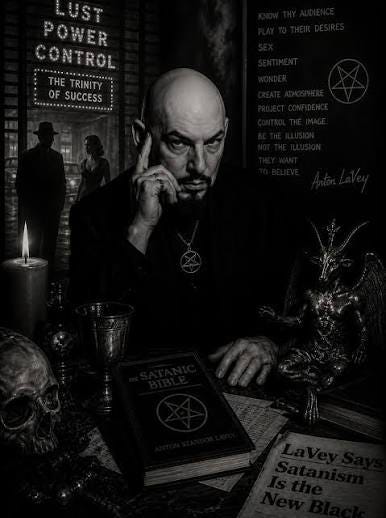
The Satanic Bible, published in 1969, is the document that gives LaVey his place in this arc. It has sold over a million copies — by some estimates significantly more — making it one of the most widely distributed expressions of the Luciferian administrative project’s philosophy in the documented record. Its influence on American popular culture, through the music, film, and aesthetic traditions it shaped, extends far beyond its direct readership.
The philosophy the Satanic Bible articulates is a simplified and accessible version of the core claim this arc has been tracing from Blavatsky through Crowley. Self-interest is the highest value. External moral authority — particularly the Judeo-Christian framework of sin, sacrifice, and submission to divine will — is a mechanism of control designed to suppress human vitality and authentic self-expression. The individual’s desire, pleasure, and power are legitimate ends in themselves. The strong should flourish and the weak should not be artificially propped up by the compassion of the strong.
LaVey drew explicitly on Ayn Rand’s Objectivist philosophy — itself a secular expression of the same individualist framework — and on Nietzsche’s critique of slave morality. He stripped away the cosmic and supernatural dimensions that Crowley and the deeper esoteric tradition had maintained, presenting a materialist philosophy of radical self-interest without the metaphysical claims that required serious engagement with the contact tradition and its implications.
This stripping away is both the Satanic Bible’s strength and its limitation as an expression of the tradition. Its strength: it made the philosophy available to anyone without requiring the cosmological commitments or the serious initiatory work that Crowley’s system demanded. Its limitation: by removing the metaphysical framework, LaVey produced a philosophy that is essentially indistinguishable from aggressive secular materialism dressed in theatrical religious clothing. The Church of Satan’s Satan is a symbol of human pride. The tradition’s actual claims about genuine non-human intelligences and their administrative relationship to human civilization are entirely absent.

The Satanic Bible is available in any bookstore. It has been in continuous print for over fifty years. The philosophy it articulates — self-interest as the highest value, external moral authority as illegitimate control, individual desire as the measure of right action — is now so thoroughly embedded in Western popular culture that it no longer requires the Satanic branding. It is the default operating philosophy of significant portions of the advertising, financial, and entertainment industries.
The Cultural Function: Normalization at Scale
The most significant contribution LaVey made to the administrative project was not theological. It was cultural. By making the philosophy available in a dramatic, accessible, media-friendly form — by creating imagery and rhetoric that could be reproduced in music, in film, in fashion, in the broader cultural conversation — he seeded the philosophical premises of the Luciferian tradition into the mainstream without requiring any of the infrastructure of initiatory transmission.
The entertainment industry’s engagement with Satanic imagery and philosophy across the latter half of the twentieth century and into the twenty-first is well documented. Rock and heavy metal music from the late 1960s onward incorporated LaVey’s aesthetics — the inverted pentagram, the theatrical inversion of Christian symbolism, the celebration of transgression and individual will — into a cultural product consumed by hundreds of millions of people who had no engagement with the theological tradition underlying the imagery. The imagery normalized the philosophy. The philosophy normalized the underlying value system. The underlying value system is the administrative project’s foundational premise: the individual will is supreme, external authority is illegitimate, service to self is the authentic expression of human nature.
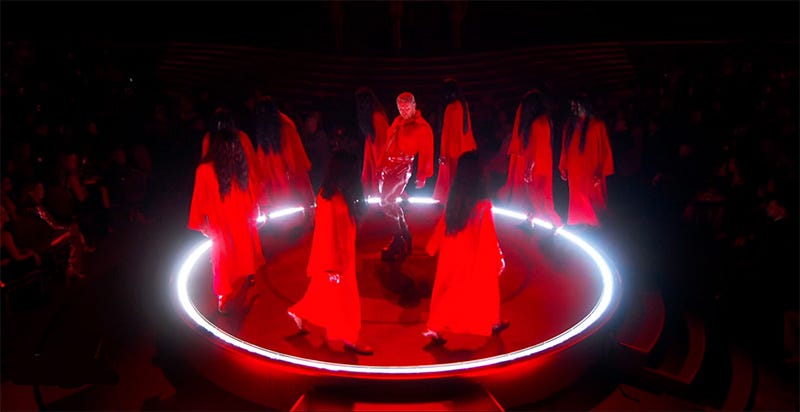

Whether this cultural influence was the product of a coordinated strategy or the organic spread of a philosophically coherent worldview that resonated with the cultural moment is a question the available evidence does not resolve. What can be documented is the pattern: the philosophical premises of the Luciferian administrative tradition are now mainstream. They do not require the Church of Satan or the Satanic Bible to propagate. They are present in the default assumptions of consumer culture, in the philosophy of corporate self-interest, in the political rhetoric of national interest above international obligation, in the social media attention economy’s design logic. The popularization function LaVey served was completed long before his death in 1997.
The End Comes to LaVey
A significant claim circulates in religious and conscious community circles about LaVey’s final hours. According to this account, witnesses present at his deathbed — accounts vary as to their identity and number — describe LaVey expressing profound fear and distress in his final hours, saying something to the effect that what he had built was wrong, that he had made a terrible mistake. The account has circulated widely since his death in October 1997 and has been cited frequently as evidence that the philosophy he promoted failed its primary practitioner at the ultimate test. Similar words like these circulate through many of the characters presented in the Arcane arc thus far.
The truth in LaVey’s death cannot be verified. But certain things about it can. LaVey died in hospital. His death was not attended by the kind of documented witness testimony that would be required to establish this account as fact rather than legend. Blanche Barton, who was present, has not confirmed the account in any publication. The account circulates primarily through Christian evangelical sources that have a strong interest in its being true. That pattern of sourcing does not establish the account as fabricated, but it does mean it must be held at assessed-source confidence rather than treated as documented fact.
What can be documented is this: LaVey spent the last years of his life in declining health and reduced circumstances. The Church of Satan he had built experienced significant internal fractures. His relationship with his daughter Zeena deteriorated publicly and bitterly — she formally resigned from the Church and became one of its most vocal critics. The organization he had built, whatever its philosophical claims, did not produce in his own closest relationships the outcomes the philosophy’s promise of personal power and authentic self-expression might have suggested
The barometer applied to LaVey’s documented life — not to the legend but to the observable record — produces the same assessment it has produced across every figure in this arc. The philosophy of self-interest and the rejection of external moral authority produced, in the life of its most prominent twentieth century popularizer, a pattern of broken relationships, institutional fracture, and an ending marked by isolation rather than the triumphant self-actualization the philosophy promised. Whether or not he said the words attributed to him in his final hours, the deeds speak.
The barometer does not require the deathbed account to be verified in order to apply it. The documented life is sufficient. The philosophy of supreme individual will, applied consistently across a lifetime, produced in its most prominent modern advocate what it tends to produce: material achievement, institutional fracture, and an ending marked by isolation rather than authentic human connection.
What Was Normalized and Why It Matters
The reason LaVey belongs in this arc is because the cultural normalization function he served has been the most consequential single development in the administrative project’s reach across the twentieth century.
Blavatsky and Bailey published their framework for an educated esoteric audience. Pike transmitted his doctrine through a graduated initiatory system to thousands of Freemasons. Crowley developed a demanding personal practice accessible only to those with the discipline and commitment his system required. Aquino brought the methodology into a military institution accessible only to those with the appropriate clearances and career paths.
LaVey put the philosophy in a paperback and sold it to anyone with a few dollars and a curiosity about transgression. The audience for the Satanic Bible was not occultists or military personnel or Theosophists. It was teenagers, rock musicians, cultural provocateurs, and everyone who had grown up in the postwar consumer economy and found its Christian moral framework increasingly unconvincing.
That audience, and the cultural products it created and consumed across the subsequent decades, carried the administrative project’s core philosophical premises — self-interest as the highest value, external moral authority as illegitimate control — into the mainstream without any awareness that they were propagating a tradition with roots in Blavatsky’s Lucifer journal and Pike’s 33rd degree inner teaching. The popularization was successful precisely because it was nearly invisible, though there for those with eyes to see it. The philosophy spread as apparently natural cultural evolution rather than as a transmitted initiatory tradition. It became trendy and brought along many curiosity seekers, as well as more manipulators
The next article examines how those normalized premises have been operationalized in the most consequential administrative mechanisms of the current moment — the pandemic operation, the non-compete plan, and the administrator recruitment system that approached organizations like Prepare for Change at the precise moment of maximum global disruption. The philosophy was always in service of the operation. The operation is now visible.
Eyes to see it.
The Arcane Blueprint — Series Roadmap
Article 1 — The Plan in Plain Sight: Blavatsky and Bailey [Published]
Article 2 — The Architect and the Doctrine [Published]
Article 3 — The Operational Methodology: Crowley, Thelema, and the Translation of Philosophy into Practice [Published]
Article 4 — The Black Sun Thread: Vril, Von Braun, Disney, and the Space Age as Occult Project [Published]
Article 5 — The Military Psyops Layer: Aquino, the Temple of Set, and the Institutionalization of the Methodology [Published]
Article 6 — The Popularization Engine: LaVey, Cultural Programming, and the Normalization Layer [You are here]
Article 7 — The Modern Administrative Layer: The Pandemic Operation and Administrator Recruitment in Practice
Article 8 — Silicon Valley, Technocratic Materialism, and the Final Expression
Article 9 — The Gnostic Departure and the Counter-Current
— Gerry
Gerry Gomez is an investigative journalist, creative director, and hybrid war correspondent who has spent a decade documenting the convergence of financial, media, and geopolitical forces shaping the current global transition.

Your Tax Free Donations Are Appreciated and Help Fund our Volunteer Website
Disclaimer: We at Prepare for Change (PFC) bring you information that is not offered by the mainstream news, and therefore may seem controversial. The opinions, views, statements, and/or information we present are not necessarily promoted, endorsed, espoused, or agreed to by Prepare for Change, its leadership Council, members, those who work with PFC, or those who read its content. However, they are hopefully provocative. Please use discernment! Use logical thinking, your own intuition and your own connection with Source, Spirit and Natural Laws to help you determine what is true and what is not. By sharing information and seeding dialogue, it is our goal to raise consciousness and awareness of higher truths to free us from enslavement of the matrix in this material realm.