EN
EN FR
FR


A summary of Roger Walsh’s practices and exercises to cultivate kindness, love, joy, peace, vision, wisdom and generosity
Introduction
According to his website (find link below), Roger Walsh graduated from Australia’s Queensland University with degrees in psychology, physiology, neuroscience, and medicine, and then came to the United States as a Fulbright Scholar. He is now at the University of California at Irvine where he is professor of psychiatry, philosophy, and anthropology, as well as a professor in the religious studies program. His research and writings are far ranging, including the nature of psychological health and wellbeing, meditation and contemplative practices, religion and spirituality, wisdom and other virtues, integral studies, and the psychological roots of our current global crises. He is deeply immersed in contemplative practices as a student, researcher, and teacher. He has also authored several books, one being Essential Spirituality, which is the subject matter in this summary.

Photo: Roger Walsh, M.D., PhD.
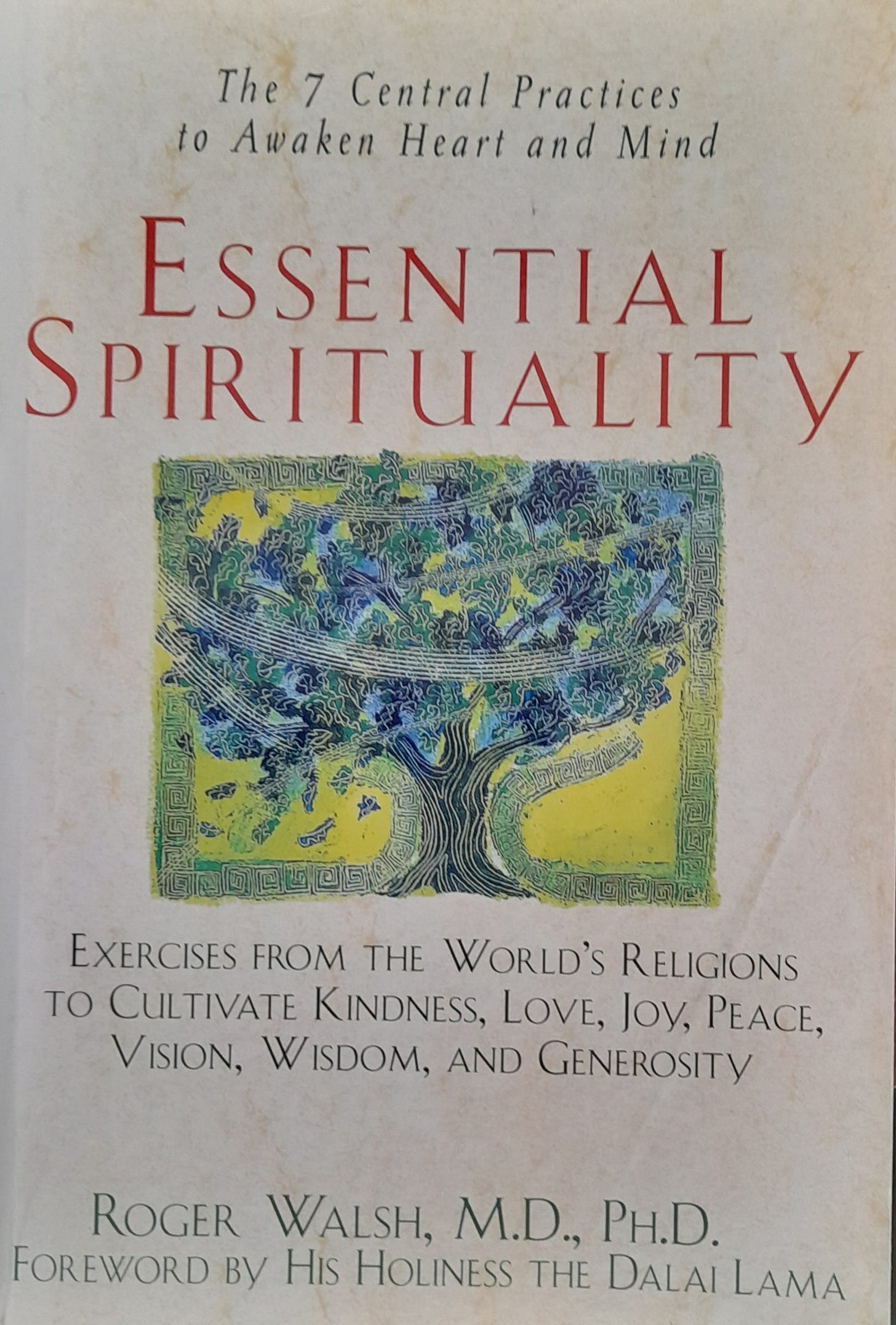
As one reviewer of this book observes, this book is “deceptively simple”. Yet its power resides in “Walsh’s formidable intellectual ability to deal effectively with a vast body of religious literature…” In Walsh’s own words:
This book is much more concerned with learning and living than with believing. All that is needed is an open mind and a willingness to experiment. The crucial question is whether the practices are helpful for you” (1999:15).
Personally, I have found Essential Spirituality to be a powerhouse of insight, with lots of learning derived from both the theory and many practices and exercises. I am persuaded by its enormous and exciting potential to nurture, grow and expand ‘essential spirituality’ in one’s personal life as well as in conversations with others, whether within the Christian faith (where I situate myself) or in dialogue with those from other major religions.
I. What did I learn from the book?
As in my previous summary, I proceed to describe just some of my key learnings from this treasure trove.
Hopefully, these stimulate and offer you the reader some introduction to the author and the content of this book, especially if you are unfamiliar with Walsh’s work.
1. Essential Spirituality offers a fresh understanding of the breadth and depth of human spirituality that extends beyond often limited understandings of ‘religion’ and ‘spirituality’.
Here, Walsh (1999:3) counsels each of us to understand the distinction between the terms religion and spirituality:
The word religion has many meanings; in particular it implies a concern with the sacred and supreme values of life. The term spirituality, on the other hand, refers to direct experience of the sacred. Spiritual practices are those that help us experience the sacred – that which is most central and essential to our lives, – for ourselves.
2. Walsh offers us invaluable insights into and a fuller appreciation of all the major world religious traditions – Judaism, Christianity, Islam, Hinduism, Buddhism, Taoism and Confucianism.
He uncovers the immense value of spiritual practices for human transformation and healing that are rooted in each of these traditions. He provides a key that unlocks a neglected and hidden secret, namely, that ‘[w]ithin ourselves we find our deepest self, our true Self, and recognize that we are not only more than we imagined but more than we can imagine.” (Walsh 1999:5). In his understanding, when we reconnect with these world religions, despite their differences in culture, claims and customs, we are able to find “a common core of both wisdom and practice at the heart of each authentic tradition.”
By ‘authentic tradition,’ I mean one capable of offering a direct experience of the sacred, and of fostering true spiritual growth and maturity in its practitioners” (Walsh 1999:6).
3. Essential Spirituality identifies and explains seven perennial practices, with several exercises which we can apply in all aspects of life and so enjoy their many benefits: psychologically, spiritually, physically, emotionally and otherwise.
These are the 7 perennial practices identified and explored by Walsh (1999:14) are:
1. Transform your motivation: reduce craving and find your soul’s desire;
2. Cultivate emotional wisdom: heal your heart and learn to love;
3. Live ethically: feel good by doing good;
4. Concentrate and calm your mind;
5. Awaken your spiritual vision: see clearly and recognize the sacred in all things;
6. Cultivate spiritual intelligence: develop wisdom and understand life; and
7. Express spirit in action: embrace generosity and the joy of service.
Walsh (1999:14) makes another important distinction which helps us navigate and understand the terms he uses throughout the book. He distinguishes practices from techniques and exercises:
I am using the term practice to refer to the discipline of cultivating a crucial capacity of mind, such as wisdom or concentration. Practices are rehearsals of desired qualities, which eventually become spontaneous, natural ways of being. By contrast, I use the words technique and exercise to indicate the specific methods used in a practice. For example, the specific technique of meditation and reflection are part of the practice of cultivating wisdom.
Each spiritual exercise is designed to be “a potent tool for self-transformation and awakening” and is able to done in the midst of our daily life, rather than restricted to ‘special’ sacred spaces or places (1999:16).
4. Both science and religion are important, though their proper places in human life and living need to be rightfully understood.
This fact is perhaps even more vital to understand today than ever before, especially when ‘science’ and ‘religion’ are being sharply pitted against each other and often with much misunderstanding and intolerance. While certain religious myths warrant closer scrutiny and even our rejection on the basis of better evidence that is proffered, science too has its limitations. “Science cannot, for example, directly assess subjective experience and can say next to nothing about such vital dimensions of life as meaning and purpose” (1999:18). Walsh clarifies what could likely be happening in the clash between ‘science’ and ‘religion’ which I find helpful to bear in mind:
…this war is really waged between pseudoreligion, with its untestable, dogmatic claims, and pseudoscience, especially scientism: the belief that science is the only means to acquire valid knowledge (1999:18).
5. Walsh’s invitation is that we embrace ‘the challenge of change’ and accept that ‘changing ourselves is a challenge’ (1999:19).
In this regard, Walsh (1999:19-20) outlines general principles that are important and can become supportive guidelines to bear in mind in applying the seven practices of the book (as outlined above):
Start easy – move from habits and situations which are relatively easy to master to those which are tougher challenges;
Decide how long – “commit to a trial period for doing the exercises.” Here consistency and quality of effort in the smaller exercises are more important than setting impossible goals which we may give up on;
Make no exceptions – keep building the new habit daily until it is firmly established, without exceptions;
Look and learn – during the process of change, embrace the openness to learn as much as possible about yourself and your experiences (e.g, How do I feel? What resistances do I experience? How do other people react?
Be gentle – “be kind and forgive yourself” and accept your frail humanity and that making mistakes are the tools of learning;
Start again – the essence of any exercise, especially new ones, is to keep on keeping on despite the slip ups which may well happen;
Write it down – the importance of keeping a journal or notebook – “research shows that people who write down their goals are far more likely to succeed than those who don’t”;
Enjoy yourself – this is often the neglected side of any spiritual practice; this need not become tedious or “teeth-gritting sacrifice…happiness makes people less self-focused and more altruistic.”
Above all, do the Practices – the practices in the book can be quickly read and offer fascinating ideas, though with little actual change; what is most important is to actually do them. “We get out of practice what we put into it.”
6. The ‘metaphors for spiritual growth’ (1999:22-24) stimulate further thought about how these and many more can be used with discernment for yourself and others.
Walsh (1999:23-24) provides a helpful list of some of the most powerful “metaphors of transformation” that may guide and describe spiritual growth. These are summarized here:
Awakening: “Our usual condition is semiconscious, says the sages, and spiritual practices awaken us from our slumber.”
Dehypnosis: “Our slumber is said to be a kind of trance or hypnosis…Spiritual practices free us from the collective trance in which we all slumber.”
Enlightenment: “Spiritual disciplines (can) bring understanding, light, and vision” amidst so much inner (and outer) darkness.
Uncovering: “Our true nature or Self is said to be covered or veiled from awareness,” so spiritual practices may help to “dissolve these veils and restore awareness of our true identities.”
Freedom: “We are said to be enslaved by our wayward motives and emotions, but taming them brings freedom.”
Metamorphosis: “As nature transforms the caterpillar into an exquisite butterfly, so to do spiritual practices transform us.”
Unfolding: “Our transcendent beauty and potential are hidden within, and spiritual practices help us unfold and blossom.”
Wholeness: Given the reality of many human experiences of “splintered and dissociated” minds, spiritual practices promise to heal the inner mind and restore us to unity of mind and purpose.”
Journey: “spiritual wisdom reveals that the goal is our Self and is forever here and now, awaiting only our recognition and remembrance, in this and every moment.”
Death and Rebirth: “Out of the ashes of the ego arises, phoenix-like, a new self-image.”
7. Essential Spirituality can usefully become a sourcebook for spiritual work in all sorts of contexts, including faith communities, meditation groups, study groups, and coaching circles, to name a few.
For example, an introductory study into the meaning of ‘essential spirituality’ as distinct from ‘religion’ and ‘religiosity’ can become the foundation on which a 3 month, 6 month or 12 month journey of personal and/or community spiritual growth and development can be build. The principles and exercises in the book can be appropriately worked through and used in creative ways – depending on the group of people involved.
Alternatively, one practice can be more fully explored, over a few weeks, using the host of exercises available to nurture and develop qualities, competencies and habits in a specific area. Here, you could explore the theme of “The Secret of Happiness” provided under Practice 1: Transform Your Motivation: Reduce Cravings and Find Your Soul’s Desire (Ch. 5). An individual or a group can work through the meaning of ‘happiness’ and ‘motivation’ and employ the exercises in daily transformation work in this area. This first practice (1999:31-41) helps us to transform our motives in the areas of happiness by:
Recognising our mistaken ideas about what brings happiness
Relinguishing attachments
Recognizing and seeking what truly fosters happiness
For many interested in the work of ‘Heightened Self-Awareness,’ “Exercises in Awareness” (1999: 184-194) under Practice 5: Awaken Your Spiritual Vision: See Clearly And Recognize The Sacred in All Things can be usefully applied in self-observation work and practices. For example, anyone who wants to lose weight can benefit from offering the exercise, ‘eat mindfully, the joy of food’ (1999:184-186) as a way to grow and ground her/his awareness of food and healthier eating habits. The exercise on ‘heighten awareness of the body’ (1999:188-190) can complement and develop positive and helpful attitudes to the body, steering clear of the extremes of either hedonism or asceticism.
Any person or group wanting to grow time spent in ‘inner work’ may choose to work through the 7th Practice: Express Spirit in Action – Embrace Generosity and the Joy of Service as they move on to embrace the call of ‘outer work’ in the world of need (1999: 249-285).
8. As an Integral Coach practitioner and also someone trained in and committed to spiritual work, I was curious to explore the value of “spiritual coaching” or “Coaching with Spirit” in my work with my coaching clients (cf. Teri-E Belf 2002).
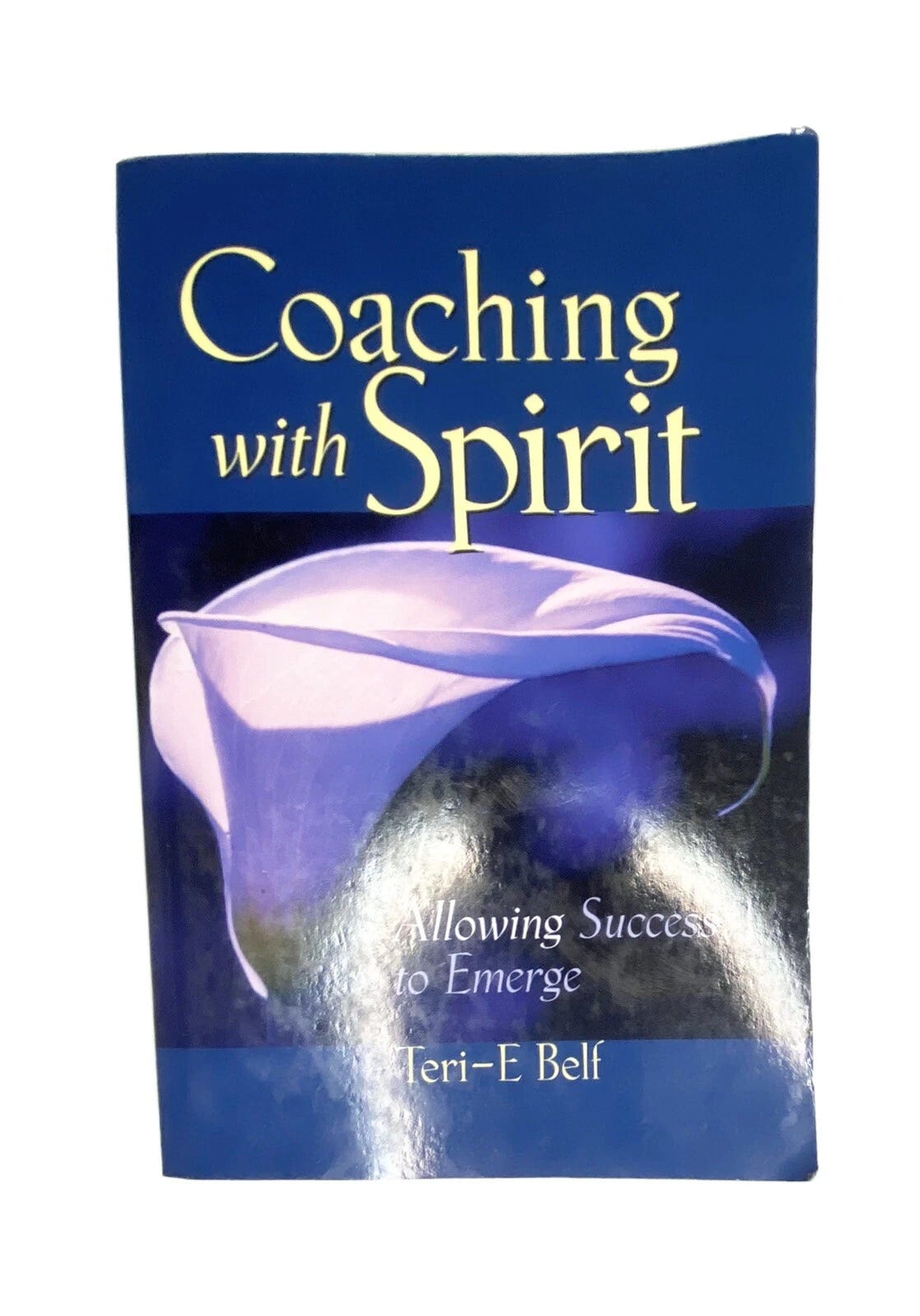
Essential Spirituality expanded possibilities for my support work with clients who were open to this kind of deeper spiritual work. Again, the breadth of resources (practices and exercises) available in the book served me and clients well when drawn on in coaching work. Walsh’s book is, thus, a practical and spiritual resource for anyone keen to explore more in this area.
9. In areas of leadership, ethics and values, Essential Spirituality offers an empowering practice to help bridge the gap between ascribed values and ethical beliefs on the one hand, and actual ethical behaviour on the other.
In this regard, the 3rd Practice: Live Ethically – Feel Good By Doing Good” (1992:115-144) was especially helpful – both the overall content (e.g. the value of virtue; the benefits of ethical behaviour against the costs of unethical living and the meaning of the ethical life as distinct from the ‘trap of ritualism’ in religious traditions) and the practical exercises to ground and embody ethical living offer fresh potential (e.g. ‘reflect on your good deeds’; ‘tell the truth for a day’; ‘give up gossip’; ‘do no harm’; ‘ communicating to heal’ and ‘right a wrong’).
Any work in the area of leadership and values/ethics requires careful attention to the work of right thinking and right living in personal and profession life – hence the motivation provided by this Practice to grow capacity and competency in this area.
10. Essential Spirituality empowers daily mindfulness work to help us cope with life’s inner and outer distractions, stresses, and conflicts.
Several exercises provided in Practice 4: Concentrate and Calm Your Mind (1999:145-171) may prove highly valuable. As Walsh recognizes, “Our minds are restless creatures” (1999:147) and many of us may find ourselves constantly challenged to rediscover a sense of well-being, peace of mind and energy in the world. In this practice, you will discover the value of the sections on learning to control the meandering mind through heightened competency in concentration (1999: 147-153) and developing a peaceful mind through the universal practice of meditation and specific exercises in transforming the busyness of daily life (1999:154-167).
One exercise in Practice 4 that has proven to be especially powerful is “Transform Daily Activities Into Sacred Rituals” (1999:158-160). I have written about this here:
Transform Daily Activities into Sacred Rituals
We easily forget that the daily activities of our lives, even the most ordinary and mundane, can be transformed into sacred rituals.
Conclusion
This is what the back-cover to Essential Spirituality (1999) states:
Based on over twenty years of research and spiritual practice, this is a groundbreaking and life-changing book. In his decades of study, Dr. Roger Walsh has discovered that each of the great spiritual traditions has both a common goal and seven common practices to reach that goal: recognizing the sacred and divine that exist both within and around us. Filled with stories, exercises, meditations, myths, prayers, and practical advice, Essential Spirituality shows how you can integrate these seven principles into one truly rewarding way of life in which kindness, love, joy, peace, vision, wisdom, and generosity become an ever-growing part of everything you do.
My aim has been to offer you an overview of some aspects of Walsh’s research and of the 7 central practices to awaken heart and mind. I have provided only a small sampling of the potential the fuller content of the book offers for personal, professional and community life, care and growth. My hope is that what you have read whets your appetite to explore more of the book’s practices and exercises for yourself.
Reflection and Journalling Exercise

How would you express what “essential spirituality” is or could be if asked to do so?
Review Walsh’s distinction between “religion” and “spirituality?” How helpful do you find his comments in this regard? What, if anything, would you wish to add?
Make time to review your own faith and/or moral tradition in light of the 7 Practices identified and described by Walsh. What do you discover? Does what you discover resonate with some of the discoveries of Walsh which are summarized above?
What additional questions come up for you after reading this summary and how will you go about finding some answers?
References
Belf,Teri-E 2002. Coaching with Spirit Allowing Success to Emerge. U.S.A.: Pfeiffer
Walsh, Roger. 1999. Essential Spirituality: Exercises From the World’s Religions To Cultivate Kindness, Love, Joy, Peace, Vision, Wisdom, and Generosity. New York: John Wiley & Sons Inc.
Additional:
Roger Walsh web site:
https://drrogerwalsh.com/about/
Thank you for making time to read this summary on Roger Walsh’s Essential Spirituality.
If you have found the content helpful, kindly consider sharing it with others who may be interested and could benefit.
I look forward to welcoming you back to my forthcoming summary of Christine Caldwell’s (1996) ever important book: “Getting Our Bodies Back: Recovery, Healing, and Transformation through Body-Centred Psychotherapy.”
Note: These summaries are not AI generated content, but wholly my own reading and reflections!
Blessings!
From Roger Arendse substack

Your Tax Free Donations Are Appreciated and Help Fund our Volunteer Website
Disclaimer: We at Prepare for Change (PFC) bring you information that is not offered by the mainstream news, and therefore may seem controversial. The opinions, views, statements, and/or information we present are not necessarily promoted, endorsed, espoused, or agreed to by Prepare for Change, its leadership Council, members, those who work with PFC, or those who read its content. However, they are hopefully provocative. Please use discernment! Use logical thinking, your own intuition and your own connection with Source, Spirit and Natural Laws to help you determine what is true and what is not. By sharing information and seeding dialogue, it is our goal to raise consciousness and awareness of higher truths to free us from enslavement of the matrix in this material realm.