 EN
EN FR
FR


When Discernment Becomes Distortion:
Finding Balance in a Noisy World
Rev. Kat Carroll
There is a subtle shift that can happen when we spend too much time looking for what is wrong with the world. And you’ll recall the phrase, “Energy flows where attention goes”.
It often begins with good intentions, truth-seeking, exposure of corruption, a desire to protect others from deception. These are not bad impulses. In fact, they are often born from conscience and care. But over time, if all our attention is trained on darkness, something changes. Our perception narrows. Our nervous system adapts. And eventually, everything begins to look suspicious, even when it may not be.
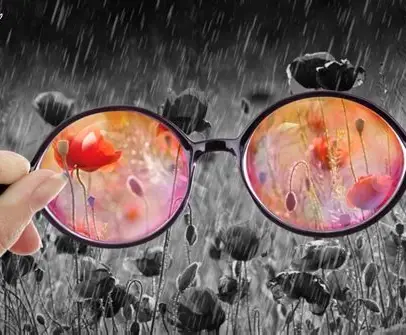 On the other end of the spectrum are those who wear what we sometimes call “rose-colored glasses.” They see only the positive, dismiss uncomfortable information, and cling to optimism as a shield. While this outlook can feel lighter, it too is a narrowed perspective. Avoiding shadow does not make it disappear; it simply leaves us unprepared to recognize it when it matters.
Both extremes limit perspective.
The Hammer and the Nail
There is an old saying: when all you have is a hammer, everything looks like a nail.
 In truth-seeking communities—especially those built around exposure—this dynamic can quietly take hold. If exposure becomes the primary tool, then every issue begins to look like a cover-up. If one’s role is defined as the revealer of hidden truths, then disagreement can feel like resistance, and nuance can feel like betrayal.
This doesn’t mean corruption doesn’t exist. It does. History makes that clear. But discernment is not the same as perpetual distrust. When exposure becomes the only lens through which reality is viewed, discernment can quietly collapse into reflexive suspicion.
At that point, the danger is no longer only external. It becomes internal.
The Wolves We Feed
 Many cultures share a version of the story about two wolves locked in battle inside us. One represents fear, anger, and resentment: the other representing compassion, clarity, and wisdom. When asked which wolf wins, the answer is simple: the one you feed.
This teaching is often misunderstood as a call to ignore darkness. It isn’t. It’s a reminder about focus and spiritual nourishment. It’s about finding balance.
If we feed ourselves exclusively on outrage, betrayal, and doom, we begin to embody the very energy we claim to oppose. Our language hardens. Our humor turns mocking. Our certainty grows brittle. In trying to expose manipulation, we may unconsciously adopt its tactics; ridicule, repetition, and emotional pressure.
An uncomfortable question quietly emerges: Are we becoming that which we seek to uncover, disclose, or even mock?
The Law of Attraction, The Law of Effect and the Need to Belong
Across psychology, neuroscience, and spiritual traditions, one principle appears again and again: attention shapes experience.
This is not just philosophical. In psychology, it is known as the law of effect, first articulated by Edward Thorndike, which shows that behaviors and mental patterns that are reinforced tend to become stronger over time, shaping how we perceive and respond to the world.
Modern neuroscience supports this understanding as well, demonstrating that sustained patterns of attention influence emotional regulation, perception, and brain connectivity. In other words, what we habitually focus on does more than shape opinions. It shapes how we interpret and experience reality itself.
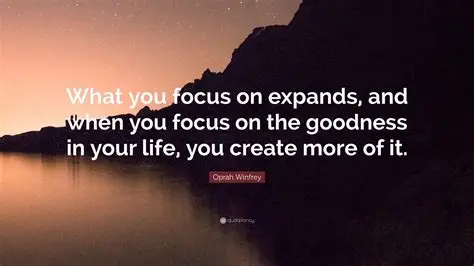 This idea also echoes what many spiritual traditions describe as the law of attraction: that which we consistently focus on tends to amplify in our field of experience. Much like social media algorithms that deliver more of what we engage with, regardless of whether it is accurate, helpful, or harmful… our attention attracts reinforcing information, emotions, and perspectives. It does not evaluate meaning or truth; it simply responds to interest.
When fear or outrage dominate our information diet, the nervous system may gradually orient toward constant alertness. Over time, this can make it more difficult to remain grounded in discernment, as perspective narrows and reactions begin to replace thoughtful response.
In a digitally driven world, are we increasingly encouraged to take sides, or are we quietly being trained away from exercising free will?
Break the Chain and Return to Stillness
 Meditation offers a quiet counterbalance to cycles of reactivity, narrowing perception, and fear-driven attention.
In those moments, attention is intentionally withdrawn from conflict, analysis, and narrative, and placed instead on qualities such as presence, compassion, gratitude, and joy.
Nothing is being solved or debated; awareness is simply resting. And yet, over time, this practice subtly reshapes perception. What we cultivate internally—calm, openness, coherence—tends to echo outward, drawing experiences and interactions that reflect those same qualities.
Below are seven ways meditation can actually change the brain, supporting the process of breaking attention loops and strengthening inner balance (adapted from Forbes):
Reduces stress reactivity — meditation helps lower the brain’s stress response, making fear-based attention less automatic.
Improves emotional regulation — regular practice enhances the ability to respond thoughtfully rather than react impulsively.
Strengthens attention and focus — meditation trains the brain to sustain attention and shift it intentionally.
Enhances self-awareness — increased insight into one’s own patterns makes it easier to notice when attention has narrowed.
Promotes neural integration — meditation supports connectivity between brain regions involved in executive function and emotional balance.
Increases gray matter in key areas — long-term practice is linked with structural changes in regions associated with learning and memory.
Boosts resilience and empathy — meditation fosters a wider, more flexible way of engaging with internal and external experience.
You can read more about these benefits in the full article here:
“7 Ways Meditation Can Actually Change the Brain” (Forbes)
When we change what we broadcast internally, we often notice the world responding in kind, offering more of what reflects the state we’ve chosen to inhabit. And when we consciously withdraw attention from what we don’t wish to perpetuate, we interrupt the cycle that keeps it energized. What is no longer fed naturally begins to lose momentum.
Regaining the 5,000-Foot View
Balance does not mean disengagement. It means altitude.
At 5,000 feet, storms are visible without being overwhelming. Patterns emerge that are impossible to see from ground level. There is movement, but also space. It’s like floating in calm waters while waves move beneath you—or standing in the eye of the storm, where clarity exists even amid chaos.
From this vantage point:
- We can acknowledge wrongdoing without assuming universal corruption.
- We can recognize progress without declaring blind victory.
- We can remain open without being naïve.
- We can be cautious without becoming cynical.
This is the difference between immersion and orientation.
Sovereignty and the Pressure to Take Sides
 Many of the most polarizing issues of our time—COVID, election integrity, geopolitical conflicts—carry an unspoken social weight. People often feel compelled to “take a side,” not only to express values, but to belong.
Yet true sovereignty does not require alignment with any camp, narrative, or authority. It asks something quieter and more demanding: the courage to sit with uncertainty, to hold multiple perspectives without outsourcing judgment, and to resist the comfort of borrowed certainty.
Belonging that comes at the cost of inner authority is simply another form of dependency.
A Maturing of Discernment
Perhaps this moment is not only about uncovering truth, but about how truth is held and shared.
Not every issue requires a side. Not every disagreement requires persuasion. Not every narrative requires amplification.
Sometimes the most sovereign act is to pause, widen the lens, and ask: how does this make me feel?
- Is this information expanding awareness, or narrowing it?
- Is it empowering discernment, or recruiting belief?
- Is it bringing clarity, or simply reinforcing what I already think?

In a world saturated with information, the rarest skill may be knowing where to place our attention… and when to step back.
Sovereignty does not require us to jump onto a bandwagon or shout our viewpoints from the pulpit. It asks us to be true to our nature, while allowing the space for others to do the same.
Because clarity doesn’t shout or push, and it doesn’t need everyone to agree.
It simply stands—steady, spacious, and free.
My advice is simple: Be the change you want to see in the world, and notice how the world begins to mirror who you are.

Sources for a Deeper Dive:
Understanding the Law of Attraction
Edward Thorndike: The Law of Effect
7 Ways Meditation Can Actually Change The Brain
Featured Image was generated by Chat GPT for this article.

Your Tax Free Donations Are Appreciated and Help Fund our Volunteer Website
Disclaimer: We at Prepare for Change (PFC) bring you information that is not offered by the mainstream news, and therefore may seem controversial. The opinions, views, statements, and/or information we present are not necessarily promoted, endorsed, espoused, or agreed to by Prepare for Change, its leadership Council, members, those who work with PFC, or those who read its content. However, they are hopefully provocative. Please use discernment! Use logical thinking, your own intuition and your own connection with Source, Spirit and Natural Laws to help you determine what is true and what is not. By sharing information and seeding dialogue, it is our goal to raise consciousness and awareness of higher truths to free us from enslavement of the matrix in this material realm.




















Now this is the kind of article that we need to see more of on PFC ! If we are going to change, the change must happen within … and reduce our focus on the external world. As once said by many awakened beings… Become aware of the most relevant events that may impact you but do not dwell. We all create our own reality through vibrational resonance. As our discernment and awareness rises, the effects will show up faster… and we will more easily recognize our own influence on the reality that we experience. Great article Kat!
Thank you Jeffrey – And well said! Sometimes looking outward is what drags us down. Observe from the 5,000 foot view, then go within, if nothing else, to transmute the energies into something we can all benefit from.