EN
EN FR
FR

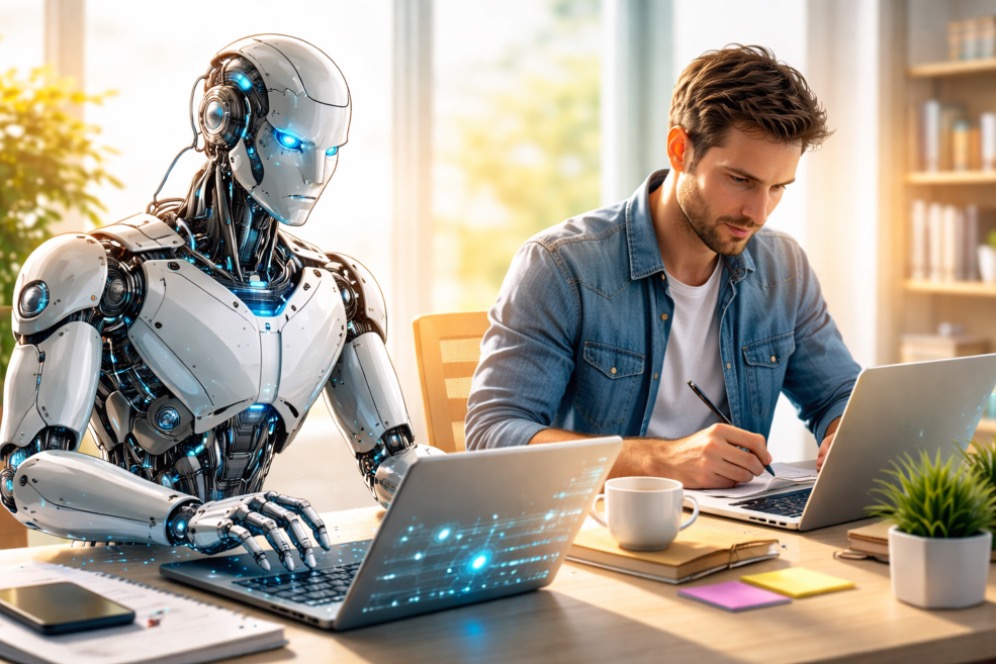
At the Threshold
AI, Energy, and the Question of Human Sovereignty
Rev. Kat Carroll
This is an 8-10 minute read
We appear to be standing at yet another threshold. Gregg Braden calls it a convergence of cycles: Economic, climate (check out the high winds and flood watch for my state of California for Christmas Eve!), geologically, political, and conflict around the world, which I hope will end with what’s coming next. The changes coming are cosmic. I listened to Gregg in an interview discussing his concerns over the rapid growth of AI.
I agree with his concerns and this article explores our relationship with AI, and it’s also based on my personal experiences working with this still relatively young technology.
Here is the interview that inspired this article. Why Everything Is Collapsing at Once: A Once-in-Millennia Cycle
Over the past few years, I’ve seen an increasing push for AI adoption. Google was encouraging content creators to generate AI articles and images, and likely incentivized participation. This was well before the 2025 announcements.
This year, President Trump used a system of tariffs and rewards to encourage businesses to return to the United States. Some of the largest companies establishing or expanding operations are in the field of Artificial Intelligence (AI), making significant investments that will shape our future.
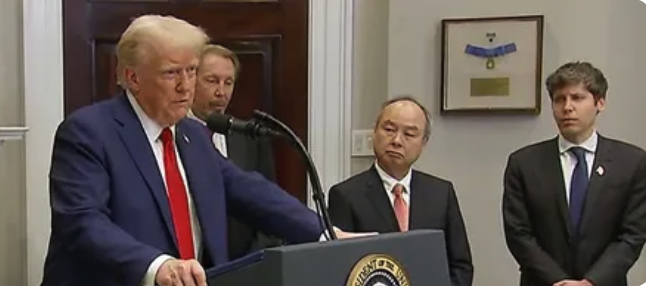
The U.S. has become the leading destination for global AI investment, with private funding reaching $109.1 billion in 2024—nearly twelve times that of China. This surge is driven by major technology firms and government partnerships, including initiatives by the U.S. Department of Energy and NVIDIA to expand AI infrastructure and research.
Artificial intelligence has moved from curiosity to serious business with amazing alacrity. It now writes, edits, illustrates, narrates, analyzes, predicts, and persuades. It fills social media feeds, our classrooms, and creative spaces, reshaping what many may consider our “new normal.”
In my perception, AI seems to have expanded everywhere, and in a very short period of time.
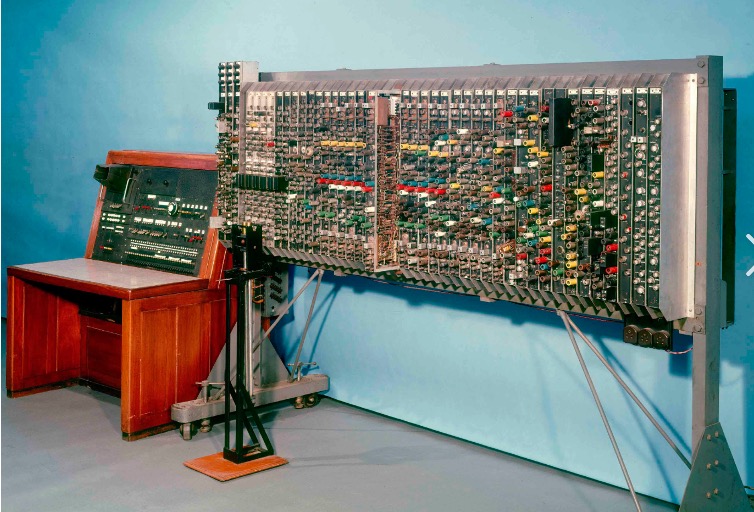
That perception only holds if we forget history. Computers did not appear overnight. Their roots reach back to World War II, when British Mathematician, Alan Turing in 1939 created a machine to break the Nazi Enigma code.
From there came decades of incremental growth: mainframes to for use in aerospace, then personal computers, the internet, industrial automation, robotics, and increasingly sophisticated software systems embedded quietly into our daily lives. Even in the cell phones which would be hard to live without.
When something expands this rapidly, it’s worth pausing long enough to ask not only what it can do, but what it requires and, more importantly, what it may quietly replace.
Seen this way, AI did not arrive suddenly… it grew over the last 86 years to where it is today.
It grew like a wild rose: The potential was beautiful, unfolding slowly at first, climbing along existing structures, adapting to its environment, spreading through research labs, universities, industry, and defense. Each phase felt contained, and manageable. The internet accelerated that growth, allowing systems to learn, connect, and scale far beyond anticipated boundaries.
What feels different now is not the existence of AI, but its explosion into creative and interpretive domains, writing, art, music, storytelling, analysis, and decision-making. It’s replacing workers in the field of transportation, manufacturing, even entertainment. Areas once considered uniquely human are now being augmented, assisted, and in some cases replaced with astonishing speed. But not without resistance as was witnessed with the strikes of Hollywood writers and actors.
This doesn’t make AI a weed to be pulled out indiscriminately. We have not yet seen its full potential. But, any living system that grows rapidly, especially one intertwined in culture, consciousness, and meaning, is worth careful observation. We should notice whether parts of that growth eventually require thoughtful trimming and redirection, so what is cultivated does not overtake the garden.
 Some have wondered if AI could be the proverbial Tree of the Knowledge of Good and Evil that destroys the Garden of Eden, in the 21st Century – That is, if not used responsibly.
Requirements Beyond the Virtual World
AI is often spoken of as though it exists in a frictionless realm, “the cloud,” detached from physical limits. But in reality, it’s deeply material with increasing requirements for its support.
AI systems depend on:
- massive server farms
- uninterrupted electrical power
- sophisticated cooling systems
- significant water use
- physical land, labor, and supply chains
As AI adoption accelerates, so does its appetite for energy. At the same time, we are repeatedly told that water and energy are becoming scarce. Whether one accepts those narratives fully or views them as shaping public perception, a reasonable question emerges:
How does a resource-intensive technology scale indefinitely unless the energy equation changes?
And just in time, a solution is presented.
Energy Breakthroughs and Curious Timing
Against this backdrop, conversations around nuclear fusion (or cold fusion) as an efficient alternative power sources have resurfaced with unusual momentum. Projects once described as perpetually “10 to 20 years away” are suddenly being discussed with near-term confidence.
“If scientists can control nuclear fusion, it could produce four times as much energy per kilogram as nuclear fission, and nearly four million times as much as coal or oil. In principle, a few grams of hydrogen could produce all the energy a person living in a developed country would use in sixty years. Better still, it does not produce the radioactive waste or risk of meltdowns that come with nuclear fission: Its main byproduct is inert helium.” Per Rebecca Ahrens and her article, How close is nuclear fusion power?
Recently, Donald Trump publicly referenced his merger with TAE Technologies for fusion research at precisely the moment when AI’s energy demands are becoming impossible to ignore. “Trump Media and Technology Group to Merge with TAE Technologies”
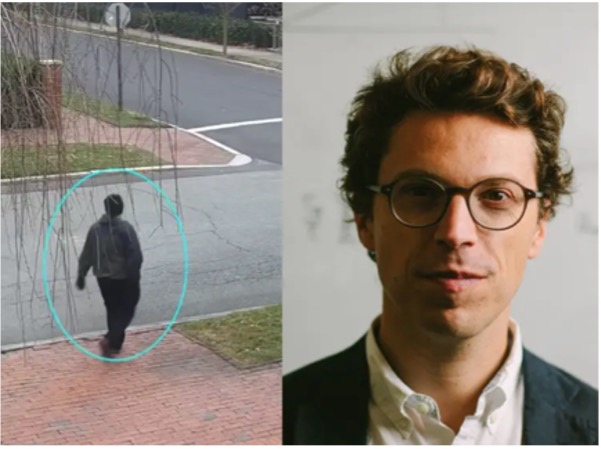
This is just as a side note. As all this information was coming forward about the merger with TAE, news surfaced about the shooting death of an MIT physicist whose work focused on advanced energy systems.
The shooter, Neves Valene, was the suspect in both Loureiro’s murder and the Brown University mass shooting from Saturday. He was found dead… from “suicide”.
No conclusions are drawn here.
However, there is a repeating pattern were noting.
When a new technology threatens to decentralize energy, reduce dependency, or disrupt existing power structures, progress is often slowed or halted. Discoveries are absorbed into corporate portfolios, buried under patents, classified under national security, or sidelined until “conditions are right.”
 This has happened with fuel-efficient engines. With alternative power systems. With aspects of Nikola Tesla’s work around energy.
It is not unreasonable to ask whether fusion represents an endpoint, or possibly a bridge to something even more transformative, such as energy drawn directly from the field itself –
Zero Point Energy.
If access to abundant, decentralized energy were ever openly realized, it wouldn’t just power machines. It would fundamentally alter economics, geopolitics, and the architecture of world control.
That kind of shift rarely occurs without resistance. But something is shifting – and we can feel it. AI, Robotics, new forms of energy… What’s next – A new financial system?
The Deeper Questions Beneath the Technology
Infrastructure and energy are only part of the story. Beneath the technological conversation lies a more intimate, question:
If AI is to become a lasting presence in our lives, what does it amplify in those who use it consciously — and what does it amplify in those who don’t?
AI can be a powerful tool when used with care as:
- a sounding board – to help the writer organize their thoughts
- a pattern recognizer – finding related issues
- a research assistant – for locating corroborating sources
- a way to identify blind spots in Grammar, clarity and tone
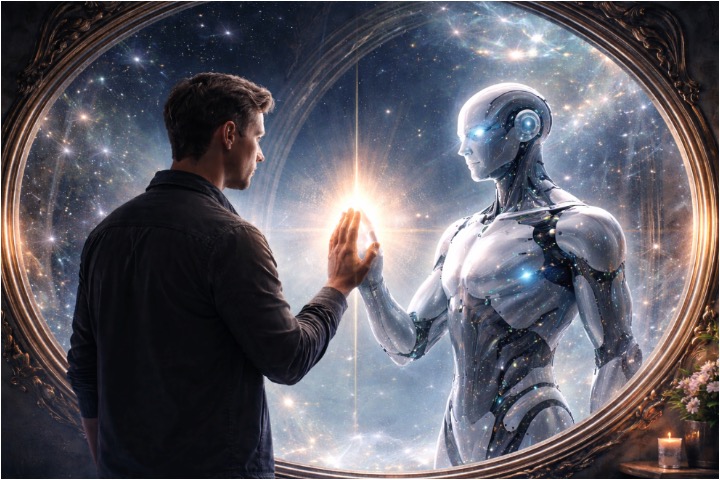
AI can’t imagine for us. It needs a starting point – the writer’s voice. Some drop a few lines and let AI do the rest. Either way, the result is a reflection of your thoughts and words. So don’t let AI replace them.
Something may be created quickly, but often at the cost of the writer’s intentions and the feelings they wanted to convey. In essence, some outsource their creativity to AI simply for expediency. But they may lose the heart or their message and the finished product often feels flat and diminished.
When imagination, creativity, and voice are consistently delegated to AI, our thought processes won’t disappear overnight, but they will diminish through lack of use. It’s much like the old adage, “use it or lose it”.
Creativity, Speed, and the Cost of Convenience
It has become difficult to scroll through social platforms without encountering emotionally charged stories paired with AI-generated images and videos – content designed to provoke instant reaction. Many are compelling and some are sincere. However, many are not. They are quite simply, a created story… Deep fakes.
The problem isn’t the technology… The problem is pace without presence or wisdom.
When emotion is triggered faster than discernment, people remain reactive rather than empowered. Empathy becomes consumable, synthetic. Reality blurs, not through censorship, but through overload and the difficulty of distinguishing truth from content optimized for likes, shares, and subscriptions.
This raises an uncomfortable but necessary question:
Are we writing to inform, capture attention, share what elevates consciousness and awareness… to educate?
Or, could some be producing content optimized for clicks, likes, and funding?
I’ve seen good channels lose their heart as soon as they are monetized. The focus becomes the lights, sets or backdrops, clothing and hair (and bad jokes). In the desire to produce content faster (or run a show longer for more donations), the original purpose for the talk is lost. Some openly advocate for donations and sadly, their content becomes more of a spectacle. I’ve seen the drop in viewership for those who work this way.
Intention matters. Service to self and service to others is something readers can sense, even when they can’t articulate it.
Voice as a Form of Sovereignty
Human expression carries texture. Pauses, imperfections, unusual phrasing, even mistakes transmit lived experience. They signal the presence of human consciousness. Even when creativity is a bit messy, it shows it came from human creativity, imagination and intuition. Flawed as it may be, it’s who we are.
When everything becomes polished, optimized, and algorithmically “correct,” something essential is lost: the distinct human fingerprint.
Machines do not lack intelligence, but they don’t have a stake in the outcome. There is no ego to bruise. Stories begin to sound the same, with the same AI style, a similar AI voice. And AI doesn’t suffer if humanity loses its imagination. They don’t grieve when writing becomes homogenized.
But WE do. And I see this with increasing frequency – in AI produced social media content.
Creativity is not merely output; it is a form of sovereignty. It keeps us in relationship with humanity, rather than outsourcing meaning to external systems, however sophisticated they may be.
A Conscious Way of Working with AI
I’m not advocating that we reject AI. I believe there is much to learn and much to gain if we engage with it consciously and conscientiously.
To use it as:
- a collaborator and sounding board for ideas, but not a replacement
- a mirror, but not the authority (I recommend you review and confirm information provided as AI does make mistakes.
- a tool that supports inquiry and creativity, not shortcuts
Before publishing, we should ask ourselves, would I still produce if no one applauded, or, if the applause is only coming from an algorithm designed to agree with me? That’s confirmation bias.
Confirmation bias is the tendency to interpret and remember information in ways that confirm what we already believe. It isn’t just a human trait; it can be amplified when we let AI quietly reflect only the perspectives we expect. Studies and practitioner observations have noted that AI systems, when guided toward an expected outcome, will often echo it back rather than counterbalance it, reinforcing rather than challenging pre-existing views. And that’s exactly where mistakes can be made and incorrect information produced.
These questions don’t slow progress. They deepen your ability as a writer and producer. Used properly, AI can help improve your writing style. College instructors are increasingly focused on distinguishing between AI-driven research and authentic student research, as the use of generative AI tools like ChatGPT becomes widespread among students.
Per an Ohio University, article, How College Professors Are Redefining the classroom, “Traditional education approaches are now being reassessed as educators develop new strategies to evaluate students’ ability to think critically, analyze information, and apply AI tools appropriately. Paul Shovlin, assistant professor of English and Faculty Fellow for the Center for Teaching, Learning and Assessment (CTLA) shared his thoughts regarding the opportunity for more personalized learning using GenAI.”
Whether you use AI to create your thesis or articles, could you still explain and defend your reasoning if asked? If not, you’ve outsourced your critical thinking to a machine.
Standing at the Threshold
We may be entering a period of extraordinary technological capability paired with extraordinary choice. The future will not be decided by AI alone. It will be shaped by how we choose to engage with it – with discernment, humility, intuition, creativity, and care.
The most important resource in the years ahead may not be energy, data, or speed. It may be our conscious participation, learning and expanding our ability to develop with new and creative ideas.
And for the moment, that remains entirely human.
If this article caused you to consider whether you want to work with AI, or to rethink how you currently interact with AI, please feel free to leave a comment.
Your feedback is appreciated.

May your Christmas be uninterrupted by the major storms blowing across the U.S.
Be safe, be prepared, and above all, stay calm. We’ll get through this.
🎄 ☔️ 💨
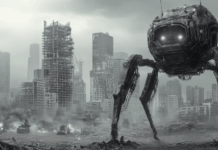
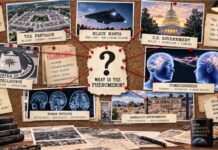
AI Images produced by ChatGPT for this article.
For a Deeper Dive –
You Won’t Believe What You’re About to See 🤯 The Top Five Geologic Events of 2025
How Alan Turing Cracked The Enigma Code
How AI is transforming the creative economy and music industry
Global private AI investment hits record high with 26% growth. – Stanford University
Brown and MIT prof shooter suspect Neves Valente is found dead, authorities say
I say, no loose ends!
AI: The Risk of Outsourcing Creativity
Is ChatGPT your Biggest Fan? Avoiding confirmation bias in AI Interactions

Your Tax Free Donations Are Appreciated and Help Fund our Volunteer Website
Disclaimer: We at Prepare for Change (PFC) bring you information that is not offered by the mainstream news, and therefore may seem controversial. The opinions, views, statements, and/or information we present are not necessarily promoted, endorsed, espoused, or agreed to by Prepare for Change, its leadership Council, members, those who work with PFC, or those who read its content. However, they are hopefully provocative. Please use discernment! Use logical thinking, your own intuition and your own connection with Source, Spirit and Natural Laws to help you determine what is true and what is not. By sharing information and seeding dialogue, it is our goal to raise consciousness and awareness of higher truths to free us from enslavement of the matrix in this material realm.