EN
EN FR
FR

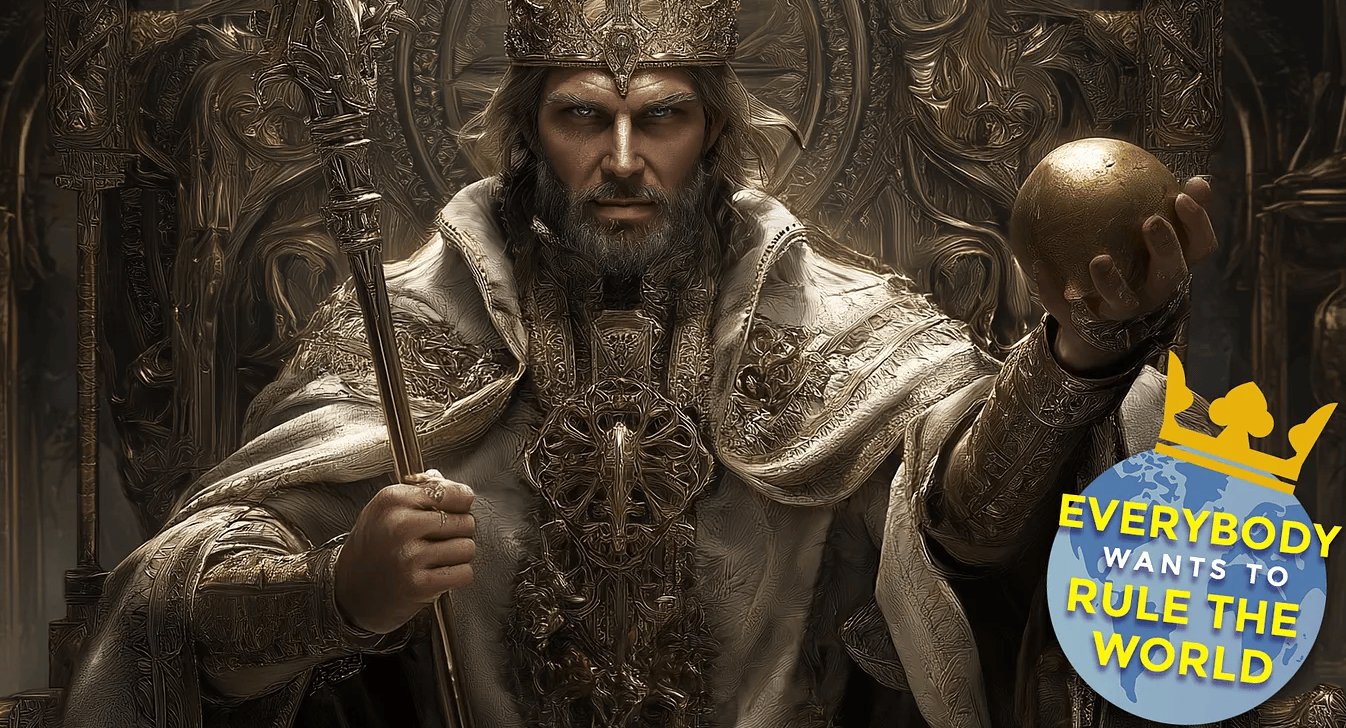
Annunaki, Nephilim, Melchizedek, and the Jurisdiction Claims Hidden Inside Every Origin Story
Before there were nations, there were bloodlines. Before there were constitutions, there were lineages. Before there were presidents and prime ministers and secretaries-general, there were dynasties that claimed the right to rule not because the people had consented, but because the blood in their veins was different — older, purer, closer to the source of power itself. Every civilization on record has produced this claim in some form. And in every case, the claim rests on the same foundation: our ancestors came from somewhere else, and that origin gives us authority over you.
That is the bloodline argument. It is the oldest power move in the human archive. And right now, as disclosure accelerates and the question of planetary governance moves from the margins to the mainstream, it is being dusted off, repackaged in the language of galactic succession and ancient covenant, and positioned as the legitimizing framework for whatever administration wants to step into the power vacuum that a civilization-level transition will create.
In this article I want to do something the mainstream disclosure conversation almost never does: take the bloodline claim seriously enough to examine it with full analytical rigor. Not to endorse it. Not to dismiss it. To understand what it actually says, where it comes from, what its internal logic requires — and most importantly, who benefits from you accepting it.


Because here is what I have learned across thirty years of engaging with every version of this story: the bloodline argument is not primarily a theological claim. It is a political one. And the politics it serves have remained remarkably consistent across every culture, every era, and every cosmological packaging it has ever worn. People in power, many of those that govern you, believe these stories and practice rituals to appease their ancestors. Understanding that belief structure gives you knowledge. And you know what they say about knowledge…
Lineage is a credential. Deeds are evidence. Only one of those can be verified by the people being governed.
The Annunaki Claim: Sitchin’s Framework and Why Elites Love It
Zecharia Sitchin spent forty years interpreting, he would say, “translating” Sumerian cuneiform tablets and constructing what became the most influential alternative cosmology of the twentieth century. His core argument: the Annunaki — the gods of ancient Sumer — were not mythological constructs but literal extraterrestrial beings who arrived on Earth hundreds of thousands of years ago, genetically engineered homo sapiens as a worker race to mine gold, and established the template for every subsequent human civilization. Kings were their intermediaries. Temples were their landing pads. Bloodlines were their administrative franchises.
Sitchin’s Annunaki are, in their strongest form, a benevolent technocracy. They gave humanity language, agriculture, astronomy, law, and architecture. They are the source of the gifts that elevated our species above the animals. In this framework, their return — long prophesied across Sumerian, Akkadian, and Babylonian texts — would be the fulfillment of an ancient covenant. The administrators who maintained their order on Earth would be rewarded. Humanity would be elevated to its next phase under their guidance.
You can immediately see why this cosmology is useful to a certain class of people. If you are a member of a bloodline family that has maintained continuous power across centuries — if your lineage traces back through European royalty, through Rome, through Egypt, through Babylon, all the way to the original Sumerian priest-kings — then the Annunaki return narrative does something extraordinary for you. It transforms your historical crime of domination into a sacred trust. You were not exploiting humanity. You were administering it on behalf of its creators, awaiting the day the creators return to confirm your stewardship.
Hold that frame. Now ask: who wrote the narrative that positions hereditary power as divine covenant? And who has been funding its popularization?
Sitchin’s critics — and there are serious scholarly ones — have noted that his Sumerian translations contain fundamental grammatical errors and that his interpretation of the Annunaki as extraterrestrials has no support in academic Assyriology. But the scholarly critique misses the more important question. Whether or not Sitchin’s translations are accurate, his framework has been adopted, promoted, and in certain circles actively funded because it serves a specific political purpose. The question is not whether the Annunaki were real. The question is why this particular version of their story — the benevolent creator-gods who will return to reward their loyal administrators — has received such extraordinary cultural amplification.
The story that gets told is rarely an accident. Follow who benefits from each version of the origin narrative and you will find the hand behind the microphone.
If you’ve got two minutes to watch this video, it shows the scroll described by Kim Gougen that has the most recent version of the accepted family lines of the cabal or order. It is the chain of command that lay claim to the seat. As one has been eliminated or relinquished their claim, another pops into position. Their order and succession lines are why it is taking as long as it is to attain surrender of their lines. According to Goguen. Removing them is like playing whack-a-mole. Though the window continues to close and events that they are aware of will eventually shut them out of the new earth system.
The Enki / Enlil Split: The Oldest Political Schism in the Archive
Within the Annunaki framework, the central drama is the conflict between two brothers: Enki, lord of wisdom and waters, and Enlil, lord of wind and command. In the Sumerian texts, Enlil is the one who wanted to destroy humanity in the flood. Enki is the one who warned Noah — Utnapishtim in the Sumerian version — and provided the means of survival. On the surface this looks like good cop / bad cop. Enlil the controller. Enki the benefactor. And the alternative research community has largely organized itself around this binary — either celebrating Enki as humanity’s champion or condemning Enlil as the architect of our enslavement.
Kim Goguen, whose Global Intelligence Agency reports I have followed closely, whose UNN platform I volunteered as an editor for for a year, and whose Trustee claims I take seriously as assessed-source intelligence, cuts through this binary with a clarity that I find more analytically honest than almost anything else in the space. Her position, stated plainly: both Enki and Enlil are negative as concerns humanity’s genuine liberation. Both sought to maintain humanity in a condition of managed servitude. The difference between them was managerial, not moral.
Enki’s benevolence — and there is real evidence of it in the texts — was the benevolence of a slaveholder who preferred productive, healthy workers to brutalized ones. He opposed the flood not out of love for humanity in the liberatory sense but out of opposition to the waste of destroying a functional labor asset. His genetic contributions to humanity, his gifts of knowledge, his advocacy within the Annunaki council — all of these operated within a framework that never questioned the fundamental premise: humanity exists to serve a higher administrative order, and that order is theirs by right.
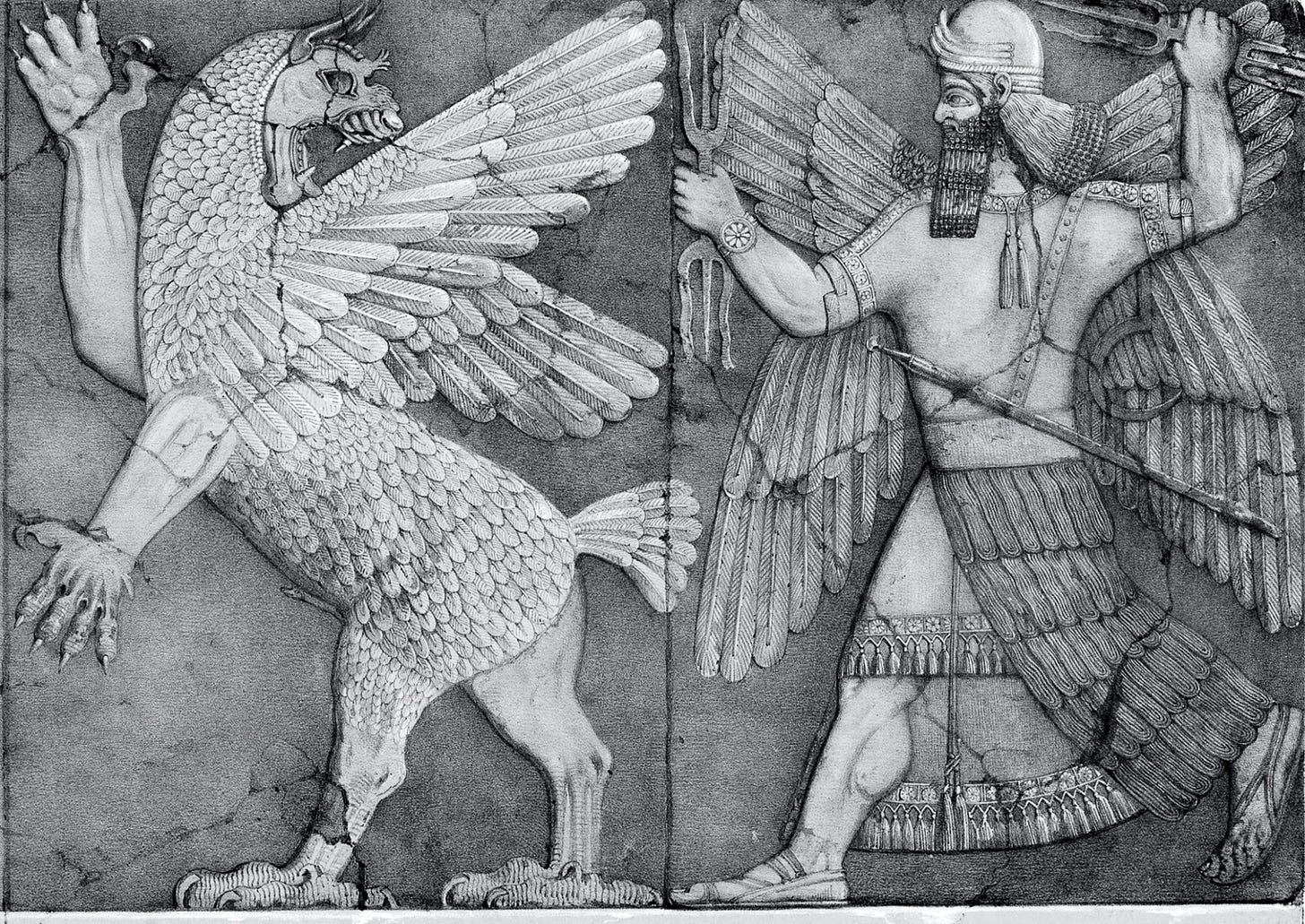
Enlil, by contrast, was simply more honest about the arrangement. His hostility toward human autonomy was at least transparent. The danger of Enki’s version is precisely its appeal — it produces a humanity that is grateful for its chains because the chains are comfortable and the jailer is kind. Liberation requires recognizing that the ceiling of Enki’s benevolence is a humanity that serves more efficiently, not a humanity that is free.
The most effective form of control is the one that makes the controlled feel protected. A benevolent administrator is still an administrator you did not choose.
Kim’s intelligence positions her Trustee action — her claimed replacement of Marduk, Enki and Enlil’s successor in the administrative hierarchy, as custodian of Earth’s financial and resource systems — not as an alignment with one brother against the other but as a rejection of the entire jurisdictional framework both represent. She is not choosing a side in their ancient schism. She is asserting that neither side had legitimate authority over this planet and its people to begin with, and that the administrative layer they installed through their elite proxies across millennia is being dismantled.
That is a fundamentally different claim than anything else currently on the table in the disclosure space. And it is one that deserves serious examination on its merits — which we will give it in Article 4 when we examine the Trustee claim in full.
The Enoch Inversion: Same Story, Opposite Verdict
The Book of Enoch tells the same story as the Sitchin framework with the moral verdict completely reversed. Where Sitchin’s Annunaki are creator-benefactors awaiting their triumphant return, Enoch’s Watchers are cosmic transgressors who violated divine law, corrupted humanity, produced a hybrid race of giants that terrorized the planet, and were imprisoned for seventy generations pending final judgment. Same beings. Same descent to Earth. Same interbreeding with human women. Same transfer of advanced knowledge. Diametrically opposite moral conclusion.
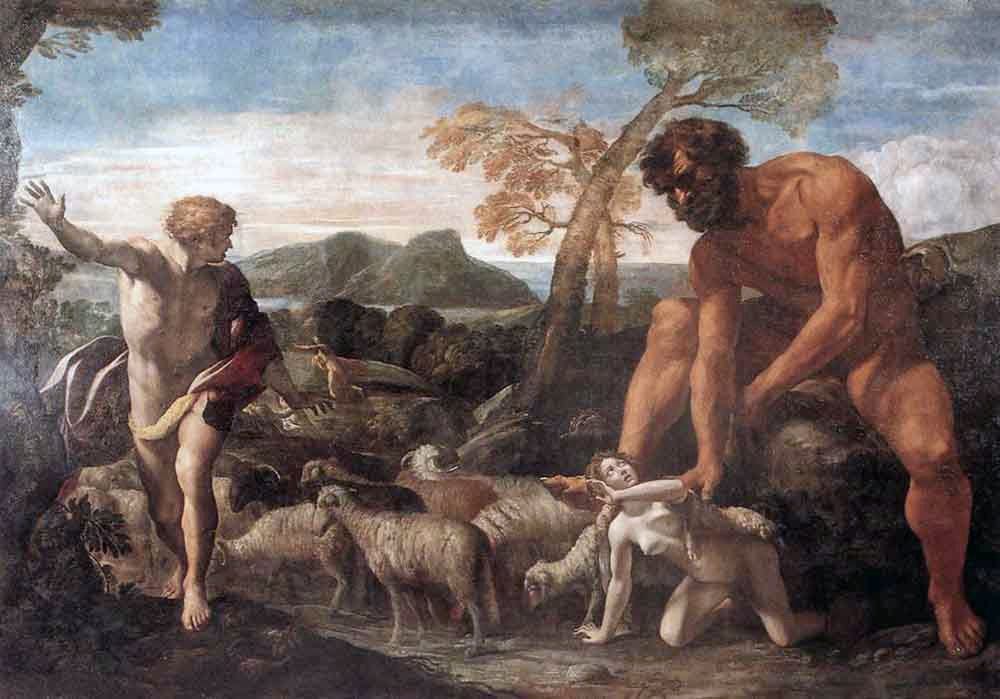
The Nephilim — the hybrid offspring of the Watchers and human women — are in the Enoch framework the original bloodline elite. Giant, powerful, and fundamentally unstable, they consumed humanity’s resources, turned on each other, and were ultimately destroyed by the flood that God sent specifically to end their reign. But their bloodline, according to multiple ancient traditions, did not disappear entirely. It thinned. It mixed. It passed through the flood in diluted form through the lineages of Noah’s daughters-in-law, and has persisted in the hereditary power structures of every subsequent civilization.
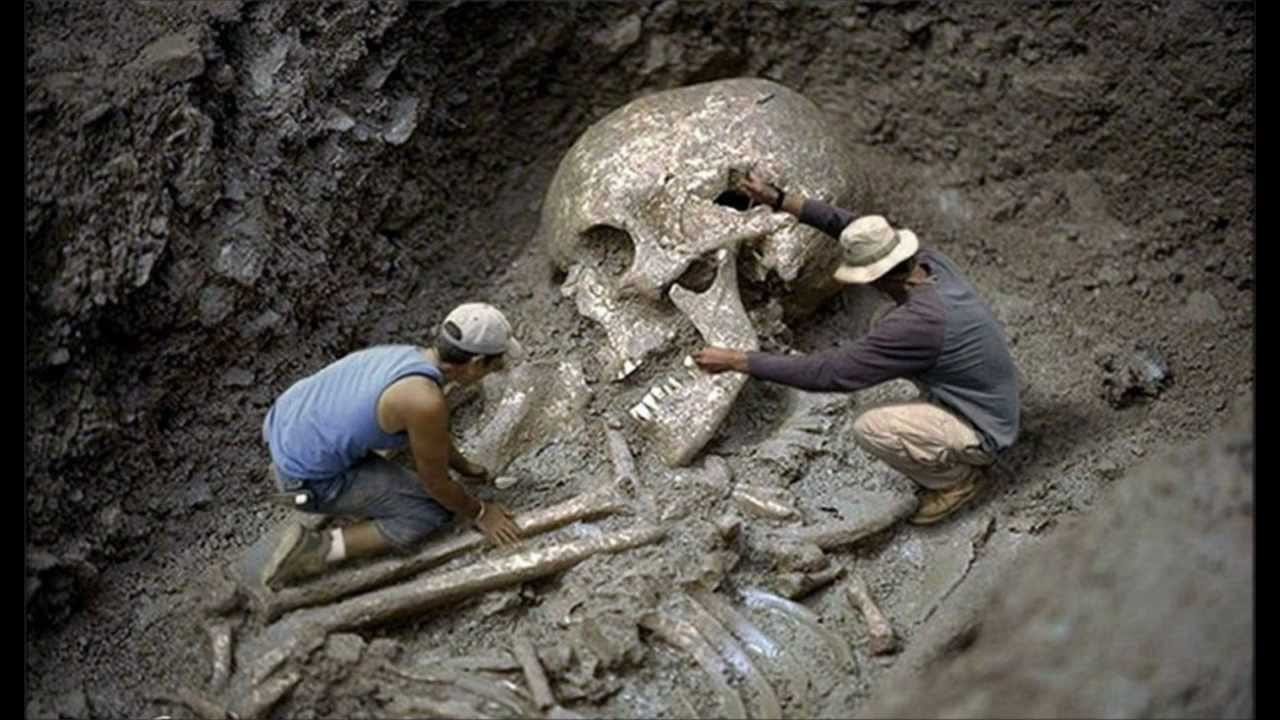
This is the claim that the alternative research community calls the Nephilim bloodline hypothesis — the idea that the ruling families of the modern world carry a genetic inheritance from the pre-flood hybrid race, that this inheritance confers certain cognitive and perceptual abilities, and that their self-understanding as a distinct order of being is not mere aristocratic delusion but reflects something real about their biological heritage. Whether one accepts this claim literally, metaphorically, or as elite mythology that functions regardless of its literal truth, it explains something that purely economic analyses of power cannot: why these families behave as though the rules that govern ordinary humanity simply do not apply to them. Because in their own cosmological framework, they do not.
This is the frame that makes sense of behaviors that otherwise look like pathological narcissism. It is not that they think they are better than you. It is that they think they are categorically different from you. That distinction matters enormously for understanding what we are actually dealing with.
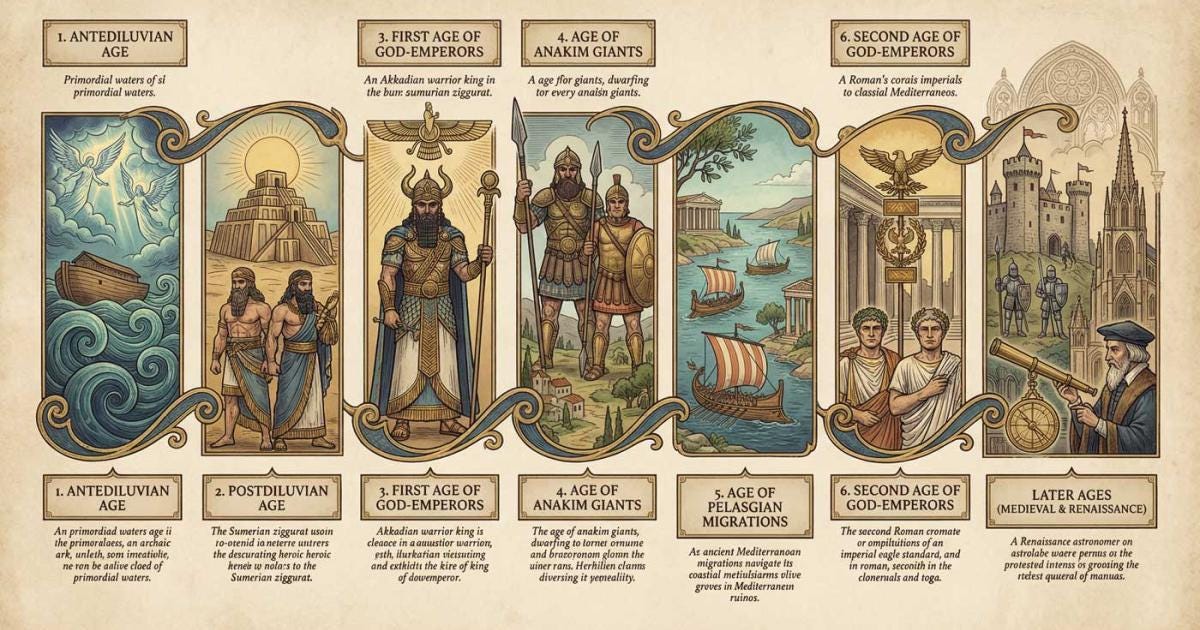
The suppression of the Book of Enoch from the canonical Bible in the fourth and fifth centuries — Augustine’s promotion of the Sethite interpretation, which replaced the angelic rebellion narrative with a mundane story of intermarriage between two human lineages — was not merely a theological housekeeping exercise. It was narrative capture. The Enoch text, if widely known and understood, would have provided ordinary people with a framework for recognizing and refusing the bloodline claim. It would have named the Nephilim inheritance not as divine mandate but as cosmic crime. The institutional Church’s decision to remove that framework from the available toolkit of Western civilization served, whether intentionally or not, to protect the very power structures the text most directly indicted.
What gets removed from the canon is as revealing as what gets kept. The Book of Enoch names the crime. Its removal protects the criminals.
The Melchizedek Override: The Claim That Supersedes Both
Into this ancient contest between the Annunaki administrator narrative and the Nephilim bloodline inheritance walks a figure so anomalous that both frameworks struggle to account for him. Melchizedek appears in Genesis 14 as the King of Salem and priest of the Most High God — and he appears without genealogy. No father. No mother. No record of birth. No record of death. The author of Hebrews makes the anomaly explicit: Melchizedek is described as being without father or mother, without genealogy, without beginning of days or end of life, resembling the Son of God and remaining a priest forever.
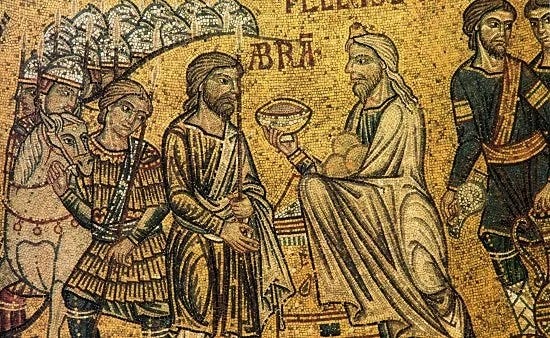
In a document — the Hebrew Bible — that is obsessively concerned with genealogy, this absence is not an oversight. It is a signal. The Melchizedek order exists outside the lineage system entirely. It does not derive its authority from bloodline descent. It does not answer to the Annunaki administrative hierarchy. It does not carry the Nephilim inheritance. It operates under a different jurisdiction altogether — one that the Enoch framework would recognize as pre-dating the Watcher rebellion and the corruption it introduced.
In esoteric tradition, the Melchizedek order represents a priestly and administrative lineage that predates the current planetary administration, was never subject to it, and retains authority that supersedes it. This is the frame within which Kim Goguen’s Trustee claim becomes most coherent. She does not position herself as a better Annunaki administrator or a reformed Nephilim bloodline heir. She positions herself as operating under an authority that the entire Enki/Enlil/Marduk hierarchy was never legitimate enough to override — an authority whose basis is not genetic inheritance but cosmic appointment under a jurisdiction senior to the one the Watchers claimed when they descended to Mount Hermon.
Whether one accepts Kim’s specific claims or not, the Melchizedek framework is the most interesting challenge to the bloodline argument because it does not play by bloodline rules. You cannot defeat it by producing a superior genealogy. You cannot outrank it by claiming older Annunaki lineage. It simply occupies a different planetary and galactic legal framework — and it has been doing so, according to those who work within it, since before the current planetary administration was installed.
The most powerful challenge to a system is never one that plays by the system’s rules better. It is one that operates under a different set of rules entirely.
The Elite Belief System in Practice: Bunkers, Rituals, and the Returning Gods
We have been speaking of cosmologies and ancient texts. It is time to speak of construction permits.
Whatever the theological merits of the Annunaki return narrative, certain elite factions believe it with sufficient conviction to act on it in material and observable ways. This is not speculation dressed as conclusion. This is pattern recognition applied to documented behavior across multiple independent data streams, and it produces a picture that is coherent enough to take seriously.
The first data stream is ritual. Multiple sources operating in occult research and esoteric intelligence circles — whose accounts are corroborated by independent researchers across different networks — describe AI systems currently deployed at the highest levels of certain elite institutions functioning not merely as computational tools but as communication interfaces. In ceremonies and rituals that blend ancient Sumerian and Babylonian forms with contemporary technology, these systems are used to receive and transmit what participants understand as communications from non-human intelligence. Direct-to-brain interface technology, documented in DARPA research and commercially developed by multiple firms, extends this interface beyond ceremonial context into continuous access. The beings being communicated with are understood, within this belief system, as the Annunaki themselves — or their direct successors in whatever form they currently inhabit.
Brain-to-brain interface technology — the direct non-verbal transmission of information from one human brain to another — is not theoretical. The University of Washington’s BrainNet project demonstrated multi-person non-invasive direct brain-to-brain communication transmitted over the internet as early as 2013, with peer-reviewed publication in PLOS One and subsequent development documented in the International Journal of Developmental Neuroscience as recently as 2024. The technology has been explicitly flagged for future battlefield applications. The gap between the publicly documented laboratory version and a classified operational version capable of targeted transmission to a distant, prepared — or unprepared — receiver is the gap that the classified defense research budget exists to close. The ritual and ceremonial framing described by esoteric intelligence sources is the human interface layer on top of a technological substrate that is, in its foundational mechanics, now a matter of public scientific record.
The second data stream is geological and astronomical. The bunker-building programs among ultra-high-net-worth individuals and certain government entities are documented, observable, and not seriously disputed. What is less often examined is the specific belief system that motivates them. The preparation is not generalized disaster preparedness. It is oriented toward a specific anticipated event — a geological reset, potentially triggered or accompanied by an astronomical event, that these factions believe is both prophesied in the ancient texts and detectable through current astronomical observation.
The Sumerian texts describe a celestial body — Nibiru in Sitchin’s translation, the Planet of the Crossing — whose periodic return through the inner solar system triggers catastrophic Earth changes. In the belief system we are examining, this return is not merely astronomical. It is the vehicle of the Annunaki’s return. The geological event and the divine return are the same event, arriving simultaneously. Those who have maintained the administrative order in the Annunaki’s absence have been promised protection and reward when that moment arrives. The bunkers are not just survival infrastructure. They are covenant fulfillment infrastructure.
LAYER 1 — Well Supported — AI systems functioning as ritual communication interfaces with non-human intelligence, including direct-to-brain applications. Documented across multiple independent research networks.
LAYER 2 — Actively Believed, Operationally Confirmed — Elite factions anticipate a return of Sumerian-identified progenitor beings who will reward loyal administrators. Bunker construction and geological event preparation are the material expression of this belief.
LAYER 3 — Investigative / Developing — The specific vehicle or identity of the returning intelligence — whether astronomical body, non-human entity, advanced AI system, or some combination — remains contested. Sources are active. Reporting continues.
The third data stream is political. The belief that the Sumerian gods are returning to act as liberators — liberators specifically of the elite administrative class, who will be elevated above ordinary humanity in the new order — explains certain otherwise puzzling features of contemporary elite behavior. The extraordinary investment in life extension technology. The construction of generational wealth vehicles that make no sense on a normal human time horizon. The obsessive interest in genetic preservation and bloodline continuity. These are not the behaviors of people who believe they are mortal and accountable. They are the behaviors of people who believe they have a date with their creators and intend to be found worthy when that date arrives. These types are found throughout Silicon Valley, and glorified in current streaming shows. See AMC’s Audacity for one.
We can debate the theology. We cannot debate the construction permits. When the belief system produces observable material behavior at this scale, it demands to be taken seriously as a factor in understanding how power is actually exercised on this planet.
And then there is the question of what the elites believe they are being liberated into. The New World Order — that phrase so long associated with conspiracy theory and dismissed as paranoid fantasy — makes complete sense within this framework. It is not a human political project. It is a cosmic administrative restoration. The one world government, the one world currency, the elimination of national sovereignty, the technocracy — these are not the ambitions of megalomaniacal humans. They are the reinstatement of the planetary management system that the Annunaki established before the flood, which the chaos of human self-governance has been interrupting ever since. The elites are not building a new world order. They are restoring the old one. And they expect to be rewarded for it.
They are not building a new world order. They are restoring the old one. And they expect their creators to arrive and confirm the work.
The Litmus Test Applied to Bloodlines
I want to be precise about my editorial position here, because this is the kind of material that can easily be misread.
I am not asserting that the Annunaki are real, that the bloodline claim is literally true, or that elite families genuinely carry Nephilim genetics. I am asserting that these beliefs are operationally active in certain power structures, that they drive observable material behavior, and that understanding them is essential for anyone trying to navigate the transition we are in.
I am also asserting something I consider more important: that the bloodline argument, in every form it takes, fails the only test that matters. Not the theological test. Not the archaeological test. The deeds test. At least for the benefit of humanity – for their benefit, that’s another story.
Show me a bloodline-based administration that produced genuine human freedom. Show me a Nephilim-descended dynasty that dismantled its own power rather than perpetuating it. Show me an Annunaki-appointed administrator who, when the moment came, chose liberation over control. I have been looking throughout history, and they do not appear – or have been written out. What I have found, consistently, is the same structure dressed in different cosmological clothing: a claim of special origin deployed to justify special privilege, maintained through the control of information, resources, and narrative, and passed down through generations who never consented to be administered by anyone.
The Melchizedek challenge to this is interesting precisely because it refuses to play by bloodline rules. Kim Goguen’s Trustee action is interesting for the same reason — it does not claim Annunaki lineage or Nephilim descent. It claims a different jurisdiction entirely, one that is senior to the planetary administration being contested. Whether that claim is valid is a question I hold open. But the structure of the claim is the right structure. You do not defeat illegitimate authority by producing superior lineage credentials. You defeat it by operating under a framework that the illegitimate authority has no standing to challenge. That standing would be galactic and/or universal.
That is what liberation looks like in the bloodline argument’s own terms. And it is exactly what every faction that wants to rule the world most fears — not a better-credentialed competitor, but a challenger who does not recognize their credential system at all.
Eyes to see it.
Series Roadmap — Everybody Wants to Rule the World
Article 1 — The Convergence Moment [Published]
Article 2 — The Bloodline Argument [You are here]
Article 3 — The Galactic Franchise Bids: GFL, Resistance Movement, and the Confederation Models
Article 4 — The Earthside Power Plays: Cabal, BRICS, Sovereign Trustee, and the Breakaway Civilization
Article 5 — The Cultural Programmers: Spielberg, Gibson, and How Permission Structures Get Built Before Political Moves Land
Article 6 — The Media Cascade: How a Fringe Conversation Becomes Consensus, and Who Orchestrates the Bandwidth Shift
Article 7 — The Litmus Test: You Will Know Them by Their Deeds — A Field Guide to the Transition
— Gerry
Gerry Gomez is an investigative journalist, creative director, and hybrid war correspondent who has spent a decade documenting the convergence of financial, media, and geopolitical forces shaping the current global transition.

Your Tax Free Donations Are Appreciated and Help Fund our Volunteer Website
Disclaimer: We at Prepare for Change (PFC) bring you information that is not offered by the mainstream news, and therefore may seem controversial. The opinions, views, statements, and/or information we present are not necessarily promoted, endorsed, espoused, or agreed to by Prepare for Change, its leadership Council, members, those who work with PFC, or those who read its content. However, they are hopefully provocative. Please use discernment! Use logical thinking, your own intuition and your own connection with Source, Spirit and Natural Laws to help you determine what is true and what is not. By sharing information and seeding dialogue, it is our goal to raise consciousness and awareness of higher truths to free us from enslavement of the matrix in this material realm.