 EN
EN FR
FR

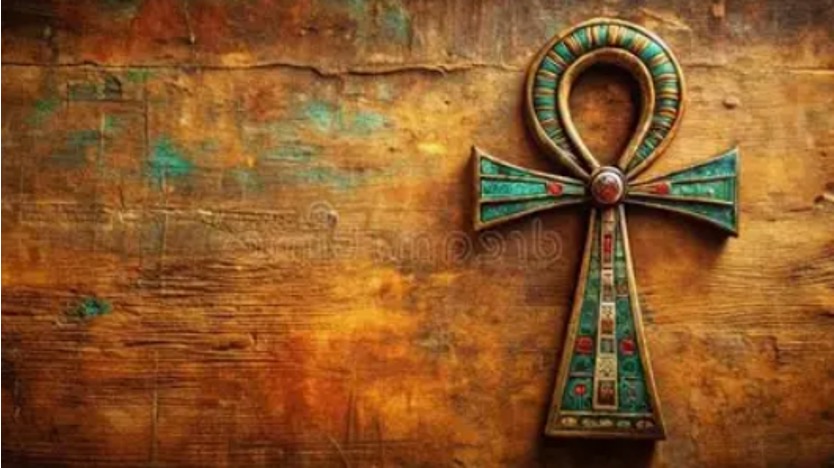
Do You Want to Live Forever?
The Curious Theory of Quantum Immortality
Reflections by Rev. Kat Carroll
(About a 12 minute read)
This article was inspired by a series of thought-provoking Instagram posts shared by Theories & More 👁️ (
). My thanks for sparking the question that became this exploration.
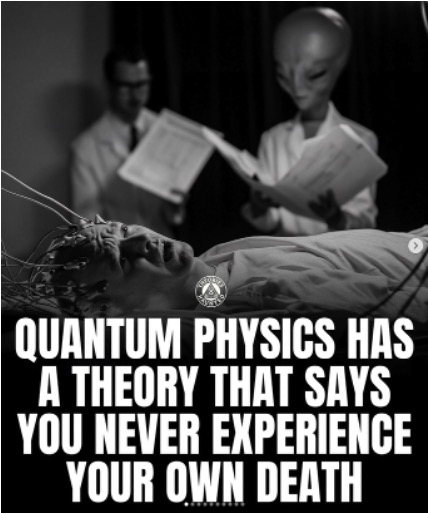 On Friday morning, my husband shared a series of memes suggesting that a person might never actually experience death, but instead continue in another reality or timeline while those around them witness their passing. They continue in a new reality.
The theory is called quantum immortality—and it was a provocative idea I hadn’t encountered before.
For my Catholic husband, it offered an unexpected kind of hope, especially since he was taught he was damned for all eternity for divorcing his wife and marrying me! 35-years later, he’s softened that belief.
Catholicism (with the largest denomination in Christianity), does not support the concept of reincarnation. But many other and far older religions do.
What we know, what we think we know, and what we believe are all very different.
There is information from religious texts that speak of eternal life:
The Bible promises ‘the person who does what God wants lives forever.’ (1 John 2:17) Learning what God wants us to do is the first step toward everlasting life.
Christians believe that through faith in God and Jesus Christ, they are promised eternal life-and death is a transition rather than an end. I like that idea very much. It’s like leaving one room and entering another, but without all the clutter and burdens of the past.
I don’t want to turn this into an article about religion, but about consciousness itself. Our language has evolved enough that now we have fundamentally different ways to express new (or old) concepts.
That said, there are many religions that have discussed the principle of eternal life, or life after death.
Many Paths, One Question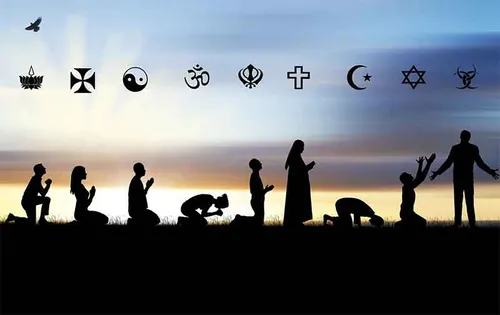
Belief in life after death, the immortality of the soul, or some form of continued existence is far older than Christianity and remarkably widespread across human civilization. While each tradition explains it differently, they share a common thread: death is not necessarily the end of consciousness.
Hinduism, Buddhism, Jainism, Sikhism, and many indigenous traditions teach that life continues through cycles of rebirth, each offering its own understanding of karma, spiritual growth, and liberation. Ancient Greek philosophers such as Pythagoras and the Orphic tradition also spoke of the soul’s journey through multiple lives, while Celtic Druids were recorded by Roman historians as believing the soul survives death.
Even within Judaism and Christianity, views have varied over time. Mainstream Christianity generally teaches resurrection and eternal life rather than reincarnation, while some Jewish mystical traditions, including Kabbalah, embrace the concept of the soul returning in different lifetimes.
Although these beliefs differ in their details, they all wrestle with the same enduring question: What happens to consciousness, the soul or spirit, when the body dies?
The differences may be the language each culture developed to describe the mystery. Rather than list them all, if you’re interested in the various philosophies and beliefs of the earliest recorded religions on this subject, you can read this article.
“The concept of reincarnation is accepted in a vast majority of the world’s nations, with belief rates varying significantly by region and religion. According to a 2025 Pew Research Center survey of 35 countries, a median of 33% of adults believe in reincarnation, with higher concentrations in sub-Saharan Africa, Latin America, and the Asia-Pacific region.”
According to Job 14:14, the question of life after death is a profound mystery and hope for renewal or resurrection is affirmed through faith in God. Job asks, “If a man dies, shall he live again? All the days of my appointed time will I wait, till my change come” (KJV) This verse reflects Job’s deep contemplation of mortality and the possibility of life beyond death. Job expresses both despair and hope, acknowledging the suffering of life while anticipating a future transformation or renewal.
Scripture contains dozens of passages that promise eternal life, resurrection, and life beyond death. Among the most familiar are John 3:16, John 11:25–26, Luke 23:43, Romans 6:23, Revelation 21:4, and 2 Corinthians 5:1. Together they paint a remarkably consistent picture: death is not viewed as an ending, but as a transition into another form of existence.
For readers wishing to explore the subject further, I’ve included a longer list of references in the sources below.
The belief that we will continue living in one form or another is strong in society. And I believe it’s more than wishful thinking… It begs questions like, Is this all I am? Is there more?
One of the more intriguing principles in physics is the Law of Conservation of Energy, which states that energy cannot be created or destroyed—only transformed from one form into another. While physicists are referring to physical energy rather than consciousness, it naturally raises an interesting question: if nothing in nature is truly lost, what becomes of the energy we call awareness, identity, or the soul?
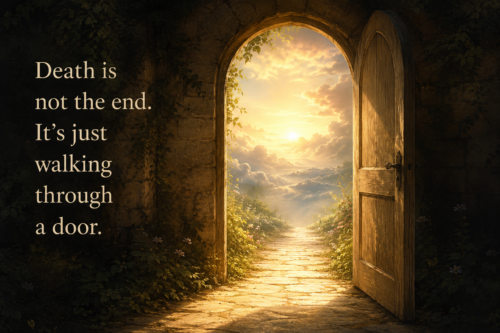
Personally, I have always felt that death was like walking through a doorway.
Many Worlds Theory
Enter Quantum Physics – and the language changes from something spiritual, to something perhaps more scientific, yet still remains only in theory.
The idea stems from the Many-Worlds Interpretation of quantum mechanics, proposed by Hugh Everett III in 1957.
“According to the “many worlds” interpretation of quantum mechanics, there may be multiple copies of us living in multiple worlds.”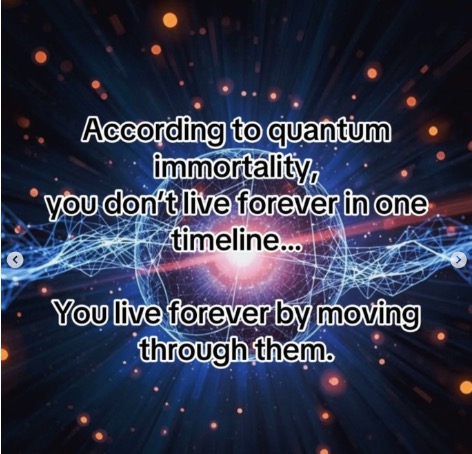
This reminds me of Physicist Erwin Schrödinger’s and his concept of a cat being alive or dead, and unconfirmed until the box is opened. Or Einstein’s spooky action at a distance, photon particles that have been split reacting as if they were still physically connected and reacting to what happens to the other.
And then there is Rupert Sheldrakes morphic field theory, “the cosmos now seems more like a developing organism than an eternal machine”. He also said:
For more than 200 years, materialists have promised that science will eventually explain everything in terms of physics and chemistry. Believers are sustained by the faith that scientific discoveries will justify their beliefs.
 “Justify their beliefs” … Even science struggles to find the words to understand that there appears to be a supernatural Source of Creation, that the Tao has stated is so vast, that it cannot be named or described. More so, it cannot be scientifically proven, only reported as experiential.
I guess we won’t know what happens to our soul, or consciousness, until that box is opened, or after we die.
Another odd thing about consciousness is the mind’s ability to react to an unseen image. MIT neuroscientists found the brain can identify images seen for as little as 13 milliseconds, reminding us that much of our perception occurs before we’re consciously aware of it.
Other researchers have gone a step further. Scientists including Dean Radin, Julia Mossbridge, and others have spent years investigating whether consciousness—or even the body itself—can sometimes respond to future events before they occur. Another example are the people who have been able to predict or feel when a UFO is near and even point to it while their eyes are closed. This supports the idea of the body acting like a fractal antenna or being able to perceive electromagnetic fields, which cannot be seen, but apparently felt by some.
Pets also seem to have uncanny abilities related to psychic awareness. Many pet owners have also reported that their animals seem to know when a family member is coming home, even when conventional explanations appear unlikely. Our profoundly deaf cat always senses my husband is coming home, even when he hasn’t left his job sight. She also vocalizes when I’m on the phone with him, as if she knows who I’m talking to… her favorite human.
Whether this reflects heightened senses, telepathy, or something else entirely remains another intriguing mystery of consciousness.
While results remain controversial, the research continues to raise fascinating questions about the nature of time, perception, and consciousness.
Perhaps time itself is called into question as we learn there are people who see events before they happen (clairvoyance). The other psychic senses are as equally intriguing as they don’t require the subject to be in contact with the item, or in the same room or country when conducting remote sensing, or remote viewing. Which begs another question:
If consciousness can exist outside the brain, do we need a physical body at all?
Quantum Jumping, Time Travel and Creating our Own Reality
 If consciousness can shift instantly from one thought to another, is that merely an internal experience, or could consciousness itself be fundamental enough that what we call “reality” shifts with it?
- Is “quantum jumping” simply a metaphor used in self-help literature, or does it unintentionally echo ideas being explored in interpretations of quantum mechanics?
- If there are branching possibilities, is consciousness selecting among them, creating them, or merely observing one possible path?
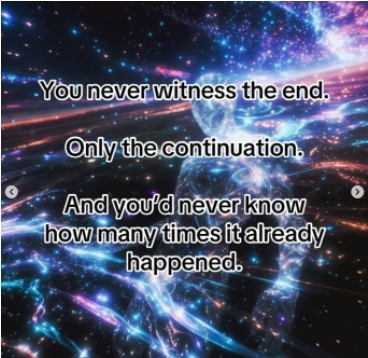 If consciousness can shift instantly from one thought to another, is that merely an internal experience, or could consciousness itself be fundamental enough that what we call “reality” shifts with it?
So, the concept of quantum physics exploring whether you can be in two places at the same time, imagining that when you might die, you may become aware of being in a new world, a parallel life – may not be that much of a stretch of the imagination.
What if living beyond this physical form is the greater reality, and everything else is simply a temporary human experience?
I’m dying to find out! 😄

Research Sources for a Deeper Dive:
Religions that believe in Reincarnation (Wikipedia)
Quantum Immortality: Exploring the Boundaries of Life and Consciousness
The Many-Worlds Theory, Explained
Understanding Spiritual Life vs. Physical Death
Resurrection and Immortality: Eight Theses (Volume 1 Issue 2)
Is the human soul mortal or immortal?
A Brief Introduction to Morphic Fields

Your Tax Free Donations Are Appreciated and Help Fund our Volunteer Website
Disclaimer: We at Prepare for Change (PFC) bring you information that is not offered by the mainstream news, and therefore may seem controversial. The opinions, views, statements, and/or information we present are not necessarily promoted, endorsed, espoused, or agreed to by Prepare for Change, its leadership Council, members, those who work with PFC, or those who read its content. However, they are hopefully provocative. Please use discernment! Use logical thinking, your own intuition and your own connection with Source, Spirit and Natural Laws to help you determine what is true and what is not. By sharing information and seeding dialogue, it is our goal to raise consciousness and awareness of higher truths to free us from enslavement of the matrix in this material realm.


















Another great article from Rev Kat.
Thank you! 🥰