EN
EN FR
FR

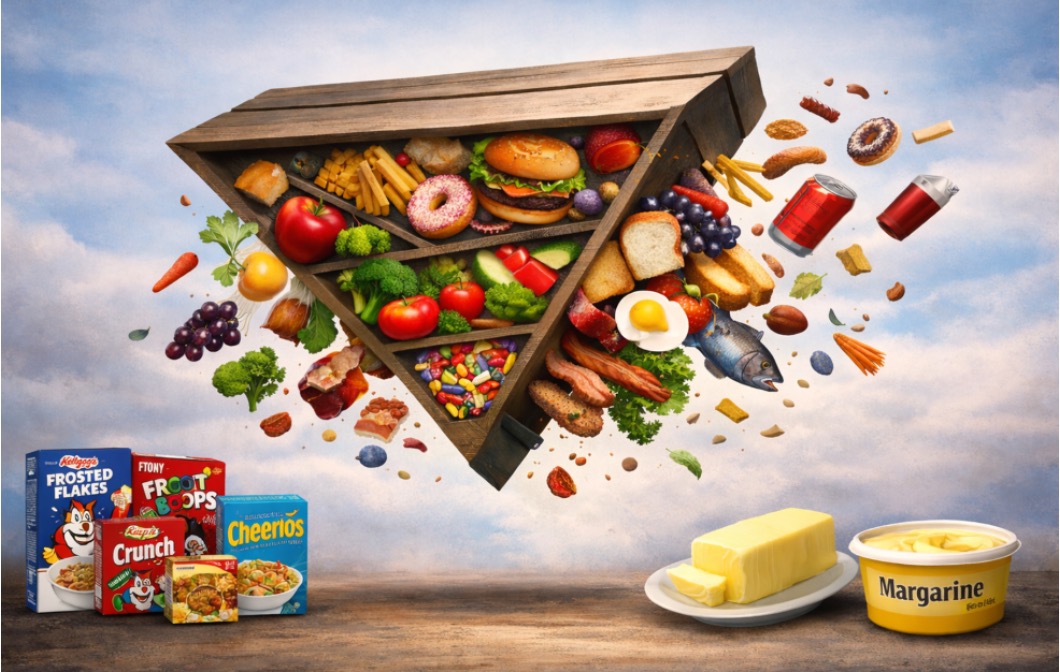
Flipping the Food Pyramid
How the Last 100 Years Reshaped What We Eat
Rev. Kat Carroll
This is about a 6 min read
Americans Were Fed a Story — and It’s Finally Being Questioned
I’d like to start this article with a bit of South Park humor on the topic I pulled from Twitter:
For as long as many Americans can remember, we’ve been told what foods were healthy, which ones to avoid, what was acceptable in moderation, and what should be eaten daily. Then, as if on cue, the guidance would change.
Not because human biology suddenly evolved. But because corporate needs and the narrative changed.
Eggs were once considered a near‑perfect protein. Then they were condemned for cholesterol. Now they’re back in favor. Butter was a kitchen staple for generations, until fat became the villain and margarine, an industrial substitute, was promoted as healthier. Years later, we learned that margarine was largely made from chemically processed seed oils now associated with inflammation and metabolic dysfunction.
The question isn’t whether advice changed. It’s why it changed so often, and who benefited.
Breakfast Before Big Food
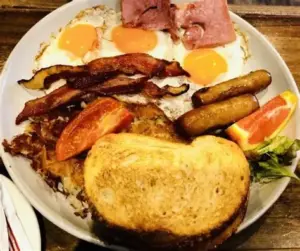 Before breakfast became something poured from a box, or popped out of your toaster, mornings began with work. For senior citizens, we recall when our grandparents lived and ate differently, naturally. In farming communities, chores came first – feeding animals, tending fields, some milked cows. We moved our bodies. When people finally sat down to eat, breakfast was hearty and honest: bacon, eggs, buttered toast, pancakes or waffles made from simple ingredients.
That food wasn’t indulgence. It was the fuel that started the day.
Then breakfast cereal arrived.
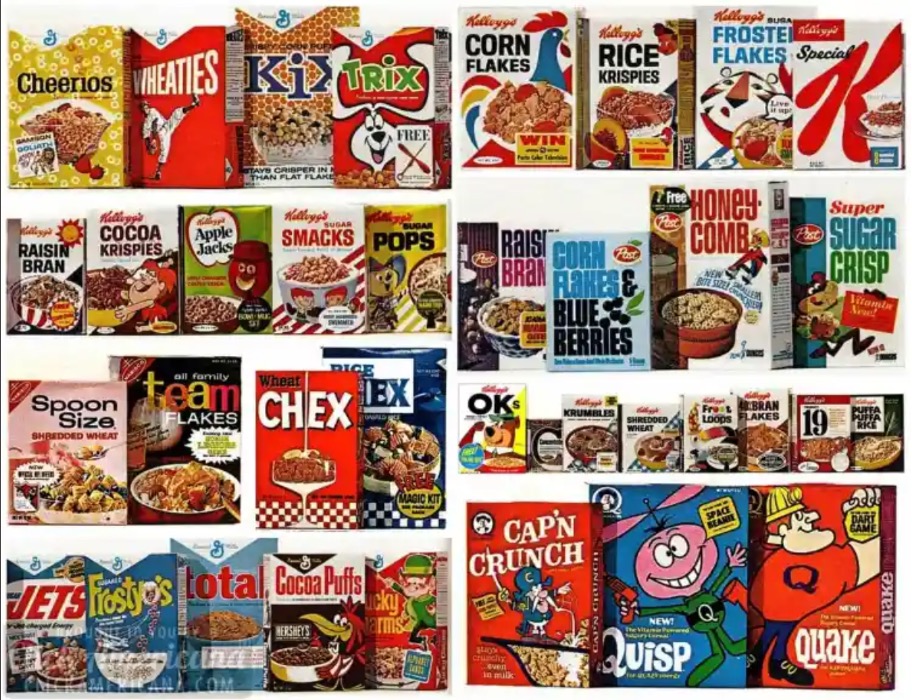
The intersection of cereal companies and corporate lobbying has been a significant aspect of food industry influence on public policy and health regulations. Major cereal manufacturers such as Kellogg’s, Nestlé, and General Mills have engaged in extensive lobbying efforts to shape legislation and public perception around nutrition and food safety.
Initially, cereal wasn’t designed for pleasure. It was a ready made meal to help working parents with busy schedules. But when sweetness, mass production, and marketing entered the picture, cereal transformed from food into a commercial product. Once sweetness was added, two things happened quietly:
- kids were far more willing to eat it
- the product created repeat demand (and brand loyalty)
That combination—speed + sweetness—was potent. And as ultra‑processed breakfast foods expanded into American kitchens, and our waistlines quietly followed.
Omnivores by Nature
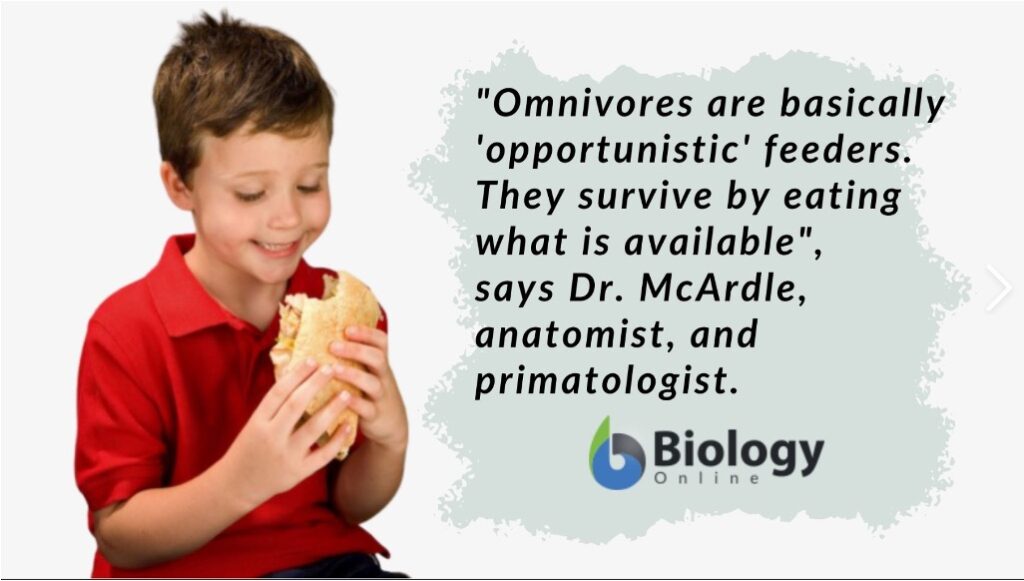 Our bodies are finely tuned. Throughout evolution, our ancestors centered their diets around animal products and only ate plant foods during times of scarcity or starvation. In other words, meats were the preferred food source and what we centered our diet around. Grains were saved for times of scarcity to help us maintain body weight and fat to endure the winter. Eating out of rhythm with our nature is part of the obesity problem.
Our body doesn’t recognize many of the new ingredients in our food sources: Hydrogenated oils, refined sugars, artificial flavorings. Instead of clean energy conversion, metabolism slowed. Fat storage increased.
Americans didn’t gain weight because they ate too much real food. They gained weight when real food was replaced with counterfeit fuel.
Protein, Muscle, and Biological Reality
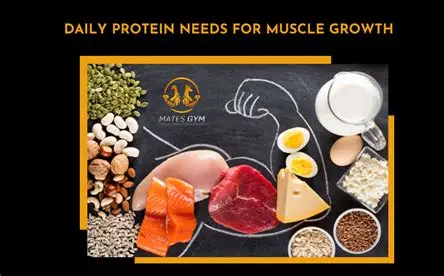 Meat followed into the crosshairs next. Yet people trying to lose weight, or simply age well, often succeed on protein‑rich diets. Protein preserves muscle mass, supports metabolism, and increases satiety.
Per Live Science, “The U.S. dietary guidelines are now being rewritten, in what officials describe as a historic reset — moving away from a grain-centric model toward one prioritizing protein and nutrient density.”
Vegetables are essential, but they do not build or maintain muscle. That doesn’t make them inferior—it makes them complementary.
The debate was never truly meat versus plants. It was biology versus ideology. Becoming vegan is labeled good, omnivore is okay as long as you restrict meat, being a carnivore is now labeled as bad (“those poor animals”). In the animal kingdom, there are species from each of these categories. We are omnivores, and it’s your choice, not an industry’s to make for you.
When the Economy Changed, So Did the Menu
Food choices didn’t shift in a vacuum. They shifted alongside the economy.
For much of the 20th century, a single income could support a household. One paycheck covered the bills, put food on the table, sent kids to school, and even allowed for the occasional family vacation. Meals were cooked at home because time allowed for it.
Then the math changed.
- As of recent data, 46% of two-parent households have both parents working full-time, a significant increase from 31% in 1970.

As wages stagnated and costs rose, one income was no longer enough. Two parents working full‑time became the norm; not for ambition, but for survival. Time, once an invisible ingredient in every meal, became the rarest commodity of all.
In that squeeze, food had to adapt.
Cheaper and faster mattered. Shelf‑stable mattered, hence preservatives (Lantibiotics) were introduced. Don’t feel like a stranger if you’ve never heard of this. I had to look it up!
“With the levels of lantibiotics currently present in food, it’s very probable that they might impact our gut health as well.”
Jerry Zhang, PhD
Articles on the problems being discovered with preservatives and gut health are listed in my resource list at the end of this article.
Soaring Food Prices Changed How We Eat
 Ready‑made breakfasts, boxed lunches, frozen dinners, and toaster pastries weren’t chosen because they were healthy. They were chosen because they were cheap and convenient – something quick before kids went off to school and parents went off to work.
In the daily struggle for time, nutrition was often the first thing cut from the menu. Not out of neglect, but necessity.
Processed foods didn’t just replace home cooking; they filled the gap created by economic pressure. We’ve all seen how the price of food staples soared to unreasonable heights in these last few years. This made the cost of eggs, milk, and especially meat, something that had to be removed or reduced from our daily meal menu.
Who Really Benefited?
When breakfast cereals, Pop‑Tarts, and frozen toaster waffles became staples, it wasn’t just Americans who gained weight.
The biggest gains belonged to the corporations producing them.
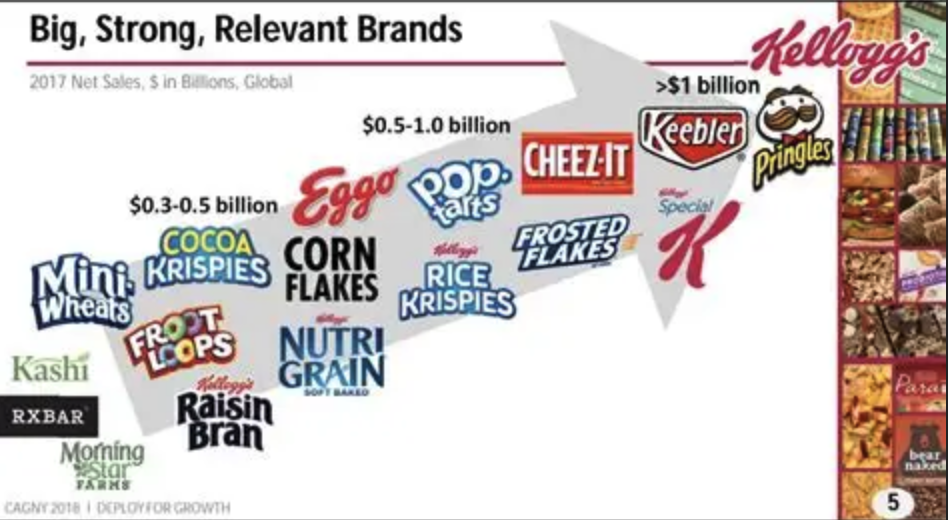
They gained market share. They gained brand loyalty—often formed in childhood. They gained profits measured in quarterly reports, not health outcomes.
Sugar played a crucial role. Sweetness made these foods addictive. It encouraged snacking rather than satiety. A bowl of cereal rarely satisfies for long and that wasn’t an accident.
Real food fills you up. Processed food keeps you reaching back into the box.
While individuals were told to count calories and “exercise more,” corporations counted profits and expanded product lines—often repackaging the same base ingredients into new shapes, colors, and marketing campaigns.
This trade‑off went largely unquestioned for decades:
- Convenience over metabolic health
- Branding over nourishment
- Corporate growth paired with personal decline
The Dust Bowl and Reshaping of Farm Ownership

 During the Dust Bowl (1930s and 1940s), the federal government purchased millions of acres of distressed farmland through New Deal programs like the Resettlement Administration and Farm Security Administration, removing fragile land from small-scale farming and placing it under federal management. While intended to prevent ecological collapse, these policies accelerated farm consolidation and helped shape a system that favored large-scale, uniform grain production, conditions that later aligned seamlessly with the needs of industrial food manufacturers.
Sugar, Butter, Substitutes, and the Fear Economy
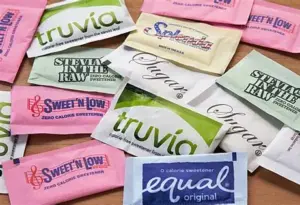 Sugar soon became the next villain. In its place came artificial sweeteners, laboratory creations far removed from anything found in nature. Only later did studies begin to acknowledge that some of these substitutes, particularly at high doses, may disrupt gut health or carry carcinogenic risk.
Even food preservatives come with a risk:
Research from the University of Chicago has shown that nisin, a widely used preservative in foods such as cheese, sausage, and beer, not only targets harmful pathogens but also indiscriminately kills beneficial gut bacteria. This dual action can disrupt the balance and diversity of the gut microbiome, potentially compromising its role in nutrient breakdown, metabolite production, and protection against opportunistic pathogens.
And the obvious question surfaced:

What was so wrong with natural sugars in moderation?
Glucose fuels the brain. The problem was never sugar alone—it was excess, refinement, and context. But moderation doesn’t sell nearly as well as fear.
And what about margarine, which tried so hard to replace butter? In my opinion, everything is better with butter. For centuries, butter was made simply—milk, cream, time, and motion. Whipped cream churned until it transformed, nothing added, nothing stripped away. But that kind of process doesn’t scale easily. Industries needed something faster, cheaper, and more profitable.
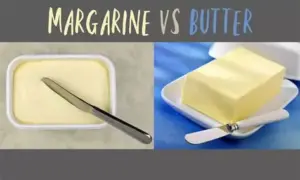
So, butter was pushed onto the unhealthy list and replaced with spreads made from refined seed oils and polyunsaturated fats—many of which were later found to contain trans fats that disrupted cholesterol balance and increased cardiovascular risk. In removing our butter, they quietly increased their own bread. And cholesterol was demonized.
Butter contains beneficial compounds such as butyrate, which supports digestive health and may aid in weight control. It also enhances the absorption of fat-soluble vitamins when used in cooking. This doesn’t mean you should snack on a cube of butter! Use in moderation.
Cholesterol is not inherently bad for you; it is an essential substance that your body needs to build cells, produce hormones, and make vitamins. Your liver produces all the cholesterol your body requires, and it is also found in animal-based foods.
And, as usual, advertising helped sell the story.
Another ad from the way back (or whey back) machine of 1974…
It’s not nice to full Mother Nature!
How many of you remember Fabio, with his gorgeous flowing hair stating,
“I can’t believe it’s not butter”?
America’s Breadbasket: Same Fields, Different Crops
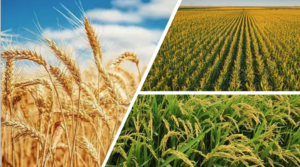
When people picture America’s breadbasket, they imagine rolling Midwestern fields of corn and wheat. That image still exists—but what’s grown there today is not the same crop that fed Americans in the 19th and early 20th centuries.
The land didn’t change, but the seeds did.
For much of American history, farmers saved seeds year to year. Crops were regionally adapted, genetically diverse, and shaped by local conditions. That began to change with industrial agriculture, chemical fertilizers, and eventually genetically modified seeds engineered for yield, uniformity, and compatibility with herbicides.
Today, many farmers operate within systems where subsidies and crop insurance favor approved seed varieties. Saving seeds is often prohibited by contract. Each season requires new purchases, frequently bundled with chemical inputs.
This isn’t a failure of farmers… It’s an economic trap.
As monoculture expanded and biodiversity shrank, corn and wheat increasingly became industrial inputs — used in processed foods, livestock feed, sweeteners, and even fuel — rather than nourishment in their original form.
Today, farmland ownership patterns reflect this industrial logic: for example, Microsoft co-founder Bill Gates is the largest private owner of U.S. farmland, with roughly 240,000 – 275,000 acres across multiple states, held through an investment firm. This highlights how farmland, once the domain of family farms and long-standing local stewardship, is now part of diversified investment portfolios and large-scale agricultural economics.

Fluoride, Additives, and a Broader Reckoning
This re‑examination isn’t limited to food.
For decades, fluoride was added to public drinking water and toothpaste as a public‑health measure. Today, that practice is being questioned. As of early 2026, Utah and Florida have enacted bans on the addition of fluoride to public water systems, with other states introducing legislation to restrict or localize fluoridation decisions.
At the same time, Americans are discovering that many additives long permitted in U.S. food products have been banned in Europe for years, including certain dyes, preservatives, and chemical agents. Only now are these substances being scrutinized or removed from American food sources. (Thank you Senator Kennedy!)
This shift isn’t about fear. It’s about choice, transparency, and consent.
Final Thoughts on The Real Inversion
The food pyramid may be turning upside down, but the real inversion happened long ago, when health guidance began serving industry, putting profits before people.
Perhaps what we’re witnessing now isn’t a revolution, but recalling of the way things used to be… When food was grown, prepared, and served with love… Those healthy ingredients.
We should have trusted real food all along. And as Joni Mitchell stated in her song Woodstock –
“We’ve got to get ourselves back to the garden”

If you learned something new, or you got a chuckle, please feel free to leave a comment!

For a Deeper Dive:
Ultra-processed foods ‘make you eat more’
Common food preservative has unexpected effects on the gut microbiome
The Effects of Food Preservatives on Gut Health
The Science Behind a Carnivore Diet

Your Tax Free Donations Are Appreciated and Help Fund our Volunteer Website
Disclaimer: We at Prepare for Change (PFC) bring you information that is not offered by the mainstream news, and therefore may seem controversial. The opinions, views, statements, and/or information we present are not necessarily promoted, endorsed, espoused, or agreed to by Prepare for Change, its leadership Council, members, those who work with PFC, or those who read its content. However, they are hopefully provocative. Please use discernment! Use logical thinking, your own intuition and your own connection with Source, Spirit and Natural Laws to help you determine what is true and what is not. By sharing information and seeding dialogue, it is our goal to raise consciousness and awareness of higher truths to free us from enslavement of the matrix in this material realm.