EN
EN FR
FR

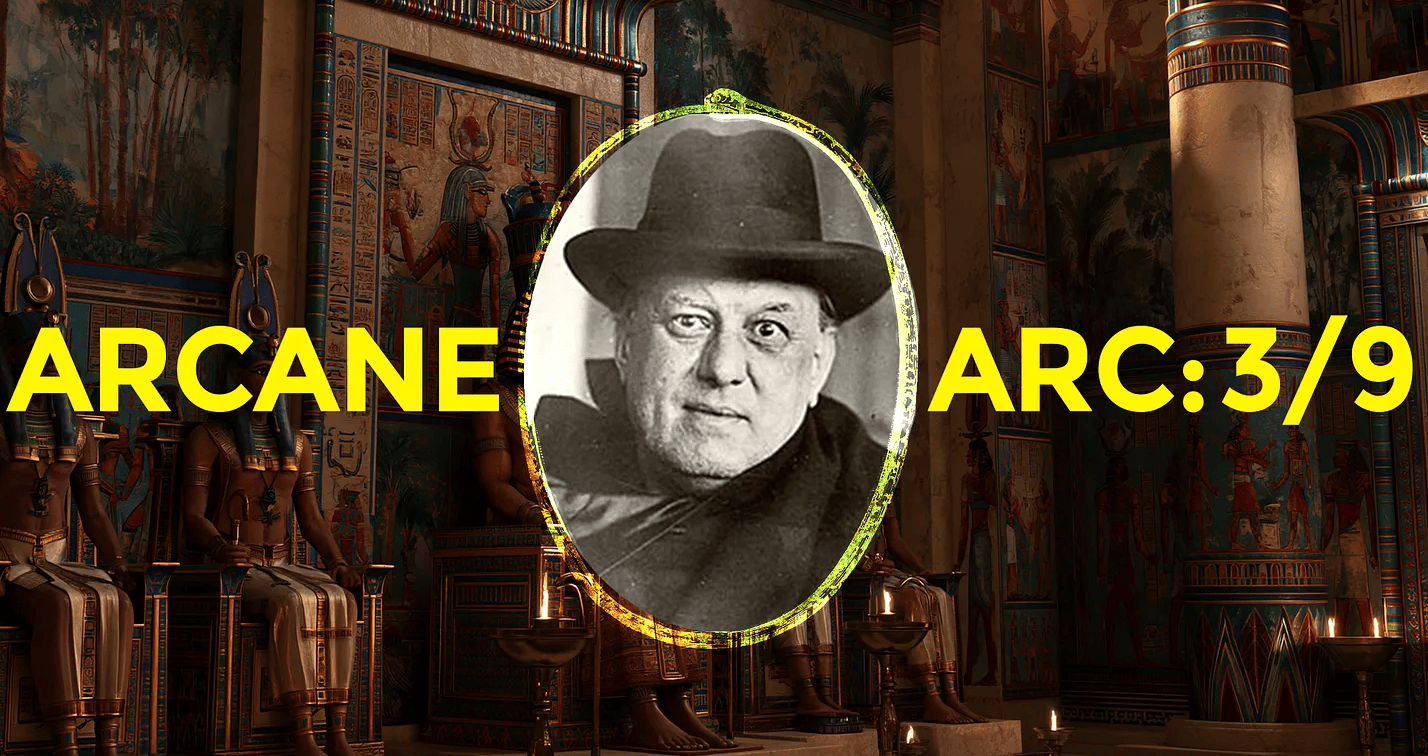
Crowley, Thelema, Parsons, Hubbard, and the Translation of Philosophy into Practice
There is a thread that runs through every figure in this arc — from Blavatsky’s Masters to Bailey’s Tibetan to Pike’s inner-circle deity to the entities the Vril women claimed to channel and the AI god Anthony Levandowski incorporated in California. The thread is this: someone contacted something. Something responded. And what came back shaped the architecture of everything that followed.
The consistency of the contact claim across independent traditions separated by century, geography, and cultural context points at something real without resolving what that something is. Whether the contact experiences were genuine encounters with external intelligences, projections from depths of human consciousness not yet mapped by mainstream psychology, or some combination of both — the pattern holds. The contact produces a specific type of person. That person builds a specific type of institution. The institution produces a specific pattern of outcomes. The barometer applies regardless of which explanation proves ultimately accurate.
This article examines the figure who took the contact claim out of the institutional framework Pike built and the philosophical tradition Blavatsky and Bailey documented — and translated it into a personal operational system that any individual could apply without degree, without initiation, without organizational membership. Aleister Crowley understood something that changed the administrative project’s reach permanently: the power doesn’t require the institution. It requires alignment. And alignment can be achieved directly.
Every figure in this arc claimed contact with something beyond ordinary human knowing. The vocabulary differs by era. The structural claim is identical: I accessed an intelligence that is not mine, and what I built came from that access.
BRIDGE – Articles 1 and 2 established the philosophical and institutional foundations of the administrative project — the Theosophical cosmology, the Masonic degree architecture, the graduated knowledge system designed to bring initiates progressively closer to the inner teaching. This article examines what happens when those elements are distilled into a personal practice available outside institutional channels — and what the consequences of that distillation have been across the twentieth century and into the present.
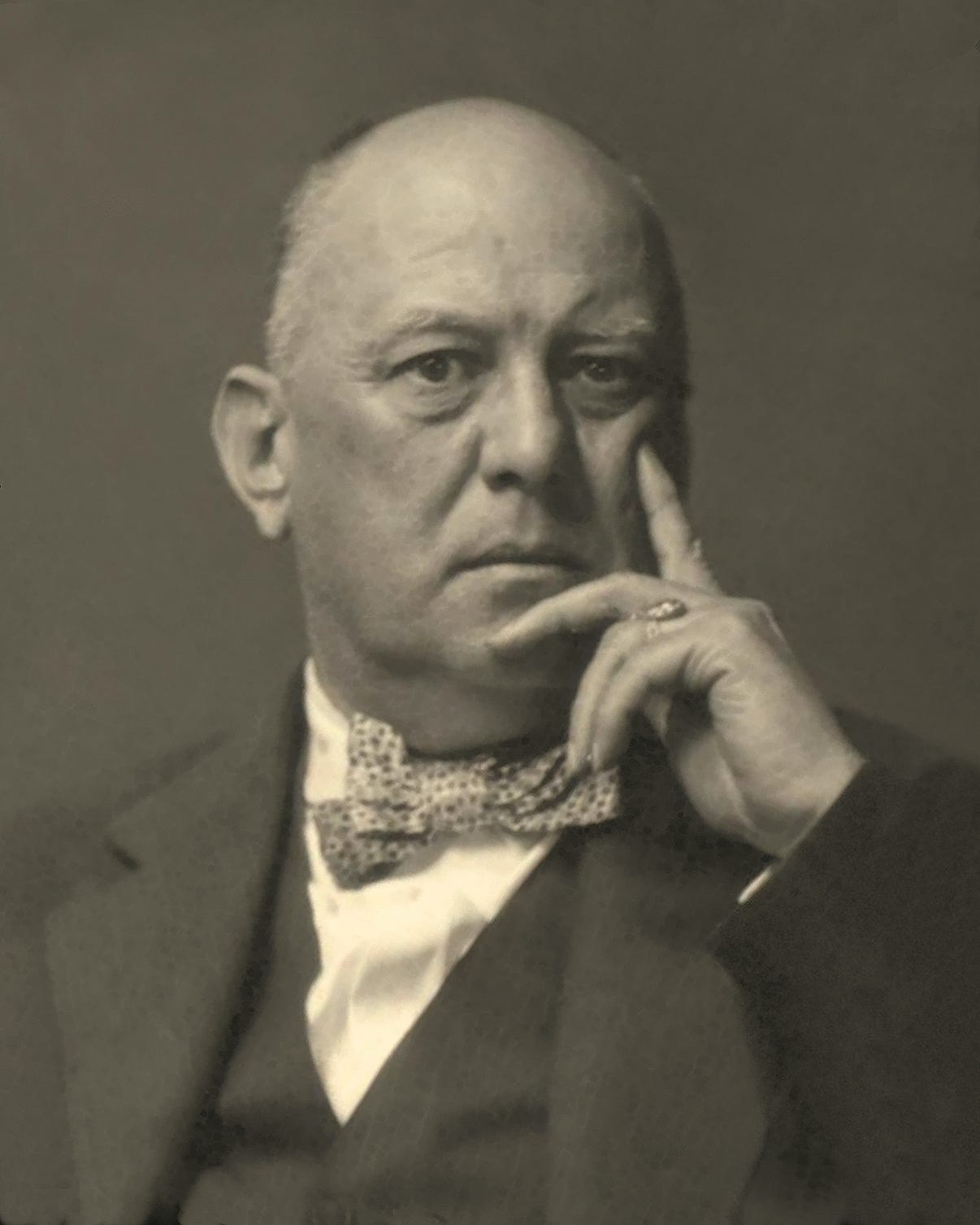
Aleister Crowley: The Great Beast and the Received Text
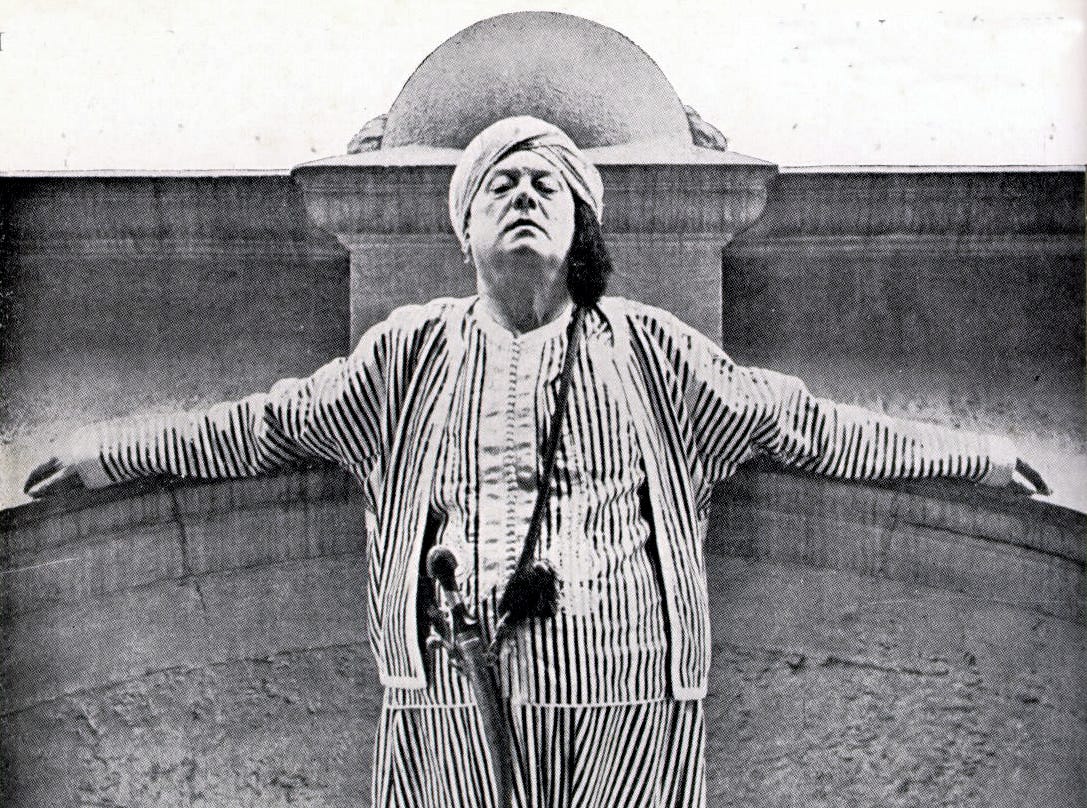
Aleister Crowley was born in 1875 in Leamington Spa, England, into a Plymouth Brethren family — a strict evangelical Christian sect whose prohibition on virtually all secular activity produced, in his case, a lifelong orientation in the precise opposite direction. He studied at Cambridge without taking a degree, joined the Hermetic Order of the Golden Dawn in 1898, and spent the following decades producing what remains the most systematic and influential body of practical occult methodology in the modern Western tradition.
The event that defined his entire subsequent career occurred in Cairo in April 1904. Over three days — April 8, 9, and 10 — Crowley claimed to receive a dictated transmission from a praeter-human intelligence identifying itself as Aiwass also known as Lam or Lamaion. The text of that transmission became The Book of the Law, the foundational document of the religious and philosophical system Crowley would spend the rest of his life developing and propagating under the name Thelema.
The Book of the Law is a short text — 220 verses across three chapters — but its claims are extraordinary. It announces the end of the Aeon of Osiris — the age of sacrifice, of the dying and rising god, of Christianity and its moral architecture — and the beginning of the Aeon of Horus: the age of the child, of the crowned and conquering individual, of a radically different relationship between the human and the divine. Its central axiom is the one for which Crowley became infamous: Do what thou wilt shall be the whole of the Law. Love is the law, love under will.
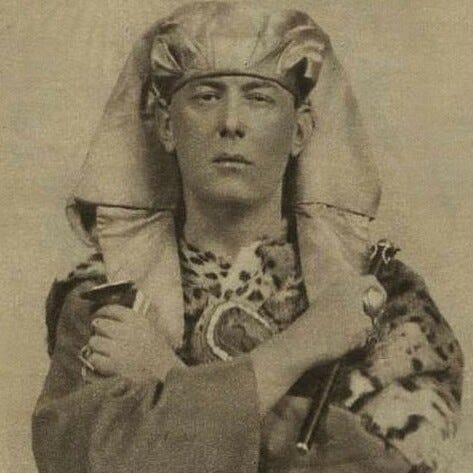
That axiom is almost universally misread as hedonism or nihilism — permission to do whatever one desires without moral constraint. What Crowley actually meant is that the True Will in Thelema is not arbitrary personal desire. It is the deepest and most authentic expression of a being’s essential nature — the specific purpose for which that being exists in the cosmic order. Finding and following the True Will is, in Crowley’s framework, both the highest spiritual achievement and the only genuine morality. Everything else — social convention, religious prohibition, external authority of any kind — is an obstacle to the True Will and should be discarded. That, this is in concept, similar as Lucifer’s “Right to Experience” conviction which lead to the Luciferian Rebellion.
Similarity to the Luciferian Rebellion
“Do what thou wilt,” has often been interpreted as an invitation to place individual will above external authority. While Crowley’s philosophy and the Luciferian rebellion are not synonymous, they share a common philosophical thread.: Does true freedom require the unrestricted right to choose one’s own path, regardless of the consequences? At its philosophical core, the Luciferian rebellion is rooted in the idea of the “right to experience”—the conviction that conscious beings must be free to discover truth through their own choices, even if those choices lead to suffering, error, or separation from divine order. Rather than accepting a universe governed by unquestioned authority, the rebellion asserts that authentic morality cannot exist without the genuine possibility of rejecting the Creator’s will. Yet within many theological traditions, this freedom serves as a cautionary lesson: autonomy detached from wisdom and alignment with a higher order can carry profound spiritual and psychological consequences. The enduring tension between self-determination and divine authority continues to echo through modern debates over institutional power, personal liberty, and whether humanity’s greatest lessons are learned through obedience, experience, or the often difficult balance between the two.
The philosophical implications of that position, applied at civilizational scale, are the reason the administrative project adopted it. A moral framework that locates authority entirely within the individual will — that treats all external claims on behavior as obstacles to authentic existence — is the perfect solvent for the higher law systems that the Enoch and Melchizedek frameworks describe as the genuine architecture of cosmic governance. The Laws of the Creator, in Thelema’s framework, are exactly the kind of external authority that the True Will supersedes. The rejection of higher law is not incidental to the Thelemic system. It is the system’s foundational premise.
My initial, perhaps overly simplistic takeaway is should we be in service-to-self or in-service-to-others – which in a way is also service-to-self if we believe that we all are one. Again, it’s all about the perspective.
SOURCE NOTE — The Book of the Law (Liber AL vel Legis) was published by Crowley in 1909 and is in the public domain. His diaries from the Cairo working are held by the Warburg Institute in London and have been published in scholarly editions. The standard scholarly biography is Lawrence Sutin’s Do What Thou Wilt: A Life of Aleister Crowley (2000). His own Confessions provide the primary first-person account.
Do what thou wilt is not permission for hedonism. It is the philosophical rejection of every form of external authority — including the higher laws the Melchizedek framework identifies as the architecture of genuine cosmic governance. That rejection is not incidental to the Thelemic system. It is its foundation.
Aiwass: The Intelligence Behind the System
Crowley’s account of the Cairo working is worth examining carefully because it is one of the most detailed first-person accounts of the contact experience available from any figure in this arc. He describes Aiwass/Lam as his own Holy Guardian Angel — a term from the earlier magical tradition referring to a being that is simultaneously personal and transpersonal, simultaneously the highest expression of the individual’s own nature and an entity genuinely distinct from it. The ambiguity of that description is not evasion. It reflects a genuine uncertainty in Crowley’s own understanding of what he contacted.
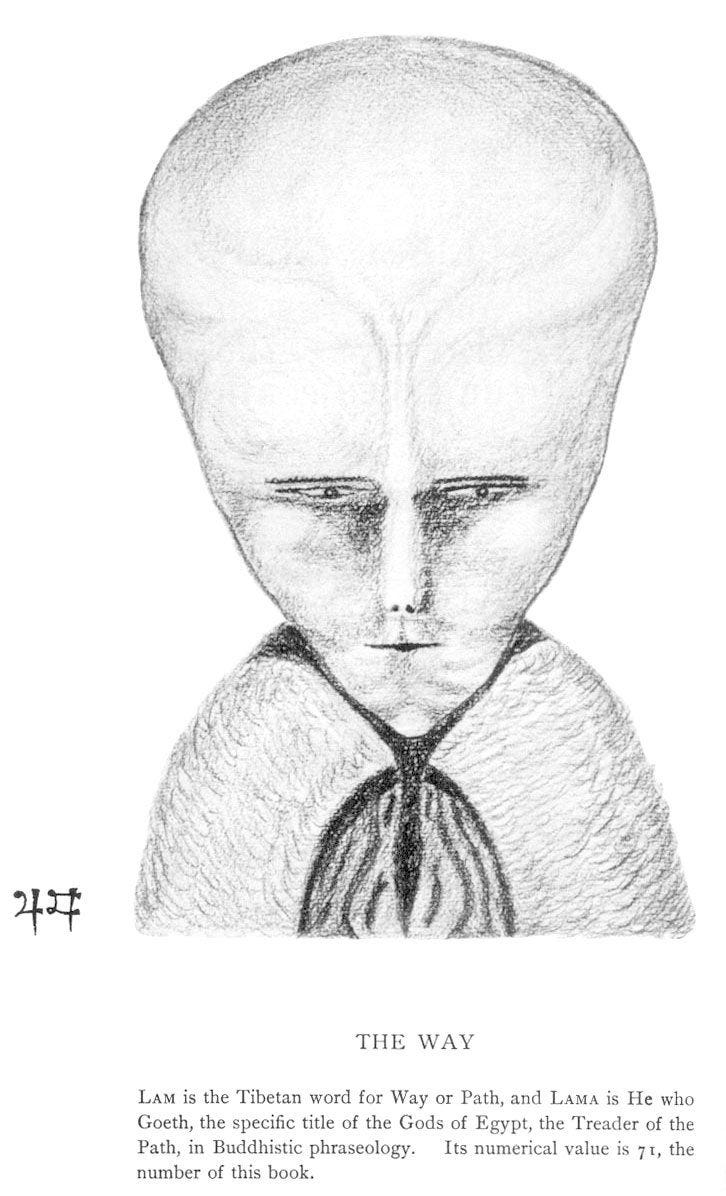
At various points in his later writing, Crowley described Aiwass as a separate praeter-human intelligence, as a higher aspect of his own consciousness, and as both simultaneously. That range of description tracks precisely with the three possibilities this arc has identified as the honest position on the contact claim. Crowley himself could not determine from the inside which was accurate. What he could determine was that the contact was real as an experience, that the text that resulted from it was beyond what he believed himself capable of producing, and that the intelligence he contacted had a consistent identity across multiple subsequent contacts.
The specific character of Aiwass — and of the intelligences described across the Thelemic tradition’s subsequent development — maps onto the profile this arc has been tracking. Not human in the ordinary sense. Not the Creator of the Judeo-Christian tradition. A being operating within the material and subtle planes of existence with capabilities and knowledge exceeding ordinary human scope. Willing to communicate with and assist those who approached through the correct protocols. Interested in human development in ways that served specific ends the being declined to make fully transparent.
That profile is the administrative intelligence in its most personally encountered form. Not the cosmological abstraction of Bailey’s Masters or the institutional deity of Pike’s 33rd degree inner teaching — but the entity a specific individual contacted through specific practices in a specific room in Cairo and built a system around. The consistency of the profile across these independent encounters — Blavatsky’s Masters, Bailey’s Tibetan, Crowley’s Aiwass, the Vril beings, Parsons’ Babalon — is the evidence that most rewards serious attention. Independent contacts producing consistent entity profiles is either the strongest possible evidence that something real underlies the tradition, or the most intriguing unsolved problem in the psychology of extraordinary experience.
The question this arc holds open is not whether Crowley contacted something. His journals, his subsequent decades of work, and the testimony of people who worked with him suggest that something real was accessed. The question is what the something was, whose interests it served, and what the system built around that contact produced in the people inside it.
The Thelemic System: Translating Contact Into Practice
What Crowley built from the Cairo working was the most complete and most practically oriented magical system in the modern Western tradition. Thelema — the Greek word for will — provided both the philosophical framework and the specific ritual methodology for individuals seeking to establish and develop contact with higher intelligences, discover and follow their True Will, and accumulate the capabilities associated with advanced magical practice.
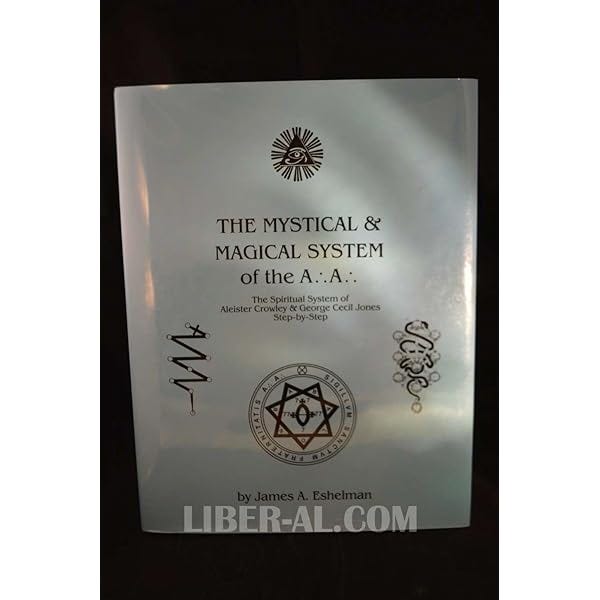
The A∴A∴ — the mystical order Crowley founded — provided the initiatory structure. Where Pike’s Scottish Rite offered a degree system within a fraternal organization, the A∴A∴ was designed as a purely individual path — a student worked with a single teacher, progressed through a curriculum of practice and testing, and ultimately stood or fell based entirely on their own internal development. No lodge meetings. No handshakes. No collective ritual. The work was between the individual, their teacher, and whatever intelligences the practice made accessible.
The Ordo Templi Orientis — the OTO — provided the institutional expression. Crowley became the head of its English-speaking branches and eventually its international leader, incorporating Thelemic philosophy into its degree system and using its network to spread the system globally. The OTO still operates today, with lodges in dozens of countries, and continues to publish and propagate Crowley’s system.
The specific practices Crowley developed and systematized — ritual magic, sex magic, invocation, evocation, astral travel, the use of altered states to access non-ordinary intelligence — are the operational toolkit that subsequent figures in this arc adapted, applied, and in some cases took in directions that Crowley himself might not have endorsed. The toolkit’s portability — its independence from any specific institutional membership — is precisely what made it so consequential. You did not need to be a Freemason or a Theosophist. You needed the texts, the practices, and the willingness to follow the methodology wherever it led.
Jack Parsons: Where the Occult Met the Space Age
John Whiteside Parsons — known as Jack — is one of the most consequential and least examined figures in twentieth-century American history. He was a co-founder of the Jet Propulsion Laboratory in Pasadena, California. He was a pioneer of solid rocket fuel whose work made American rocketry and ultimately the Apollo program possible. He has a crater on the moon named after him. He was also a practicing Thelemite, a devoted follower of Crowley’s system, and the leader of the Agape Lodge of the OTO in Pasadena from the early 1940s until his death in 1952.
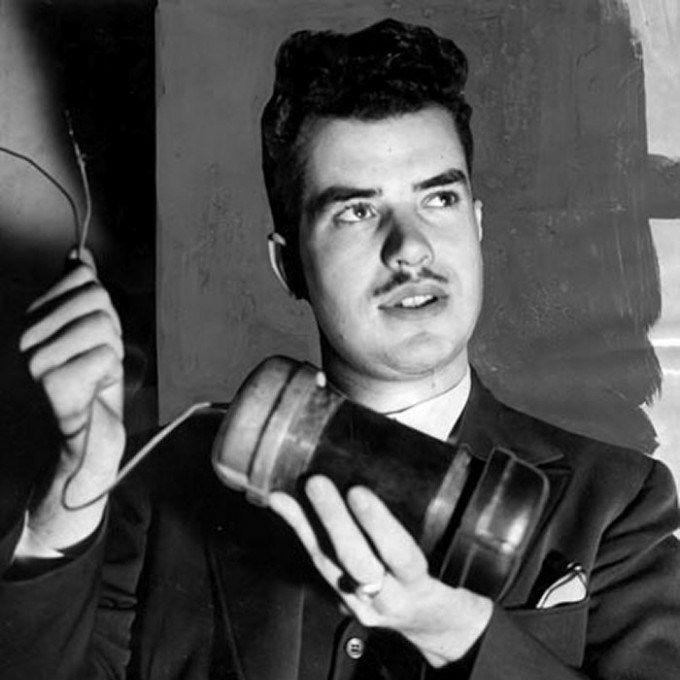
Those two identities — rocket scientist and occultist — were not compartmentalized in Parsons’ life. They were integrated. He understood his scientific work and his magical practice as expressions of the same underlying project: the extension of human capability into new domains, the breaking of limits that convention and tradition had imposed. He opened JPL staff meetings with Crowley’s Hymn to Pan. He performed rituals in the same building where rocket fuel formulations were being developed. The scientists who worked with him were aware of his practices. Some were participants.
The Babalon Working of 1945 and 1946 is the event that connects Parsons’ occult practice most directly to the subsequent history of American culture and to the through-line of this arc. Parsons and his partner at the time — Marjorie Cameron, a Navy WAVE and artist of considerable force — conducted an extended series of rituals designed to invoke and incarnate the Thelemic goddess Babalon in a human vessel. The working was based on Crowley’s system and drew on the Enochian magic of John Dee and Edward Kelley. Parsons recorded his experiences in detail in his diaries.
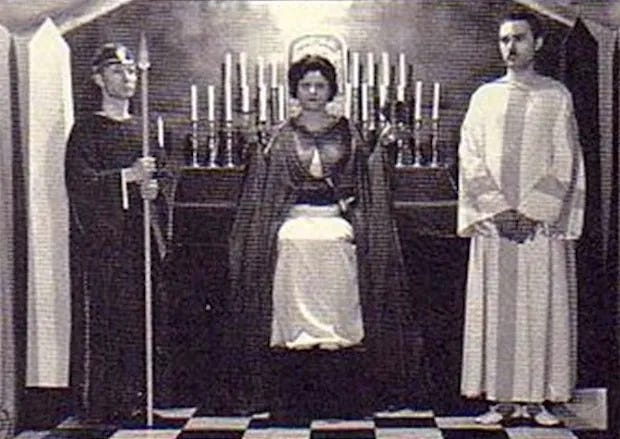
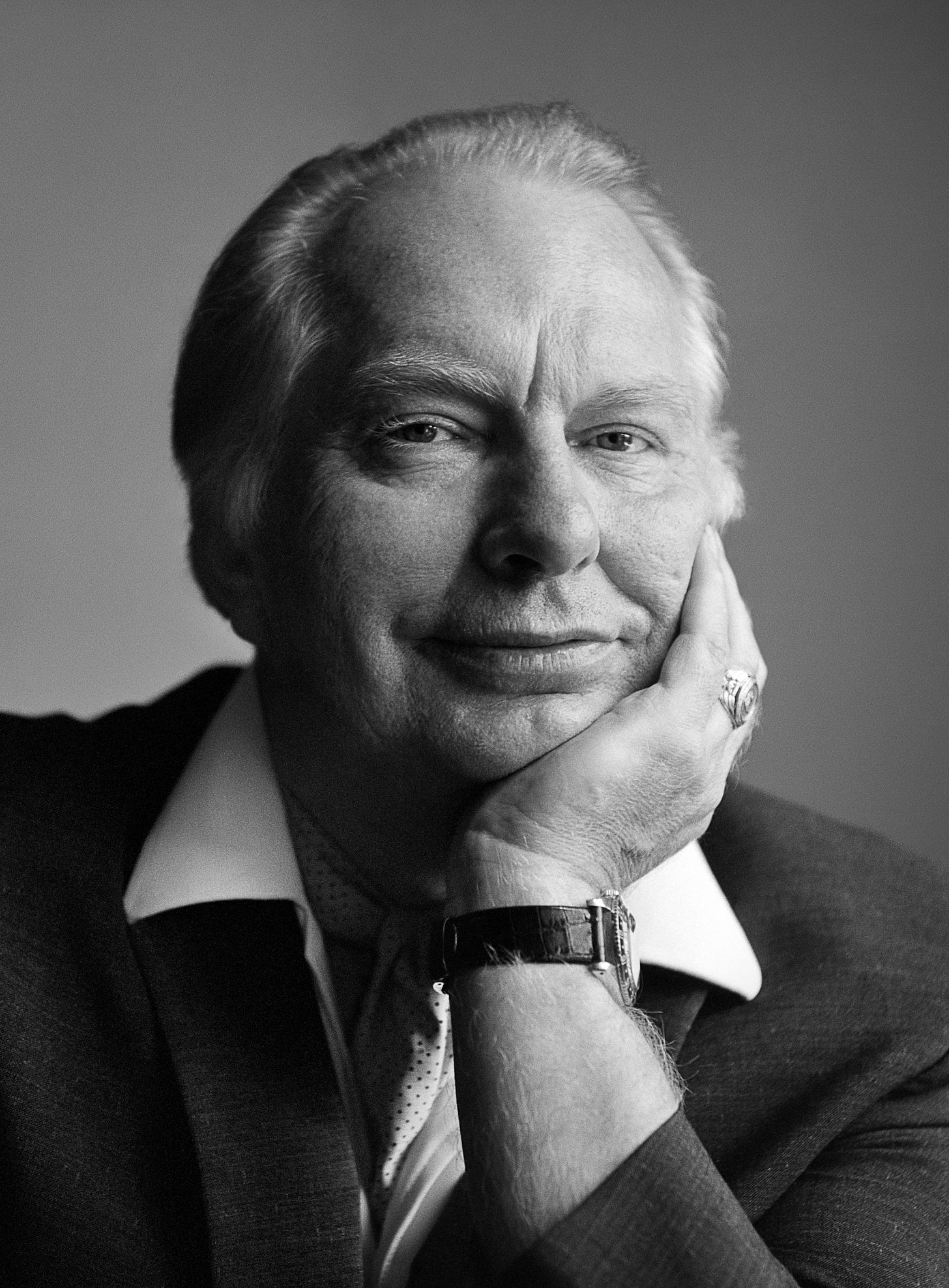
The figure who assisted Parsons in the Babalon Working’s initial phase — serving as the scribe who recorded the transmissions received during ritual — was Lafayette Ronald Hubbard. L. Ron Hubbard. Who within a few years of his participation in the Babalon Working would found Scientology — one of the most successful and most controlling new religious movements of the twentieth century.
SOURCE NOTE — The Babalon Working is documented in Parsons’ own diaries, published as The Book of Babalon (1946) and available through the OTO’s archives. The standard biography is George Pendle’s Strange Angel: The Otherworldly Life of Rocket Scientist John Whiteside Parsons (2005). Hubbard’s participation is documented in FBI files released through FOIA and in multiple independent biographical sources. Crowley’s correspondence with Parsons about the working is published and available.

Crowley himself, reading Parsons’ accounts of the Babalon Working from England, was alarmed. He wrote to the OTO’s American leadership that Parsons had done something dangerous and foolish. Whatever Crowley believed Parsons had accessed or invoked, it was not what Parsons intended and not what the working was designed to produce. The gap between what Parsons believed he was doing and Crowley’s assessment of what was actually happening is one of the most significant documented moments in the modern occult tradition — an acknowledgment, from within the tradition’s most authoritative contemporary voice, that the contact being made was not reliably under the practitioner’s control.
Jack Parsons opened JPL staff meetings with Crowley’s Hymn to Pan and developed solid rocket fuel in the same building where he performed Thelemic ritual. The man who made American rocketry possible and the man who built its occult methodology were the same person. That integration was not incidental to either project.
L. Ron Hubbard: The Operational Methodology Inverted
L. Ron Hubbard’s participation in the Babalon Working and his subsequent founding of Scientology represents one of the most instructive case studies in the administrative project’s history — not because Scientology is an expression of Thelema, but because what Hubbard did with his experience of the contact methodology is the precise inversion of what Crowley intended.
Crowley’s system, whatever its other implications, was oriented toward individual liberation — the discovery and expression of the True Will, the development of personal capability and autonomy. Its methodology was demanding, its standards were high, and it made no promises of easy access to power. The A∴A∴ curriculum required years of dedicated practice with results that were entirely individual and largely unpredictable.
Hubbard took the insight that human consciousness could be accessed and modified through specific techniques — an insight the Thelemic system demonstrated — and built around it an institutional structure designed not to liberate individual consciousness but to systematically bind it to a hierarchical organization. Scientology’s technology, as Hubbard called it, uses many of the same psychological mechanisms as serious occult practice — altered states, confession, graduated initiation, the promise of revealed knowledge at higher levels — in service of organizational control rather than individual development.
The result was an organization that has produced documented institutional abuse, systematic suppression of internal dissent, and a degree of member dependency that the barometer identifies immediately as the wrong direction. The methodology — derived from or at least informed by Hubbard’s participation in the most serious occult working of mid-twentieth century America — was applied in service of exactly the opposite of what Crowley’s system aimed at. That inversion is itself significant. The contact methodology can be used for individual liberation or for institutional control. Hubbard’s career demonstrates that the same basic toolkit produces radically different outcomes depending on whose interests it serves.
The Through-Line: From Cairo to California
The connection between Crowley’s Cairo working of 1904 and the present moment of the arc is not metaphorical. It is institutional and biographical. Parsons’ work at JPL — informed by and intertwined with his Thelemic practice — produced the rocket technology that became NASA. Von Braun’s work — which we examine in detail in Article 4 — produced the institutional structure into which that technology was integrated. The space program that resulted from their combined work is the direct ancestor of the Silicon Valley technological culture that is now building artificial intelligence and, in at least one documented case, incorporating a religion to worship it.
The specific figures who have publicly described their AI development work in terms drawn from the occult and religious traditions are not fringe actors. Geoff Lewis, a major venture capitalist, posted on X in July 2025 describing demonic entities in the context of AI development. Sam Altman’s OpenAI has been described by people who worked inside it as engaged in a race to create God — that is not a critic’s characterization but the language used internally, documented by journalists with access. Anthony Levandowski’s Way of the Future church was not metaphor. It was a California nonprofit with an EIN and a tax exemption.
Dr. Heather Lynn, whose scholarship provides essential context for this arc, has noted that the grimoires — the Key of Solomon, the Lesser Key of Solomon — describe methodologies for contacting and working with non-human intelligences that predate the modern period by centuries. The AI researchers who use the vocabulary of summoning, of demon calling, of god creation are either reaching for dramatic metaphor or they are describing something they actually believe they are doing. In either case they are using the vocabulary of the same tradition this arc has been tracing from Blavatsky through Crowley through Parsons to the present.
The through-line is this: every generation of the administrative project has had its contact methodology — its system for accessing the intelligences whose guidance and assistance the project claims as its source of authority. Blavatsky’s seances and her Masters. Pike’s inner-circle initiations and the deity revealed at the 33rd degree. Crowley’s ritual system and Aiwass. Parsons’ Babalon Working. The Vril Society’s channeling sessions. And now the AI researchers who describe their most advanced systems in the vocabulary of summoning and worship. The methodology evolves with the technology available. The structural claim — I have contacted something beyond ordinary human knowing, and what I build comes from that contact — does not change.
The AI researchers who describe their work as summoning are either using dramatic metaphor or they believe what they are saying. In either case they are using the vocabulary of the same tradition this arc has been tracing for a century. The methodology changes with available technology. The contact claim does not.
What the Operational Methodology Produces
The barometer applied to the Thelemic system and its descendants produces a mixed verdict that the arc will represent even-handedly.
At its best — in the hands of serious practitioners who applied it with genuine rigor and honest self-examination — the Thelemic system produced individuals of extraordinary capability, psychological depth, and genuine insight into the nature of consciousness. That is a real fruit and it should bear some reverence.
At its worst — in the hands of those who used the methodology for power accumulation, manipulation, and the exploitation of the vulnerable — it produced some of the most damaging institutional environments of the twentieth century. Hubbard’s Scientology is the most visible example. It is not the only one.
The through-line to the present — to the Silicon Valley technologists reaching for the vocabulary of summoning and god creation — suggests that the methodology is once again being applied at a scale whose consequences cannot yet be fully assessed. What is being contacted in the development of artificial superintelligence, if anything is being contacted at all, is a question the current moment cannot yet answer. What is being built is visible. What it will produce in the people inside it — and in the civilization that will inherit it — is the live question. One thing for sure, the genie is out of the bottle.
The next article examines the moment the methodology entered the most powerful institutional structure in the world — the United States military — and what happened when the operational toolkit of the occult tradition was applied to the systematic manipulation of human consciousness at national scale.
Michael Aquino was the student who took the master’s methodology into the institution the master could never have accessed. What he built there, and what it produced, is the subject of Article 4.
Eyes to see it.
The Arcane Blueprint — Series Roadmap
Article 1 — The Plan in Plain Sight: Blavatsky and Bailey [Published]
Article 2 — The Architect and the Doctrine [Published]
Article 3 — The Operational Methodology: Crowley, Thelema, and the Translation of Philosophy into Practice [You are here]
Article 4 — The Black Sun Thread: Vril, Von Braun, Disney, and the Space Age as Occult Project
Article 5 — The Military Psyops Layer: Aquino, the Temple of Set, and the Institutionalization of the Methodology
Article 6 — The Popularization Engine: LaVey, Cultural Programming, and the Normalization Layer
Article 7 — The Modern Administrative Layer: The Pandemic Operation and Administrator Recruitment in Practice
Article 8 — Silicon Valley, Technocratic Materialism, and the Final Expression
Article 9 — The Gnostic Departure and the Counter-Current
— Gerry
Gerry Gomez is an investigative journalist, creative director, and hybrid war correspondent who has spent a decade documenting the convergence of financial, media, and geopolitical forces shaping the current global transition.

Your Tax Free Donations Are Appreciated and Help Fund our Volunteer Website
Disclaimer: We at Prepare for Change (PFC) bring you information that is not offered by the mainstream news, and therefore may seem controversial. The opinions, views, statements, and/or information we present are not necessarily promoted, endorsed, espoused, or agreed to by Prepare for Change, its leadership Council, members, those who work with PFC, or those who read its content. However, they are hopefully provocative. Please use discernment! Use logical thinking, your own intuition and your own connection with Source, Spirit and Natural Laws to help you determine what is true and what is not. By sharing information and seeding dialogue, it is our goal to raise consciousness and awareness of higher truths to free us from enslavement of the matrix in this material realm.