EN
EN FR
FR

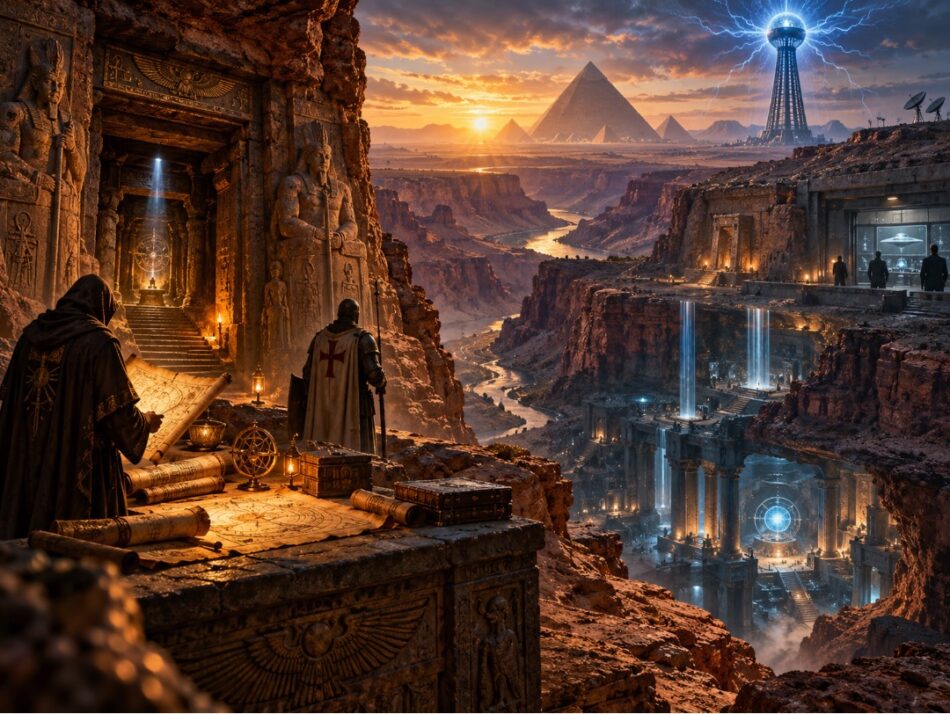
Who Were the Guardians of Knowledge, and What Have They Been Protecting?
Rev. Kat Carroll
I was both inspired and dismayed by a recent documentary. Inspired by the possibilities it presented, but dismayed by the sheer volume of information, much of which, if true, could rewrite what we know about history.
After two hours and twenty-five minutes of extraordinary claims, I found myself wondering how anyone could possibly investigate them all and find corroborating evidence. Perhaps that was part of the problem. There was so much to absorb that separating the good from the bad, the questionable, and the downright unbelievable became a challenge.
Rather than follow every trail, I decided to focus on what I felt was most relevant to humanity today.
Here’s the documentary if you’d like to explore it yourself:
The Last Guardians: Templars, Atlantis and the Future of Mankind
 The discussion began with the Knights Templar and their efforts to preserve and conceal ancient knowledge, sacred teachings, and possibly remnants of technology from Atlantis. The idea was intriguing, but as the conversation wandered through an ever-expanding collection of mysteries, I began losing the thread.
Of course, I’ve been known to dive down a few rabbit holes myself, something my regular readers may have noticed! Still, the documentary left me with some important questions.
What knowledge did earlier civilizations consider so important that they preserved it for generations they would never meet? And are we listening to what they were trying to tell us?
Throughout history, sacred texts, oral traditions, Mystery Schools, and religious orders have preserved teachings about forgotten civilizations, extraordinary human abilities, spiritual wisdom, scientific discoveries, and catastrophic events. Some accounts may be allegorical, others historical, or perhaps a combination of both.
The guardians are not defined by titles or public recognition but by their commitment to protect what is sacred, create safety for growth, and uphold truth even when it is difficult. This role blends service, integrity, and conscious leadership, often emerging after deep study and initiation.
Were these teachings intended simply to preserve the past, or to prepare future generations for challenges humanity might encounter again?
What was the motivation of those who chose to guard information?
Perhaps they feared that valuable knowledge would be lost through war, persecution, or another catastrophe. Perhaps they recognized that certain discoveries, particularly powerful technologies, could be misused by those lacking the wisdom or responsibility to handle them, such as the atomic bomb. Oppenheimer himself later felt terrible for his part and exclaimed, “Now I am become death, the destroyer of worlds”.
Or could secrecy have served another purpose: maintaining power and influence by controlling who had access to that knowledge? These possibilities needn’t be mutually exclusive. We already understand that control over a certain technology has often been for personal gain or exploitation.
But if ancient wisdom was preserved for the benefit of future generations, shouldn’t humanity eventually have access to it? I wouldn’t want to learn how to hunt, grow crops, or find water AFTER the grid should fail. We would need to possess that information before a disaster, or to prevent a man made disaster. And those are just the basics. What about higher spiritual knowledge about healing, such as the works of Jesus?
If that knowledge could help us grow, rediscover abilities we may have forgotten, or prevent us from repeating the devastating mistakes of the past, it should be open sourced for those willing to research or take classes.
Movies and Esoteric Knowledge
 I’m reminded of movies that explore secret societies, mystical teachings, and important information hidden from the public. For example, The Da Vinci Code, with its secrets surrounding the Holy Grail and the history of Christianity, and Angels & Demons, about a secret Illuminati society threatening to destroy the Vatican with antimatter stolen from CERN, both starring Tom Hanks.
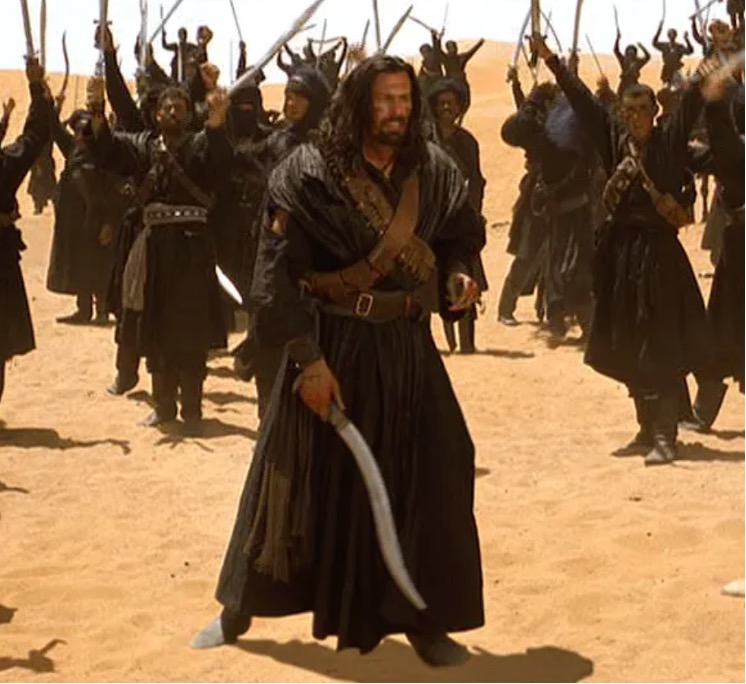
And there’s the more adventurous Raiders of the Lost Ark, starring Harrison Ford, and The Mummy, where the Medjai, an ancient order of guardians were entrusted to watch over the ruins of Hamunaptra (the City of the Dead) to prevent the resurrection of the evil High Priest Imhotep.
Some of these stories may be closer to historical truths than we’d imagine, cleverly wrapped in entertainment. After all, fiction often draws inspiration from actual events, ancient traditions, and historical mysteries.
And these are only a few examples!
Interestingly, The Da Vinci Code draws upon one of the more remarkable modern examples of manufactured history.
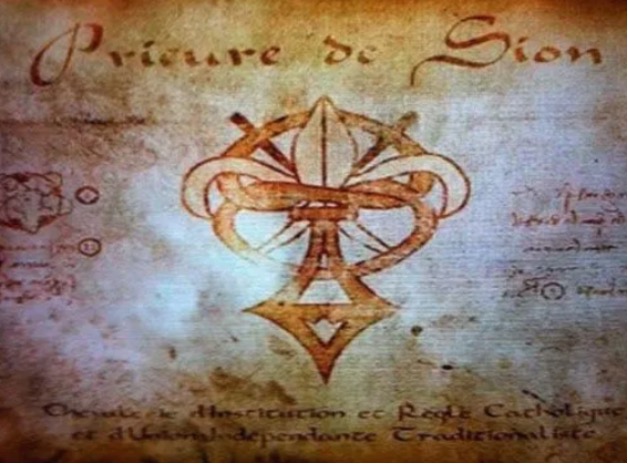 The Priory of Sion was a real organization founded in France in 1956 by Pierre Plantard. However, its supposed origins dating back to the Crusades were fabricated. During the 1960s, documents supporting its alleged ancient history were placed in France’s National Library, giving the story an appearance of historical credibility.
Those documents were subsequently exposed as forgeries, but the legend continued to spread through books and eventually became central to The Da Vinci Code.
I think the intriguing question isn’t whether Hollywood knows the secrets, but why stories about hidden knowledge have remained so captivating across generations.
Perhaps we’re drawn to the possibility that humanity has forgotten something important.
It raises another important question: If genuine knowledge can be concealed or lost, how easily can invented history be introduced and accepted as ancient truth?
And that brings me back to the documentary. Some of the claims are so different from the history we’ve been taught that they’re difficult to accept without further investigation.
Timothy Hogan is a Freemason, author, and lecturer who identifies himself as a modern Templar Grand Master. His documentary presents some extraordinary accounts of ancient discoveries, hidden artifacts, and knowledge allegedly preserved through secret traditions.
How much is historical fact, how much is interpretation, and how much remains unverified? I’ll leave that for interested readers to investigate and decide for themselves.
For me, the documentary raised a larger question about the preservation of knowledge and whether information intended to benefit humanity should remain accessible only to a select few.
The Mystery Schools: Guardians of Ancient Wisdom
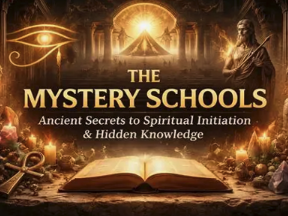 Long before the Knights Templar, ancient civilizations had their own traditions of preserving spiritual teachings and initiating those considered ready to receive them.
Among the best known were the Eleusinian, Orphic, Dionysian/Baccic, Isis, and Mithraic mysteries. Although their practices differed, they shared an emphasis on initiation, sacred rituals, and explorations of humanity’s relationship with the divine, the nature of existence, and, in some cases, life after death. Want to learn more? Thalira.com has more details than I can dive into here (unless you want yet another rabbit hole!). The Ancient Mystery Schools: Initiation, Death, and Rebirth
The ancient Orphic tradition offers an intriguing perspective on humanity’s dual nature. In one interpretation of its mythology, humans inherit both the material nature of the Titans and a divine spark associated with Dionysus. Could this ancient teaching about duality suggest that spiritual awakening isn’t about becoming something entirely new, but remembering the divine essence that has always been part of us?
Secrecy was often required of initiates. But why? Was it to protect the sacred nature of the experience, prevent misunderstanding or misuse, or maintain the authority of those entrusted with the teachings?
As Christianity became dominant in the Roman Empire, many older religious practices were suppressed. Laws enacted under Emperor Theodosius I in the late fourth century helped bring an end to public pagan worship. Yet ideas associated with earlier traditions continued to appear in philosophical, mystical, and esoteric writings.
Even the missing years of Jesus, between his childhood and the beginning of his public ministry, have inspired speculation. Some traditions suggest he traveled to Egypt, India, or other centers of spiritual learning. Although no reliable historical documentation establishes those journeys, the stories continue to raise questions about possible exchanges of spiritual knowledge among ancient cultures.
Centuries later, the Rosicrucian manifestos, beginning in 1614, described a mysterious brotherhood devoted to spiritual understanding, healing, and the reform of society. Their teachings drew upon Christian mysticism, alchemy, and esoteric philosophy. Today, Rosicrucian organizations continue to study and teach variations of these traditions. My Grandmother was very interested in their teachings which, no doubt, had a big influence over my interests and studies.
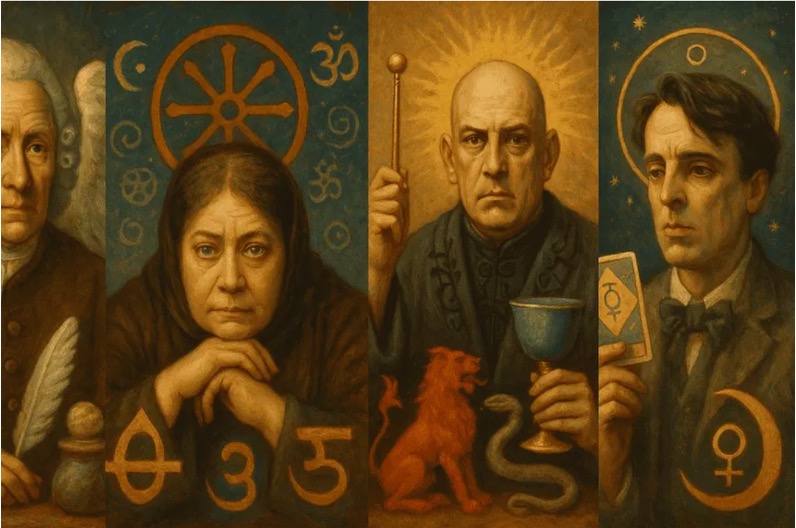 In 1875, Helena Petrovna Blavatsky and her associates founded the Theosophical Society, bringing Eastern and Western spiritual philosophies together in a renewed search for ancient wisdom. Its stated objectives included investigating unexplained laws of nature and the latent powers of humanity.
Once again, we encounter the suggestion that human beings may possess capacities they have yet to fully understand or rediscover.
Whether these later movements preserved specific ancient teachings, reinterpreted them, or developed new understandings inspired by the past, they share a recurring theme: the pursuit of knowledge beyond the material world.
Perhaps the most important question is whether such wisdom was intended to remain the privilege of initiates or eventually become available to all humanity.
Gnosis or knowledge through experience, should be about the preservation, protection, control, and humanity’s right to seek knowledge. Not just to limit it.
Other traditions exploring sacred knowledge and spiritual transformation include Kabbalah, Hermeticism, Gnosticism, Sufism, Neoplatonism, and the Pythagorean tradition. Each developed its own approaches to spiritual knowledge, initiation, and understanding humanity’s relationship with the divine.
And here is a thought for the spiritual warriors in the crowd. While some were playing with Alchemy to turn lead into gold, others were working on their understanding of humanity, who we were, and how to return to those early days before the fall… when we were still –
Divine Beings.
Atlantis Rising
This is a concept I’ve been hearing and reading about more frequently in recent years. Interestingly, last year I had been thinking about finding a copy of Edgar Cayce’s book on Atlantis. Then, quite unexpectedly, there it was, sitting on a shelf where it didn’t belong, almost as though it had been waiting for me to find it. Another one of those curious synchronicities!
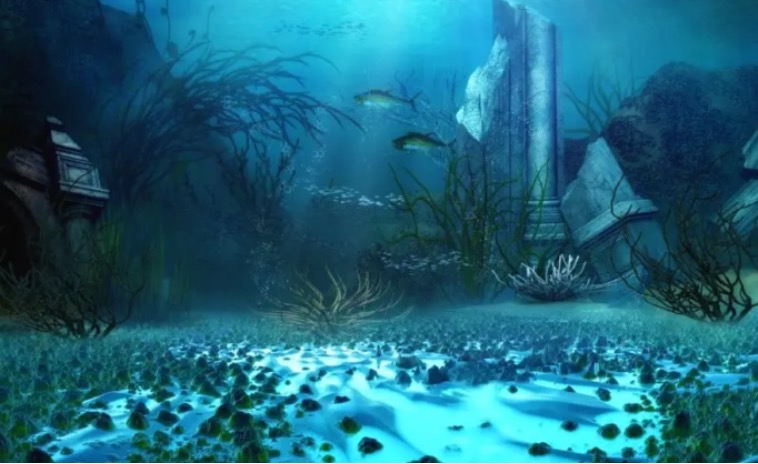
Atlantis itself is a fascinating subject, woven through ancient accounts, philosophical writings, and more recent channeled material, including the readings of Edgar Cayce. These accounts describe a remarkably advanced civilization, one whose knowledge and achievements may have extended far beyond what we understand today. And it raises an intriguing question: Could humanity be striving not simply to advance into the future, but to rediscover something it once possessed, both physically and spiritually?
Physically: There are submerged archaeological sites, ancient coastal settlements, and geological evidence that sea levels changed dramatically after the last Ice Age.
Under sea structures in the Bahamas, Florida, Cuba and near the Straits of Gibralter, have attracted considerable attention from alternative-history researchers. The Bimini Road, for example, is a real underwater formation whose unusual arrangement has prompted decades of debate over its origins. According to Plato, it was “beyond the Pillars of Hercules”
Spiritually: Suppose Atlantis represents a civilization that achieved extraordinary levels of development without acquiring the wisdom to use its capabilities responsibly. Perhaps that was its downfall, a warning preserved in ancient traditions and carried forward through generations.
A New Atlantis wouldn’t necessarily mean rebuilding those structures or recovering ancient machines. It might mean achieving something the legendary civilization failed to accomplish: combining knowledge, free will, compassion, and a deeper understanding of consciousness.
Sir Francis Bacon envisioned New Atlantis in an incomplete utopian novel which published posthumously in 1626. In New Atlantis, Bacon portrayed a vision of the future of human discovery and knowledge, expressing his aspirations and ideals for humankind. The novel depicts the creation of a utopian land where “generosity and enlightenment, dignity and splendor, piety and public spirit” are the commonly held qualities of the inhabitants of the mythical land.
 Technology could assist humanity during that transition without remaining the ultimate objective. Whether we continue using advanced technology or eventually rediscover natural abilities that might surpass it. However, personal responsibility must accompany our progress.
Technology was one of the major causes for the fall of Atlantis.
Perhaps our greatest advancement won’t come from creating more powerful technology, but from rediscovering our own potential—
our Divine nature.
Gregg Braden describes divinity not simply as an external deity to be worshipped, but as a sacred potential within us that allows humanity to transcend its perceived limitations.
For centuries, alchemists attempted to transform base metals, such as lead, into gold through a process known as chrysopoeia. But what if the greatest alchemical transformation was never about metals at all, but about awakening human consciousness, rediscovering our divine nature, and moving beyond the limitations we have come to accept?
And if knowledge has been preserved that could help humanity awaken, learn from the past, and create a wiser future, shouldn’t this be the time to share it?
What do you think?

If you would like to leave a comment or ask a question, scroll down past the donations and bio information, below the recent articles, until you find the leave a reply section. I love hearing from you!
Further Resources:
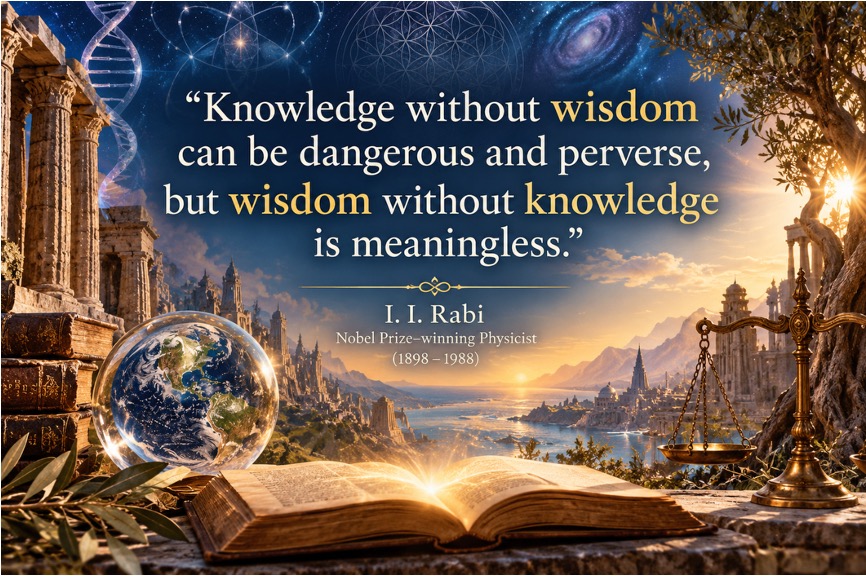
Man’s right to knowledge – and the free use thereof I.I. Rabi
The Guardian: Tim Hogan — Grand Master, Author, Initiatic Guide
RMM-049: “Hogan’s Heroes,” the Truth About Timothy Hogan’s “Templar” Lineages (and Chapter XXX TBOP)
Neo Templar Watch: a critical assessment of Hogan’s organization

Your Tax Free Donations Are Appreciated and Help Fund our Volunteer Website
Disclaimer: We at Prepare for Change (PFC) bring you information that is not offered by the mainstream news, and therefore may seem controversial. The opinions, views, statements, and/or information we present are not necessarily promoted, endorsed, espoused, or agreed to by Prepare for Change, its leadership Council, members, those who work with PFC, or those who read its content. However, they are hopefully provocative. Please use discernment! Use logical thinking, your own intuition and your own connection with Source, Spirit and Natural Laws to help you determine what is true and what is not. By sharing information and seeding dialogue, it is our goal to raise consciousness and awareness of higher truths to free us from enslavement of the matrix in this material realm.