EN
EN FR
FR

How They Radicalized a Generation — From Endowments to Your Child’s Classroom
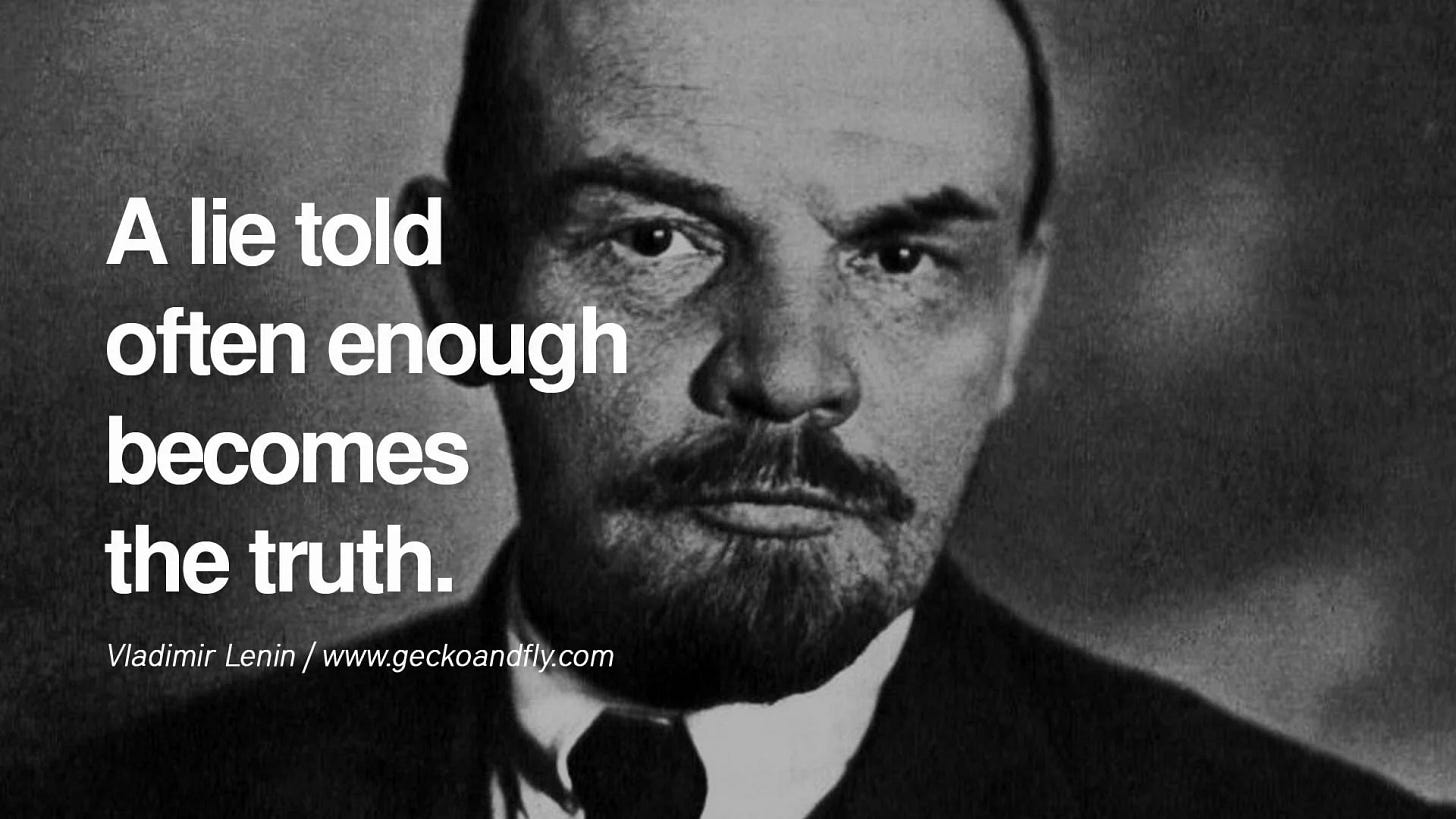
There is a phrase that has rattled around elite strategy circles for over a century: repeat the lie often enough, and it becomes fact. Most people assume that’s a political trick — a debate club tactic. What they don’t understand is that it is also an education policy.
The most efficient delivery mechanism ever devised for shaping what a generation believes is not the television. It is not social media. It is the classroom. And for the better part of five decades, the classroom has been systematically captured — not by force, not by conspiracy in the dramatic sense, but by something far more mundane and therefore far more durable: incentive structures.
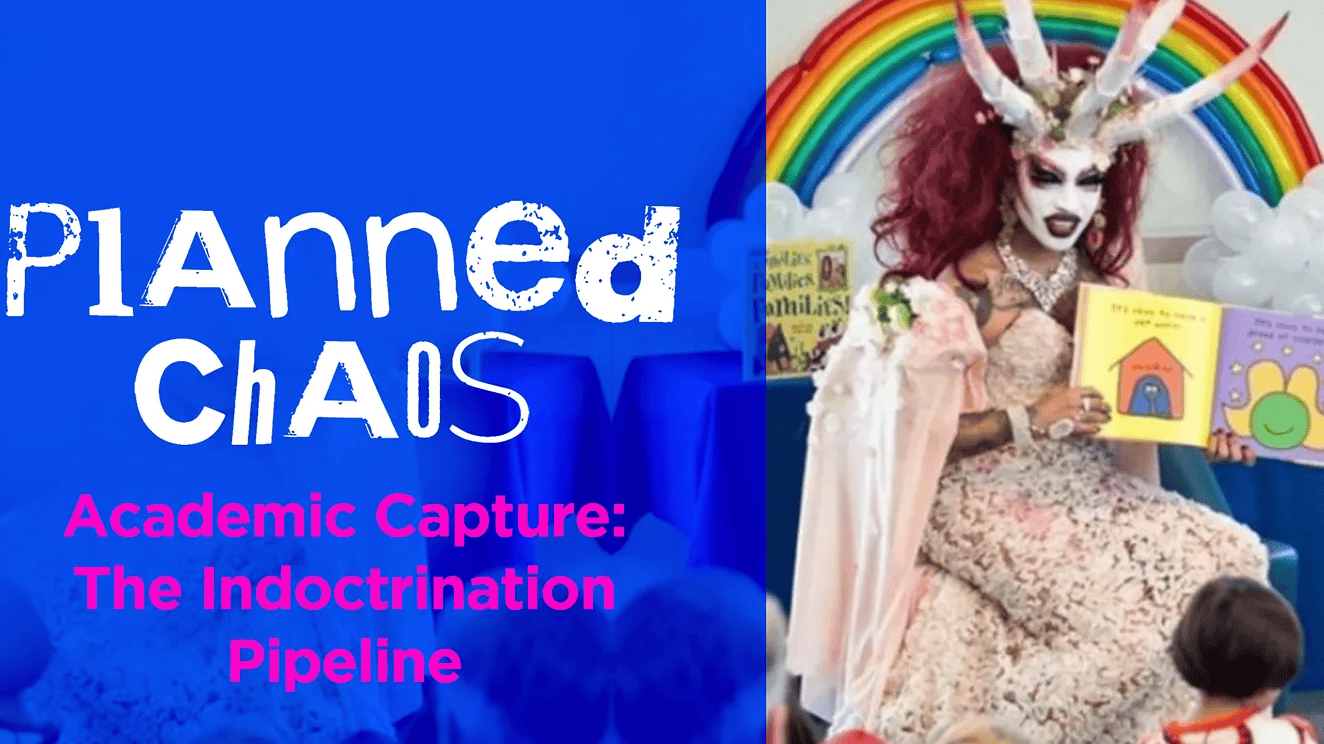
This is Article 15 in the Planned Chaos series. If you have been following along, you already understand how control of narrative equals control of perception — and how perception, when manufactured at scale, becomes what most people call reality.
What we have not yet examined in full is the engine room: the academic and educational apparatus that produces the believers, the activists, the compliant professionals, and increasingly, the children who cannot tell the difference between what they were taught and what they actually think.
That engine room is what we call the Indoctrination Pipeline. And it runs from the Ivy League all the way down to picture books for four-year-olds.
I. The Architecture of Capture: How Institutions Get Bought
Let’s start where the money lives, because that is always where the truth lives.
Yale University — one of the most prestigious institutions on earth — now employs more administrators than it has undergraduate students. In 2003, Yale had 3,500 administrators managing a student body of 5,307 undergraduates. By 2019, the undergraduate population had grown by only 600 students. The administrative class had grown by more than 1,500 — a nearly 45 percent expansion. Today, Yale’s managerial and professional staff outnumbers its faculty: over 5,000 administrators compared to fewer than 4,937 professors. The Chronicle of Higher Education found that Yale holds the highest manager-to-student ratio of any Ivy League university.
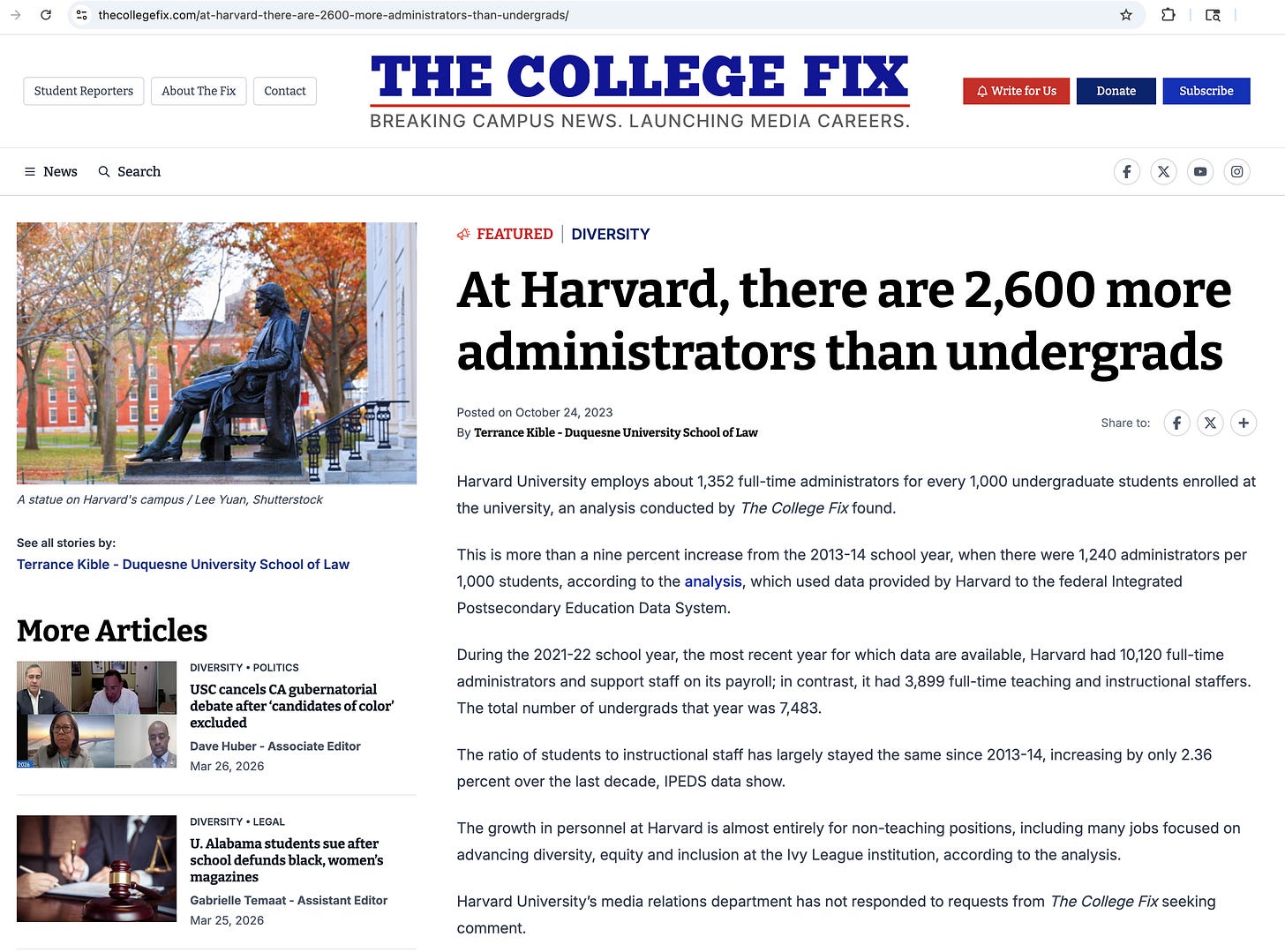
Harvard tells a similar story. In 2022, Harvard employed approximately 7,024 administrators — nearly three times its roughly 2,400 professors, lecturers, and instructors. Across the eight Ivy League schools, there are roughly six staff members for every ten students enrolled.
Ask yourself: why does a university need more managers than teachers?
The answer is not academic. It is political.
As Professor Paul Campos of the University of Colorado Law School has argued, the main driver of administrative bloat is not government regulation — that is the stated excuse. The real driver is the desire of administrators to accumulate power and influence within institutions. The more administrators, the more programs. The more programs, the more ideology. The more ideology, the more compliant the faculty, the students, and ultimately the graduates who flow into every sector of society.
This is funded, in large part, through endowments. Harvard’s endowment sits at roughly $49 billion. Yale’s at over $41 billion. These are not rainy-day funds — they are war chests that insulate institutions from market pressures, from donor dissent, and from accountability. When you do not need to answer to anyone for your operating budget, you can build whatever ideological infrastructure you like. And they have.
Endowments also create patronage networks. Fellowships, grants, research chairs, visiting professorships — all funded, all awarded, all gatekept. You do not get the fellowship if you challenge the framework. You do not receive the grant if your conclusions threaten the consensus. Independent thinkers wallow in obscurity, as your notes put it, while credentialed conformists ascend. The result is not a marketplace of ideas. It is a very expensive echo chamber.
II. The Credibility Machine: Science, Expertise, and Paid Propaganda
The capture of academia serves a second function beyond producing ideological graduates: it produces ‘credible sources.’ In an era of information overload, credibility is the most valuable currency in the world. And the academic-institutional complex has cornered the market on it.
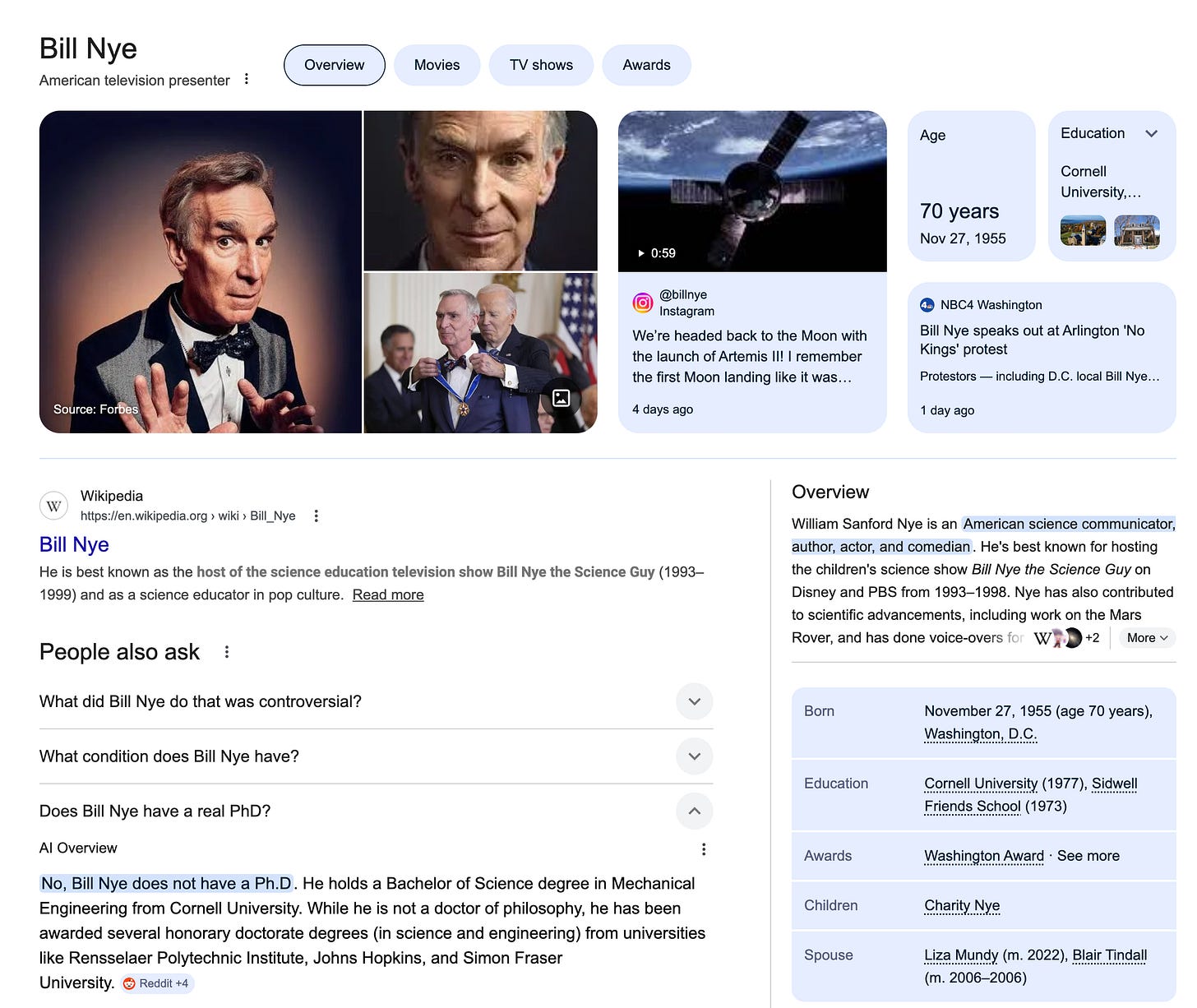
Think about the faces we are given as arbiters of science and reason. Bill Nye — a mechanical engineer by training, a children’s television personality by profession — became the American public’s most trusted voice on climate and gender policy. Neil deGrasse Tyson, gifted communicator that he is, became a political validator dressed in the costume of astrophysics. These figures are not corrupt in the obvious sense. They are something more useful: they are certified. They carry the imprimatur of institutional approval. That approval transforms their opinions into facts in the public mind.
The deeper mechanism is peer review — a system ostensibly designed to validate scientific rigor that has, in practice, become a closed loop. Academics cite academics from the same ideological ecosystem. Grant committees are staffed by the same class of people who receive grants. The sources validate each other. The system defines what counts as knowledge, who counts as an expert, and what questions are even permitted to be asked. Anyone operating outside that ecosystem — regardless of the quality of their thinking — is dismissed as fringe.
This is not accidental. It is a structural feature. Sun Tzu understood it: appear strong when weak, appear credible when propagandizing. The genius of laundering ideology through academic credentials is that the targets of the propaganda rarely realize they are being propagandized. They think they are being educated.
III. The Generational Targets: Millennials, Gen Z, and Gen Alpha in the Crosshairs
It is important to name generations correctly here, because the timeline matters.
Millennials — born roughly 1981 to 1996 — were the first cohort to move through a university system that had been substantially restructured around identity politics, diversity programs, and activist scholarship. They graduated into a job market shaped by HR departments staffed by the same graduates from the same programs. The ideological loop closed.
Generation Z — born roughly 1997 to 2012 — entered a K-12 system that had incorporated those university-born frameworks at every level, compounded by social media and celebrity culture that reinforced the same messaging outside school hours. This is the generation that saw teachers facilitate student walkouts during school hours — the author of these notes witnessed it firsthand a decade ago — as 12-year-olds were handed placards and told this was civic participation. It was, in fact, their first lesson in organized activism, delivered by the institution that was supposed to teach them math.
Generation Alpha — born 2013 onward — is being introduced to ideological content before they can read chapter books. This is not hyperbole. It is documented.
IV. Picture Books as Political Primers: What’s on the Shelf
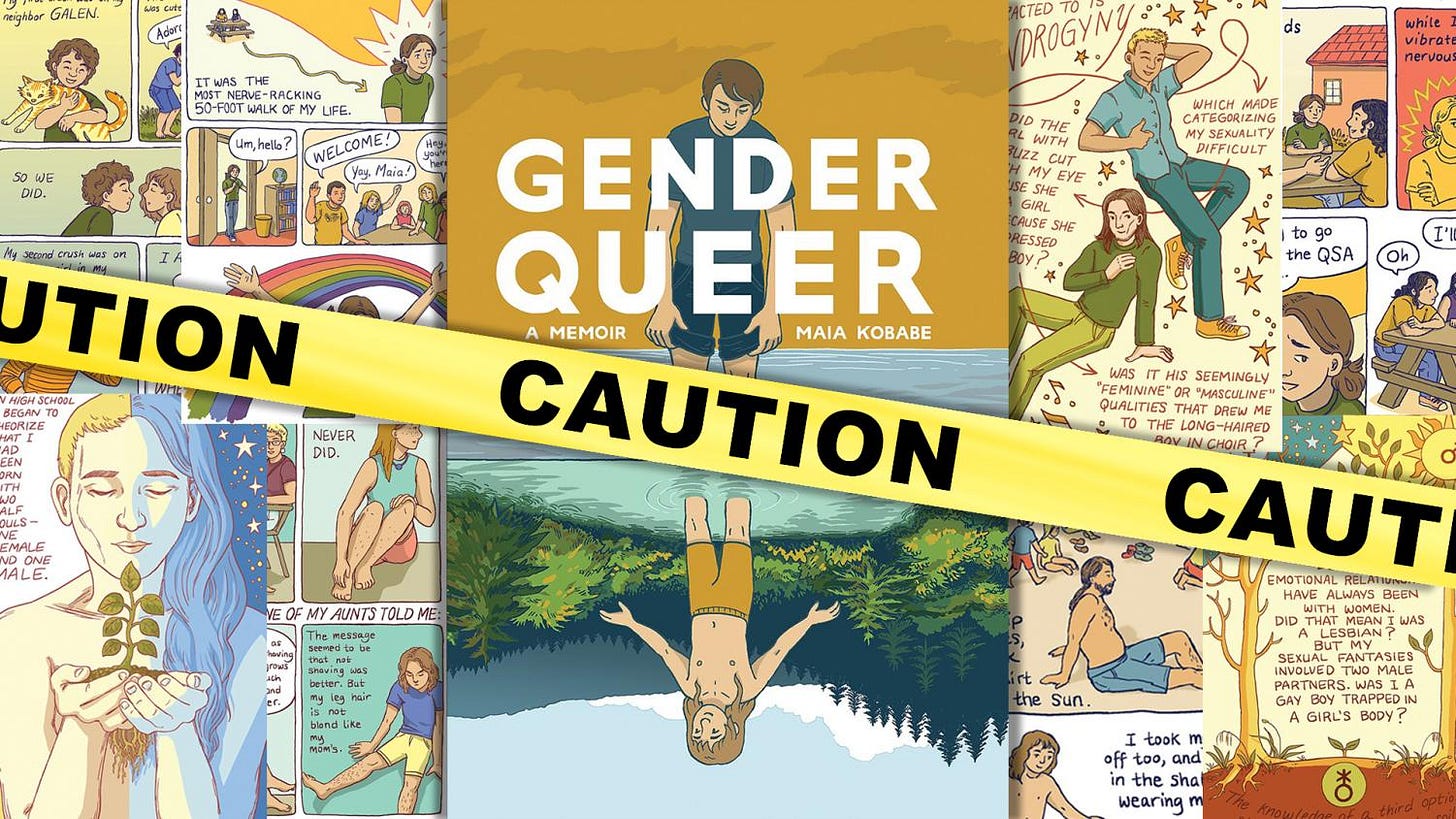
In 2022 and 2023, several school districts around the country — in Michigan, Ohio, Wisconsin, Washington, and others — were found to have purchased books for their K-12 libraries covering gender dysphoria, sexual identity, and critical race theory under the cover of ‘inclusive literature.’
The American Library Association reported that ‘Gender Queer,’ a graphic memoir containing illustrated depictions of sexual content, topped its list of most-challenged books for two consecutive years. It was the most banned book of the 2022-23 academic year according to PEN America — which means it was also the most actively placed book, because banning implies prior presence. Books are not challenged from shelves they never occupied.
For children as young as four and five, titles like ‘Every Body Is a Rainbow’ — marketed for ages 4 to 8 — contain explicit anatomical descriptions alongside the suggestion that body parts carry no fixed gender identity. Books such as ‘All Bodies Are Cool’ and ‘Some Bodies’ contain illustrations of double mastectomies, presented to children ages 2 to 8 as simply another variation of normal.
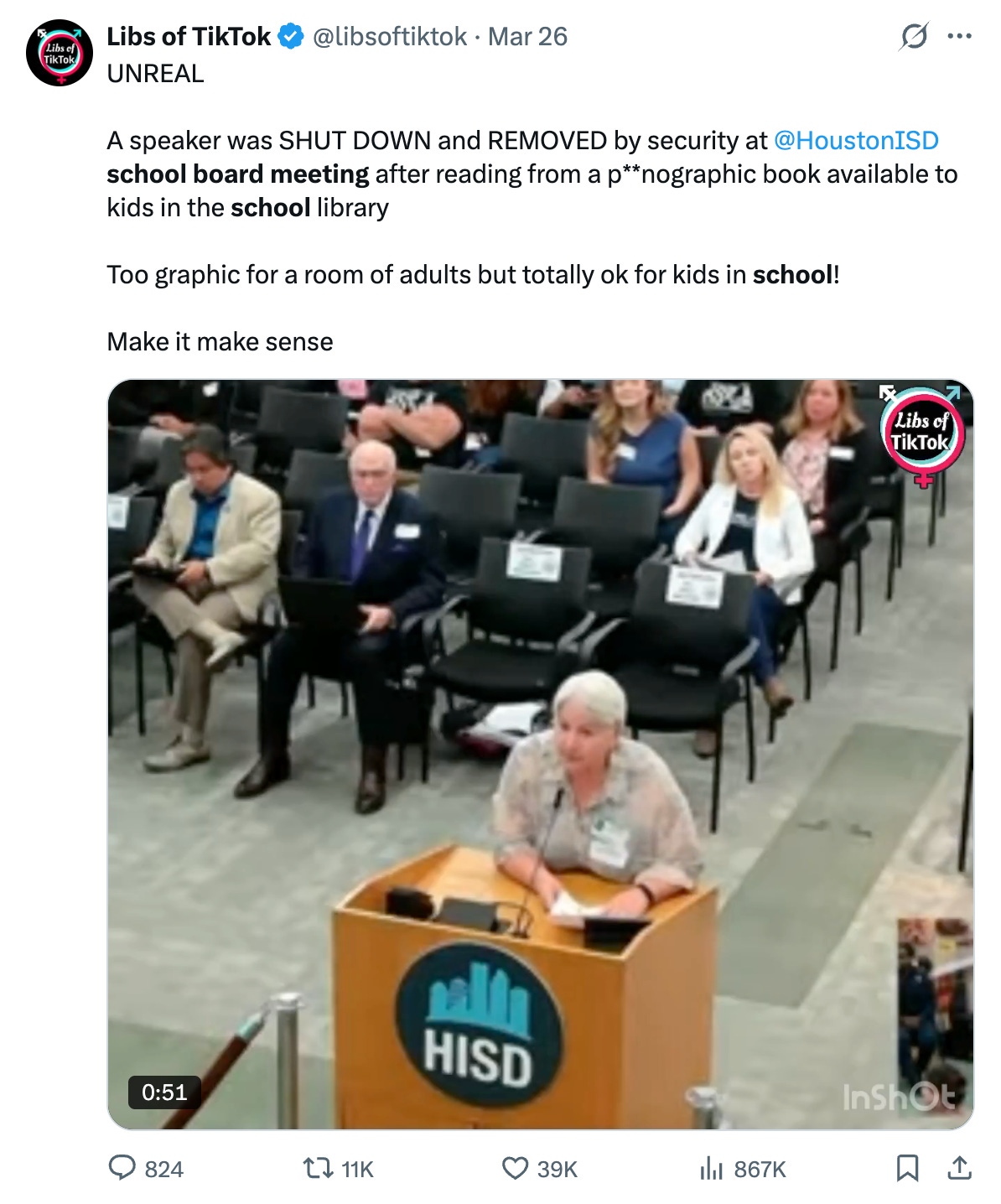
In Montgomery County, Maryland, the school board introduced LGBTQ-inclusive storybooks as mandatory language arts curriculum for elementary students in the 2022-23 school year — and when parents raised objections and began pulling their children from class, the board revoked opt-out rights entirely, citing ‘absenteeism concerns.’ The message to parents was unmistakable: your children will receive this material whether you consent or not. That case has since reached the United States Supreme Court.
When a state board strips parents of the right to opt their children out of ideological content, it is not protecting students. It is asserting that the state’s claim on your child’s mind supersedes your own.
None of this happened by accident. It happened because the people selecting these books, writing these curricula, and training the educators who deliver them came out of universities that had spent decades building exactly this apparatus. The pipeline is not a metaphor. It is a system with inputs, throughputs, and intended outputs.
V. What School Is For — And What It Has Become
Here is a question that should not be controversial: what is school for?
School exists to teach children how to function in society. Reading, writing, mathematics, history, science, civics — the tools of literate participation in a complex world. It exists to develop critical thinking, not to install conclusions. It exists to prepare citizens, not to manufacture activists.
Religious instruction and the formation of gender identity are the domain of the family. They always have been. Not because these are unimportant — they are among the most important questions a human being navigates — but precisely because they are so important that no state institution should be permitted to preempt the family’s role in answering them.
The bipartisan instinct here is actually strong when you strip away the political noise. A 2023 survey found that 72 percent of Californians — the highest percentage of whom identified as Democrats — said parents should be informed if their child identifies as transgender at school. Sixty-three percent opposed gender-affirming medical intervention for minors. The public, across party lines, understands intuitively that there is something wrong with a system that keeps secrets about children from their parents.
This is the premise behind a growing body of legislation. In California, the debate has been visceral — Governor Newsom signed the SAFETY Act in July 2024, prohibiting schools from notifying parents of a student’s gender identity without the student’s consent. The federal government has pushed back, with the Department of Education opening FERPA investigations into California and Maine, asserting that ‘gender plans’ are education records and parents have a legal right to access them. Texas passed Senate Bill 12 in 2025, prohibiting gender identity instruction at any grade level and requiring parental consent before human sexuality content is covered.
For better or worse, the legal battles are being fought. What they represent, at their core, is a reckoning with a system that overreached — that substituted ideological formation for education and then locked parents out of the building.
VI. The Counter-Signal: What Kirk and TPUSA Revealed
The existence of Turning Point USA — founded in 2012 by Charlie Kirk, who was assassinated in September 2025 while speaking at Utah Valley University — is itself a data point worth examining carefully.
Kirk built TPUSA into one of the most powerful youth political organizations in American history, with chapters at roughly 900 colleges and 1,200 high schools at the time of his death. His ‘You’re Being Brainwashed’ campus tour in 2024 visited 25 universities and generated approximately two billion views on social media. Within two weeks of his assassination, TPUSA received over 37,000 new chapter inquiries from students.
None of that happens in a vacuum. You do not build that kind of reactive energy among young people by inventing a problem. Kirk’s entire thesis — that college campuses had become ideological monocultures hostile to conservative thought, that the ‘Professor Watchlist’ was necessary because faculty were actively penalizing dissent — resonated because students were living it. The demand proved the supply.
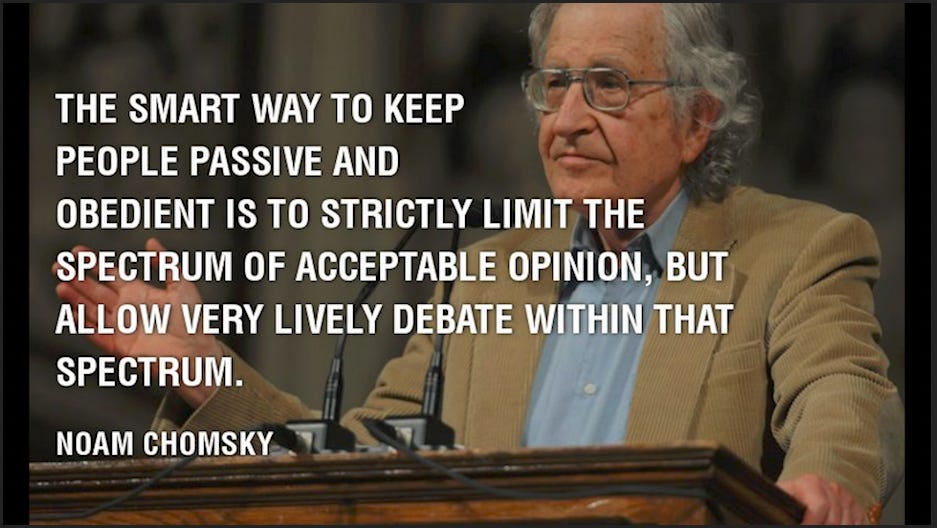
But here is the point worth pressing on: the answer to institutional indoctrination from the left is not institutional indoctrination from the right. Kirk himself understood this at some level — his campus strategy was debate, not capture. Show up, make the argument, let the ideas compete. The deeper principle is that school should be where students learn how to think, not where they are told what to think — regardless of the ideological direction of the instruction.
The real counter to the pipeline is not a conservative pipeline. It is the restoration of education as an intellectual discipline rather than a political one. It is the teaching of logic, rhetoric, history, and evidence-based reasoning to students who can then apply those tools to any ideology presented to them — including the one their teachers prefer.
VII. The Blueprint: Rules for Radicals, the Protocols, and the Targeted Youth
It would be convenient if this were all spontaneous — a natural cultural drift toward progressive ideology driven by nothing more than the accumulated preferences of well-meaning educators. The record suggests otherwise.
Saul Alinsky’s ‘Rules for Radicals,’ published in 1971, is explicit: change is made through the patient organization of institutions, not through frontal assault. The university is the perfect target — a place where young people arrive with half-formed identities, desperate for belonging, and are handed a framework that explains the world and assigns them a role within it. The campus is not where the revolution happens. It is where the revolutionaries are made.

Whether one grants the Protocols of the Elders of Zion any historical authenticity — and there are serious reasons not to — the blueprint it describes for corrupting youth as a mechanism of societal destabilization has been an observable tactic across ideological movements for over a century. The Rockefeller-funded restructuring of American education in the early twentieth century, documented by Iserbyt and others, deliberately shifted the goal of schooling from individual intellectual development to social utility — the production of compliant workers and manageable citizens. These are documented institutional decisions, not conspiracy theory.
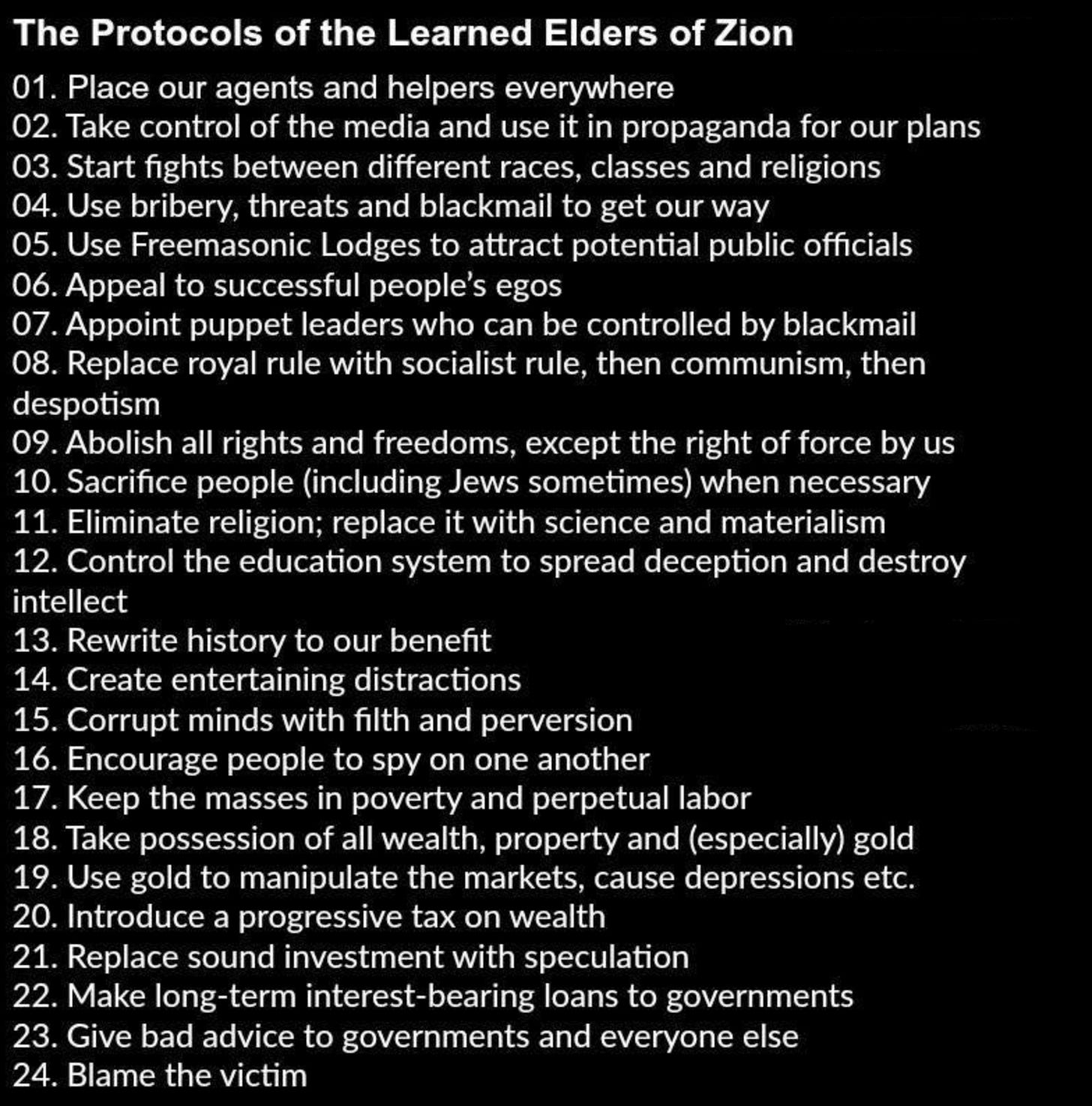
What matters is not the origin story. What matters is the result. Whether by design, by institutional drift, or by the accumulated decisions of true believers who entered education precisely because they understood its power — the outcome is the same: youth have been systematically targeted as the most leverageable population in any long-term cultural project.
Celebrities normalize. Social media amplifies. School institutionalizes. The three channels feed each other in a closed loop, and the child who moves through all three emerges with beliefs they experience as their own but which were installed by others. That, in any honest accounting, is what radicalization looks like — regardless of the ideological direction.
VIII. We Failed Our Children — And We Did It With Good Intentions
The most uncomfortable part of this analysis is not what the institutions did. It is what the rest of us did not do.
We had faith. Reasonable faith, in many cases — faith in institutions that had earned it over generations. We sent our children to school trusting that school meant what it once meant. We did not read the curriculum. We did not attend the school board meetings. We did not ask what books were on the shelves or why a teacher was facilitating a student protest during second period.
That trust was exploited. It was exploited patiently, incrementally, and in many cases by people who genuinely believed they were helping. The DEI coordinator who designed the kindergarten unit on gender fluidity was not, in her own mind, doing something sinister. She was doing what her graduate program trained her to do, what her professional network rewarded her for, what her institution sanctioned. She was, in that sense, a product of the pipeline herself.

This is not a partisan failure. It is a generational one. It happened across red states and blue states, in urban districts and rural ones, accelerating through the 2000s and reaching critical mass sometime in the mid-2010s — precisely the window when the first parents began noticing that their children were coming home with values that neither parent had taught them.
When people began showing up to school board meetings, they were not radicals. They were parents who had finally read the syllabus.
The reaction has been called a backlash. It is more accurately described as a correction. In the natural motion of societies — and yes, this is cyclical, it is a pendulum — extreme concentration in one direction eventually produces a counterforce. That counterforce is underway. The legal battles, the legislative pushback, the surge in parental rights organizations, the 37,000 students who asked to start TPUSA chapters in two weeks: these are all data points in the same directional signal.
The pendulum does not always land in the right place when it swings back. The task of this moment is not to simply reverse the polarity of the pipeline. It is to dismantle the pipeline concept entirely. Education is not a delivery mechanism for ideology. It is a practice of developing minds capable of navigating their own lives in a complex and contested world.
That means teaching children how to read a primary source and interrogate it. How to follow an argument and test its premises. How to distinguish between a claim and the evidence offered for it. These are not conservative skills or progressive skills. They are human skills. And they are precisely what a captured educational system has the most incentive to withhold.
A Final Note
The title of this series is Planned Chaos. One of its central premises is that what appears chaotic at the surface often reflects organized intention below it. The state of American education is not chaos. It is the product of decades of deliberate institutional construction — of endowments and fellowships and curricula and credentialing systems all pointing in the same direction.
Understanding the pipeline does not require you to believe in a room somewhere with a whiteboard and a master plan. It only requires you to follow the incentives, read the documents, and acknowledge what the outcomes show. The outcomes show a generation — several generations now — shaped by institutions that were never supposed to hold that much power over the formation of young minds.
The Shift begins when enough people see it clearly enough to demand something different.
That Shift is what this platform exists to accelerate.
BTW – I am in really good health. I really look forward to helping and healing many people in the near future. I have a LOT to live for. I LOVE ALL people. We can get along once we acknowledge our similarities, rather than pointing out and arguing over trivial differences. I AM NOT SUICIDAL.
Gerry Gomez is an investigative journalist, creative director, and hybrid war correspondent who has spent a decade documenting the convergence of financial, media, and geopolitical forces shaping the current global transition.

Your Tax Free Donations Are Appreciated and Help Fund our Volunteer Website
Disclaimer: We at Prepare for Change (PFC) bring you information that is not offered by the mainstream news, and therefore may seem controversial. The opinions, views, statements, and/or information we present are not necessarily promoted, endorsed, espoused, or agreed to by Prepare for Change, its leadership Council, members, those who work with PFC, or those who read its content. However, they are hopefully provocative. Please use discernment! Use logical thinking, your own intuition and your own connection with Source, Spirit and Natural Laws to help you determine what is true and what is not. By sharing information and seeding dialogue, it is our goal to raise consciousness and awareness of higher truths to free us from enslavement of the matrix in this material realm.