 EN
EN FR
FR

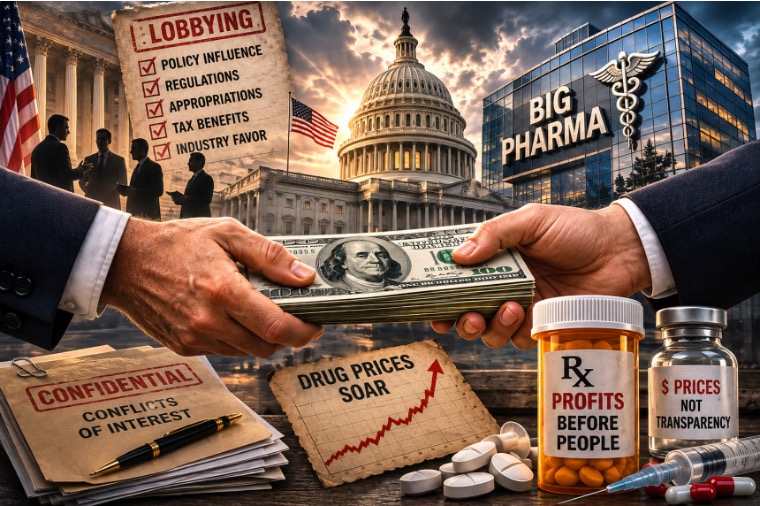
Pharmaceutical Companies and the Conflict of Interest Problem
Research by Rev. Kat Carroll
This Op-Ed reflects my analysis and opinions based on the research and sources cited throughout the article and in the Additional Resources section.
This is a bit personal, but I feel the information is important, especially at this time of fad weight loss drugs being pushed in TV commercials and even social media. You can’t get away from it.
A recent conversation with my physician about medications for Type II diabetes sent me back into research mode.
Before simply adding several new medications, I wanted to understand my choices—the benefits, the risks, the alternatives, and what was known or still unknown about possible long-term consequences.
So, as any intelligent person who still thinks independently might do, I began researching in earnest.
And when I say research, I don’t mean finding something created in the basement of some kid’s house where he still lives with his mother.
I look at medical journals, PubMed, universities, government information and published studies. Sometimes I have to stop and break down the medical terminology so I understand what I’m reading.
I’m not a physician, and I don’t have a medical education. But I can read, research, and learn. And perhaps most importantly, I can ask questions.
While researching GLP-1 medications on what most of us would consider trusted medical sources, I encountered a conflict-of-interest disclosure attached to a published study:
Conflict of interest statement:
“Competing interests: D.J.D. has received financial remuneration from Alnylam, Amgen, AstraZeneca, Crinetics, Eli Lilly, Insulet, Kallyope, Metsera, Pfizer and Sanofi for consulting and from Novo Nordisk for speaking, and Mt. Sinai Hospital receives investigator-initiated grant support from Amgen, Eli Lilly, Novo Nordisk and Zealand Pharma for preclinical studies in the Drucker lab.”
A conflict-of-interest disclosure doesn’t mean the research is false. In fact, reputable journals require such disclosures precisely so readers can evaluate possible influences for themselves.
But it gives cause to consider further.
If researchers, medical institutions or professional organizations receive money from companies manufacturing the products being studied, shouldn’t patients know that? At what point does a financial relationship become a conflict of interest?
Those questions brought me back to several earlier articles I’ve written about the medical industry:
The Next Health Craze: Miracle or Manufactured Demand? A Reflection on Policy and Profit
The Pharmaceutical Ad Blitzkrieg: Compliance in a Syringe
What Do You Believe and What Will You Do About It?
In each case, I found myself asking variations of the same questions about medicine, pharmaceutical companies, government, advertising, lobbying and profit—and how much of that machinery remains invisible to the patient expected to make an informed decision.
WHO Is Calling the Shots?
The World Health Organization (WHO) has been actively involved in both pandemic response and the regulation of diabetes and weight-loss medications. I hope you’ll pardon the pun.
Do you recall when President Trump exited from the World Health Organization? His stated reasons for leaving WHO were quite serious. His January 20, 2025 executive order specifically alleged mishandling of COVID-19, failure to implement needed reforms, inability to demonstrate independence from political influence by member states, and a disproportionate financial burden on the United States. He also ordered the U.S. to stop participating in negotiations over the WHO Pandemic Agreement and International Health Regulations amendments. The United States completed its withdrawal on January 22, 2026.
And the pharmaceutical industry doesn’t operate independently from government or organizations like the WHO.
People regularly move between pharmaceutical companies, lobbying, regulatory agencies and government positions. Industry experience can certainly be valuable. Who better to understand pharmaceutical development than somebody who has spent decades working in pharmaceuticals?
But turn that question around.
When someone spends years representing or working inside an industry and then obtains governmental authority involving that same industry, shouldn’t we at least examine the possibility of conflicts of interest?
Alex Azar, for example, served as Secretary of Health and Human Services from 2018 to 2021. Before that, he was president of Eli Lilly’s U.S. division. During his years at Lilly, insulin prices rose substantially, and the company was later among those involved in litigation over insulin pricing. This is an interesting article about him: Trump’s HHS pick Alex Azar is the worst pharma bro of all
Moncef Slaoui, who headed Operation Warp Speed, had previously spent approximately thirty years at GlaxoSmithKline and headed its vaccine division. Another interesting article about his background can be read here: The dark spots on Moncef Slaoui’s bright career
And this caught my attention: In 2019, Emma Walmsley, CEO of GlaxoSmithKline, received a total compensation package of £8.37 million ($10.81 million), a significant increase from £5.89 million in 2018… Just before the Covid pandemic: GlaxoSmithKline CEO Walmsley nets £2.5M pay bump as overhaul starts to play out.
Now that’s a lot of money, even for a CEO! Where do those profits go?
A significant majority of pharmaceutical corporate profits are distributed to shareholders rather than being reinvested in drug innovation or patient care. (from Sick with “Shareholder Value”: US Pharma’s Financialized Business Model During the Pandemic)
Industry experience does not establish wrongdoing. Neither do previous financial relationships. But these relationships matter.
Who did a decision-maker work for previously? What financial interests remain? What safeguards exist against conflicts? Who is lobbying whom? And are those relationships easily visible to the public?
COVID isn’t the subject of this article, but that period certainly taught many of us to look more carefully at relationships among government, regulators, pharmaceutical companies, researchers, medical institutions and the media.
The same questions apply today in a surging weight loss industry.
Pharmaceutical companies fund research, advertise their products, employ representatives who interact with medical professionals, sponsor educational activities and spend enormous sums lobbying government.
Follow the Money
 The profit motive didn’t suddenly appear with COVID. It was already deeply embedded in the pharmaceutical and healthcare system, and COVID demonstrated just how enormous those profits could become.
Pharmaceutical corporations have shareholders. Executives have compensation packages. Stock prices matter. Sales matter. Patents matter. Market share matters. That’s simply how publicly traded corporations operate.
COVID created an unprecedented global market for vaccines and therapeutics, generating enormous profits for several companies. Now obesity and metabolic disease represent another enormous market, and GLP-1 drugs have become cultural phenomena, not merely medications.
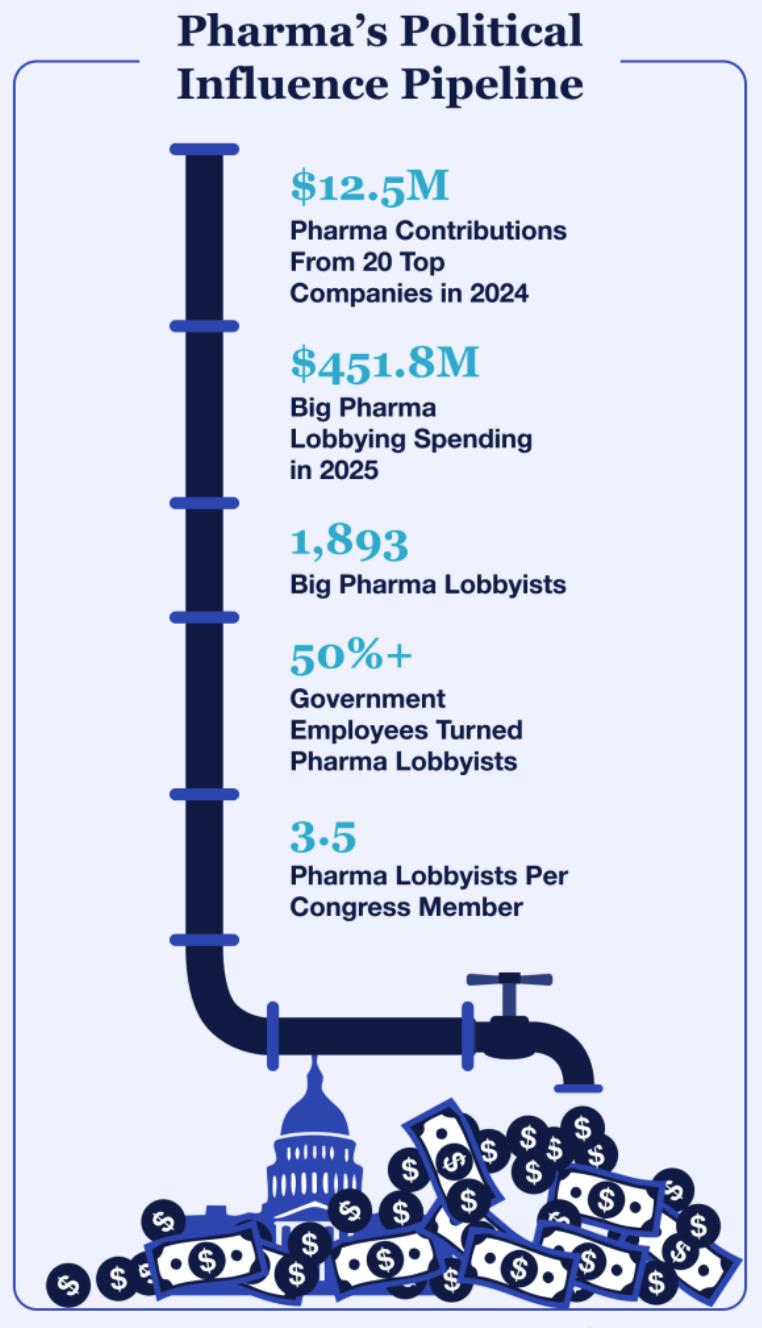 That brings us back to the question of conflict of interest. The same companies developing treatments may also fund research, advertise directly to consumers, lobby government, sponsor medical education and maintain relationships throughout the healthcare system.
None of those relationships is particularly secret. In fact, much of the information is publicly available. The problem is that most patients would have little reason to look for it until something causes them to start asking questions.
When illness becomes profitable, where is the financial incentive to make us well?
Big Pharma Profits Surged from 2019 to 2022. Major players saw dramatic revenue and profit jumps. Pfizer’s net income soared from $9.6 billion in 2020 to $22.0 billion in 2021, and further to $31 billion in 2022, primarily due to its Comirnaty vaccine and Paxlovid antiviral. Moderna and BioNTech also generated massive profits, with Moderna earning approximately $20 billion in net profits from 2021–2022. A 2023 report by SOMO estimated that four major companies (Pfizer, BioNTech, Moderna, Sinovac) collectively generated around $90 billion in profits from COVID-19 products during 2021 and 2022.
In an article by economists William Lazonick and Öner Tulum at the Institute for New Economic Thinking, they examined 14 pharmaceutical companies in the S&P 500 over 2012–2021. Their finding was rather striking: those companies distributed $747 billion to shareholders through stock buybacks and dividends, compared with $660 billion spent on research and development. In other words, shareholder distributions were 13% greater than R&D spending over the decade.
What About the Physician?
My physician and I recently agreed on one thing: the medical system is broken. But we arrived at two very different conclusions of how it affects us.
He spoke about having to work harder to make the same amount of money he had earned in previous years.
I’m more concerned about what choices patients still have, and whether our best interests are truly at heart, or whether it ultimately comes down to the bottom line… money.
However, that did make me consider the problem from his side of the exam table as well.
Physicians don’t practice medicine in a vacuum. A doctor may believe Treatment A is best but find that insurance prefers Treatment B. Treatment C may require prior authorization. Treatment D may be difficult to cover because it is prescribed off-label. A nutritional, behavioral or non-drug intervention may require considerably more counseling and follow-up than writing a prescription—and reimbursement may not reward that time equally.
Hospital policies, formularies, liability concerns and professional guidelines create still more boundaries.
That doesn’t mean physicians don’t care about their patients. It means their choices may be constrained as well.
And physicians face another problem: time.
How much time does a busy doctor have to investigate every available alternative for every individual patient? How much time is available to keep up with emerging research, investigate something outside the conventional treatment model, or spend an hour discussing nutrition and lifestyle changes?
 If they don’t have that time, where does their information come from?
Medical journals? Professional organizations? Continuing medical education? Hospitals? Government agencies? Pharmaceutical representatives? And what about research the patient has dug up? Is it to be immediately dismissed because there is no M.D. or Ph.D. after their name?
And who funds the research upon which those organizations rely? Which leads to a question at the heart of this article:
How independent can a medical decision actually be when so many financially interested institutions participate in producing, approving, paying for, recommending and delivering the available choices?
Here is a bit of research from someone without academic credentials who was told NOT to search the internet for information by her physician.
 The Good, the Bad and the Ugly
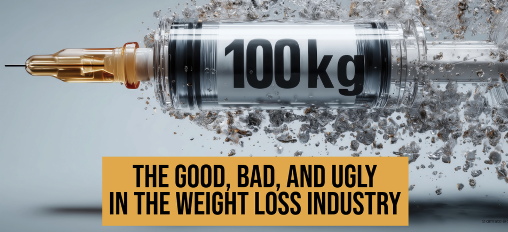 The Good, the Bad and the Ugly
That brings me back to GLP-1 medications. Because as a non-credentialed researcher, I still bother looking and asking questions.
Anyone considering drugs such as Ozempic, Wegovy, Mounjaro or Zepbound and even Metformin should first acknowledge that these medications offer genuine benefits. They can improve blood sugar control and produce substantial weight loss. Some have demonstrated cardiovascular benefits, and researchers are investigating additional potential benefits.
That’s the good.
Then there’s the bad.
Common side effects include nausea, vomiting, constipation and delayed gastric emptying. More serious concerns include gastroparesis, pancreatitis, gallbladder disease, dehydration and kidney injury. Significant weight loss can also involve loss of lean mass rather than fat alone, raising additional concerns about muscle, strength and bone health.
And here’s the ugly.
The enormous demand for GLP-1 drugs has produced another problem: counterfeit and questionable compounded products.
In the United States and elsewhere, regulators have warned about products whose source, potency or purity may be uncertain. A rapidly expanding market creates financial opportunities not only for the pharmaceutical companies producing approved drugs, but for compounders, online sellers, med spas, advertisers and outright counterfeiters.
How does the average patient navigate all of that?
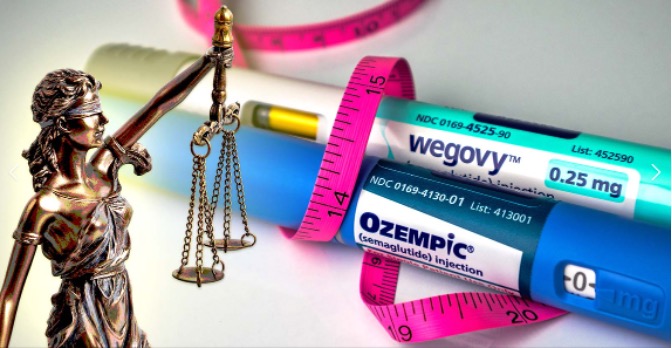 And now there are the lawsuits.
Thousands of claims involving GLP-1 medications are moving through the courts. Plaintiffs allege injuries including severe gastroparesis, persistent vomiting and malnutrition, bowel obstruction, pancreatitis, gallbladder and kidney problems, and vision loss.
The manufacturers dispute liability and maintain that their medications are safe and effective when appropriately prescribed and that their warnings adequately describe the known risks.
A lawsuit, of course, is an allegation until the case is proven true. It doesn’t prove that a medication caused an injury.
Neither does an adverse-event report, even when there were thousands reported during Covid.
As of June 28, 2024, the VAERS database included a total of 970,968 adverse event case reports specifically for FDA-authorized or approved classic COVID-19 vaccines.
This total is broken down by vaccine manufacturer as follows: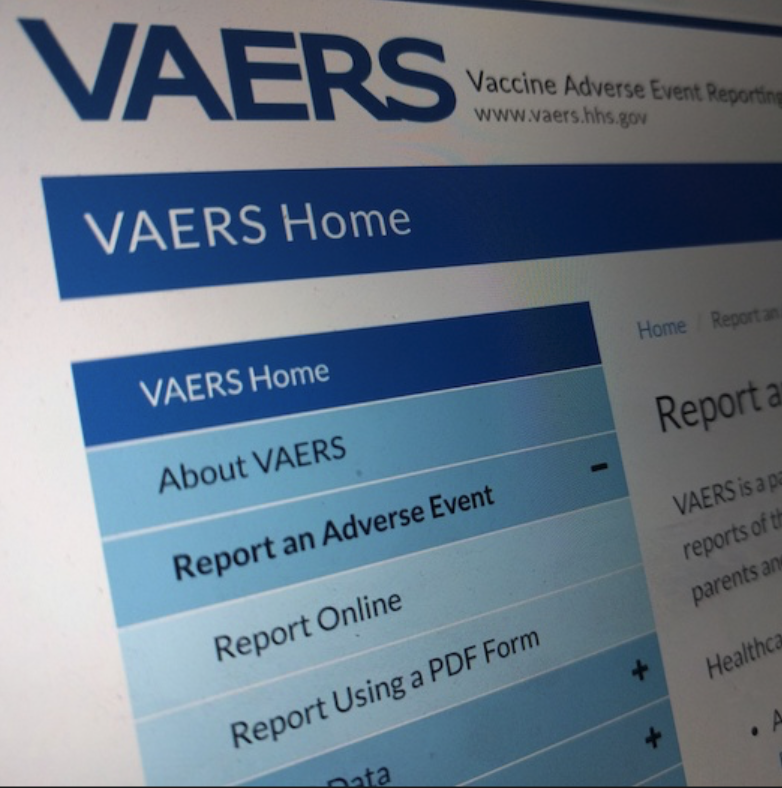
Pfizer-BioNTech: 453,010 reports
Moderna: 436,071 reports
Janssen: 74,108 reports
Other COVID-19 vaccines: 7,302 reports
Now I’d call that a loud safety signal. (But, nothing to see here folks!) 🤨
A fire alarm isn’t proof that the building is burning. But isn’t the purpose of an alarm to make someone go look?
GLP medications may, in retrospect, raise some of the same questions we encountered with the rushed Covid vaccines.
Could history be repeating?
“Those who cannot remember the past are condemned to repeat it.” – Philosopher George Santayana
True Informed Consent — Possible Consequences
This is where the discussion becomes much larger than GLP-1 medications.
When we’re told that a particular serious side effect is rare, most of us naturally think about probability.
One person in a thousand? One in ten thousand?
But there’s another part of risk that patients need to understand:
If it happens to me, what are the consequences?
Temporary nausea that resolves after discontinuing a medication is one calculation.
An injury requiring hospitalization or surgery is another.
An adverse effect that persists after the medication is discontinued changes that calculation considerably.
Risk isn’t merely about probability. It’s also about consequences like losing the ability to work, or losing your life.
There is also the matter of time.
GLP-1 medications don’t all have the same history. Liraglutide has considerably more years of post-market surveillance than semaglutide, while tirzepatide is newer still. Longer exposure provides more opportunity to discover uncommon or delayed adverse effects that weren’t apparent during clinical trials.
A newer medication isn’t necessarily dangerous. But how can anyone know its twenty-year consequences when it hasn’t been used for twenty years? We can’t.
That’s not anti-science. It’s arithmetic.
And this raises an important distinction between long-term use and long-term side effects. What happens after taking a medication for five, ten or twenty years?
I’m certain you recall Operation Warp Speed during the Covid Pandemic. The GLP-1 weight loss drug market is experiencing a transformation comparable to Operation Warp Speed, with experts noting that these therapies have “defined the decade in terms of impact on population health.”
Rapid Innovation: The field is advancing quickly, with new oral formulations and next-generation drugs like retatrutide showing even greater efficacy, suggesting that the industry is moving toward a “new standard of metabolic care“ driven by aggressive pharmaceutical innovation. If the Covid Pandemic taught us anything, it’s that we should tread carefully and fully study new medications thoroughly and report on all findings, positive and negative.
We won’t know the long term effects on new medications for years. Does the problem disappear when the drug is discontinued? Are side effects treatable, reversible? Does it improve partially? Or can the injury become permanent?
Those questions should be part of informed consent too.
What Are the Alternatives?
None of this means medication is inherently bad. Nor does it mean something described as “natural” is inherently safe. It means patients should know their reasonable choices.
If Type II diabetes or obesity can be improved through dietary changes, exercise, weight reduction and other lifestyle interventions, can those approaches reasonably be attempted first for a particular patient?
If medication is necessary, are there alternatives with longer safety records? What happens if treatment is postponed while other reasonable approaches are tried? What happens without treatment?
And what evidence exists for inexpensive, non-drug or non-patentable interventions, those that have existed for a very long time?
That last question raises another uncomfortable economic reality. Large randomized clinical trials are expensive.
Pharmaceutical companies have a financial incentive to spend enormous amounts developing and testing a compound that can ultimately become a profitable patented medication.
But who spends millions investigating an inexpensive intervention that nobody can patent? That doesn’t prove the inexpensive alternative works. But lack of research doesn’t prove that it doesn’t.
“We don’t have enough evidence” and “we have evidence that it doesn’t work” are not the same statement.
Perhaps the economics of medical research influence not only the answers we receive, but which questions receive enough funding to be asked in the first place.
Making informed decisions means gathering reliable facts, exploring all options, identifying information gaps, and weighing outcomes using critical thinking.
In Closing
We hear a great deal about informed consent, but how informed is consent when patients don’t know about reasonable alternatives? How informed is it when financial relationships are buried in disclosures most people will never read?
True informed consent doesn’t require everyone to make the same decision. It requires giving them enough information to make their own.
So before jumping onto the next pharmaceutical bandwagon pushed by media ads, perhaps we should be asking a few more questions before swallowing a pill or rolling up a sleeve:
- Do we really know if what we’re being told we need is safe?
- Do we know how much of what is offered to us may be influenced by advertising, lobbying, patents and financial incentives?
- Do physicians have enough freedom—and enough time—to explore reasonable alternatives?
- Are inexpensive or non-patentable approaches receiving the research attention they deserve?
- Who benefits financially from the choices being offered?
- Who assumes the risk?
And ultimately, who gets to decide what happens to your body?
| Hopefully, the answer is still you! |  |

Additional Resources from my dive down the Rabbit Hole:
‘My colon blew up’: lawsuits mount over GLP-1 weight-loss drugs
Metformin Lawsuit 2026: Payouts, Eligibility, Updates. Certain extended-release metformin products were recalled after unacceptable levels of the probable carcinogen NDMA were discovered, followed by litigation alleging cancer risks and other harms. Metformin nevertheless remains widely prescribed, illustrating another problem for informed consent: Some risks may not become apparent until years after a medication has entered widespread use.
GLP-1 receptor agonists: The good, the bad, and the ugly-A comprehensive guide for NPs PubMed
GLP-1 drugs promise wider health benefits, but experts urge caution on use
Sick with “Shareholder Value”: US Pharma’s Financialized Business Model During the Pandemic

Your Tax Free Donations Are Appreciated and Help Fund our Volunteer Website
Disclaimer: We at Prepare for Change (PFC) bring you information that is not offered by the mainstream news, and therefore may seem controversial. The opinions, views, statements, and/or information we present are not necessarily promoted, endorsed, espoused, or agreed to by Prepare for Change, its leadership Council, members, those who work with PFC, or those who read its content. However, they are hopefully provocative. Please use discernment! Use logical thinking, your own intuition and your own connection with Source, Spirit and Natural Laws to help you determine what is true and what is not. By sharing information and seeding dialogue, it is our goal to raise consciousness and awareness of higher truths to free us from enslavement of the matrix in this material realm.

























Just say no to drugs. Pretty much everything is repairable with good food, good sleep and good movement…maybe with a little help from natural remedies.
One of the early Q posts stated, we have everything we need, or at least words to that affect. I agree!